
Greater Cleveland
Chimney Liner Installation & Relining in Cleveland, OH
Stainless steel relining for flues with cracked tiles, gaps, or no liner at all — sized to your appliance, insulated, done once.
The liner is the part of the chimney that does the actual work. Everything else is structure; the liner is what contains the heat and the combustion gases and delivers them out of the house without letting either reach the brickwork or the framing around it. Most Cleveland chimneys were built with clay tile liners, and clay has a hard life here. Thermal shock cracks it, settlement shifts it, and moisture eats the mortar joints between tiles until the sections stop behaving as one continuous passage. A cracked or gapped liner is invisible without a camera, and it is the failure that turns into house fires and carbon monoxide.
The modern fix is a stainless steel liner: a continuous, insulated stainless flue run down the existing chimney and connected directly to the fireplace or appliance it serves. Done properly — sized to the appliance, insulated so the flue stays warm and drafts, terminated and capped cleanly — it outperforms the original clay and typically carries a manufacturer lifetime warranty on the liner itself. Relining is also the required move in two situations this market produces constantly: pre-1940 chimneys that were never lined at all, and utility flues left badly oversized after a high-efficiency furnace was installed.
What the liner is actually for
A flue liner does three jobs at once, and losing any one of them matters. It keeps heat away from the wood framing that surrounds every masonry chimney — the code clearances that framing was built to assume an intact liner. It protects the masonry from the corrosive by-products of combustion, which will otherwise attack mortar and brick from the inside. And it provides a correctly sized, smooth passage so the appliance drafts the way it was designed to.
This is why 'the chimney is structurally fine' and 'the chimney is safe to use' are two different statements. A perfectly sound-looking stack with a broken flue is not a working chimney. It is a masonry column with a fire hazard running through the middle of it.
How clay tile liners fail
Thermal shock
Clay tile does not expand and contract quickly. A chimney fire, or in some cases just a very hot fire in a cold flue, puts a rapid temperature spike into the tile, and the tile cracks. The cracks are often vertical or spiral, and they do not close up when things cool down. This is the classic post-chimney-fire finding and the main reason the standard calls for an inspection after any suspected fire, no matter how minor it seemed at the time.
Failed mortar joints
Flue tiles are stacked in short sections with thin mortar joints between them. Those joints are the weakest part of the assembly, and in Northeast Ohio they take a beating from condensation and freeze-thaw at the top of the stack. Once the joints wash out, you have a series of separate tiles with gaps between them rather than a continuous flue, and gases can reach the masonry at every gap.
Condensation and acid attack
Any flue running cooler than the exhaust dew point condenses moisture on its walls, and that condensate is acidic. On a gas or oil appliance venting into an oversized masonry flue, the condensate dissolves the mortar joints and softens the tile over years. The tell is rust, dampness or white deposits at the base of the flue and around the clean-out.
Never lined in the first place
Ohio building practice did not universally require flue liners until well into the twentieth century, and a substantial share of pre-1940 Cleveland-area chimneys have bare brick flues with no tile at all. On those, combustion gases have been in direct contact with the masonry for their whole life, and the mortar joints between the flue bricks are frequently washed out. This is one of the most common findings on the older east and west side streets, and it is not something a homeowner can see.
How we confirm a liner has actually failed
Camera first, always. Relining is a significant job and nobody should be selling one on a hunch or on what could be seen with a flashlight from the firebox. The scan is run the full length of the flue and it either shows you cracked tile, open joints, missing sections and gaps, or it shows you an intact flue. Both answers are useful and we say the second one out loud when it is the true one.
There is a specific version of this we want homeowners to be skeptical about: a photograph of a cracked flue that is not your flue. Footage from your chimney is identifiable, we walk you through it, and it should be part of every relining quote you receive from anyone.
Sizing: the part that decides whether it drafts
More relining jobs are ruined by wrong sizing than by bad installation. A flue that is too large runs cool, drafts weakly, and condenses moisture and creosote onto its own walls. A flue that is too small cannot move the volume of exhaust the appliance produces, and the surplus comes into the room. Neither problem announces itself as a sizing problem; both present as 'the fireplace smokes' or 'the chimney keeps getting dirty'.
For an open fireplace, the flue is sized against the area of the fireplace opening — the long-standing rule in NFPA 211 puts a round flue at no less than about a twelfth of the opening area, and a rectangular one at no less than about a tenth. For a stove, insert or appliance, the liner is sized to the manufacturer's specified outlet and the listed installation instructions, not to whatever is currently in the chimney. Getting this right is the difference between a fireplace that pulls crisply the moment it is lit and one the family stops using.
What a relining job involves
Preparing the flue
The existing flue is swept and cleared. Where broken tile is obstructing the passage or protruding into it, it has to be removed or broken out so the liner can run straight. On some older chimneys with tight offsets, this is the part that takes the time, and it is the part a quote can get wrong if nobody looked first.
The liner and its insulation
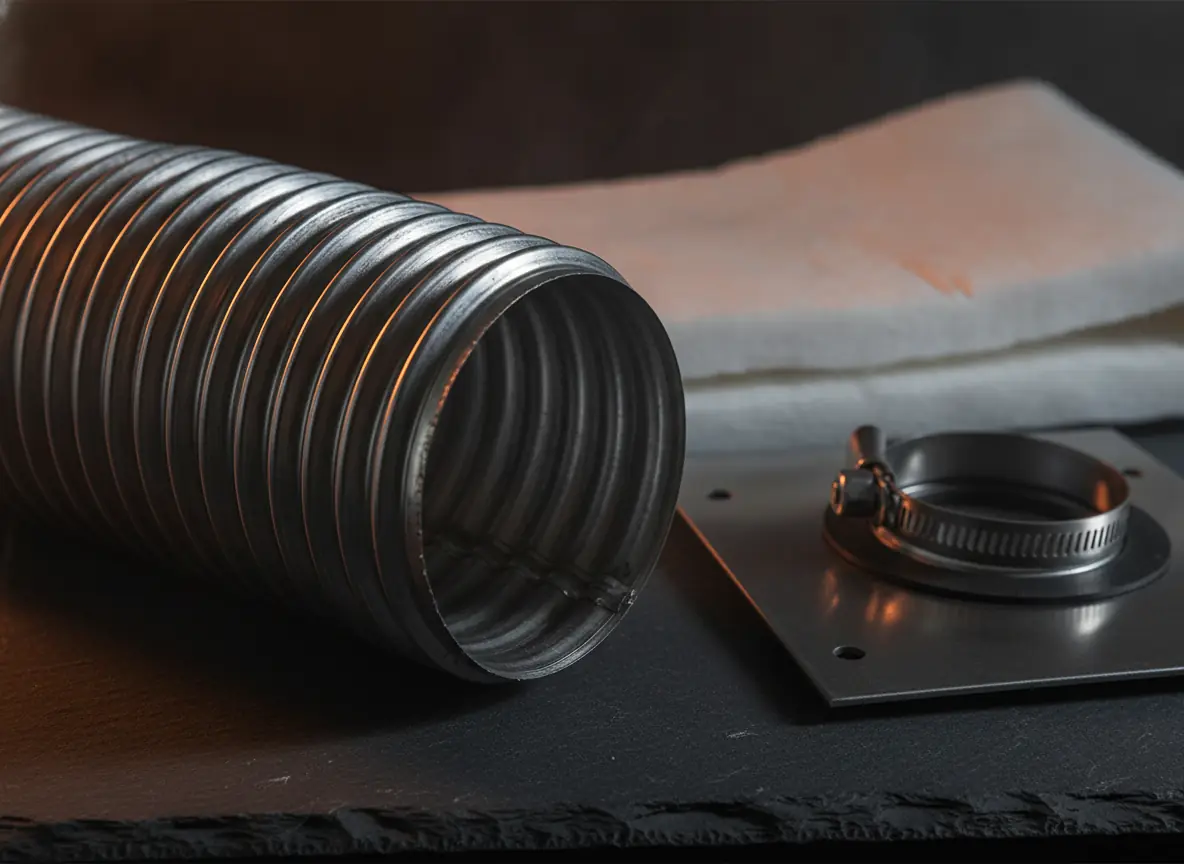
A continuous stainless liner in the correct alloy for the fuel — 316Ti-grade stainless is the normal choice for wood and oil, and a listed alloy is used for high-efficiency condensing appliances, because condensate chemistry differs. It goes in insulated, either with a factory or field-applied wrap or a pour-around insulation mix. Insulation is not optional dressing: it is often required by the liner's own listing, it keeps the flue warm enough to draft properly, and it dramatically reduces condensation and creosote formation. An uninsulated liner rattling around inside an oversized masonry chase is a cheaper job and a worse chimney.
Termination at the top
A top plate seals the liner to the top of the chimney, a storm collar sheds water off the joint, and a cap sized to the new liner finishes it. Done properly, the top of the chimney is now sealed against rain for the first time in decades, which is a side benefit that quietly protects the masonry below.
The connection at the bottom
The liner is connected to the fireplace, stove or appliance with the correct listed components. Improvised adapters and unsupported connector pipe are common findings on older installations and they are exactly where the system leaks. On a fireplace, this usually means a connection at the smoke chamber; on an insert or stove, a direct connect to the appliance outlet.
Documentation
Photos of the completed run top to bottom, and the liner's product documentation handed over, so the manufacturer's warranty on the liner is something you actually hold rather than something you were told about.
Furnace and water heater flues: the Cleveland problem
This one affects tens of thousands of houses across Parma, Old Brooklyn, Euclid, Garfield Heights and every other postwar neighborhood, and almost nobody has been told about it. The sequence goes like this. The original furnace and the water heater both vented into the masonry chimney, and the flue was sized for the two of them together. The furnace gets replaced with a high-efficiency condensing unit, which vents through white PVC out a side wall. The water heater is left where it is.
Now a small appliance is venting into a flue sized for a large one. The exhaust volume is nowhere near enough to keep that flue warm, so it condenses on the way up. The condensate is acidic. It attacks the tile and the mortar joints, and over a decade it can take a flue apart from the inside while everything looks perfectly normal from the basement. The industry name for this is an orphaned water heater, and the standard fix is a correctly sized metal liner that matches the appliance rather than the chimney.
The signs are worth knowing: rust or scaling on the draft hood or the vent connector, dampness or white crusty deposits at the base of the chimney, tile fragments in the clean-out, or a chimney exterior that is staining on the outside near the top. If your furnace was upgraded in the last fifteen years and nobody looked at the chimney afterwards, that is the situation this section is describing.
What drives the cost of a reline
- Height and diameter. A liner is a manufactured product sold by the foot in a given diameter, and a three-story Cleveland Heights stack is materially more liner than a ranch.
- Insulation method. A wrapped liner and a pour-around insulation both cost more than an uninsulated drop, and both are usually the correct specification.
- Offsets and obstructions. A straight flue is a straightforward day. A chimney with a significant offset, or one where broken tile has to be removed to make room, is not.
- Whether tile has to be broken out. On tight older flues, opening the passage to accept the correct liner diameter is real, messy work.
- The appliance connection. A direct connect to a stove or insert, versus a fireplace connection, versus a shared utility flue that needs reconfiguring, are different scopes.
- Access at the top. Roof pitch and material change how the crew works from the moment they arrive.
- Whether the crown and cap need doing at the same time. They frequently do, and doing them in the same visit is cheaper than doing them separately later.
What happens if a failed flue keeps getting used
The two outcomes are the ones this whole trade exists to prevent. The first is a structure fire. A gap in the liner lets flue temperatures reach the masonry, and a masonry chimney is not a sealed object — it is built into a house with framing members close to it, sometimes closer than modern clearances allow, especially in houses built before those clearances existed. Heat over time chars wood, and charred wood ignites at a lower temperature than sound wood. This is the mechanism behind fires that start in a chimney the family had used without incident for years.
The second is carbon monoxide. A gapped or partially blocked flue lets exhaust find easier routes than the one out of the top. On a gas or oil appliance the exhaust is not visible and does not smell, and it comes back into a basement or a utility room. Every house with a fuel-burning appliance needs working CO alarms on every level regardless — but an alarm is a last defense, not a repair.
The reason to reline is that it removes both mechanisms permanently rather than managing them. The reason to camera-inspect first is that plenty of chimneys turn out not to need it.
What a relining job includes
- Camera inspection first — you see why (or whether) the flue needs relining
- Continuous stainless steel liner in the correct alloy, sized to the fireplace or appliance it serves
- Insulation wrap or pour so the flue drafts correctly and meets the liner's listing
- Existing flue cleared, and broken tile removed where it obstructs the run
- New top plate, storm collar and cap terminating the system
- Correct listed connection at the appliance — no improvised adapters
- Photos of the completed run top to bottom, and the liner's product documentation
Our work
Chimney Liner & Relining, photographed on the job
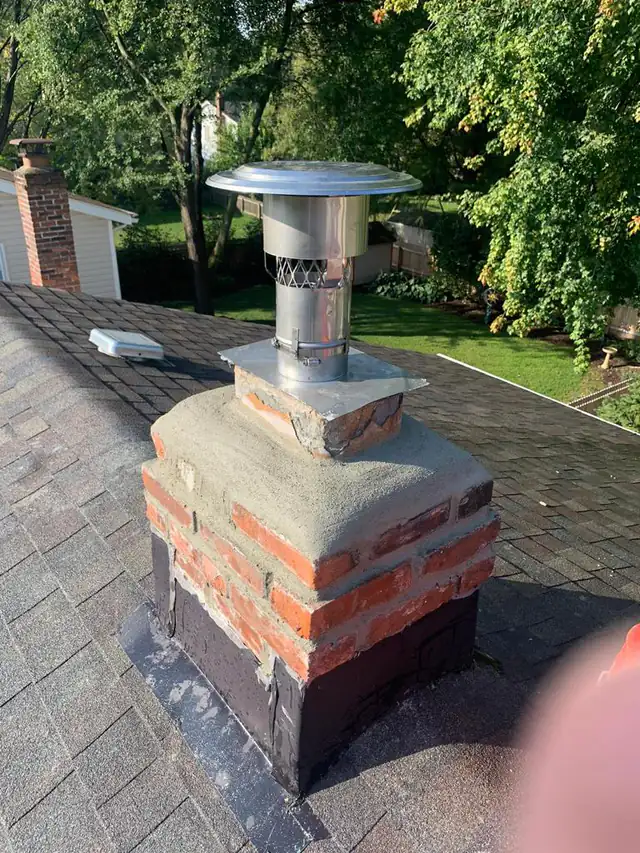
Stainless liner brought through a new crown, capped 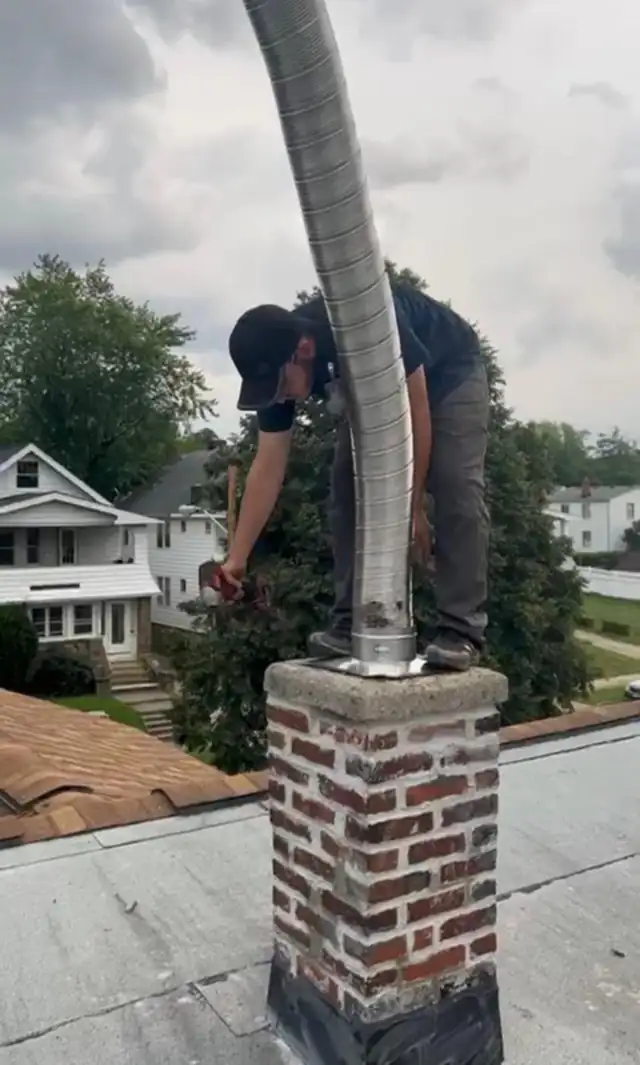
Feeding a new stainless liner down the flue
Meet the team
The people behind the work
Manny, Zack and Myke — meet the people behind Chimney Expert Solutions.
Our team and story →
Manny
Owner

Zack
Manager

Myke
Technician
FAQ
Chimney Liner & Relining: questions we hear
Why stainless instead of replacing the broken clay tiles?
Access. Clay tiles are stacked inside a sealed masonry shaft, so reaching a cracked one partway up means opening the chimney to get to it — which usually costs more than relining and leaves you with a repaired eighty-year-old flue. A stainless liner installs from the top, restores a continuous sealed passage in a day or two on most jobs, and the liner itself typically carries a manufacturer lifetime warranty.
How long does a reline take and is my house disrupted?
Most single-flue relines are a one- or two-day job, and the majority of the work happens on the roof. Inside, the disruption is at the fireplace or the appliance for the connection. If the chimney vents your water heater, we plan the sequence so it is not left without a vent overnight.
Can one liner serve two appliances?
Sometimes, and it is governed by rules rather than preference — appliance types, fuels, input ratings and connection geometry all determine whether common venting is permitted. Plenty of existing shared arrangements in older Cleveland houses would not pass today. It is something we work out on site, and 'the old chimney did it this way' is not an answer.
Does a stainless liner need sweeping like clay?
Yes. Stainless is smoother and better insulated, so it usually builds less deposit and is easier to clean, but wood smoke still leaves creosote on it. What changes is the brush: a wire brush that is fine on clay tile can damage a stainless liner, so it needs a poly brush sized to the liner. Worth knowing if you ever hire a sweep who does not ask what your liner is.
The chimney is being rebuilt anyway. Do the liner at the same time?
Almost always yes. A rebuild is the one moment the flue is open and accessible, and doing both together avoids paying twice for access, staging and roof protection. If we are rebuilding the top of a stack and the camera shows a compromised flue below it, we will say so before the scope is agreed rather than after.
Where we do this work
Chimney Liner & Relining across Greater Cleveland
Housing era changes this job more than anything else does, so the towns below have their own pages on it. The rest of our Greater Cleveland service area is on the areas page.
- Chimney Liner & Relining in Cleveland
- Chimney Liner & Relining in Lakewood
- Chimney Liner & Relining in Cleveland Heights
- Chimney Liner & Relining in Shaker Heights
- Chimney Liner & Relining in Parma
- Chimney Liner & Relining in Rocky River
- Chimney Liner & Relining in Westlake
- Chimney Liner & Relining in Strongsville
- Chimney Liner & Relining in Euclid
- Chimney Liner & Relining in South Euclid
- Chimney Liner & Relining in University Heights
- Chimney Liner & Relining in Beachwood
- Chimney Liner & Relining in Bedford
- Chimney Liner & Relining in Garfield Heights
- Chimney Liner & Relining in North Olmsted
- Chimney Liner & Relining in Mentor
- Chimney Liner & Relining in Willoughby
- Chimney Liner & Relining in Painesville
- Chimney Liner & Relining in Chardon
- Chimney Liner & Relining in Elyria
- Chimney Liner & Relining in Lorain
- Chimney Liner & Relining in Avon Lake
- Chimney Liner & Relining in Medina
- Chimney Liner & Relining in Brunswick
- Chimney Liner & Relining in Akron
- Chimney Liner & Relining in Cuyahoga Falls
- Chimney Liner & Relining in Hudson
- Chimney Liner & Relining in Kent
- Canton
- Wooster
- Warren
- Youngstown
- Boardman
- Sandusky
- Mansfield
- Ashland
Free estimate
Get this looked at properly
Describe what you're seeing and we'll call or text back to schedule. Photos of what we find, honest triage, and a written scope before any work starts — that method is the whole of how we work.
Call and tell us what the chimney's doing — if we're up on a roof, we'll call you back. All the ways to reach us are on the contact page.
Call216-647-1882