
Cuyahoga County, Ohio
Chimney Liner & Relining in Cleveland, OH
Stainless steel relining for flues with cracked tiles, gaps, or no liner at all — sized to your appliance, insulated, done once.
What chimney relining involves in Cleveland is set by the housing stock here: 1890s–1950s stock across most neighborhoods: soft pre-war brick, unlined or clay-tile flues, doubles with multi-flue stacks, and utility chimneys serving furnaces and water heaters.
Cleveland is a chimney town, and the reason is in the building dates. Ohio City, Tremont, Detroit-Shoreway, Old Brooklyn, West Park, Slavic Village and Collinwood were largely built out between the 1890s and the 1950s, in an era when every house got at least one masonry chimney and a great many got two or three. Those stacks are now anywhere from seventy to a hundred and thirty years old, and they have spent every one of those winters in one of the harder masonry climates in the country.
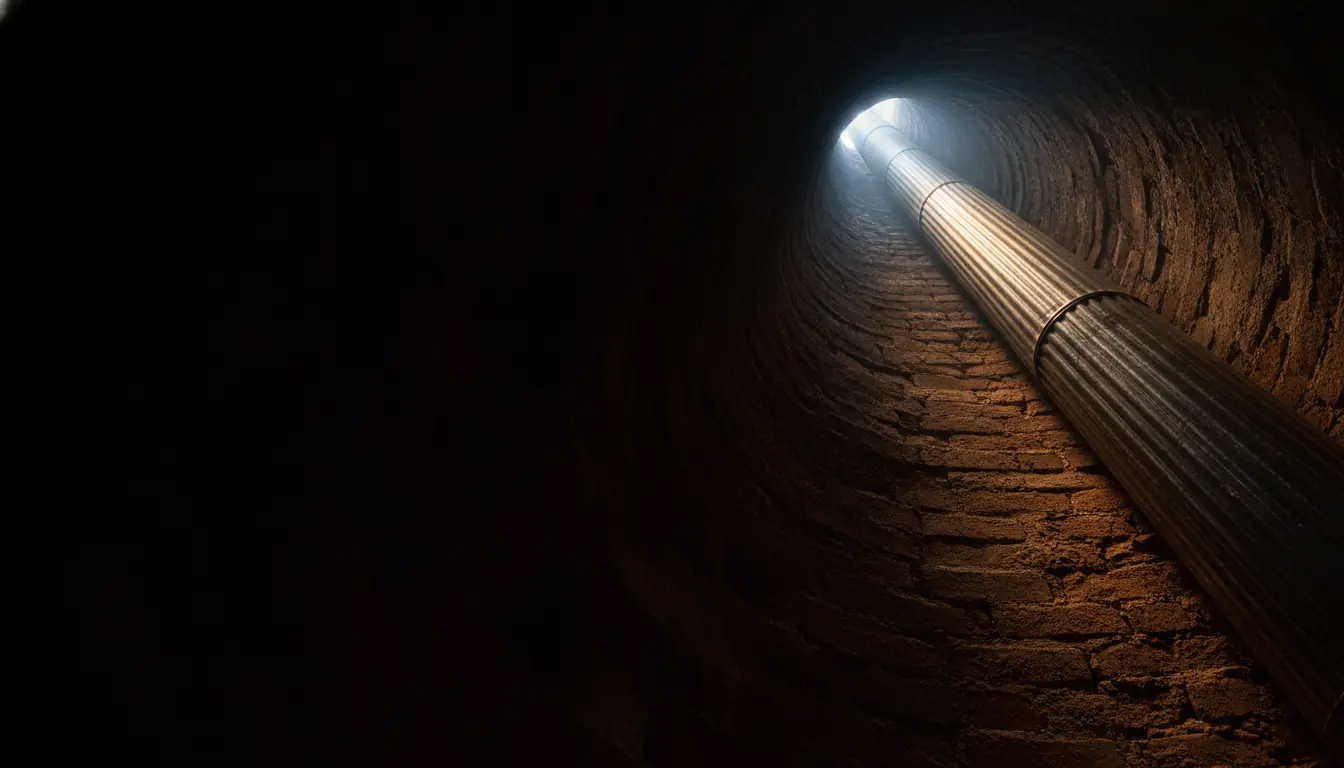
The liner is the part of the chimney that does the actual work. Everything else is structure; the liner is what contains the heat and the combustion gases and delivers them out of the house without letting either reach the brickwork or the framing around it. Most Cleveland chimneys were built with clay tile liners, and clay has a hard life here. Thermal shock cracks it, settlement shifts it, and moisture eats the mortar joints between tiles until the sections stop behaving as one continuous passage. A cracked or gapped liner is invisible without a camera, and it is the failure that turns into house fires and carbon monoxide.
What we find on Cleveland chimneys that leads to chimney relining
Utility flues orphaned by furnace upgrades
When an old gravity or mid-efficiency furnace is replaced with a high-efficiency unit venting through PVC out a side wall, the water heater is usually left on the masonry chimney by itself. A small appliance on a flue sized for two runs cool, condenses acidic moisture on its own walls, and dissolves the tile and mortar from the inside over a decade while everything looks fine from the basement. The failure mode there is carbon monoxide, not a fire you would notice.
Unlined and clay-tile flues in the pre-1940 stock
Flue liners were not universal building practice here until well into the twentieth century, and a substantial share of Cleveland chimneys from before the war have bare brick flues with washed-out mortar joints between the courses. Where clay tile was used, eight decades of thermal cycling and moisture have generally cracked it and eaten the joints. Neither condition is visible from the firebox or the yard, and both mean combustion gases are in contact with masonry that was never meant to contain them.
Doubles, and nobody sure which flue does what
On a Cleveland Double it is common to find one stack with three or four flues: an upstairs fireplace, a downstairs fireplace, the furnace, and sometimes an abandoned one from a coal or a gravity system nobody remembers. They age independently, so a scan frequently finds one sound, one cracked, and one that was disconnected mid-conversion and left open at the top. Sorting out which flue serves what is genuinely part of the first visit, and it is not something a homeowner can be expected to know.
What the liner is actually for
A flue liner does three jobs at once, and losing any one of them matters. It keeps heat away from the wood framing that surrounds every masonry chimney — the code clearances that framing was built to assume an intact liner. It protects the masonry from the corrosive by-products of combustion, which will otherwise attack mortar and brick from the inside. And it provides a correctly sized, smooth passage so the appliance drafts the way it was designed to.
This is why 'the chimney is structurally fine' and 'the chimney is safe to use' are two different statements. A perfectly sound-looking stack with a broken flue is not a working chimney. It is a masonry column with a fire hazard running through the middle of it.
What a relining job involves
Preparing the flue
The existing flue is swept and cleared. Where broken tile is obstructing the passage or protruding into it, it has to be removed or broken out so the liner can run straight. On some older chimneys with tight offsets, this is the part that takes the time, and it is the part a quote can get wrong if nobody looked first.
The liner and its insulation
A continuous stainless liner in the correct alloy for the fuel — 316Ti-grade stainless is the normal choice for wood and oil, and a listed alloy is used for high-efficiency condensing appliances, because condensate chemistry differs. It goes in insulated, either with a factory or field-applied wrap or a pour-around insulation mix. Insulation is not optional dressing: it is often required by the liner's own listing, it keeps the flue warm enough to draft properly, and it dramatically reduces condensation and creosote formation. An uninsulated liner rattling around inside an oversized masonry chase is a cheaper job and a worse chimney.
Termination at the top
A top plate seals the liner to the top of the chimney, a storm collar sheds water off the joint, and a cap sized to the new liner finishes it. Done properly, the top of the chimney is now sealed against rain for the first time in decades, which is a side benefit that quietly protects the masonry below.
The connection at the bottom
The liner is connected to the fireplace, stove or appliance with the correct listed components. Improvised adapters and unsupported connector pipe are common findings on older installations and they are exactly where the system leaks. On a fireplace, this usually means a connection at the smoke chamber; on an insert or stove, a direct connect to the appliance outlet.
Documentation
Photos of the completed run top to bottom, and the liner's product documentation handed over, so the manufacturer's warranty on the liner is something you actually hold rather than something you were told about.
This page covers chimney relining as it plays out in Cleveland. The full chimney liner & relining page walks the whole job — every stage, what changes the scope, and what we do about each of them. For everything else we handle in this suburb, see chimney services in Cleveland.
What a relining job includes
- Camera inspection first — you see why (or whether) the flue needs relining
- Continuous stainless steel liner in the correct alloy, sized to the fireplace or appliance it serves
- Insulation wrap or pour so the flue drafts correctly and meets the liner's listing
- Existing flue cleared, and broken tile removed where it obstructs the run
- New top plate, storm collar and cap terminating the system
- Correct listed connection at the appliance — no improvised adapters
- Photos of the completed run top to bottom, and the liner's product documentation
Our work
Chimney Liner & Relining, photographed on the job
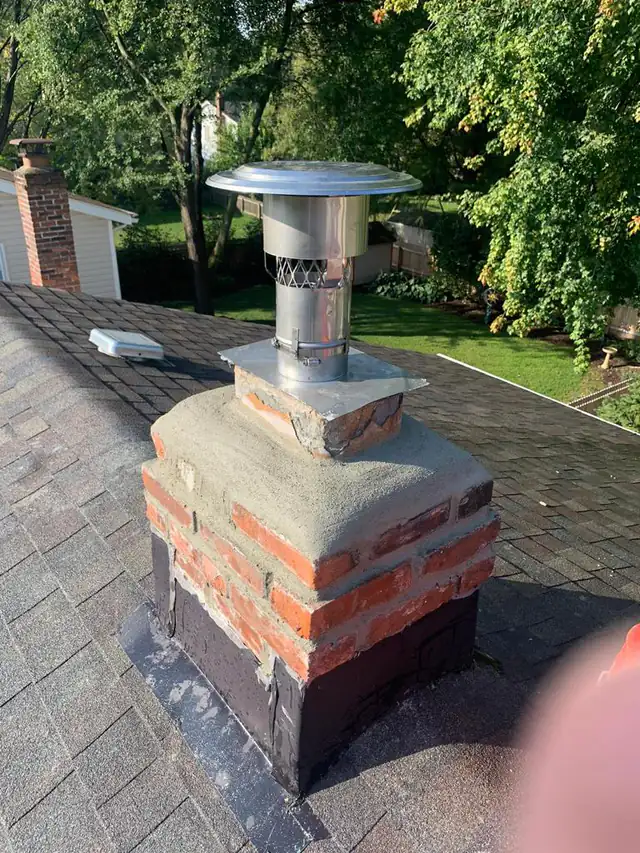
Stainless liner brought through a new crown, capped 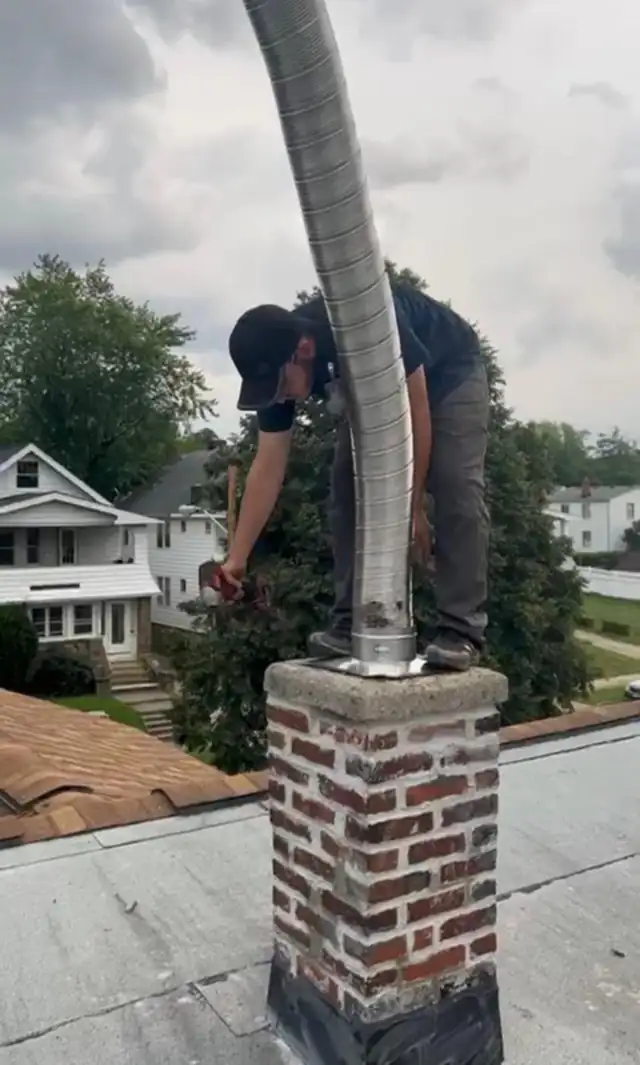
Feeding a new stainless liner down the flue
Meet the team
The people behind the work
Manny, Zack and Myke — meet the people behind Chimney Expert Solutions.
Our team and story →
Manny
Owner

Zack
Manager

Myke
Technician
FAQ
Chimney Relining in Cleveland: questions we hear
My chimney only vents the furnace. Does it still need service?
Yes, and it is the most under-inspected chimney in the average Cleveland house. Old oversized flues condense acidic exhaust that eats clay tile and mortar from inside, and a restricted or collapsing utility flue is a carbon monoxide problem rather than a comfort one. If the furnace or water heater was replaced in the last decade and nobody looked at the chimney afterwards, that is worth a camera scan on its own.
Do you work in all Cleveland neighborhoods?
East side, west side and everywhere between. A lot of the work runs through the pre-war neighborhoods where the housing and its chimneys are oldest — Ohio City, Tremont, Old Brooklyn, West Park, Slavic Village, Collinwood and the streets around them — because that is where the unlined flues and the century-old masonry are.
We're buying a house in Cleveland. Is a chimney inspection worth it separately?
On this housing stock, it is one of the highest-value things you can spend inspection-contingency money on. A general home inspection explicitly excludes the flue interior, and on a pre-1940 Cleveland house the flue is exactly where the expensive surprises live. A camera scan turns an invisible problem into either a negotiating position or genuine peace of mind.
Why stainless instead of replacing the broken clay tiles?
Access. Clay tiles are stacked inside a sealed masonry shaft, so reaching a cracked one partway up means opening the chimney to get to it — which usually costs more than relining and leaves you with a repaired eighty-year-old flue. A stainless liner installs from the top, restores a continuous sealed passage in a day or two on most jobs, and the liner itself typically carries a manufacturer lifetime warranty.
Can one liner serve two appliances?
Sometimes, and it is governed by rules rather than preference — appliance types, fuels, input ratings and connection geometry all determine whether common venting is permitted. Plenty of existing shared arrangements in older Cleveland houses would not pass today. It is something we work out on site, and 'the old chimney did it this way' is not an answer.
Free estimate
Chimney Relining in Cleveland?
Tell us what you’re seeing and we’ll call or text back to schedule a look — with photos of what we find and an honest read on what’s urgent and what can wait. That evidence-first method is the way we work on every job.
Call and tell us what the chimney's doing — if we're up on a roof, we'll call you back. Other ways to reach us are on the contact page, and Cleveland is one of the communities we cover across Greater Cleveland.
Call216-647-1882