
Lake County, Ohio
Chimney Services in Mentor, OH
Mostly 1960s–90s subdivision housing under serious snow-belt loading — ice damming at chimney flashing, missing crickets behind wide stacks, and caps and chase covers taking sliding snow every winter.
Mentor is the largest city in Lake County and most of it is subdivision housing built from the 1960s through the 1990s, spreading off Mentor Avenue and Route 306 north toward the Headlands and south past the Great Lakes Mall. The houses are generally sound, the chimneys are generally younger than the county average, and the thing that dominates the work is not the building era. It is the snow.
Lake County is where the eastern snow belt starts in earnest, and the difference from the Cleveland side of the county line is not a rounding error. More snow means deeper accumulation sitting on the roof for longer, and the chimney is the one thing standing in its way. Everything that happens next — meltwater refreezing at the eaves, snow sliding down a slick roof in a January thaw, drifts collecting on the uphill side of a stack — puts loads and water paths on a chimney that a drier climate simply does not generate.
So the recurring Mentor call is not a failing flue. It is water showing up inside the house in February on a chimney that looked fine in October, or a cap and cover that have physically moved. Both are seasonal, both are predictable, and both are far cheaper to prevent in the fall than to chase in the spring.
What goes wrong with chimneys in Mentor
Ice dams pushing water back up under the counterflashing
Roof flashing is designed to shed water running downhill. It is not designed to hold back standing water, and that is exactly what an ice dam creates: melt from the warm upper roof runs down, refreezes at the cold eave, and backs a pond of water up the slope. When that pond reaches the chimney it gets under the step flashing and behind the counterflashing, and it appears indoors as a stain at the ceiling near the stack. The chimney did not fail; it was asked to be a dam. The fixes are a combination of getting the flashing details right at the chimney and getting the heat and ventilation right in the attic above it.
No cricket behind a wide chimney
A chimney wider than about thirty inches sitting on a sloped roof needs a cricket — a small peaked structure built behind it that splits water and snow and sends it around each side. Plenty of houses here were built without one, or had it flattened during a re-roof. Without a cricket, snow packs into the uphill corner and stays there for months, meltwater sits against the masonry, and the back of the chimney rots its flashing and saturates its brick while the front three faces look perfect. If you have ever noticed the back of your stack is the ugly side, this is usually why.
Snow sliding into caps, covers and storm collars
A slab of snow releasing off a steep roof carries real force, and the components at the top of a chimney are thin metal. We see rain caps torn off, chase covers dented into a shape that ponds water, storm collars pushed down or off the pipe entirely, and spark screens flattened. Most owners never look, because these parts are only visible from the roof, and a missing cap does not announce itself until a spring rain is running down the flue. A fall check of the top of the chimney is a small thing that catches all of it before the snow arrives.
What we do here
Every chimney service we cover in Mentor
One crew for the whole system, so the diagnosis and the repair come from the same people. The pages marked for Mentor go into what this suburb’s housing stock does to that particular job; the rest cover the work across our whole service area.
Chimney Sweep & Cleaning
Full mechanical sweep of the flue, smoke chamber and firebox — creosote out, dust contained, and a look at the whole system while we're in it.
Chimney Sweep in MentorChimney Inspection
Camera inspection of the full flue, plus the firebox, damper, crown, cap and flashing — documented in photos, explained in plain language.
Chimney Inspection in MentorChimney Repair & Rebuilds
Masonry repair from spot fixes to full stack rebuilds — spalled brick, failed joints, and chimneys the freeze-thaw cycle has taken apart.
Chimney Repair in MentorChimney Liner & Relining
Stainless steel relining for flues with cracked tiles, gaps, or no liner at all — sized to your appliance, insulated, done once.
Chimney Relining in MentorChimney Leak Repair & Waterproofing
Finding where the water actually gets in — crown, cap, flashing, masonry or condensation — and fixing that, not caulking symptoms.
Chimney Leak Repair in MentorChimney Caps & Crown Repair
The two parts that protect everything below them — stainless caps fitted right, and crowns rebuilt to actually shed water.
Chimney Caps & Crown RepairTuckpointing & Repointing
Grinding out failed mortar joints and repacking them properly — matched in strength, color and profile, not smeared over the brick.
Tuckpointing & RepointingFireplace & Damper Repair
Fireboxes rebuilt, refractory panels replaced, dampers that open, close and seal — the room side of the system, done right.
Fireplace & Damper Repair
Not sure which of these you need? That is what an inspection is for — or see how the whole chimney fits together and the way we work.
Working with us
What every Mentor job comes with
Evidence, not assertions
Photographs of every finding before you decide anything — including the parts of your chimney you have never seen.
Free estimates on repair work
Honest triage on what we find: urgent, plan-for, or fine.
One crew, whole system
One crew for the whole chimney — sweep, inspection, masonry, liner, crown, cap and flashing, with one person responsible for all of it.
Our work
The work Mentor chimneys usually need
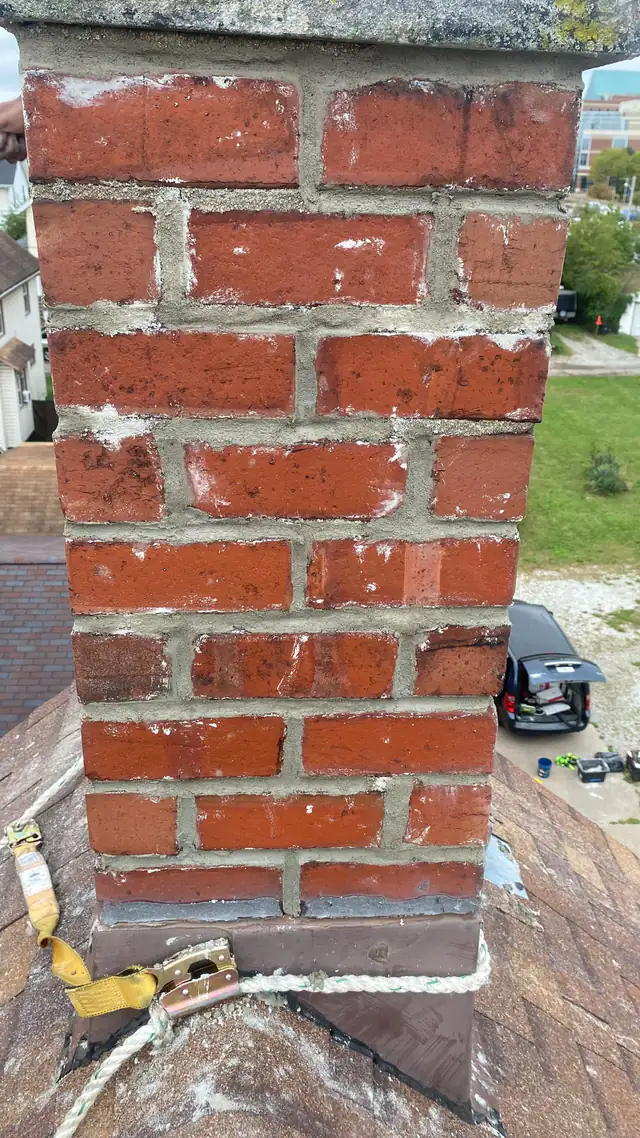
Roped in on a steep roof — repointed, flashing sealed 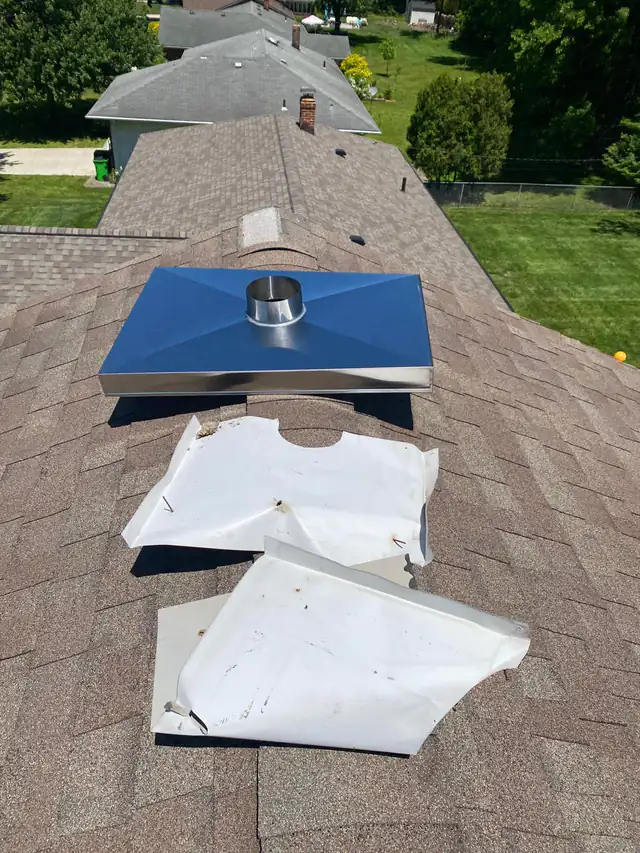
Replacement chase cover beside the removed cover sections on the roof 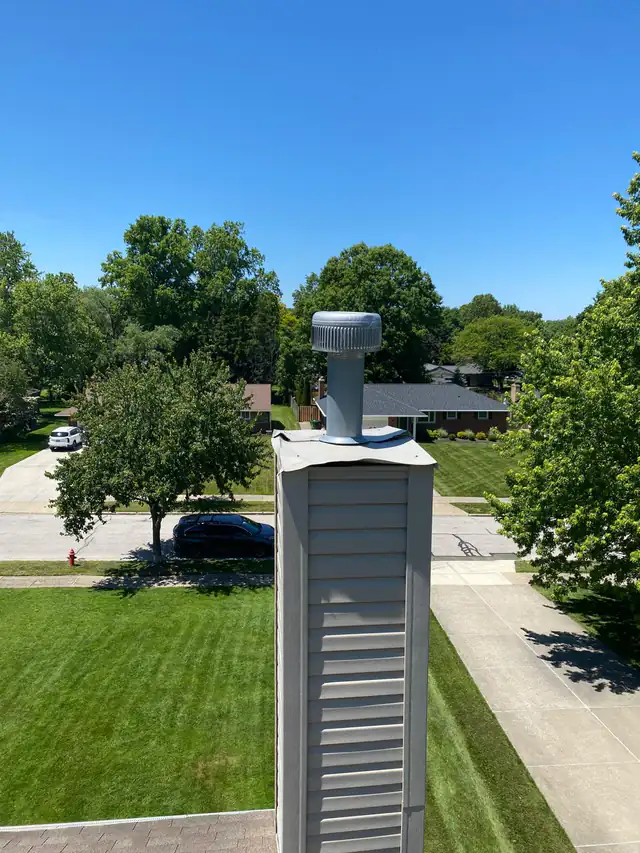
Before — the old chase cover, with bent and raised edges around the vent
Meet the team
The people behind the work
Manny, Zack and Myke — meet the people behind Chimney Expert Solutions.
Our team and story →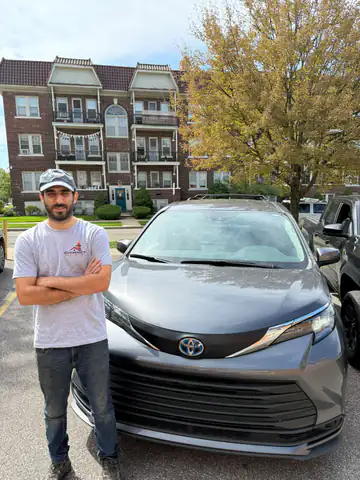
Manny
Owner
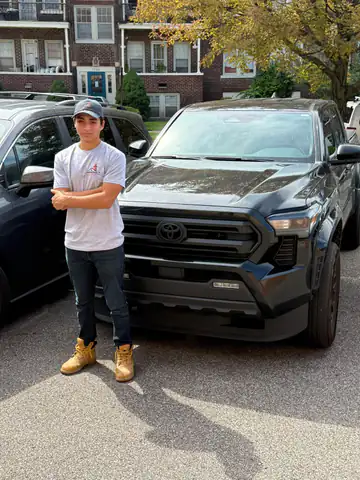
Zack
Manager

Myke
Technician
Service area
Mentor is inside our service area
36 communities across Northeast Ohio · based in Cleveland Heights
- Cleveland
- Lakewood
- Cleveland Heights
- Shaker Heights
- Parma
- Rocky River
- Westlake
- Strongsville
- Euclid
- South Euclid
- University Heights
- Beachwood
- Bedford
- Garfield Heights
- North Olmsted
- Mentor
- Willoughby
- Painesville
- Chardon
- Elyria
- Lorain
- Avon Lake
- Medina
- Brunswick
- Akron
- Cuyahoga Falls
- Hudson
- Kent
- Canton
- Wooster
- Warren
- Youngstown
- Boardman
- Sandusky
- Mansfield
- Ashland
FAQ
Mentor chimney questions
Water comes in near the chimney only in winter. Is the chimney leaking?
Usually not in the way people mean. A leak that appears in thaw conditions and never in summer downpours is the signature of an ice dam backing water up under the flashing rather than a defect in the crown or the masonry. We look at the flashing details and at what the attic is doing above them, because insulation and ventilation are usually half the answer.
What is a cricket and do we need one?
It is a small peaked saddle built on the roof behind the chimney that divides water and snow and routes it around the stack instead of letting it pond against the back of it. Chimneys wider than roughly thirty inches on a sloped roof are the ones that need it. If snow sits behind your chimney all winter or the back face looks noticeably worse than the others, that is the reason to have it looked at.
Should we get the chimney looked at before winter or after?
Before, if the choice is yours. Fall is when a missing cap, a dented cover, an open joint or a cracked crown can still be corrected before it takes on a season of snow and freeze cycles, and it is also when mortar work is still possible — masonry needs sustained temperatures above roughly 40°F to cure properly, so the season here effectively closes in November.
Does more snow actually mean more chimney damage?
It means more of the specific kinds. Snow sits in contact with masonry for weeks rather than running off in an afternoon, so it melts and refreezes against the same joints repeatedly, and it loads the roof in ways that move flashing and shear off caps. The flue's interior condition is not much affected by snowfall; everything from the roofline up very much is.
Free estimate
Chimney trouble in Mentor?
Tell us what you're seeing and we'll call or text back to schedule a look — with photos of what we find and an honest read on what's urgent and what can wait.
Call and tell us what the chimney's doing — if we're up on a roof, we'll call you back. You can also reach us on the contact page, or look through the other communities we serve if you are calling about a second property.
Call216-647-1882