
Cuyahoga County, Ohio
Chimney Services in South Euclid, OH
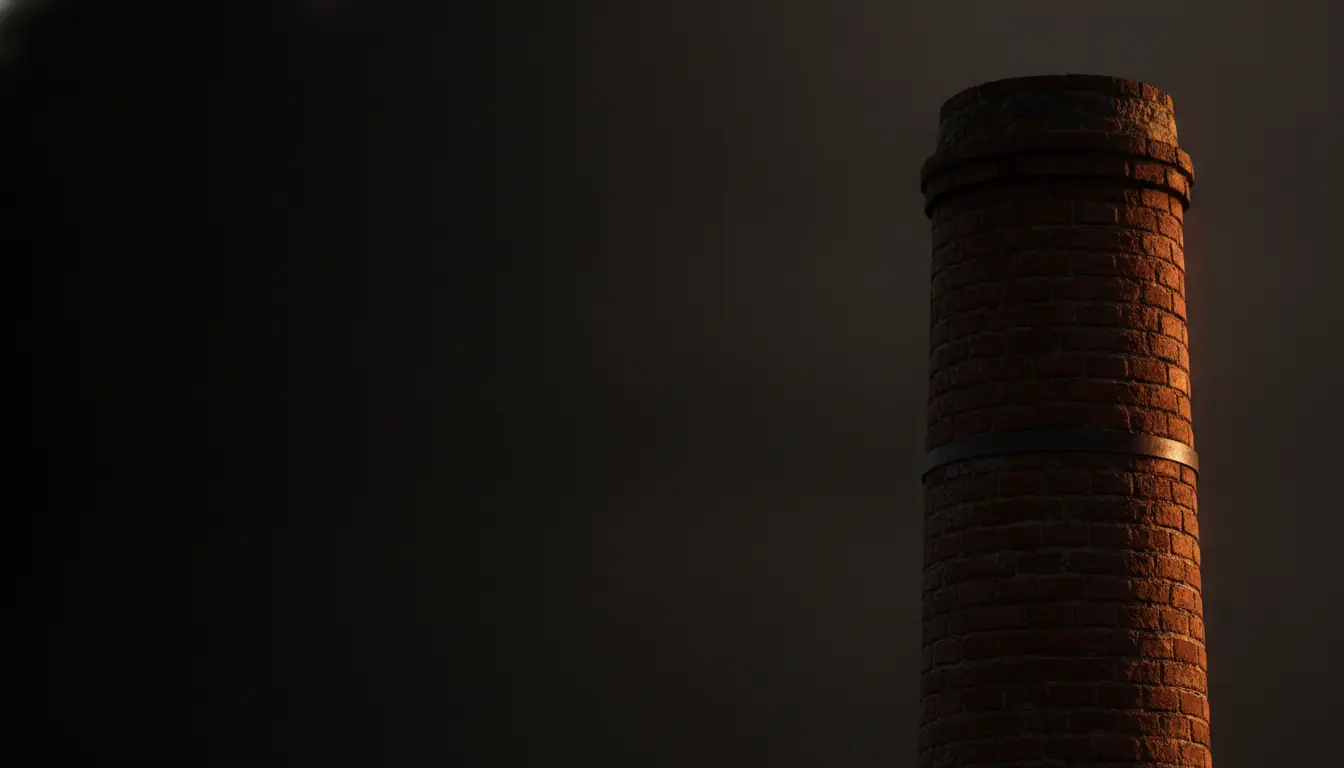
1920s bungalows and colonials near Cedar Center alongside late-40s and 50s Capes and ranches toward Green Road — two building recipes, two failure profiles, often on the same block.
South Euclid was built in two clearly separated pushes, and that is the single most useful thing to know about its chimneys. The streets near Cedar Center and the Cleveland Heights line went up in the 1920s boom: brick and stucco bungalows, side-gable colonials, tile-roofed cottages. Then the war stopped everything, and the land north and east toward Green Road and Bexley Park filled in through the late 1940s and 1950s with Cape Cods and ranches built to a completely different recipe.
So a single South Euclid block frequently has a 1926 bungalow four doors down from a 1953 Cape, and they have almost nothing in common above the roofline. The bungalow has a tall interior stack, probably an unlined or early clay-tile flue, and mortar mixed with a lot of lime. The Cape has a short, squat stack, a thin crown poured flush, and a flue sized around a coal-then-gas heating plant. Different construction, different failures, different repairs.
The practical result is that borrowed advice does not travel well here. What your neighbor paid, what your neighbor's contractor recommended, and what your neighbor's chimney needed are frequently irrelevant to your house even though you can see their roof from your kitchen window. We date the stack first, because the era decides most of what follows.
What goes wrong with chimneys in South Euclid
Two eras on one street, two completely different stacks
A 1920s South Euclid chimney is tall, usually interior, built with soft brick in lime-rich mortar, and its problems are flue-side: unlined or early tile, joints washed out, heat damage from a century of use. A 1950s chimney on the same street is short, exterior or half-exterior, harder brick, and its problems are water-side: a thin flush crown, a weathered face, and a flue that is now the wrong size for what vents into it. Assuming one when you have the other is how people buy a repair that does not address the actual defect.
Insulation packed against the stack in the knee-wall attic
The bungalows and Capes here have low, awkward attics with knee walls, and almost all of them have been re-insulated at some point. Blown-in cellulose and batt insulation routinely end up shoved hard against the masonry where the chimney passes through, and on the factory-built and metal-flue systems the same thing happens around the pipe. Masonry and listed metal chimneys are both designed with a required air gap and a firestop at the floor or ceiling penetration, and stuffing that gap closed removes the design. It is one of the more common things we photograph in an attic here, and it is cheap to correct once someone has actually looked.
What the clean-out door at the base is telling you
Most South Euclid stacks have a small iron door at the bottom, usually in the basement, and most owners have never opened it. It is the most informative thirty seconds of an inspection. Sand and grit mean mortar joints are eroding somewhere above. Orange or buff shards mean flue tile is breaking up and falling. Standing water or a white salt bloom on the surrounding brick means the crown or cap is letting rain into the stack. Nothing at all is a good sign. We open it, photograph it, and show you what came out.
What we do here
Every chimney service we cover in South Euclid
One crew for the whole system, so the diagnosis and the repair come from the same people. The pages marked for South Euclid go into what this suburb’s housing stock does to that particular job; the rest cover the work across our whole service area.
Chimney Sweep & Cleaning
Full mechanical sweep of the flue, smoke chamber and firebox — creosote out, dust contained, and a look at the whole system while we're in it.
Chimney Sweep in South EuclidChimney Inspection
Camera inspection of the full flue, plus the firebox, damper, crown, cap and flashing — documented in photos, explained in plain language.
Chimney Inspection in South EuclidChimney Repair & Rebuilds
Masonry repair from spot fixes to full stack rebuilds — spalled brick, failed joints, and chimneys the freeze-thaw cycle has taken apart.
Chimney Repair in South EuclidChimney Liner & Relining
Stainless steel relining for flues with cracked tiles, gaps, or no liner at all — sized to your appliance, insulated, done once.
Chimney Relining in South EuclidChimney Leak Repair & Waterproofing
Finding where the water actually gets in — crown, cap, flashing, masonry or condensation — and fixing that, not caulking symptoms.
Chimney Leak Repair in South EuclidChimney Caps & Crown Repair
The two parts that protect everything below them — stainless caps fitted right, and crowns rebuilt to actually shed water.
Chimney Caps & Crown RepairTuckpointing & Repointing
Grinding out failed mortar joints and repacking them properly — matched in strength, color and profile, not smeared over the brick.
Tuckpointing & RepointingFireplace & Damper Repair
Fireboxes rebuilt, refractory panels replaced, dampers that open, close and seal — the room side of the system, done right.
Fireplace & Damper Repair
Not sure which of these you need? That is what an inspection is for — or see how the whole chimney fits together and the way we work.
Working with us
What every South Euclid job comes with
Evidence, not assertions
Photographs of every finding before you decide anything — including the parts of your chimney you have never seen.
Free estimates on repair work
Honest triage on what we find: urgent, plan-for, or fine.
One crew, whole system
One crew for the whole chimney — sweep, inspection, masonry, liner, crown, cap and flashing, with one person responsible for all of it.
Our work
The work South Euclid chimneys usually need
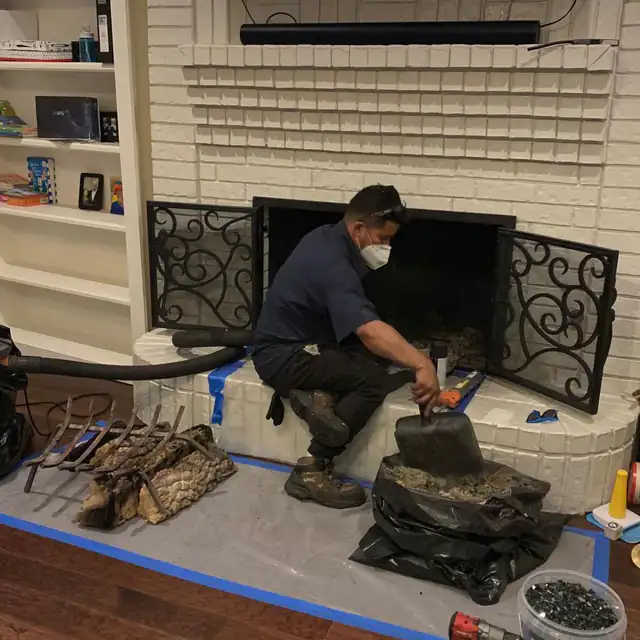
Drop cloths down and a vacuum on the hearth before anything is opened 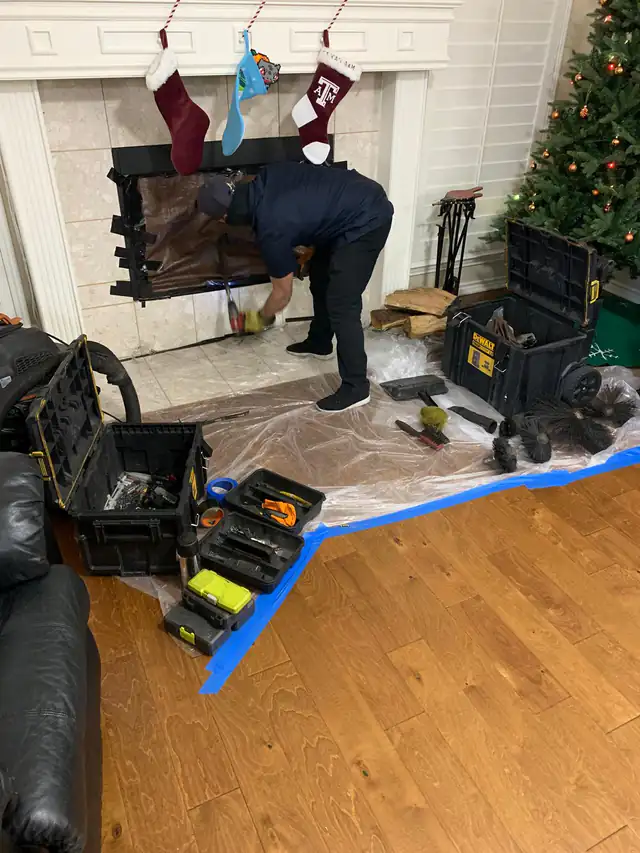
Working at the protected fireplace opening, with brushes and tools on covered floors 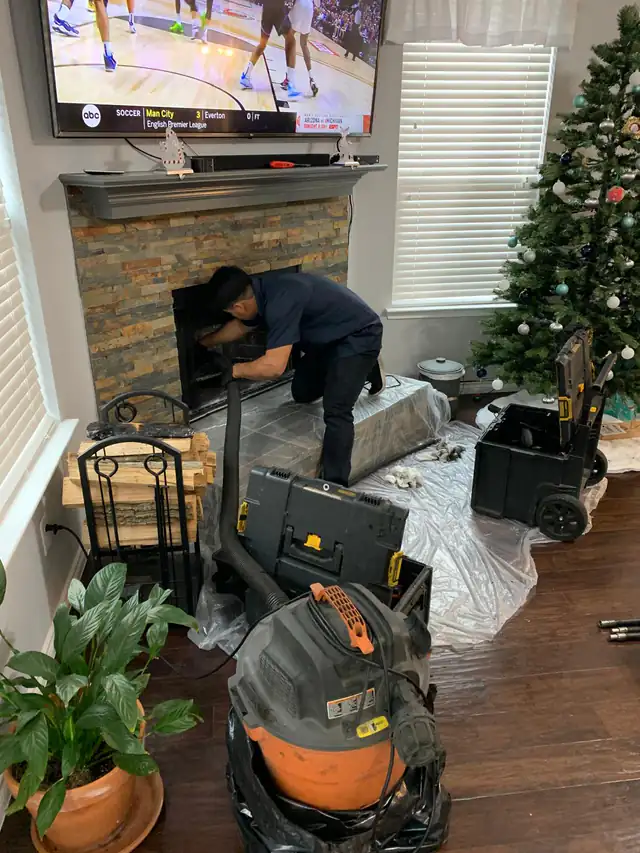
At the stone-front fireplace, with the hearth covered and a vacuum alongside
Meet the team
The people behind the work
Manny, Zack and Myke — meet the people behind Chimney Expert Solutions.
Our team and story →
Manny
Owner

Zack
Manager

Myke
Technician
Service area
South Euclid is inside our service area
36 communities across Northeast Ohio · based in Cleveland Heights
- Cleveland
- Lakewood
- Cleveland Heights
- Shaker Heights
- Parma
- Rocky River
- Westlake
- Strongsville
- Euclid
- South Euclid
- University Heights
- Beachwood
- Bedford
- Garfield Heights
- North Olmsted
- Mentor
- Willoughby
- Painesville
- Chardon
- Elyria
- Lorain
- Avon Lake
- Medina
- Brunswick
- Akron
- Cuyahoga Falls
- Hudson
- Kent
- Canton
- Wooster
- Warren
- Youngstown
- Boardman
- Sandusky
- Mansfield
- Ashland
FAQ
South Euclid chimney questions
How do I know which era my chimney is from?
The roofline usually tells you before we get inside. A tall stack rising out of the middle of a steep roof is almost always the older build; a short stack near a gable end on a shallower roof is postwar. Inside, the pre-war fireboxes are narrower and deeper with a hand-laid look to the firebrick. If it is genuinely ambiguous, the flue tile itself dates it — the sizes and joint styles changed.
Our neighbor was told they needed a full rebuild. Should we assume the same?
No, and on these streets that is a specifically bad assumption. Houses four doors apart here can be twenty-five years apart in construction, with different brick, different mortar and different flues. Even two identical houses weather differently depending on which way the stack faces and whether a tree has been shading it for forty years. Yours gets its own scan and its own photographs.
Is insulation touching the chimney really a problem?
It removes a clearance the chimney was built to have. Masonry chimneys are detailed with an air gap at floor and ceiling penetrations, and listed metal chimneys have a manufacturer-specified clearance that is part of what the system was tested to. Packing that gap with insulation or debris defeats it. Pulling it back and installing a proper firestop is a small job, and the attic is worth a look on any house that has been re-insulated.
Do you inspect the basement as well as the roof?
Yes, and on this housing it is where half the useful evidence is. The clean-out contents, the condition of the vent connector into the chimney, staining or efflorescence on the chimney breast and the state of the base itself all say something about what is happening sixty feet up. A rooftop-only look misses it.
Free estimate
Chimney trouble in South Euclid?
Tell us what you're seeing and we'll call or text back to schedule a look — with photos of what we find and an honest read on what's urgent and what can wait.
Call and tell us what the chimney's doing — if we're up on a roof, we'll call you back. You can also reach us on the contact page, or look through the other communities we serve if you are calling about a second property.
Call216-647-1882