
Cuyahoga County, Ohio
Chimney Services in Cleveland, OH
1890s–1950s stock across most neighborhoods: soft pre-war brick, unlined or clay-tile flues, doubles with multi-flue stacks, and utility chimneys serving furnaces and water heaters.
Cleveland is a chimney town, and the reason is in the building dates. Ohio City, Tremont, Detroit-Shoreway, Old Brooklyn, West Park, Slavic Village and Collinwood were largely built out between the 1890s and the 1950s, in an era when every house got at least one masonry chimney and a great many got two or three. Those stacks are now anywhere from seventy to a hundred and thirty years old, and they have spent every one of those winters in one of the harder masonry climates in the country.
The city's signature housing type shapes the work more than anything else. The Cleveland Double — two stacked units in one narrow frame house, still standing by the thousand on the near west and east sides — routinely has a single masonry stack carrying more flues than anyone in the building can account for. Add the sheer number of pre-1940 houses whose flues were built as bare brick with no tile liner at all, and camera inspection stops being an upsell and starts being the only way to know what you own.
Most Cleveland jobs start the same way: honest triage. A century-old stack usually has a mix of conditions, and the useful work is sorting what has to be dealt with before the next fire from what can be scheduled next spring from what is simply old and fine. That sorting happens in photographs, so you can see the reasoning rather than take a verdict on trust.
What goes wrong with chimneys in Cleveland
Unlined and clay-tile flues in the pre-1940 stock
Flue liners were not universal building practice here until well into the twentieth century, and a substantial share of Cleveland chimneys from before the war have bare brick flues with washed-out mortar joints between the courses. Where clay tile was used, eight decades of thermal cycling and moisture have generally cracked it and eaten the joints. Neither condition is visible from the firebox or the yard, and both mean combustion gases are in contact with masonry that was never meant to contain them.
Doubles, and nobody sure which flue does what
On a Cleveland Double it is common to find one stack with three or four flues: an upstairs fireplace, a downstairs fireplace, the furnace, and sometimes an abandoned one from a coal or a gravity system nobody remembers. They age independently, so a scan frequently finds one sound, one cracked, and one that was disconnected mid-conversion and left open at the top. Sorting out which flue serves what is genuinely part of the first visit, and it is not something a homeowner can be expected to know.
Utility flues orphaned by furnace upgrades
When an old gravity or mid-efficiency furnace is replaced with a high-efficiency unit venting through PVC out a side wall, the water heater is usually left on the masonry chimney by itself. A small appliance on a flue sized for two runs cool, condenses acidic moisture on its own walls, and dissolves the tile and mortar from the inside over a decade while everything looks fine from the basement. The failure mode there is carbon monoxide, not a fire you would notice.
What we do here
Every chimney service we cover in Cleveland
One crew for the whole system, so the diagnosis and the repair come from the same people. The pages marked for Cleveland go into what this suburb’s housing stock does to that particular job; the rest cover the work across our whole service area.
Chimney Sweep & Cleaning
Full mechanical sweep of the flue, smoke chamber and firebox — creosote out, dust contained, and a look at the whole system while we're in it.
Chimney Sweep in ClevelandChimney Inspection
Camera inspection of the full flue, plus the firebox, damper, crown, cap and flashing — documented in photos, explained in plain language.
Chimney Inspection in ClevelandChimney Repair & Rebuilds
Masonry repair from spot fixes to full stack rebuilds — spalled brick, failed joints, and chimneys the freeze-thaw cycle has taken apart.
Chimney Repair in ClevelandChimney Liner & Relining
Stainless steel relining for flues with cracked tiles, gaps, or no liner at all — sized to your appliance, insulated, done once.
Chimney Relining in ClevelandChimney Leak Repair & Waterproofing
Finding where the water actually gets in — crown, cap, flashing, masonry or condensation — and fixing that, not caulking symptoms.
Chimney Leak Repair in ClevelandChimney Caps & Crown Repair
The two parts that protect everything below them — stainless caps fitted right, and crowns rebuilt to actually shed water.
Chimney Caps & Crown RepairTuckpointing & Repointing
Grinding out failed mortar joints and repacking them properly — matched in strength, color and profile, not smeared over the brick.
Tuckpointing & RepointingFireplace & Damper Repair
Fireboxes rebuilt, refractory panels replaced, dampers that open, close and seal — the room side of the system, done right.
Fireplace & Damper Repair
Not sure which of these you need? That is what an inspection is for — or see how the whole chimney fits together and the way we work.
Working with us
What every Cleveland job comes with
Evidence, not assertions
Photographs of every finding before you decide anything — including the parts of your chimney you have never seen.
Free estimates on repair work
Honest triage on what we find: urgent, plan-for, or fine.
One crew, whole system
One crew for the whole chimney — sweep, inspection, masonry, liner, crown, cap and flashing, with one person responsible for all of it.
Our work
The work Cleveland chimneys usually need
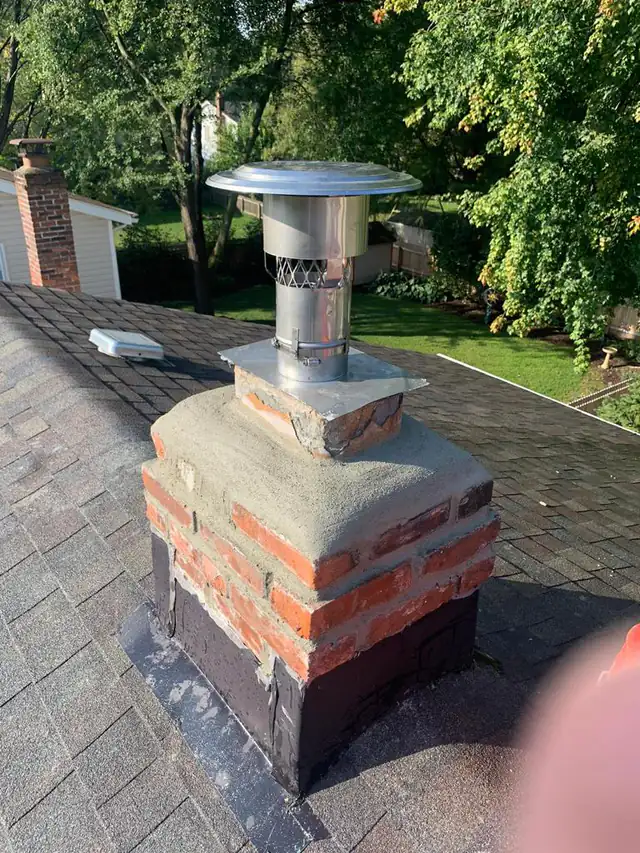
Stainless liner brought through a new crown, capped 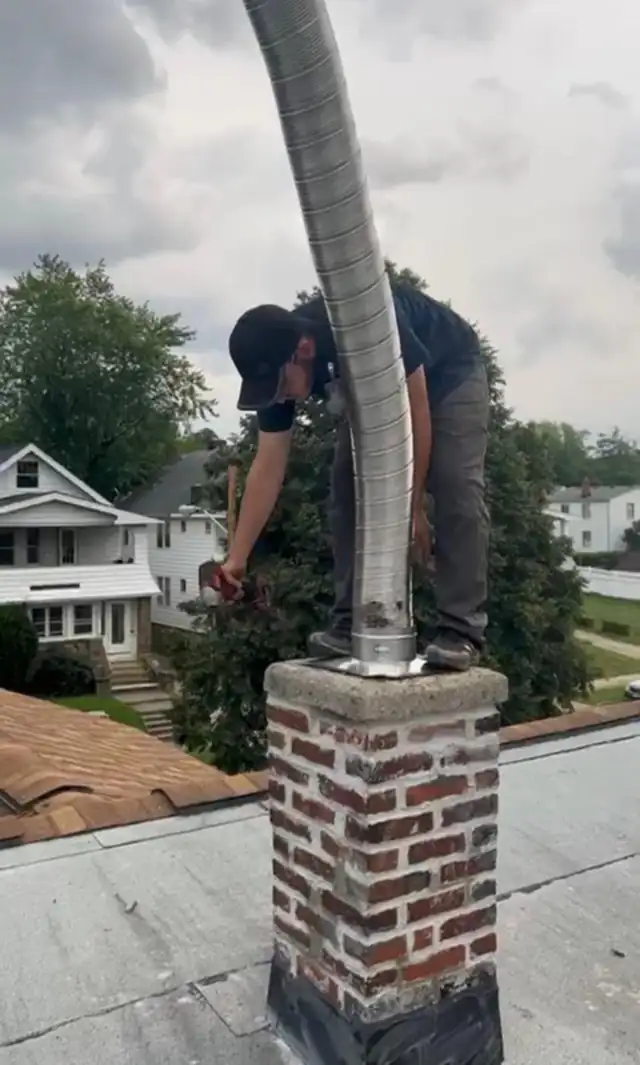
Feeding a new stainless liner down the flue 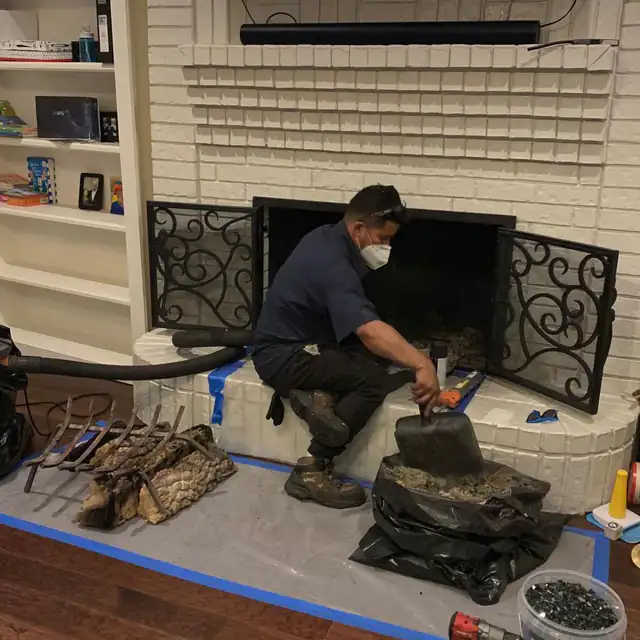
Drop cloths down and a vacuum on the hearth before anything is opened
Meet the team
The people behind the work
Manny, Zack and Myke — meet the people behind Chimney Expert Solutions.
Our team and story →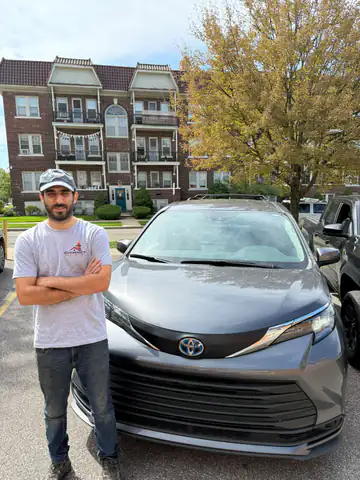
Manny
Owner

Zack
Manager

Myke
Technician
Service area
Cleveland is inside our service area
36 communities across Northeast Ohio · based in Cleveland Heights
- Cleveland
- Lakewood
- Cleveland Heights
- Shaker Heights
- Parma
- Rocky River
- Westlake
- Strongsville
- Euclid
- South Euclid
- University Heights
- Beachwood
- Bedford
- Garfield Heights
- North Olmsted
- Mentor
- Willoughby
- Painesville
- Chardon
- Elyria
- Lorain
- Avon Lake
- Medina
- Brunswick
- Akron
- Cuyahoga Falls
- Hudson
- Kent
- Canton
- Wooster
- Warren
- Youngstown
- Boardman
- Sandusky
- Mansfield
- Ashland
FAQ
Cleveland chimney questions
Do you work in all Cleveland neighborhoods?
East side, west side and everywhere between. A lot of the work runs through the pre-war neighborhoods where the housing and its chimneys are oldest — Ohio City, Tremont, Old Brooklyn, West Park, Slavic Village, Collinwood and the streets around them — because that is where the unlined flues and the century-old masonry are.
My chimney only vents the furnace. Does it still need service?
Yes, and it is the most under-inspected chimney in the average Cleveland house. Old oversized flues condense acidic exhaust that eats clay tile and mortar from inside, and a restricted or collapsing utility flue is a carbon monoxide problem rather than a comfort one. If the furnace or water heater was replaced in the last decade and nobody looked at the chimney afterwards, that is worth a camera scan on its own.
We're buying a house in Cleveland. Is a chimney inspection worth it separately?
On this housing stock, it is one of the highest-value things you can spend inspection-contingency money on. A general home inspection explicitly excludes the flue interior, and on a pre-1940 Cleveland house the flue is exactly where the expensive surprises live. A camera scan turns an invisible problem into either a negotiating position or genuine peace of mind.
When should I book ahead of winter?
Late spring through early fall. Every chimney calendar in Northeast Ohio fills in the same two weeks of October. Booking off-season also leaves runway for anything the sweep turns up, because mortar work needs sustained temperatures above roughly 40°F and the masonry season here ends around November whether the queue is finished or not.
Free estimate
Chimney trouble in Cleveland?
Tell us what you're seeing and we'll call or text back to schedule a look — with photos of what we find and an honest read on what's urgent and what can wait.
Call and tell us what the chimney's doing — if we're up on a roof, we'll call you back. You can also reach us on the contact page, or look through the other communities we serve if you are calling about a second property.
Call216-647-1882