
Greater Cleveland
Chimney Cap & Crown Repair in Cleveland, OH
The two parts that protect everything below them — stainless caps fitted right, and crowns rebuilt to actually shed water.
The crown is the slab that seals the top of the chimney around the flue; the cap is the hood over the flue opening itself. Together they are the chimney's roof, and when either one fails everything below starts taking water. These are small components with an outsized effect on how long the rest of the masonry lasts, which is why they get their own page instead of being buried in a repair list.
Most crowns on older Cleveland homes were never really crowns. They were struck flat out of leftover mortar the day the chimney was topped out, with no overhang past the brick and no gap around the flue tile to allow for movement. Mortar is not a weatherproof material and that assembly cracks, usually within a couple of decades, after which it channels water into the top of the stack rather than off it. A properly cast crown is a modest job that protects a great deal of masonry underneath it.
Crown and cap are not the same thing
The terms get used interchangeably, including by contractors, and it causes real confusion when comparing quotes. The crown is masonry: a concrete or mortar slab covering the whole top surface of the chimney, sloped to shed water, with the flue tiles projecting through it. The cap is hardware: a metal hood, usually stainless, sitting over the flue opening on legs, with mesh screening on the sides. One keeps water off the brickwork; the other keeps water, animals and embers out of the flue. A chimney needs both, and they fail for different reasons.
What a crown should actually be
A crown built to last is cast concrete rather than struck mortar, reinforced, and thick enough to hold together. It slopes from the flue tile out toward the edges so water runs off. It overhangs the face of the brick by an inch or two and has a drip edge cut into the underside, so the water leaves the crown clear of the masonry instead of running back down the brick face. And it has a bond break or flexible joint where it meets the flue tile, because the tile heats and expands at a different rate than the crown does, and a rigid connection is a guaranteed crack.
That description covers maybe a minority of crowns on the housing stock in this market. Most are flat, flush with the brick, bonded hard to the tile, and cracked. When we photograph a crown for a homeowner it is usually the first time they have seen the top of their own chimney, and it explains a lot of what is happening lower down.
- Sound but surface-crazed: a flexible elastomeric coating bridges the fine cracks and seals it for years. Genuinely good value when the crown underneath is intact.
- Cracked through, spalling, or never more than struck mortar: coating over it is money thrown away. It needs recasting with a drip edge and an expansion joint.
- Missing entirely, or eroded down to the top brick course: recast, and expect to find water damage in the courses below it.
What a cap does, and what a cheap one doesn't
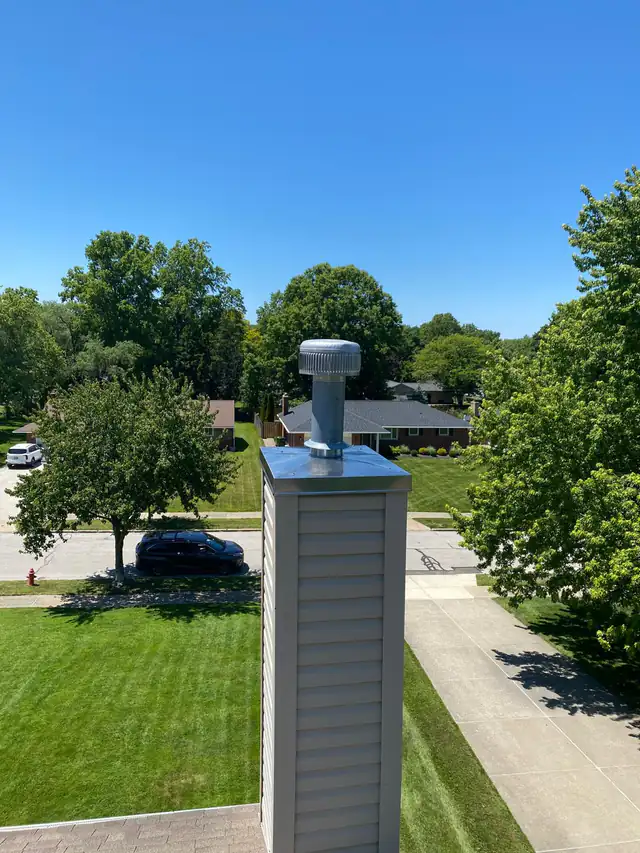
A cap earns its place three times over. It keeps rain out of the flue, which is otherwise an open pipe collecting every storm. It keeps animals out, which in Cleveland is a spring event rather than a hypothetical. And its spark screen keeps embers off the roof, which matters more on a wood-burning chimney with an asphalt roof and overhanging trees than most people think about.
The failure mode of a cheap cap is predictable: galvanized steel rusts through in this climate and then stains the masonry on its way out, and a friction-fit clamp-on cap sized loosely to the tile comes off in the kind of wind this region gets off the lake. A stainless cap sized to the flue and properly anchored is not an expensive component, and it is the highest-value single part on the chimney. On a multi-flue stack, a single custom stainless cap covering the whole crown does the job of several and protects the crown at the same time.
Animals in the chimney
Uncapped flues in Greater Cleveland attract chimney swifts, starlings, squirrels and raccoons, and the recurring one is a raccoon in spring, because a warm masonry shaft is an excellent place to raise kits. This is a genuinely bad situation to handle wrong. Do not light a fire, and do not try to smoke anything out — it kills animals in the flue, which then becomes both a blockage and a smell you will not forget, and some species are protected under Ohio wildlife rules with restrictions on when and how they can be removed.
The right sequence is removal first, by someone equipped for it, then a thorough sweep because nesting material and droppings in a flue are both a blockage and a health issue, then a screened cap so it cannot happen again. The cap is the part that makes it a one-time event.
What drives the cost
- Number of flues, and whether they take individual caps or one custom multi-flue cover.
- Whether the flue tiles are a standard size. Odd or damaged tile terminations need a custom-fabricated cap.
- Coating versus recast on the crown, which is a condition question rather than a preference.
- Roof access and pitch — the same variable that drives every chimney job.
- Whether the top course of brick needs rebuilding before a crown can be cast on it, which is common when the old crown failed years ago.
- Fabrication: a stock stainless cap and a custom-made stainless cover for a wide multi-flue stack are different products.
Cap and crown work
- Stainless caps sized and anchored to the flue — not a clamp-on that blows off
- Multi-flue and custom-fabricated covers for wide or paired stacks
- Flexible crown coating where the crown is sound but crazed
- Full crown recast with a drip edge and an expansion joint at the flue
- Animal-resistant screening on every cap
- Photos from the roof — most owners have never seen the top of their chimney
Our work
Chimney Caps & Crown Repair, photographed on the job
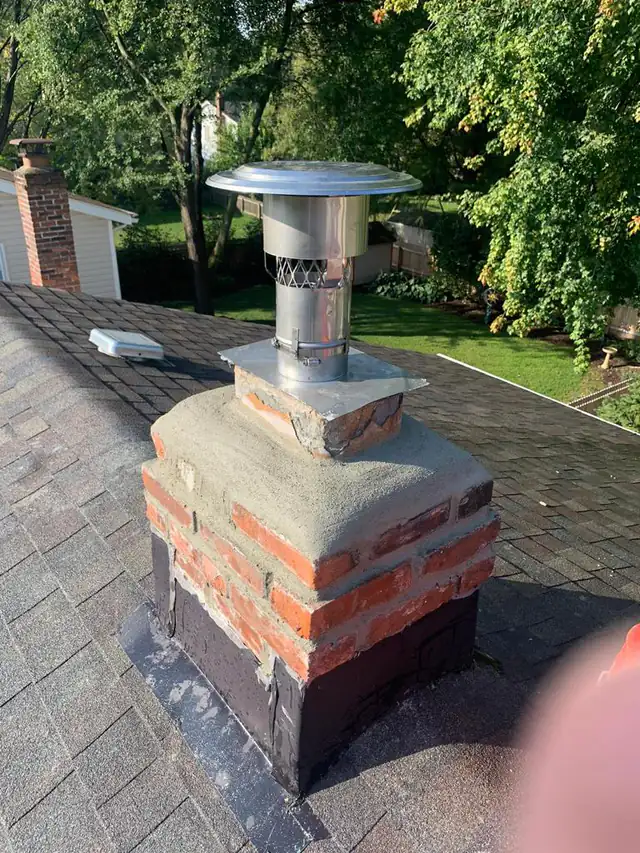
Stainless liner brought through a new crown, capped 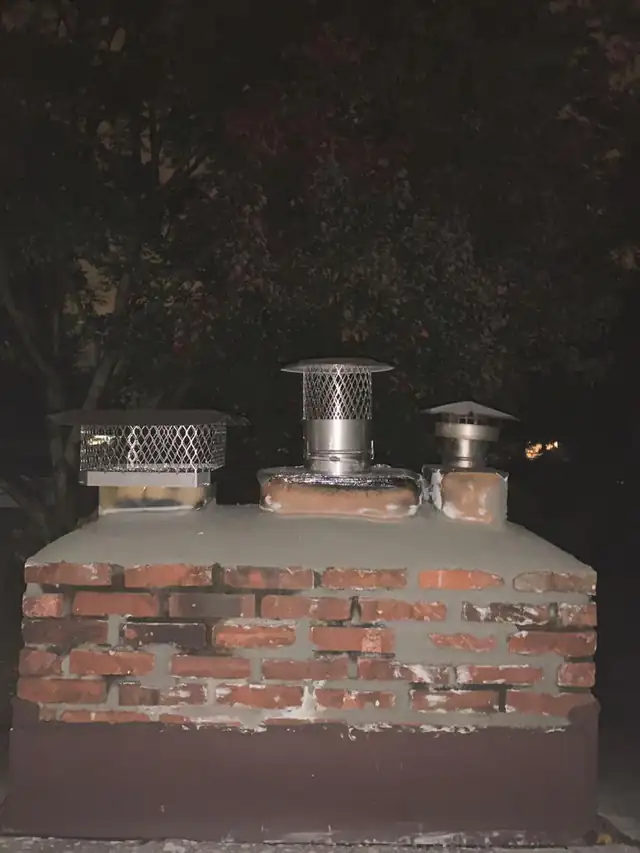
Three flues, three caps, one new crown 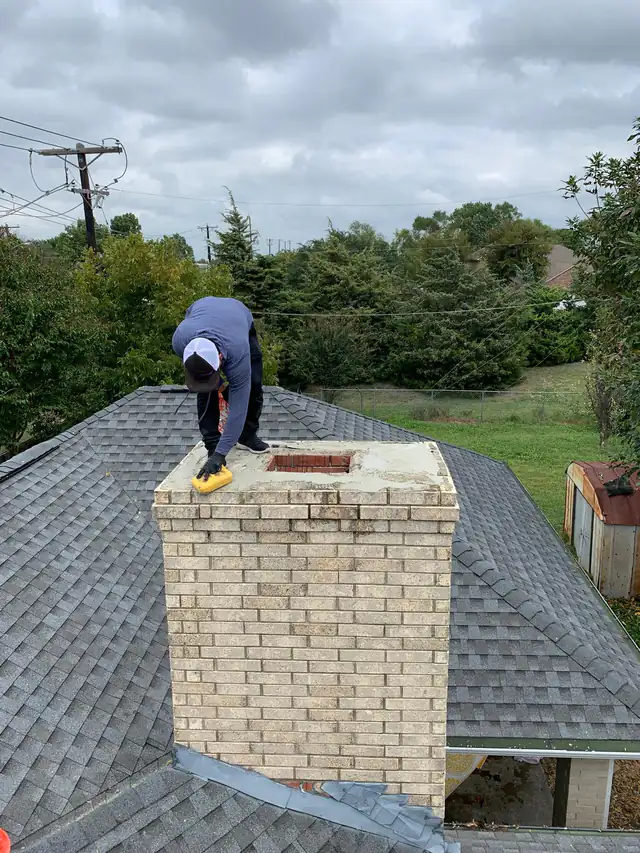
Finishing a fresh crown around the flue 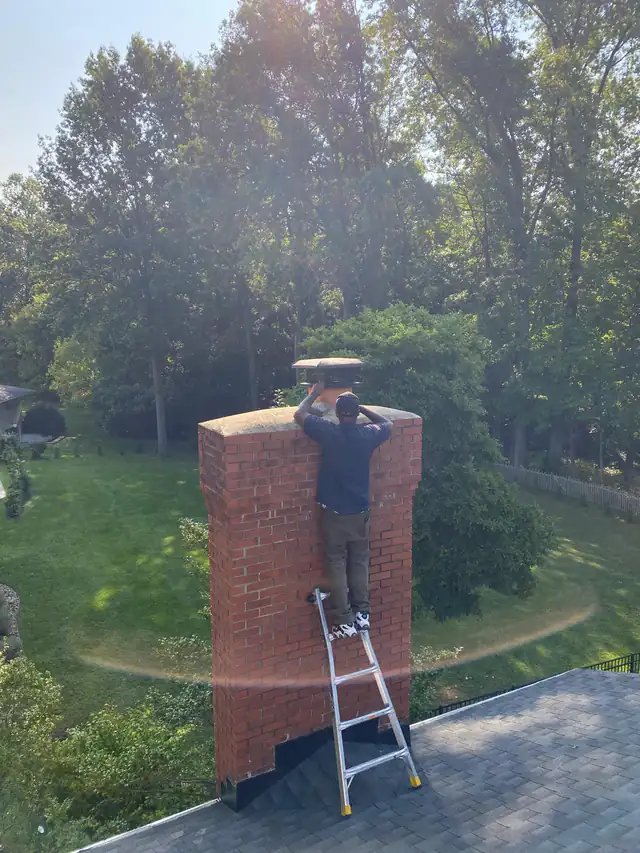
Ladder work on a tall stack — fitting the cap 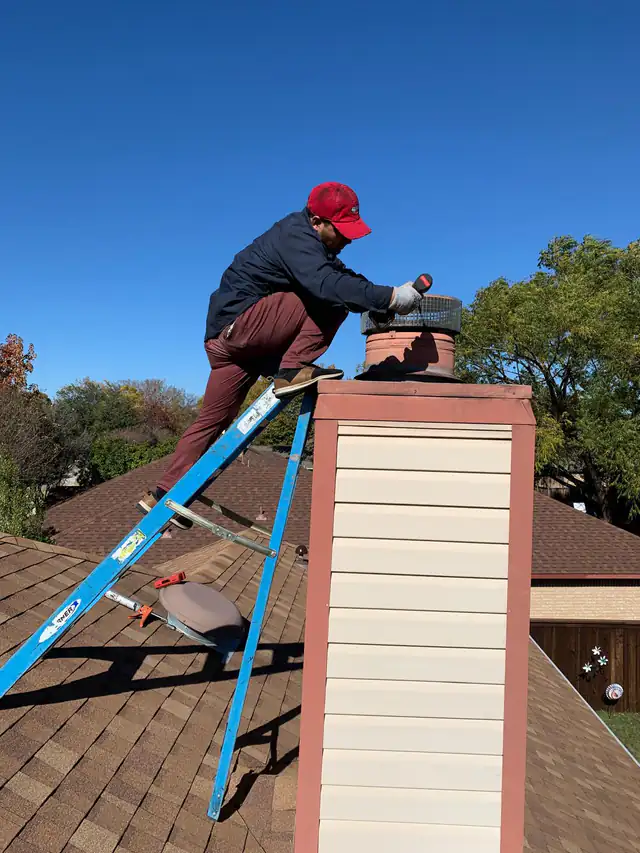
Screwing down a new cap on the flue 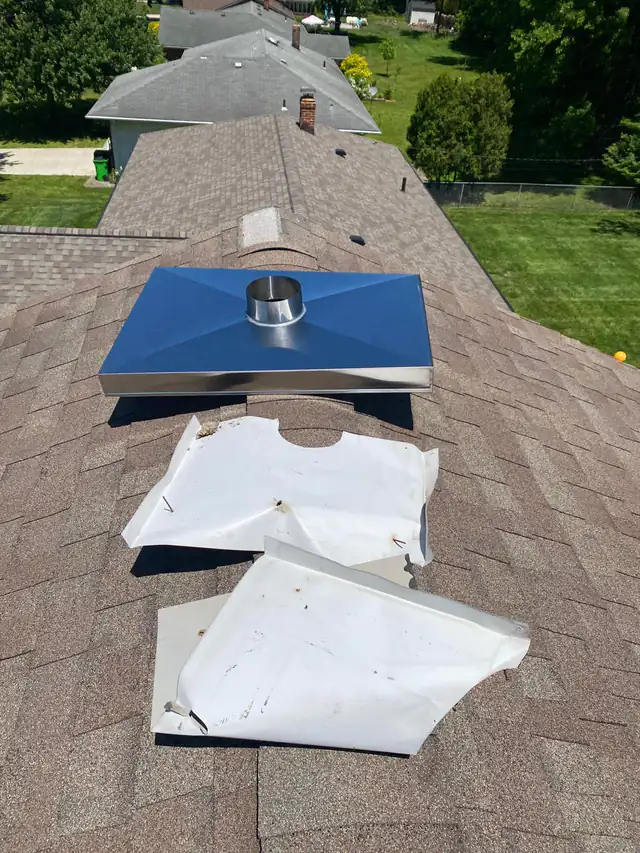
Replacement chase cover beside the removed cover sections on the roof 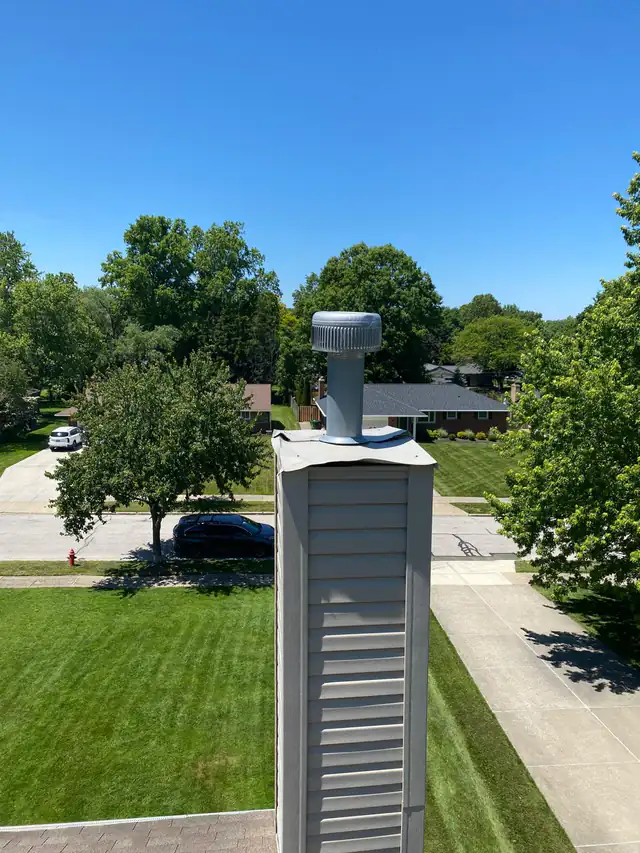
Before — the old chase cover, with bent and raised edges around the vent After — replacement chase cover fitted around the vent 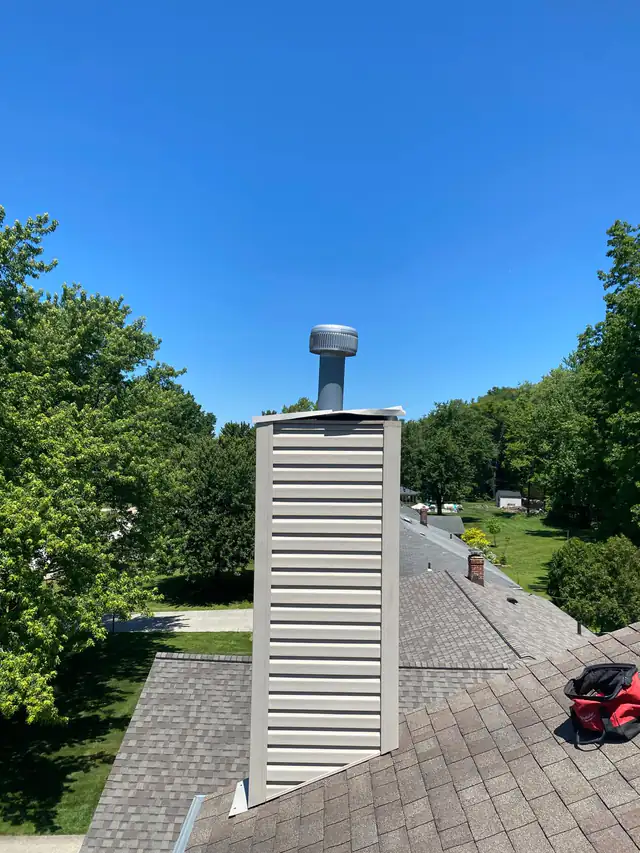
Before — the old cover from the roof side, with a raised edge 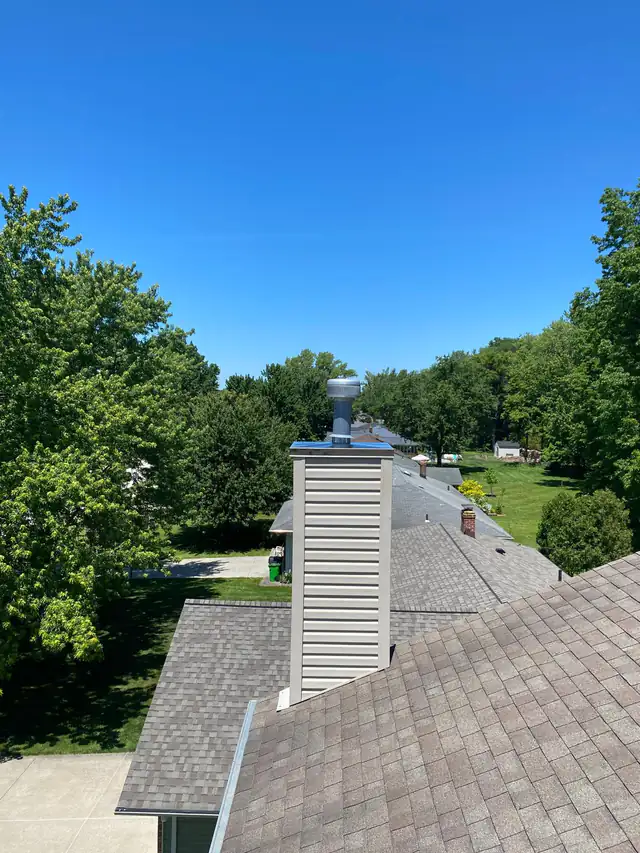
After — the replacement cover and chase, viewed from the roof
Meet the team
The people behind the work
Manny, Zack and Myke — meet the people behind Chimney Expert Solutions.
Our team and story →
Manny
Owner
Zack
Manager

Myke
Technician
FAQ
Chimney Caps & Crown Repair: questions we hear
Will a cap make my fireplace draft worse?
A correctly sized cap will not. Caps are designed with an open area at least equal to the flue's cross-section, and in windy conditions a cap often improves draft by preventing downdrafts. What does hurt draft is an undersized cap, a screen matted with soot and lint, or a cap crushed out of shape. If a fireplace started smoking after a cap went on, the cap was wrong, not the concept.
How often do caps need replacing?
A properly anchored stainless cap on a normal residential chimney is a long-lived component; galvanized ones are not, and in this climate they are usually the reason for the rust stains running down the brick. The parts that need occasional attention are the screen, which can mat with creosote and lint, and the anchoring after a serious wind event.
Can a crown be recast in cold weather?
Not properly. Concrete and mortar both need sustained temperatures above roughly 40°F to cure, so crown recasting runs with the rest of the masonry season, about April through November. If a crown fails in December we can usually get a cap on and a temporary measure in place to limit the water going in, then do the permanent recast in spring.
There's a chimney pot on our stack. Does it still need a cap?
Yes. A clay chimney pot is a draft and aesthetic component from an earlier era, not a rain cap — it is an open flue that happens to be taller. Pots are worth keeping on the older Heights and Shaker houses where they are part of the architecture, and there are caps made to sit on them without wrecking the look.
Where we do this work
Chimney Caps & Crown Repair across Greater Cleveland
We handle this work in every community we cover. The rest of our Greater Cleveland service area is on the areas page.
- Cleveland
- Lakewood
- Cleveland Heights
- Shaker Heights
- Parma
- Rocky River
- Westlake
- Strongsville
- Euclid
- South Euclid
- University Heights
- Beachwood
- Bedford
- Garfield Heights
- North Olmsted
- Mentor
- Willoughby
- Painesville
- Chardon
- Elyria
- Lorain
- Avon Lake
- Medina
- Brunswick
- Akron
- Cuyahoga Falls
- Hudson
- Kent
- Canton
- Wooster
- Warren
- Youngstown
- Boardman
- Sandusky
- Mansfield
- Ashland
Free estimate
Get this looked at properly
Describe what you're seeing and we'll call or text back to schedule. Photos of what we find, honest triage, and a written scope before any work starts — that method is the whole of how we work.
Call and tell us what the chimney's doing — if we're up on a roof, we'll call you back. All the ways to reach us are on the contact page.
Call216-647-1882