
Trumbull County, Ohio
Chimney Services in Warren, OH
Large industrial-era houses with several flues apiece alongside modest mill-era frame housing — repair economics that require honest triage, and a long history of flashing done quickly rather than properly.
Warren has more good old housing than its reputation suggests. The streets around Courthouse Square and out along the Mahoning include large, seriously built houses from the industrial decades — four and five bedrooms, multiple fireplaces, two or three chimneys apiece — alongside a great deal of modest worker housing built during the same period for the mills and fabricating plants.
The large houses present a problem that is not really technical. A house with six flues has six things that can need work, and the repair cost of doing all of it properly can be a serious proportion of what the house is worth. That is a real constraint, not something to pretend away, and it changes what good advice looks like. Our job on a house like that is to sort findings into what genuinely cannot wait, what is worth doing this season, what will keep for two or three years with an eye on it, and what does not need doing at all.
That last category matters more than people expect. On a house with several unused flues, closing one properly is often the correct and permanent answer, and it costs a fraction of restoring it. Nobody needs six working chimneys.
What goes wrong with chimneys in Warren
More chimney than budget, and how to sort it
The findings on a big old house here are almost never uniform, and treating them as one number is what makes the situation feel impossible. What has to be dealt with is anything that affects a flue currently venting an appliance, anything that is letting water into the building, and anything structurally unstable. What can wait is cosmetic spalling on a face that is shedding water fine, an unused flue that is capped and dry, and pointing that is worn but not open. What may never need doing is restoring a flue nobody will use. We photograph everything, rank it, and put dates against it, so the decision is yours with the evidence in front of you rather than ours over the phone.
Counterflashing caulked to the face instead of cut into the joint
This is the most common flashing defect we see, and it is why so many chimney leaks come back. Done properly, counterflashing is let into a groove cut in a mortar joint, wedged, sealed and lapped over the step flashing, so it is a mechanical detail that keeps working. Done quickly, it is a piece of metal laid against the brick face with a bead of sealant along the top edge. Sealant in that position is exposed to full sun and constant movement, and it fails in a handful of years — after which every rain runs behind the metal and into the wall. If your chimney leak has been fixed twice already, this is the first thing to look at.
Siding run up to the chimney with nothing behind it
On the frame housing here, a lot of chimneys were re-sided around rather than reflashed. Vinyl or aluminum was cut to fit against the brick and caulked, and whatever flashing was there originally is now buried behind it. Water gets in at that junction — it always eventually does — and instead of being shed back onto the roof it runs down inside the wall behind the siding, where nothing dries and nothing is visible until the sheathing is soft. The tell is usually interior: staining on a wall near the chimney that has no obvious source above it. Correcting it means opening the junction, putting the flashing back in properly and re-terminating the siding to it.
What we do here
Every chimney service we cover in Warren
One crew for the whole system, so the diagnosis and the repair come from the same people. The pages marked for Warren go into what this suburb’s housing stock does to that particular job; the rest cover the work across our whole service area.
Chimney Sweep & Cleaning
Full mechanical sweep of the flue, smoke chamber and firebox — creosote out, dust contained, and a look at the whole system while we're in it.
Chimney Sweep & CleaningChimney Inspection
Camera inspection of the full flue, plus the firebox, damper, crown, cap and flashing — documented in photos, explained in plain language.
Chimney InspectionChimney Repair & Rebuilds
Masonry repair from spot fixes to full stack rebuilds — spalled brick, failed joints, and chimneys the freeze-thaw cycle has taken apart.
Chimney Repair & RebuildsChimney Liner & Relining
Stainless steel relining for flues with cracked tiles, gaps, or no liner at all — sized to your appliance, insulated, done once.
Chimney Liner & ReliningChimney Leak Repair & Waterproofing
Finding where the water actually gets in — crown, cap, flashing, masonry or condensation — and fixing that, not caulking symptoms.
Chimney Leak Repair & WaterproofingChimney Caps & Crown Repair
The two parts that protect everything below them — stainless caps fitted right, and crowns rebuilt to actually shed water.
Chimney Caps & Crown RepairTuckpointing & Repointing
Grinding out failed mortar joints and repacking them properly — matched in strength, color and profile, not smeared over the brick.
Tuckpointing & RepointingFireplace & Damper Repair
Fireboxes rebuilt, refractory panels replaced, dampers that open, close and seal — the room side of the system, done right.
Fireplace & Damper Repair
Not sure which of these you need? That is what an inspection is for — or see how the whole chimney fits together and the way we work.
Working with us
What every Warren job comes with
Evidence, not assertions
Photographs of every finding before you decide anything — including the parts of your chimney you have never seen.
Free estimates on repair work
Honest triage on what we find: urgent, plan-for, or fine.
One crew, whole system
One crew for the whole chimney — sweep, inspection, masonry, liner, crown, cap and flashing, with one person responsible for all of it.
Our work
The work Warren chimneys usually need
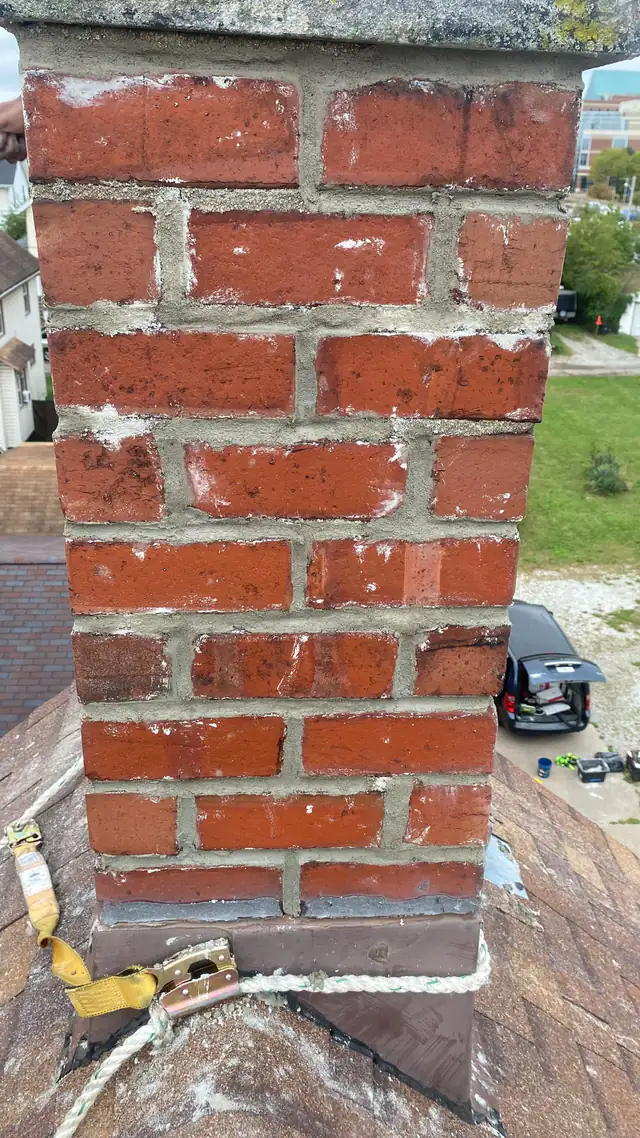
Roped in on a steep roof — repointed, flashing sealed 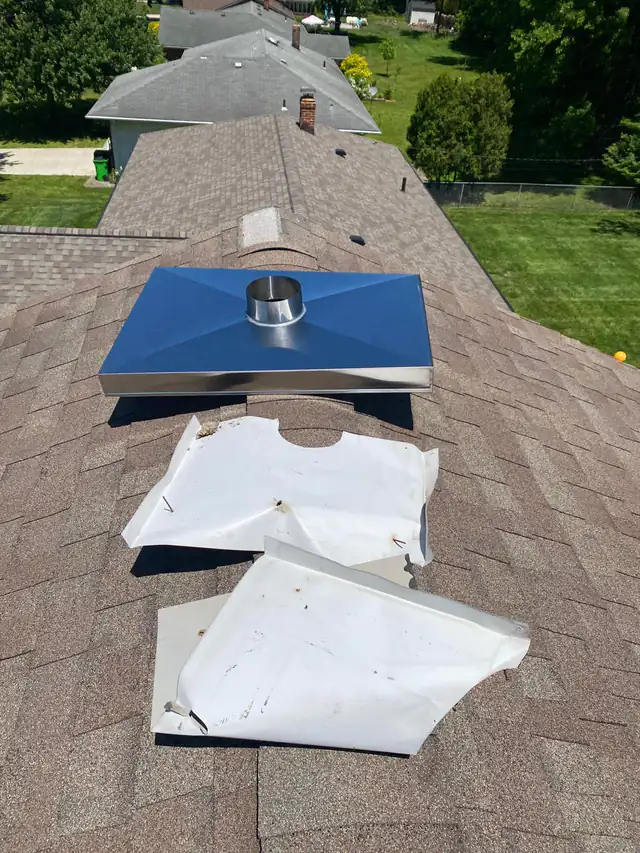
Replacement chase cover beside the removed cover sections on the roof 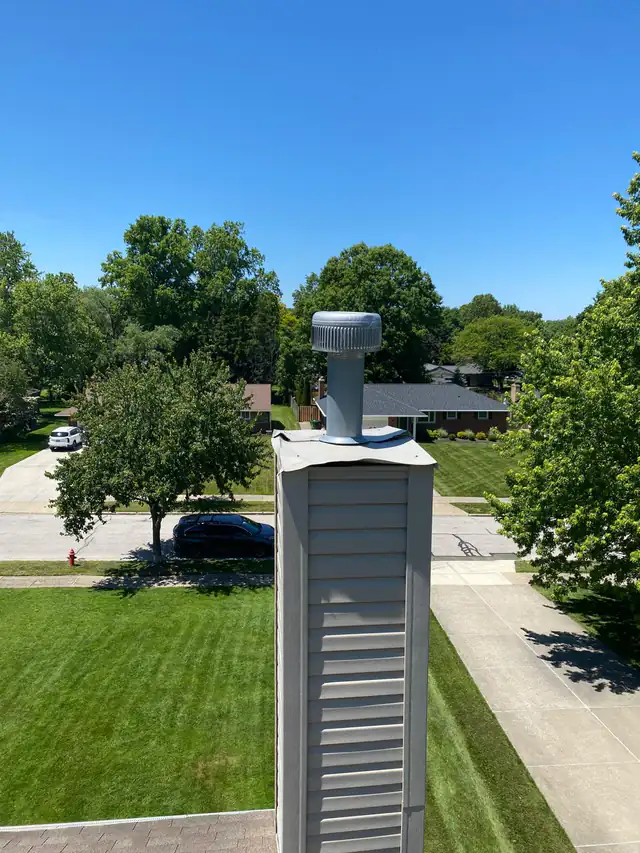
Before — the old chase cover, with bent and raised edges around the vent
Meet the team
The people behind the work
Manny, Zack and Myke — meet the people behind Chimney Expert Solutions.
Our team and story →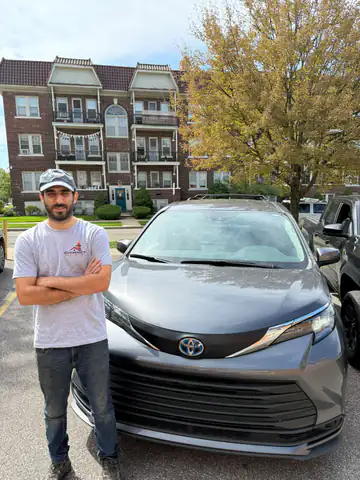
Manny
Owner

Zack
Manager

Myke
Technician
Service area
Warren is inside our service area
36 communities across Northeast Ohio · based in Cleveland Heights
- Cleveland
- Lakewood
- Cleveland Heights
- Shaker Heights
- Parma
- Rocky River
- Westlake
- Strongsville
- Euclid
- South Euclid
- University Heights
- Beachwood
- Bedford
- Garfield Heights
- North Olmsted
- Mentor
- Willoughby
- Painesville
- Chardon
- Elyria
- Lorain
- Avon Lake
- Medina
- Brunswick
- Akron
- Cuyahoga Falls
- Hudson
- Kent
- Canton
- Wooster
- Warren
- Youngstown
- Boardman
- Sandusky
- Mansfield
- Ashland
FAQ
Warren chimney questions
Our house has five flues and we can't afford to do everything. What comes first?
Anything venting a live appliance, anything letting water into the building, and anything structurally unstable. After that it is genuinely a schedule rather than an emergency, and some of it may never need doing — an unused flue that is capped and dry is a finished job, not a deferred one. We rank findings with photographs and dates so you can decide with the evidence rather than on a description.
We've had the chimney leak fixed twice and it's back. Why?
The most common reason is counterflashing that was sealed to the face of the brick instead of cut into a mortar joint. Sealant in that position fails within a few years no matter how well it was applied, and the leak returns looking like a new problem. The permanent version is a groove cut in the joint, metal let in and wedged, and the step flashing lapped underneath — it is more work once and then it stops.
Is it acceptable to just close a chimney we don't use?
Often it is the right answer, and it is a legitimate finished repair rather than a shortcut. Done properly it means the flue is closed at the top with a sound crown and a cap or sealed cover, any appliance connections are removed and closed at the bottom, and the masonry above the roof is left weathertight. What is not acceptable is blocking the bottom and leaving the top open, which quietly destroys the flue.
There's water staining on a wall next to the chimney but the roof is fine.
On sided frame housing that often points at the chimney-to-wall junction rather than the roof. Where siding was run up to the brick and caulked over old flashing, water gets in at that seam and runs down inside the wall with nothing to shed it back out. It is a real repair rather than a caulking job — the flashing has to go back in properly and the siding re-terminated against it.
Free estimate
Chimney trouble in Warren?
Tell us what you're seeing and we'll call or text back to schedule a look — with photos of what we find and an honest read on what's urgent and what can wait.
Call and tell us what the chimney's doing — if we're up on a roof, we'll call you back. You can also reach us on the contact page, or look through the other communities we serve if you are calling about a second property.
Call216-647-1882