
Cuyahoga County, Ohio
Chimney Services in Bedford, OH
Nineteenth-century Western Reserve houses around the old town center — narrow unlined stove flues, plastered-over thimbles hidden in walls, corbelled stacks with no footing, plus a postwar ring with conventional postwar chimneys.
Bedford is one of the older settlements in Cuyahoga County, and the housing around the square and the Broadway corridor shows it: Western Reserve frame houses, Greek Revival details, brick from the second half of the nineteenth century, with the Tinkers Creek valley and the Metroparks reservation cutting through below. Newer neighborhoods fill in around that core, but the old center is why chimney work here is genuinely different from the rest of the county.
Nineteenth-century chimneys were not built for fireplaces the way people assume. By the mid-1800s stoves had largely replaced open hearths for heat and cooking, so a great many of these stacks were built as stove flues — narrow, unlined brick, with round openings called thimbles cut into the wall on each floor where a stovepipe went in. When central heating arrived those openings were plugged with anything to hand and plastered or papered over, and they are still there, invisible, inside finished walls.
Add to that the era's structural habits — chimneys corbelled out of a wall rather than carried on a footing, stacks shortened during later re-roofs — and the first visit to an old Bedford house is genuinely an investigation. It is also the most interesting work we do, and none of it is guessable from the outside.
What goes wrong with chimneys in Bedford
Plastered-over stove thimbles inside finished walls
An old stove connection that was blocked with a sheet-metal cover, a piece of tin, a rag or nothing at all and then plastered over is a hole into a live flue sitting behind your wallboard. If the chimney still vents anything, that is a path for combustion gases and for a chimney fire into the wall cavity. They are common in this housing and they do not show up in a visual inspection of the firebox or the roof — the way we find them is with a camera in the flue, looking sideways for the openings, and then matching them to floor levels. Closing one properly means a masonry or listed plug, not a cover plate.
Stacks corbelled out of the framing instead of standing on a footing
Upper-floor stove flues in this era were frequently started partway up the house, with the brick corbelled — stepped out course by course — from a wall or carried on a wood beam, rather than built from a footing in the ground. It works until the wood shrinks, the framing sags or someone removes a wall in a renovation. The tells are a chimney that stops at a ceiling in the basement or first floor instead of continuing down, a diagonal crack pattern in the plaster below it, or a stack visibly out of plumb. That is a structural assessment, not a mortar repair, and it is worth knowing before anyone starts a kitchen remodel.
Chimneys taken down to the roof and abandoned in the attic
A very common history on these houses: at some re-roof decades ago, a redundant stack was demolished down to just below the roofline, decked over, and the rest of it left standing in the attic. Sometimes the flue was capped, often it was not. What is left is a masonry column sitting on old framing, collecting nothing, supported by nothing in particular, and occasionally still connected to something in the basement that people assume vents elsewhere. If your house has a chimney breast on a wall but no chimney on the roof, that is worth tracing before it is worth ignoring.
What we do here
Every chimney service we cover in Bedford
One crew for the whole system, so the diagnosis and the repair come from the same people. The pages marked for Bedford go into what this suburb’s housing stock does to that particular job; the rest cover the work across our whole service area.
Chimney Sweep & Cleaning
Full mechanical sweep of the flue, smoke chamber and firebox — creosote out, dust contained, and a look at the whole system while we're in it.
Chimney Sweep in BedfordChimney Inspection
Camera inspection of the full flue, plus the firebox, damper, crown, cap and flashing — documented in photos, explained in plain language.
Chimney Inspection in BedfordChimney Repair & Rebuilds
Masonry repair from spot fixes to full stack rebuilds — spalled brick, failed joints, and chimneys the freeze-thaw cycle has taken apart.
Chimney Repair in BedfordChimney Liner & Relining
Stainless steel relining for flues with cracked tiles, gaps, or no liner at all — sized to your appliance, insulated, done once.
Chimney Relining in BedfordChimney Leak Repair & Waterproofing
Finding where the water actually gets in — crown, cap, flashing, masonry or condensation — and fixing that, not caulking symptoms.
Chimney Leak Repair in BedfordChimney Caps & Crown Repair
The two parts that protect everything below them — stainless caps fitted right, and crowns rebuilt to actually shed water.
Chimney Caps & Crown RepairTuckpointing & Repointing
Grinding out failed mortar joints and repacking them properly — matched in strength, color and profile, not smeared over the brick.
Tuckpointing & RepointingFireplace & Damper Repair
Fireboxes rebuilt, refractory panels replaced, dampers that open, close and seal — the room side of the system, done right.
Fireplace & Damper Repair
Not sure which of these you need? That is what an inspection is for — or see how the whole chimney fits together and the way we work.
Working with us
What every Bedford job comes with
Evidence, not assertions
Photographs of every finding before you decide anything — including the parts of your chimney you have never seen.
Free estimates on repair work
Honest triage on what we find: urgent, plan-for, or fine.
One crew, whole system
One crew for the whole chimney — sweep, inspection, masonry, liner, crown, cap and flashing, with one person responsible for all of it.
Our work
The work Bedford chimneys usually need
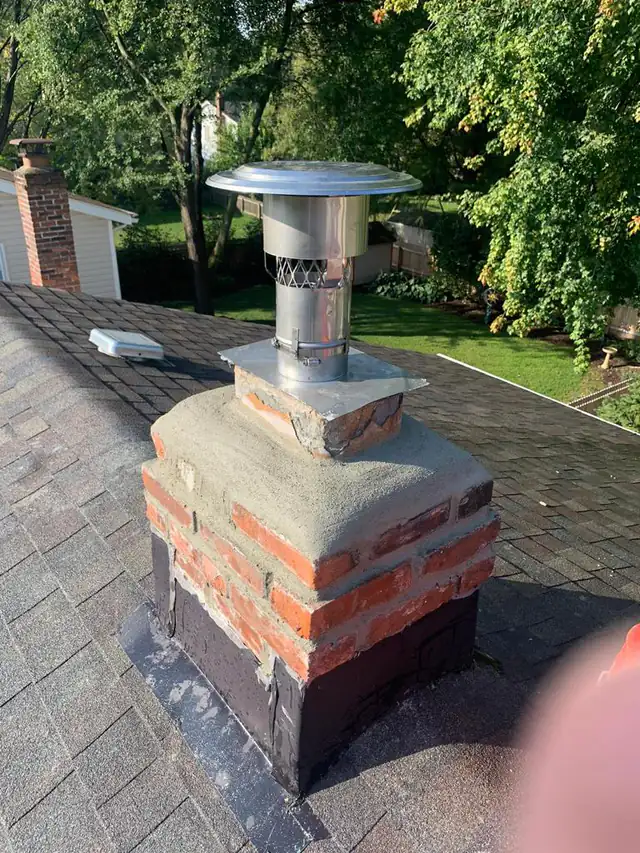
Stainless liner brought through a new crown, capped 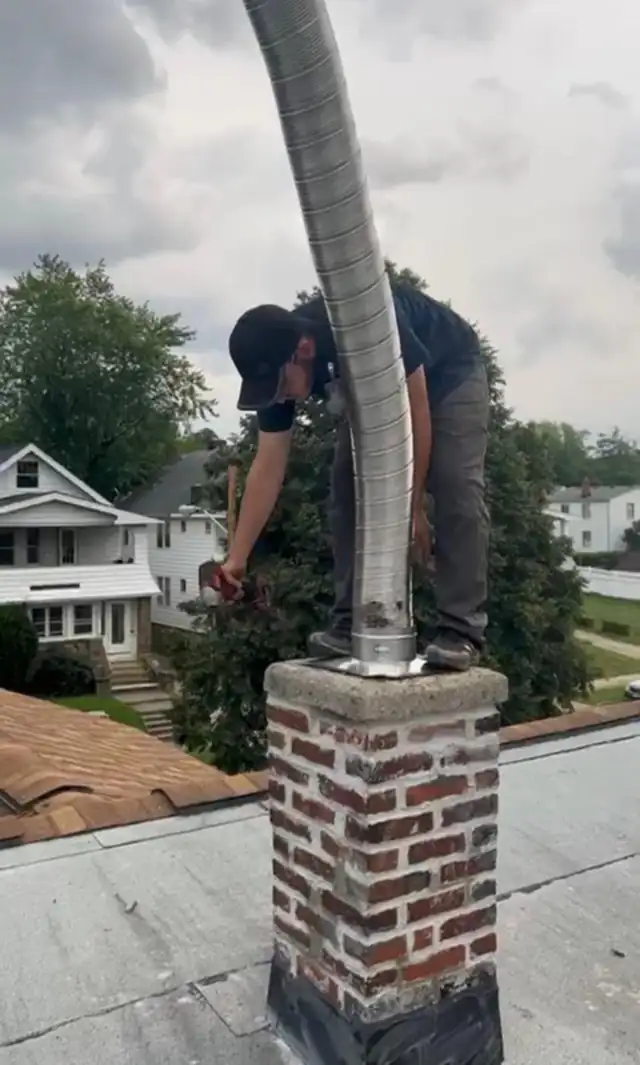
Feeding a new stainless liner down the flue 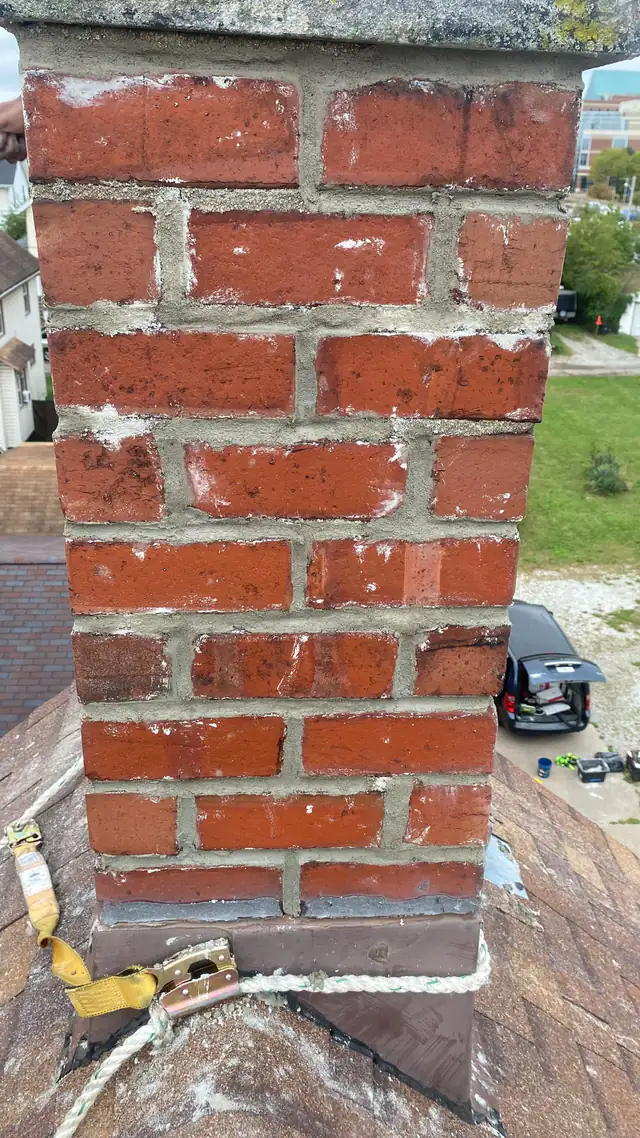
Roped in on a steep roof — repointed, flashing sealed
Meet the team
The people behind the work
Manny, Zack and Myke — meet the people behind Chimney Expert Solutions.
Our team and story →
Manny
Owner

Zack
Manager

Myke
Technician
Service area
Bedford is inside our service area
36 communities across Northeast Ohio · based in Cleveland Heights
- Cleveland
- Lakewood
- Cleveland Heights
- Shaker Heights
- Parma
- Rocky River
- Westlake
- Strongsville
- Euclid
- South Euclid
- University Heights
- Beachwood
- Bedford
- Garfield Heights
- North Olmsted
- Mentor
- Willoughby
- Painesville
- Chardon
- Elyria
- Lorain
- Avon Lake
- Medina
- Brunswick
- Akron
- Cuyahoga Falls
- Hudson
- Kent
- Canton
- Wooster
- Warren
- Youngstown
- Boardman
- Sandusky
- Mansfield
- Ashland
FAQ
Bedford chimney questions
Our old house has a chimney breast upstairs but nothing on the roof. What is that?
Usually a stack that was demolished to just under the roofline at some past re-roof, with the rest left in place. Worth tracing rather than ignoring: we want to know whether the flue was capped, whether anything is still connected to it lower down, and what the remaining masonry is standing on. It is a common and usually manageable finding — it is just not one you want to discover during a renovation.
There's a round patch on the plaster near where a stove used to be. Does it matter?
It can, and it is worth a look. That is very likely an old stovepipe thimble — an opening into the flue that was covered over rather than sealed. If the chimney still vents an appliance, it is a route for combustion gases and heat into the wall cavity. Properly closing one is straightforward once we know where it is and what the flue behind it is doing.
Can a nineteenth-century flue be brought back into use?
Frequently, and a stainless liner is usually how. These flues were built narrow, unlined and for stoves, so they generally cannot serve a modern appliance as they stand. What decides it is what the camera shows: the flue's actual dimensions, its condition, how it is routed, and whether there are openings or framing issues to resolve first. We will tell you plainly if the honest answer is that it should stay decommissioned.
Do you work on the newer parts of Bedford too?
Yes. The postwar neighborhoods here have conventional postwar chimneys — single stacks, thin original crowns, and flues that have outlived a heating conversion or two — and that work is straightforward. The old core is where the unusual findings are, but both get the same camera scan and the same photographs.
Free estimate
Chimney trouble in Bedford?
Tell us what you're seeing and we'll call or text back to schedule a look — with photos of what we find and an honest read on what's urgent and what can wait.
Call and tell us what the chimney's doing — if we're up on a roof, we'll call you back. You can also reach us on the contact page, or look through the other communities we serve if you are calling about a second property.
Call216-647-1882