
Lake County, Ohio
Chimney Liner & Relining in Painesville, OH
Stainless steel relining for flues with cracked tiles, gaps, or no liner at all — sized to your appliance, insulated, done once.
What chimney relining involves in Painesville is set by the housing stock here: A nineteenth-century county seat of Italianate and Queen Anne houses — tall exposed stacks that deteriorate from the top down, apartment conversions with layers of added flues, and balloon-framed walls with no firestopping.
Painesville is the Lake County seat, and it looks it: a courthouse square, streets of Italianate and Queen Anne houses around it, Lake Erie College, and a downtown built when this was the center of gravity for the whole county. The residential stock through the older districts is substantially nineteenth century, and Victorian chimneys are a different animal from anything else in this service area.
The liner is the part of the chimney that does the actual work. Everything else is structure; the liner is what contains the heat and the combustion gases and delivers them out of the house without letting either reach the brickwork or the framing around it. Most Cleveland chimneys were built with clay tile liners, and clay has a hard life here. Thermal shock cracks it, settlement shifts it, and moisture eats the mortar joints between tiles until the sections stop behaving as one continuous passage. A cracked or gapped liner is invisible without a camera, and it is the failure that turns into house fires and carbon monoxide.
What we find on Painesville chimneys that leads to chimney relining
Grand houses divided into apartments, with the flues to match
A lot of the large houses in the older districts were subdivided into apartments during the twentieth century, and each division tended to add heating equipment. The result is stacks with more flues than the house was built with, connections made at different eras with different standards, and abandoned openings left where a unit's arrangement changed again. On these buildings the first inspection is genuinely a survey: every flue scanned, every connection traced to its appliance, everything abandoned identified and properly closed. It usually takes longer than a single-family visit and it produces a document the owner should keep.
Balloon framing turns a wall cavity into a chimney of its own
In a house framed this way, the stud bays run uninterrupted from the basement to the attic. Where those bays sit alongside a chimney with a cracked flue, a defective thimble or an open abandoned connection, there is a clear vertical path for heat, smoke and embers to reach the roof structure — which is the mechanism behind a lot of historic house fires that started at a chimney. The same open path lets water from a leaking stack travel two floors before it appears. Firestopping at each floor line and sealing the flue properly are what break the path.
Furnace and water heater flues: the Cleveland problem
This one affects tens of thousands of houses across Parma, Old Brooklyn, Euclid, Garfield Heights and every other postwar neighborhood, and almost nobody has been told about it. The sequence goes like this. The original furnace and the water heater both vented into the masonry chimney, and the flue was sized for the two of them together. The furnace gets replaced with a high-efficiency condensing unit, which vents through white PVC out a side wall. The water heater is left where it is.
Now a small appliance is venting into a flue sized for a large one. The exhaust volume is nowhere near enough to keep that flue warm, so it condenses on the way up. The condensate is acidic. It attacks the tile and the mortar joints, and over a decade it can take a flue apart from the inside while everything looks perfectly normal from the basement. The industry name for this is an orphaned water heater, and the standard fix is a correctly sized metal liner that matches the appliance rather than the chimney.
The signs are worth knowing: rust or scaling on the draft hood or the vent connector, dampness or white crusty deposits at the base of the chimney, tile fragments in the clean-out, or a chimney exterior that is staining on the outside near the top. If your furnace was upgraded in the last fifteen years and nobody looked at the chimney afterwards, that is the situation this section is describing.
What happens if a failed flue keeps getting used
The two outcomes are the ones this whole trade exists to prevent. The first is a structure fire. A gap in the liner lets flue temperatures reach the masonry, and a masonry chimney is not a sealed object — it is built into a house with framing members close to it, sometimes closer than modern clearances allow, especially in houses built before those clearances existed. Heat over time chars wood, and charred wood ignites at a lower temperature than sound wood. This is the mechanism behind fires that start in a chimney the family had used without incident for years.
The second is carbon monoxide. A gapped or partially blocked flue lets exhaust find easier routes than the one out of the top. On a gas or oil appliance the exhaust is not visible and does not smell, and it comes back into a basement or a utility room. Every house with a fuel-burning appliance needs working CO alarms on every level regardless — but an alarm is a last defense, not a repair.
The reason to reline is that it removes both mechanisms permanently rather than managing them. The reason to camera-inspect first is that plenty of chimneys turn out not to need it.
This page covers chimney relining as it plays out in Painesville. The full chimney liner & relining page walks the whole job — every stage, what changes the scope, and what we do about each of them. For everything else we handle in this suburb, see chimney services in Painesville.
What a relining job includes
- Camera inspection first — you see why (or whether) the flue needs relining
- Continuous stainless steel liner in the correct alloy, sized to the fireplace or appliance it serves
- Insulation wrap or pour so the flue drafts correctly and meets the liner's listing
- Existing flue cleared, and broken tile removed where it obstructs the run
- New top plate, storm collar and cap terminating the system
- Correct listed connection at the appliance — no improvised adapters
- Photos of the completed run top to bottom, and the liner's product documentation
Our work
Chimney Liner & Relining, photographed on the job
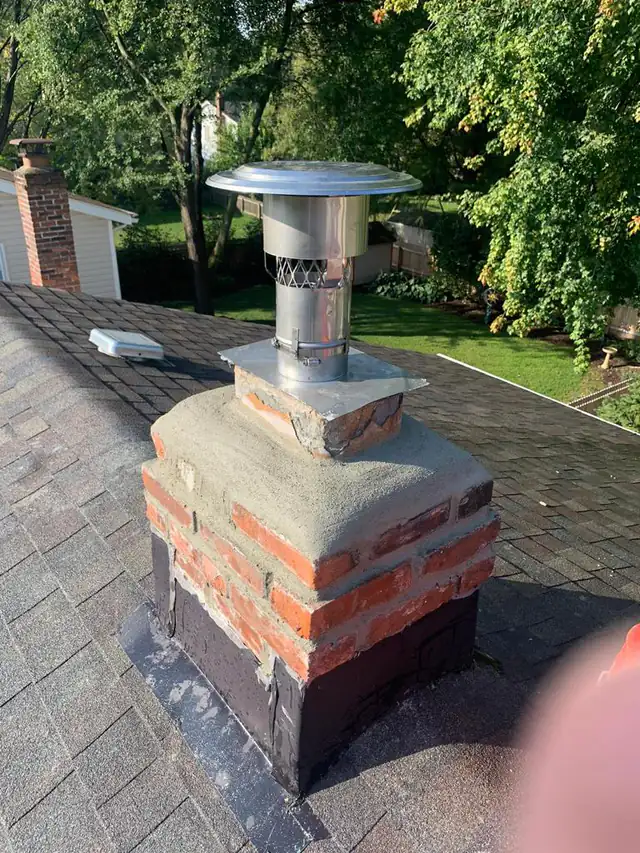
Stainless liner brought through a new crown, capped 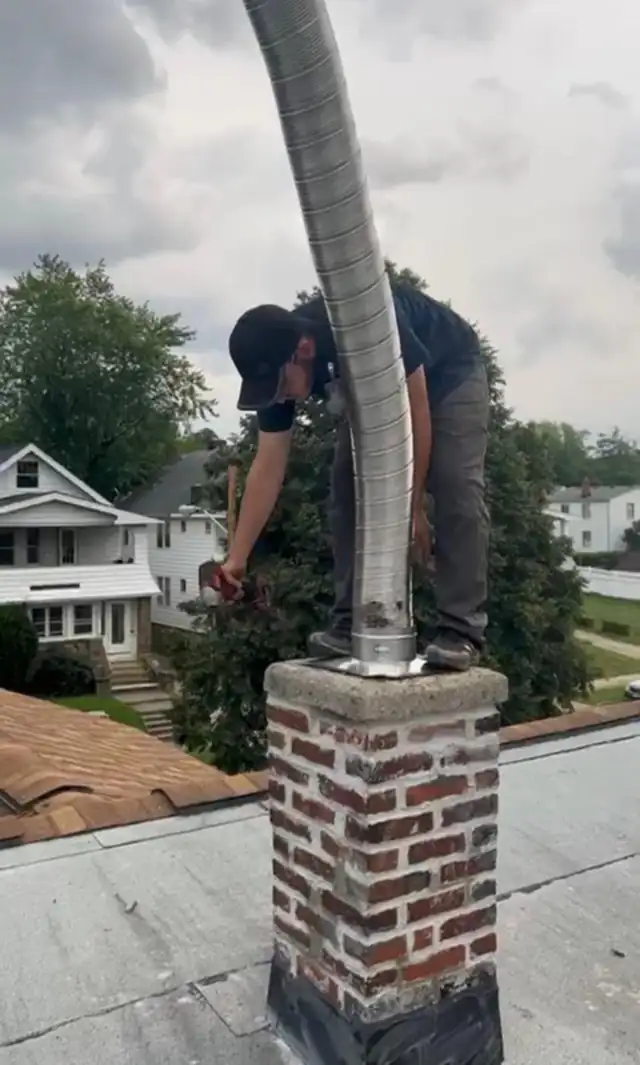
Feeding a new stainless liner down the flue
Meet the team
The people behind the work
Manny, Zack and Myke — meet the people behind Chimney Expert Solutions.
Our team and story →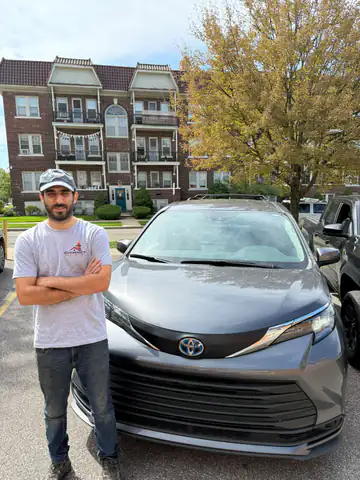
Manny
Owner
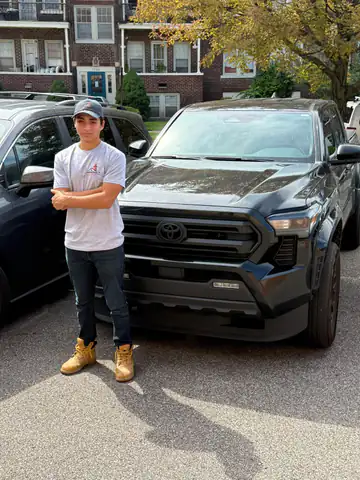
Zack
Manager
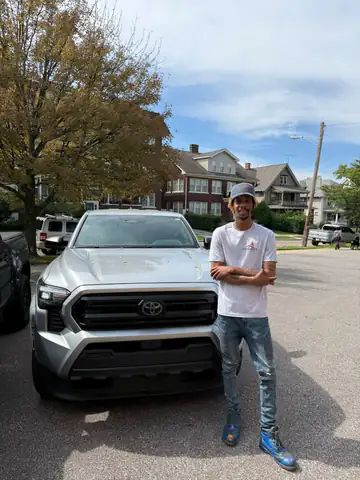
Myke
Technician
FAQ
Chimney Relining in Painesville: questions we hear
Our building has several apartments and one chimney. Where do we start?
With a full survey rather than a single flue. Each flue gets scanned, each appliance connection gets traced to what it actually serves, and anything abandoned gets identified and closed properly. Multi-unit buildings accumulate arrangements over the decades and nobody has a complete picture — the point of the first visit is to produce one you can keep.
Can one liner serve two appliances?
Sometimes, and it is governed by rules rather than preference — appliance types, fuels, input ratings and connection geometry all determine whether common venting is permitted. Plenty of existing shared arrangements in older Cleveland houses would not pass today. It is something we work out on site, and 'the old chimney did it this way' is not an answer.
Does a stainless liner need sweeping like clay?
Yes. Stainless is smoother and better insulated, so it usually builds less deposit and is easier to clean, but wood smoke still leaves creosote on it. What changes is the brush: a wire brush that is fine on clay tile can damage a stainless liner, so it needs a poly brush sized to the liner. Worth knowing if you ever hire a sweep who does not ask what your liner is.
Free estimate
Chimney Relining in Painesville?
Tell us what you’re seeing and we’ll call or text back to schedule a look — with photos of what we find and an honest read on what’s urgent and what can wait. That evidence-first method is the way we work on every job.
Call and tell us what the chimney's doing — if we're up on a roof, we'll call you back. Other ways to reach us are on the contact page, and Painesville is one of the communities we cover across Greater Cleveland.
Call216-647-1882