
Summit County, Ohio
Chimney Liner & Relining in Hudson, OH
Stainless steel relining for flues with cracked tiles, gaps, or no liner at all — sized to your appliance, insulated, done once.
What chimney relining involves in Hudson is set by the housing stock here: Early Western Reserve houses of soft handmade brick and lime mortar with framing built into the stacks, alongside larger modern homes with multiple fireplaces — antique work that punishes modern materials and shortcuts.
Hudson kept its early architecture better than almost anywhere else in this part of Ohio. The houses around the Green and along the older streets are genuinely early — Federal and Greek Revival work from the 1820s through the 1850s, put up by New England settlers who built the way they had built at home — and the town has been deliberate about protecting how they look. Around that core is a great deal of newer and larger housing, much of it with several fireplaces.
The liner is the part of the chimney that does the actual work. Everything else is structure; the liner is what contains the heat and the combustion gases and delivers them out of the house without letting either reach the brickwork or the framing around it. Most Cleveland chimneys were built with clay tile liners, and clay has a hard life here. Thermal shock cracks it, settlement shifts it, and moisture eats the mortar joints between tiles until the sections stop behaving as one continuous passage. A cracked or gapped liner is invisible without a camera, and it is the failure that turns into house fires and carbon monoxide.
What we find on Hudson chimneys that leads to chimney relining
Floor joists and framing built into the stack
In houses of this age, it was standard to set the ends of floor joists, headers and mantel framing directly into pockets in the chimney masonry, because the chimney was the most solid thing in the building. That puts structural wood in permanent contact with a flue, sometimes with only a few inches of brick between it and the fire. Two centuries of slow heating dries that wood out and lowers the temperature at which it will ignite, a process that takes decades and gives no warning. It is one of the reasons a camera scan and an inspection of the framing around the chimney matter more on an antique house than anywhere else, and it usually shapes the entire approach to bringing a fireplace back into service.
Soft handmade brick and lime mortar, and what not to do to them
The brick in these walls was made from local clay and fired in small batches, so it varies from hard to genuinely soft within a single course, and it was laid in lime mortar that is far weaker than anything sold at a builder's merchant today. That combination has survived two centuries precisely because the mortar was the soft part. Repointing with a modern Portland-heavy mix reverses the relationship and destroys the brick faces within a few winters, and pressure washing or sandblasting takes off the fired surface that is the brick's only weather protection. The right work here is slow, matched, and done in small areas — and it is worth asking any contractor what mortar they intend to use before they start.
What drives the cost of a reline
- Height and diameter. A liner is a manufactured product sold by the foot in a given diameter, and a three-story Cleveland Heights stack is materially more liner than a ranch.
- Insulation method. A wrapped liner and a pour-around insulation both cost more than an uninsulated drop, and both are usually the correct specification.
- Offsets and obstructions. A straight flue is a straightforward day. A chimney with a significant offset, or one where broken tile has to be removed to make room, is not.
- Whether tile has to be broken out. On tight older flues, opening the passage to accept the correct liner diameter is real, messy work.
- The appliance connection. A direct connect to a stove or insert, versus a fireplace connection, versus a shared utility flue that needs reconfiguring, are different scopes.
- Access at the top. Roof pitch and material change how the crew works from the moment they arrive.
- Whether the crown and cap need doing at the same time. They frequently do, and doing them in the same visit is cheaper than doing them separately later.
What happens if a failed flue keeps getting used
The two outcomes are the ones this whole trade exists to prevent. The first is a structure fire. A gap in the liner lets flue temperatures reach the masonry, and a masonry chimney is not a sealed object — it is built into a house with framing members close to it, sometimes closer than modern clearances allow, especially in houses built before those clearances existed. Heat over time chars wood, and charred wood ignites at a lower temperature than sound wood. This is the mechanism behind fires that start in a chimney the family had used without incident for years.
The second is carbon monoxide. A gapped or partially blocked flue lets exhaust find easier routes than the one out of the top. On a gas or oil appliance the exhaust is not visible and does not smell, and it comes back into a basement or a utility room. Every house with a fuel-burning appliance needs working CO alarms on every level regardless — but an alarm is a last defense, not a repair.
The reason to reline is that it removes both mechanisms permanently rather than managing them. The reason to camera-inspect first is that plenty of chimneys turn out not to need it.
This page covers chimney relining as it plays out in Hudson. The full chimney liner & relining page walks the whole job — every stage, what changes the scope, and what we do about each of them. For everything else we handle in this suburb, see chimney services in Hudson.
What a relining job includes
- Camera inspection first — you see why (or whether) the flue needs relining
- Continuous stainless steel liner in the correct alloy, sized to the fireplace or appliance it serves
- Insulation wrap or pour so the flue drafts correctly and meets the liner's listing
- Existing flue cleared, and broken tile removed where it obstructs the run
- New top plate, storm collar and cap terminating the system
- Correct listed connection at the appliance — no improvised adapters
- Photos of the completed run top to bottom, and the liner's product documentation
Our work
Chimney Liner & Relining, photographed on the job
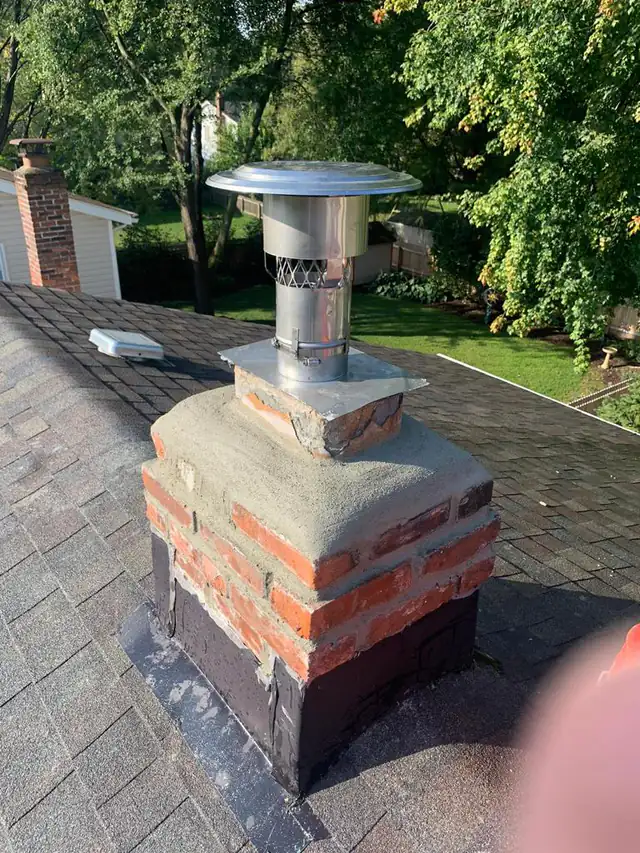
Stainless liner brought through a new crown, capped 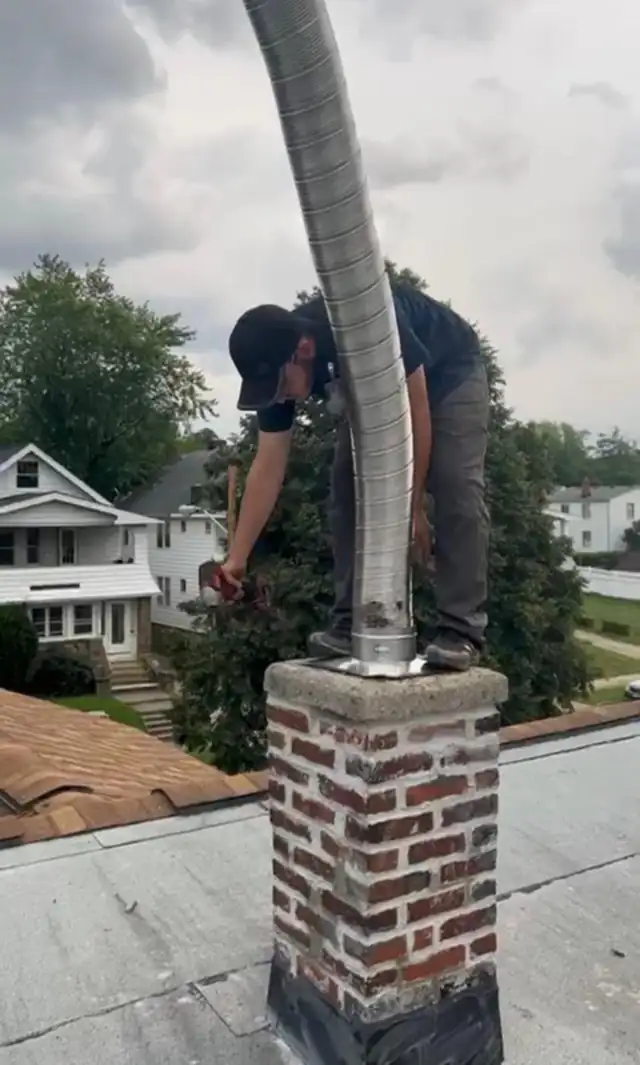
Feeding a new stainless liner down the flue
Meet the team
The people behind the work
Manny, Zack and Myke — meet the people behind Chimney Expert Solutions.
Our team and story →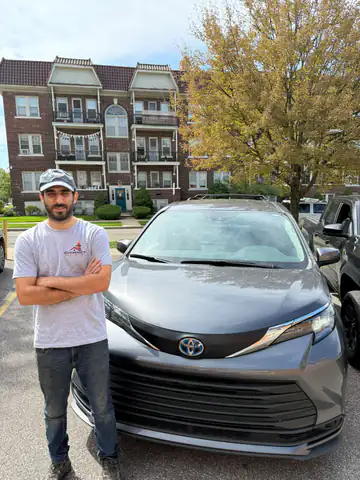
Manny
Owner
Zack
Manager
Myke
Technician
FAQ
Chimney Relining in Hudson: questions we hear
We want to use the original fireplace in our old house. What does that take?
A camera scan of the flue first, and an inspection of the framing around and inside the chimney, because framing set into the masonry is common in houses of this period and it changes the answer. From there it is usually some combination of a properly sized liner, firebox work and a cap. Sometimes the finding is that it can be brought back straightforwardly; sometimes it is that it should not be used as built. We will show you what the camera saw either way.
How long does a reline take and is my house disrupted?
Most single-flue relines are a one- or two-day job, and the majority of the work happens on the roof. Inside, the disruption is at the fireplace or the appliance for the connection. If the chimney vents your water heater, we plan the sequence so it is not left without a vent overnight.
Can one liner serve two appliances?
Sometimes, and it is governed by rules rather than preference — appliance types, fuels, input ratings and connection geometry all determine whether common venting is permitted. Plenty of existing shared arrangements in older Cleveland houses would not pass today. It is something we work out on site, and 'the old chimney did it this way' is not an answer.
Free estimate
Chimney Relining in Hudson?
Tell us what you’re seeing and we’ll call or text back to schedule a look — with photos of what we find and an honest read on what’s urgent and what can wait. That evidence-first method is the way we work on every job.
Call and tell us what the chimney's doing — if we're up on a roof, we'll call you back. Other ways to reach us are on the contact page, and Hudson is one of the communities we cover across Greater Cleveland.
Call216-647-1882