
Cuyahoga County, Ohio
Chimney Liner & Relining in Westlake, OH
Stainless steel relining for flues with cracked tiles, gaps, or no liner at all — sized to your appliance, insulated, done once.
What chimney relining involves in Westlake is set by the housing stock here: Later-era housing with a high share of factory-built fireplaces — rusting chase covers, cracked refractory panels and metal flues that still need annual sweeping, plus conventional masonry in the older pockets.
Westlake was farmland and township into the middle of the last century, and the bulk of its housing came later than the inner-ring suburbs: substantial building from the 1970s onward and strong 1990s and 2000s neighborhoods filling in around Dover Center, Columbia and Hilliard. That changes what chimney service means here in a way that catches a lot of contractors out.
The liner is the part of the chimney that does the actual work. Everything else is structure; the liner is what contains the heat and the combustion gases and delivers them out of the house without letting either reach the brickwork or the framing around it. Most Cleveland chimneys were built with clay tile liners, and clay has a hard life here. Thermal shock cracks it, settlement shifts it, and moisture eats the mortar joints between tiles until the sections stop behaving as one continuous passage. A cracked or gapped liner is invisible without a camera, and it is the failure that turns into house fires and carbon monoxide.
What we find on Westlake chimneys that leads to chimney relining
Metal flues still build creosote
There is a persistent belief that a factory-built fireplace does not need sweeping because there is no masonry. Wood smoke deposits creosote on a stainless flue exactly as it does on clay tile, and NFPA 211's annual inspection recommendation covers factory-built systems explicitly. What changes is technique: a wire brush that is fine in clay tile will damage a stainless flue, so it wants a poly brush sized to the pipe. If a sweep does not ask what kind of system you have before arriving, that is worth noticing.
Cracked refractory panels, and the wrong repair
The molded panels lining a factory-built firebox are a wear item with a service life, and they crack with thermal cycling. The correct fix is replacement with the panel specified for that make and model, because the panel's job is to hold a defined thickness of insulating material between the fire and the steel shell. Filling a cracked panel with furnace cement is something we find constantly and it is not a repair — it restores the appearance and none of the function.
Chase covers rusting and dumping water into framing
The flat metal pan closing the top of a framed chimney chase is the highest-consequence component on a Westlake chimney. Builder-grade galvanized covers rust through, and because most were installed flat rather than with a cross-break, they pond water rather than shed it. Once they perforate, water goes directly into the framed chase, where it rots structure and soaks insulation out of sight. The rust stain running down the siding below the chimney top is the early warning, and the fix is a custom stainless cover with a proper cross-break and drip edge.
How we confirm a liner has actually failed
Camera first, always. Relining is a significant job and nobody should be selling one on a hunch or on what could be seen with a flashlight from the firebox. The scan is run the full length of the flue and it either shows you cracked tile, open joints, missing sections and gaps, or it shows you an intact flue. Both answers are useful and we say the second one out loud when it is the true one.
There is a specific version of this we want homeowners to be skeptical about: a photograph of a cracked flue that is not your flue. Footage from your chimney is identifiable, we walk you through it, and it should be part of every relining quote you receive from anyone.
Furnace and water heater flues: the Cleveland problem
This one affects tens of thousands of houses across Parma, Old Brooklyn, Euclid, Garfield Heights and every other postwar neighborhood, and almost nobody has been told about it. The sequence goes like this. The original furnace and the water heater both vented into the masonry chimney, and the flue was sized for the two of them together. The furnace gets replaced with a high-efficiency condensing unit, which vents through white PVC out a side wall. The water heater is left where it is.
Now a small appliance is venting into a flue sized for a large one. The exhaust volume is nowhere near enough to keep that flue warm, so it condenses on the way up. The condensate is acidic. It attacks the tile and the mortar joints, and over a decade it can take a flue apart from the inside while everything looks perfectly normal from the basement. The industry name for this is an orphaned water heater, and the standard fix is a correctly sized metal liner that matches the appliance rather than the chimney.
The signs are worth knowing: rust or scaling on the draft hood or the vent connector, dampness or white crusty deposits at the base of the chimney, tile fragments in the clean-out, or a chimney exterior that is staining on the outside near the top. If your furnace was upgraded in the last fifteen years and nobody looked at the chimney afterwards, that is the situation this section is describing.
This page covers chimney relining as it plays out in Westlake. The full chimney liner & relining page walks the whole job — every stage, what changes the scope, and what we do about each of them. For everything else we handle in this suburb, see chimney services in Westlake.
What a relining job includes
- Camera inspection first — you see why (or whether) the flue needs relining
- Continuous stainless steel liner in the correct alloy, sized to the fireplace or appliance it serves
- Insulation wrap or pour so the flue drafts correctly and meets the liner's listing
- Existing flue cleared, and broken tile removed where it obstructs the run
- New top plate, storm collar and cap terminating the system
- Correct listed connection at the appliance — no improvised adapters
- Photos of the completed run top to bottom, and the liner's product documentation
Our work
Chimney Liner & Relining, photographed on the job
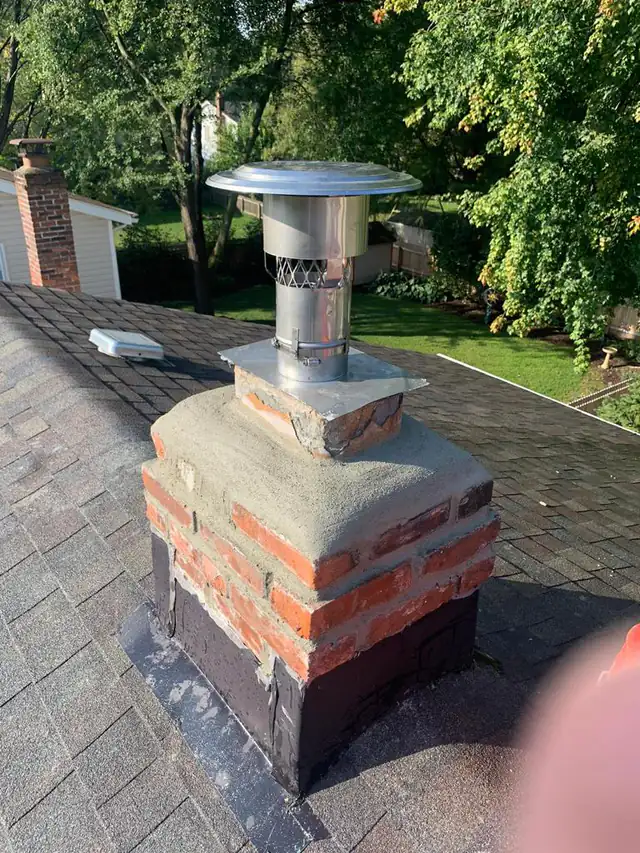
Stainless liner brought through a new crown, capped 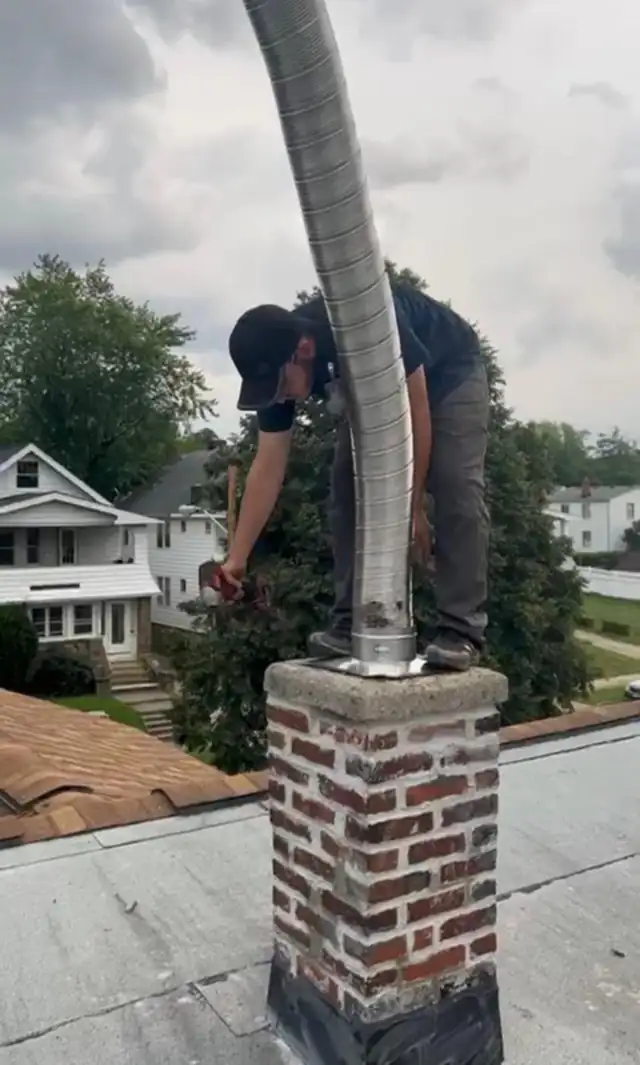
Feeding a new stainless liner down the flue
Meet the team
The people behind the work
Manny, Zack and Myke — meet the people behind Chimney Expert Solutions.
Our team and story →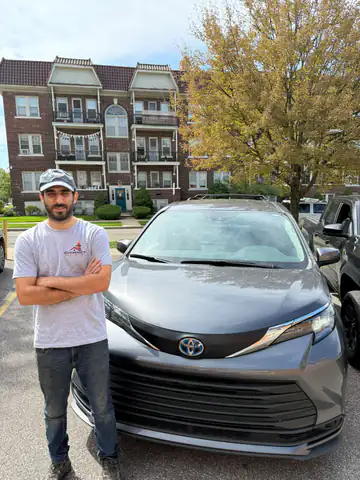
Manny
Owner
Zack
Manager
Myke
Technician
FAQ
Chimney Relining in Westlake: questions we hear
Do factory-built fireplaces really need annual service like masonry ones?
Yes. The flue is metal instead of clay, but wood smoke deposits creosote on it just the same, and the refractory panels, chase cover, cap and storm collar all have inspection points of their own. The NFPA 211 annual-inspection recommendation covers factory-built systems explicitly rather than treating them as exempt.
There's rust staining down the siding below our chimney top. What is that?
Almost always a corroding galvanized chase cover — the flat metal pan closing the top of the framed chase. The staining means it is already perforating or about to, and the water it is not shedding is going into the chase framing. A custom stainless cover with a cross-break so water runs off rather than ponding is the durable answer.
How long does a reline take and is my house disrupted?
Most single-flue relines are a one- or two-day job, and the majority of the work happens on the roof. Inside, the disruption is at the fireplace or the appliance for the connection. If the chimney vents your water heater, we plan the sequence so it is not left without a vent overnight.
Can one liner serve two appliances?
Sometimes, and it is governed by rules rather than preference — appliance types, fuels, input ratings and connection geometry all determine whether common venting is permitted. Plenty of existing shared arrangements in older Cleveland houses would not pass today. It is something we work out on site, and 'the old chimney did it this way' is not an answer.
Free estimate
Chimney Relining in Westlake?
Tell us what you’re seeing and we’ll call or text back to schedule a look — with photos of what we find and an honest read on what’s urgent and what can wait. That evidence-first method is the way we work on every job.
Call and tell us what the chimney's doing — if we're up on a roof, we'll call you back. Other ways to reach us are on the contact page, and Westlake is one of the communities we cover across Greater Cleveland.
Call216-647-1882