
Medina County, Ohio
Chimney Liner & Relining in Medina, OH
Stainless steel relining for flues with cracked tiles, gaps, or no liner at all — sized to your appliance, insulated, done once.
What chimney relining involves in Medina is set by the housing stock here: A Victorian square and its nineteenth-century streets alongside three decades of new subdivisions — traditional tall masonry stacks on one side of town and unserviced sealed direct-vent gas appliances on the other.
Medina is two towns wearing one name, and the chimney work splits cleanly along the same line. There is the old city — the Victorian square with its gaslights and storefronts, and the streets of nineteenth-century houses radiating out from it — and there is everything built since about 1990, which is a very large amount of subdivision housing pushing out toward Route 18 and the highway in every direction.
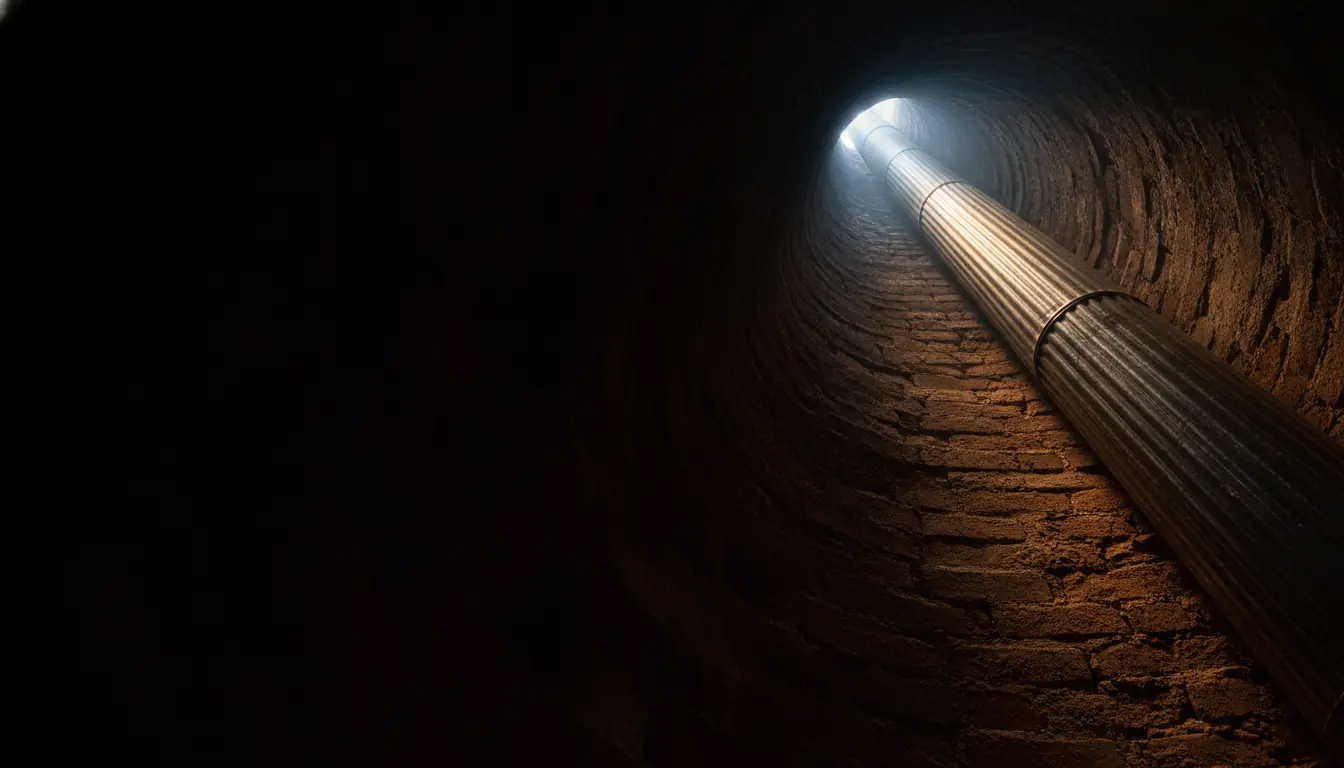
The liner is the part of the chimney that does the actual work. Everything else is structure; the liner is what contains the heat and the combustion gases and delivers them out of the house without letting either reach the brickwork or the framing around it. Most Cleveland chimneys were built with clay tile liners, and clay has a hard life here. Thermal shock cracks it, settlement shifts it, and moisture eats the mortar joints between tiles until the sections stop behaving as one continuous passage. A cracked or gapped liner is invisible without a camera, and it is the failure that turns into house fires and carbon monoxide.
What we find on Medina chimneys that leads to chimney relining
Horizontal terminations at head height
The vent for a direct-vent fireplace exits through an exterior wall, often only a few feet above the ground and often on a side of the house nobody walks past. That location invites problems a rooftop flue never has. Birds nest in the termination in spring. Snow drifts against it and blocks it, which on a sealed system stops combustion air as well as exhaust. Shrubs grow over it. Deck furniture gets stacked in front of it. And the exhaust stains the siding above it, which people usually notice long before they connect it to the fireplace. Keeping the required clearance around the termination clear is genuinely part of owning one of these.
Nineteenth-century stacks around the square
The older housing here has the full set of Victorian chimney conditions — tall exposed masonry above the roof, decorative corbelled tops, and clay flues that have carried a century and a half of use. What is different about Medina is the standard the repair is held to. These are visible chimneys on houses in a district that is looked after, so brick blend, joint profile and the shape of the top are part of the job rather than optional refinements. Photograph the existing detail before anything is dismantled, and confirm with the city what review, if any, applies to your property before scheduling a rebuild.
Direct-vent gas fireplaces that have never been serviced
The belief that a gas appliance is maintenance-free is the single most common thing we correct in the newer subdivisions. A direct-vent unit is a sealed combustion system, and every part of that seal is a service item. The gasket around the glass hardens and lets the seal go. The oxygen depletion sensor and thermocouple foul and stop proving. The burner ports clog with lint and pet hair drawn in around the surround. The fan, where there is one, packs with dust. Symptoms are a pilot that will not hold, a unit that lights and drops out, sooting on the inside of the glass, or a faint gas smell — all of which are service items rather than replacements if they are caught.
How we confirm a liner has actually failed
Camera first, always. Relining is a significant job and nobody should be selling one on a hunch or on what could be seen with a flashlight from the firebox. The scan is run the full length of the flue and it either shows you cracked tile, open joints, missing sections and gaps, or it shows you an intact flue. Both answers are useful and we say the second one out loud when it is the true one.
There is a specific version of this we want homeowners to be skeptical about: a photograph of a cracked flue that is not your flue. Footage from your chimney is identifiable, we walk you through it, and it should be part of every relining quote you receive from anyone.
Sizing: the part that decides whether it drafts
More relining jobs are ruined by wrong sizing than by bad installation. A flue that is too large runs cool, drafts weakly, and condenses moisture and creosote onto its own walls. A flue that is too small cannot move the volume of exhaust the appliance produces, and the surplus comes into the room. Neither problem announces itself as a sizing problem; both present as 'the fireplace smokes' or 'the chimney keeps getting dirty'.
For an open fireplace, the flue is sized against the area of the fireplace opening — the long-standing rule in NFPA 211 puts a round flue at no less than about a twelfth of the opening area, and a rectangular one at no less than about a tenth. For a stove, insert or appliance, the liner is sized to the manufacturer's specified outlet and the listed installation instructions, not to whatever is currently in the chimney. Getting this right is the difference between a fireplace that pulls crisply the moment it is lit and one the family stops using.
This page covers chimney relining as it plays out in Medina. The full chimney liner & relining page walks the whole job — every stage, what changes the scope, and what we do about each of them. For everything else we handle in this suburb, see chimney services in Medina.
What a relining job includes
- Camera inspection first — you see why (or whether) the flue needs relining
- Continuous stainless steel liner in the correct alloy, sized to the fireplace or appliance it serves
- Insulation wrap or pour so the flue drafts correctly and meets the liner's listing
- Existing flue cleared, and broken tile removed where it obstructs the run
- New top plate, storm collar and cap terminating the system
- Correct listed connection at the appliance — no improvised adapters
- Photos of the completed run top to bottom, and the liner's product documentation
Our work
Chimney Liner & Relining, photographed on the job
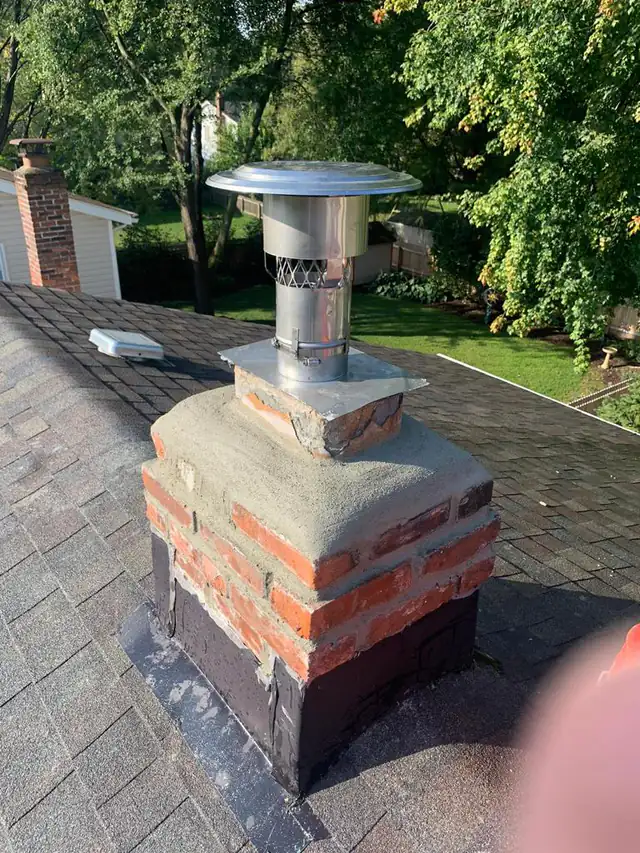
Stainless liner brought through a new crown, capped 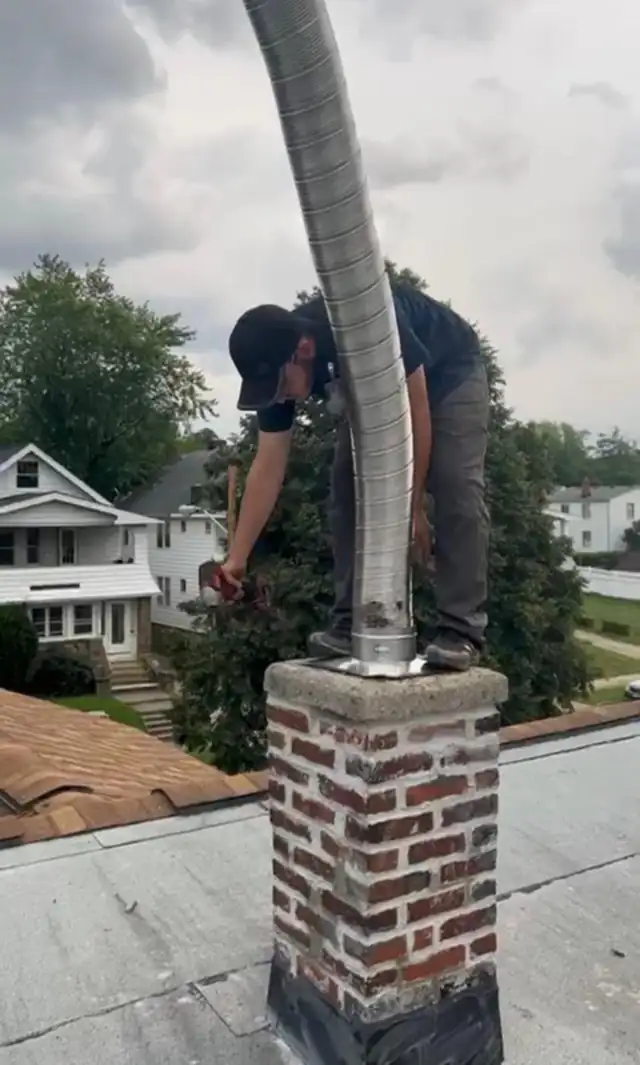
Feeding a new stainless liner down the flue
Meet the team
The people behind the work
Manny, Zack and Myke — meet the people behind Chimney Expert Solutions.
Our team and story →
Manny
Owner

Zack
Manager

Myke
Technician
FAQ
Chimney Relining in Medina: questions we hear
Our gas fireplace vents out the side wall. Does it need servicing?
Yes. A direct-vent unit is a sealed system and the seal is exactly what wears: the glass gasket hardens, the pilot assembly and safety sensors foul, burner ports clog with household dust and pet hair, and the vent termination outside collects nests and debris. None of that is visible from the room, and all of it is routine to service once a year.
There's a dark stain on the siding above a vent outside. What is it?
That is almost certainly the exhaust termination for a gas appliance, and the staining means the combustion is not as clean as it should be or the termination is partly obstructed. It is worth having the unit and the vent checked rather than just cleaning the siding — the stain is the visible end of something happening inside the appliance.
Can you work on both the old masonry chimneys and the newer gas units?
Yes — they are different jobs and we treat them that way. Masonry gets the camera, the crown and cap assessment, and the mortar and matching conversation. A sealed gas appliance gets its glass, gasket, burner, safety controls and vent termination gone through. Tell us which you have when you book so the right parts and tools come with us.
Can one liner serve two appliances?
Sometimes, and it is governed by rules rather than preference — appliance types, fuels, input ratings and connection geometry all determine whether common venting is permitted. Plenty of existing shared arrangements in older Cleveland houses would not pass today. It is something we work out on site, and 'the old chimney did it this way' is not an answer.
The chimney is being rebuilt anyway. Do the liner at the same time?
Almost always yes. A rebuild is the one moment the flue is open and accessible, and doing both together avoids paying twice for access, staging and roof protection. If we are rebuilding the top of a stack and the camera shows a compromised flue below it, we will say so before the scope is agreed rather than after.
Free estimate
Chimney Relining in Medina?
Tell us what you’re seeing and we’ll call or text back to schedule a look — with photos of what we find and an honest read on what’s urgent and what can wait. That evidence-first method is the way we work on every job.
Call and tell us what the chimney's doing — if we're up on a roof, we'll call you back. Other ways to reach us are on the contact page, and Medina is one of the communities we cover across Greater Cleveland.
Call216-647-1882