
Summit County, Ohio
Chimney Services in Cuyahoga Falls, OH
Older river-valley neighborhoods and postwar streets under a heavy mature canopy — blocked cap screens, permanently shaded masonry that never dries, tree-access animal entry, and draft affected by what is growing overhead.
Cuyahoga Falls follows the river gorge north of Akron, and the thing you notice about it from a roof is how much of the city is under trees. The older neighborhoods off Front Street and Portage Trail, the streets running down toward the gorge, and most of the postwar housing east and north of them all sit beneath a mature canopy that has had seventy or a hundred years to grow up over the rooflines.
That canopy is why people live here and it is also, from a chimney's point of view, a specific set of problems. Trees drop things. Trees hold moisture against a roof and keep a stack in permanent shade. Trees that stand taller than a chimney interfere with the wind pattern the flue depends on. And trees are how animals get onto a roof in the first place — a chimney fifteen feet from a horizontal limb is accessible in a way one in an open yard is not.
None of this is dramatic. It is the accumulation of small things: a cap screen packed with seeds, a stack that never dries out, a flue that draws worse in leaf-off season than leaf-on, and a scratching noise in the firebox in May. All of it is manageable, and most of it is prevented by getting the cap right.
What goes wrong with chimneys in Cuyahoga Falls
Debris in the cap, and a stack that never dries
A chimney under a canopy collects everything the trees shed — seeds, samaras, needles, twigs, leaf litter — and it collects it in the spark screen of the cap, where it packs down into a mat. A blocked screen restricts the flue, which shows up as poor draft or smoke in the room, and on a heating flue a restriction is a carbon monoxide question rather than a comfort one. The same shade means the masonry stays wet after every rain. Masonry that does not dry between wettings freezes wetter, spalls faster, and grows the green and black film you can see from the yard. Neither is expensive to deal with; both are invisible from the ground.
Animals, and the ones you are not allowed to remove
Raccoons treat an uncapped chimney as a hollow tree and squirrels and starlings do much the same, and an accessible roof under branches is how they get there. There is one case that catches people out. Chimney swifts are a migratory bird protected under federal law, and an active nest with eggs or young cannot legally be removed — the honest answer, when we find one, is that the flue is out of service until the birds fledge, usually a matter of weeks, and then it gets cleaned and capped so it does not happen again. We would rather tell you that than quietly do something we should not.
Branches over the chimney top
Limbs hanging above or immediately beside a flue termination are worth dealing with for two separate reasons. The obvious one is embers: a wood fire sends sparks up the flue, a screened cap catches most of them, and dry foliage directly overhead is the one place you do not want the rest to land. The less obvious one is draft. A chimney needs clear air above it to work, and a dense canopy can create the same kind of turbulence and downward pressure a taller building would. If your fireplace draws noticeably better in winter than it does in early autumn, the leaves are a reasonable suspect.
What we do here
Every chimney service we cover in Cuyahoga Falls
One crew for the whole system, so the diagnosis and the repair come from the same people. The pages marked for Cuyahoga Falls go into what this suburb’s housing stock does to that particular job; the rest cover the work across our whole service area.
Chimney Sweep & Cleaning
Full mechanical sweep of the flue, smoke chamber and firebox — creosote out, dust contained, and a look at the whole system while we're in it.
Chimney Sweep in Cuyahoga FallsChimney Inspection
Camera inspection of the full flue, plus the firebox, damper, crown, cap and flashing — documented in photos, explained in plain language.
Chimney Inspection in Cuyahoga FallsChimney Repair & Rebuilds
Masonry repair from spot fixes to full stack rebuilds — spalled brick, failed joints, and chimneys the freeze-thaw cycle has taken apart.
Chimney Repair in Cuyahoga FallsChimney Liner & Relining
Stainless steel relining for flues with cracked tiles, gaps, or no liner at all — sized to your appliance, insulated, done once.
Chimney Relining in Cuyahoga FallsChimney Leak Repair & Waterproofing
Finding where the water actually gets in — crown, cap, flashing, masonry or condensation — and fixing that, not caulking symptoms.
Chimney Leak Repair in Cuyahoga FallsChimney Caps & Crown Repair
The two parts that protect everything below them — stainless caps fitted right, and crowns rebuilt to actually shed water.
Chimney Caps & Crown RepairTuckpointing & Repointing
Grinding out failed mortar joints and repacking them properly — matched in strength, color and profile, not smeared over the brick.
Tuckpointing & RepointingFireplace & Damper Repair
Fireboxes rebuilt, refractory panels replaced, dampers that open, close and seal — the room side of the system, done right.
Fireplace & Damper Repair
Not sure which of these you need? That is what an inspection is for — or see how the whole chimney fits together and the way we work.
Working with us
What every Cuyahoga Falls job comes with
Evidence, not assertions
Photographs of every finding before you decide anything — including the parts of your chimney you have never seen.
Free estimates on repair work
Honest triage on what we find: urgent, plan-for, or fine.
One crew, whole system
One crew for the whole chimney — sweep, inspection, masonry, liner, crown, cap and flashing, with one person responsible for all of it.
Our work
The work Cuyahoga Falls chimneys usually need
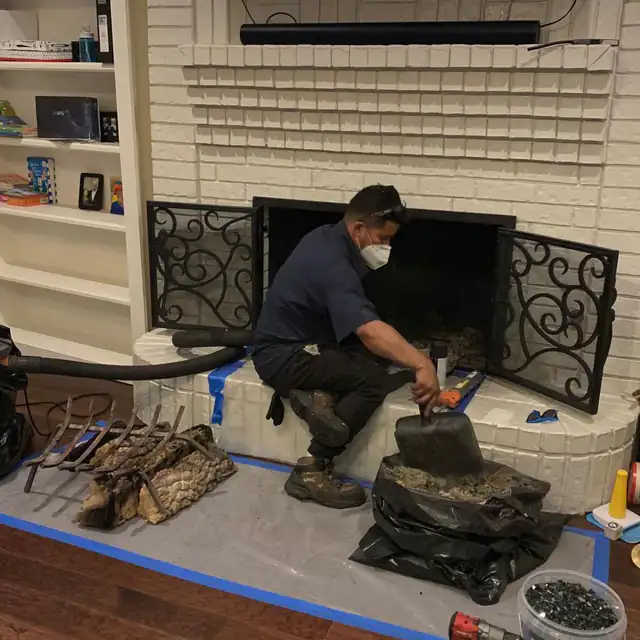
Drop cloths down and a vacuum on the hearth before anything is opened 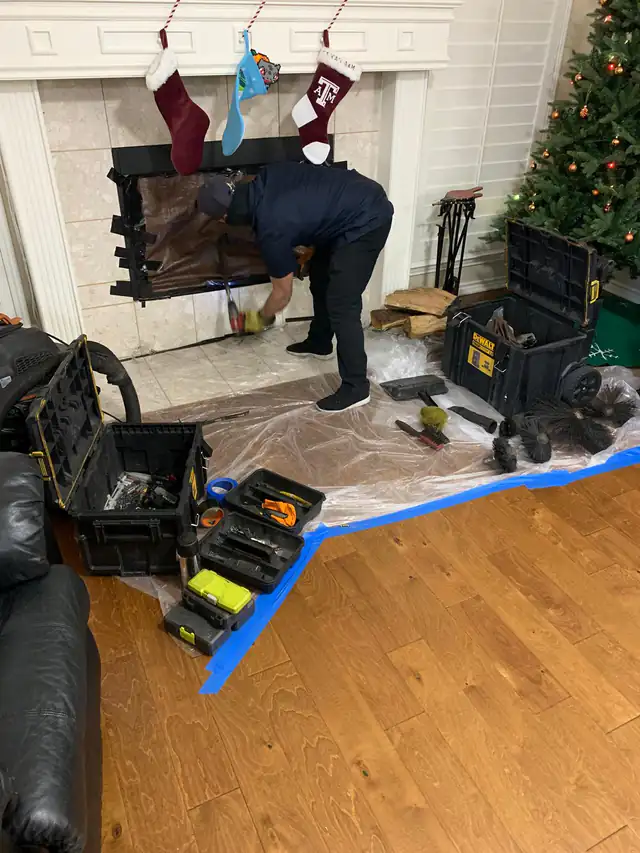
Working at the protected fireplace opening, with brushes and tools on covered floors 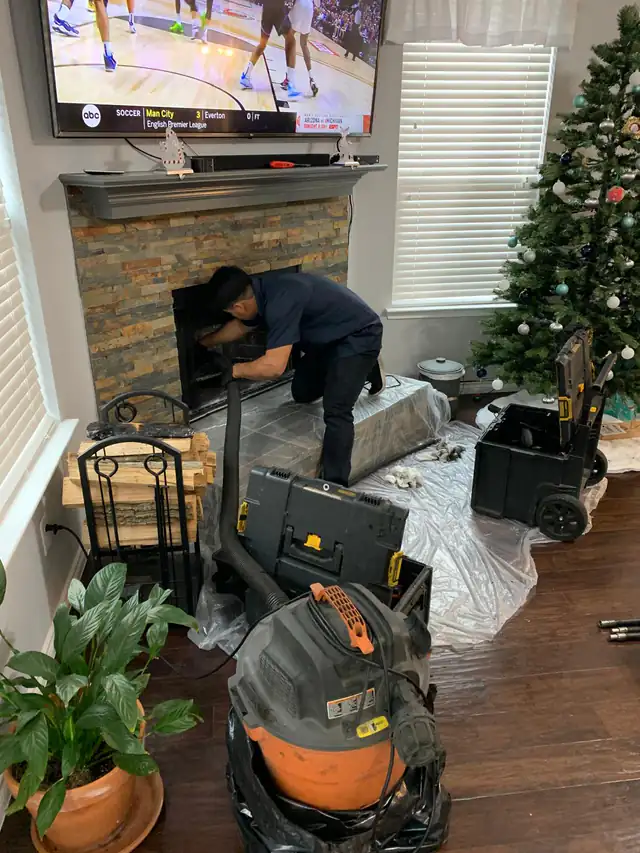
At the stone-front fireplace, with the hearth covered and a vacuum alongside
Meet the team
The people behind the work
Manny, Zack and Myke — meet the people behind Chimney Expert Solutions.
Our team and story →
Manny
Owner
Zack
Manager
Myke
Technician
Service area
Cuyahoga Falls is inside our service area
36 communities across Northeast Ohio · based in Cleveland Heights
- Cleveland
- Lakewood
- Cleveland Heights
- Shaker Heights
- Parma
- Rocky River
- Westlake
- Strongsville
- Euclid
- South Euclid
- University Heights
- Beachwood
- Bedford
- Garfield Heights
- North Olmsted
- Mentor
- Willoughby
- Painesville
- Chardon
- Elyria
- Lorain
- Avon Lake
- Medina
- Brunswick
- Akron
- Cuyahoga Falls
- Hudson
- Kent
- Canton
- Wooster
- Warren
- Youngstown
- Boardman
- Sandusky
- Mansfield
- Ashland
FAQ
Cuyahoga Falls chimney questions
We hear scratching in the chimney. What happens next?
First we identify what it is, because that determines what can be done. Raccoons, squirrels and starlings can be dealt with and the flue cleaned and capped. Chimney swifts are federally protected migratory birds, and an active nest has to be left alone until the young fledge — after which the flue gets cleaned and a proper cap goes on so it does not recur. We will tell you which you have before quoting anything.
Our chimney is always damp and greenish on one side. Is that a problem?
It means the masonry is not drying between rains, usually because it is permanently shaded. Wet masonry going into a freeze does far more damage than dry masonry does, so it accelerates joint erosion and spalling. Opening up the shade where that is possible helps; keeping the crown, cap and pointing in good order matters more here than it would on a sunny exposure.
Do we really need a cap with a screen if we are surrounded by trees?
Especially if you are. The screen is what keeps embers in and animals and debris out, and under a canopy it is doing all three jobs constantly. What it does need is a look each year, because the same screen that catches seeds and leaf litter will pack solid over a season and restrict the flue. A cap is not a fit-and-forget component in this neighborhood.
Should we cut back the branches over the chimney?
Where it is practical, yes. Foliage directly above a flue is the worst place for a spark to land, and a dense canopy over the top can disturb the airflow the chimney needs to draw. A fireplace that works noticeably better once the leaves are down is telling you something. That said, tree work is not what we do — we will point out what is affecting the chimney and leave the arborist decision to you.
Free estimate
Chimney trouble in Cuyahoga Falls?
Tell us what you're seeing and we'll call or text back to schedule a look — with photos of what we find and an honest read on what's urgent and what can wait.
Call and tell us what the chimney's doing — if we're up on a roof, we'll call you back. You can also reach us on the contact page, or look through the other communities we serve if you are calling about a second property.
Call216-647-1882