
Cuyahoga County, Ohio
Chimney Liner & Relining in Strongsville, OH
Stainless steel relining for flues with cracked tiles, gaps, or no liner at all — sized to your appliance, insulated, done once.
What chimney relining involves in Strongsville is set by the housing stock here: 70s–90s colonials and later builds — thin original crowns reaching the end of their service life, stiff original dampers, exterior stacks that run cold, and a generation of fireplaces overdue a first camera inspection.
Strongsville grew fastest between the 1970s and the 1990s, spreading out from the old town center along Pearl Road and Route 82 into large-lot subdivisions. Its chimneys reflect those decades precisely: full-height masonry fireplace chimneys on the colonials of the era, factory-built systems in the later builds, and everything now thirty to fifty years old — which is exactly the age where original components start failing on schedule rather than at random.
The liner is the part of the chimney that does the actual work. Everything else is structure; the liner is what contains the heat and the combustion gases and delivers them out of the house without letting either reach the brickwork or the framing around it. Most Cleveland chimneys were built with clay tile liners, and clay has a hard life here. Thermal shock cracks it, settlement shifts it, and moisture eats the mortar joints between tiles until the sections stop behaving as one continuous passage. A cracked or gapped liner is invisible without a camera, and it is the failure that turns into house fires and carbon monoxide.
What we find on Strongsville chimneys that leads to chimney relining
Fireplaces with no history at all
The most common Strongsville situation is not a defect, it is an information vacuum. Nobody knows what is up there. The findings that come out of that first camera scan cluster predictably: a damper that has rusted stiff from disuse, a nest in an uncapped flue, creosote from a previous owner's burning habits, and occasionally cracked tile from a chimney fire nobody ever mentioned at the closing table. All of it is manageable; none of it is visible from the hearth.
Thin 1970s crowns failing on schedule
Crowns from this building era were frequently poured thin, flush with the brick, and bonded rigidly to the flue tile. All three are problems. Thin cracks, flush means water runs down the brick face instead of dripping clear, and a rigid bond to the tile guarantees a crack where the two move at different rates. Thirty to fifty years is about the service life of that assembly, which is why a whole generation of Strongsville crowns is reaching the end at once.
Exterior chimneys that run cold
The era's colonials typically put the chimney on an outside gable wall rather than through the middle of the house, which looks right and performs worse. A stack running up the outside never holds heat, so the flue is cold at startup and stays cooler through the burn. Cold flue walls are where creosote condenses, and a cold column of air is what makes a fireplace push smoke into the room for the first ten minutes. Priming the flue before lighting solves most of the smoking; the faster creosote build is a maintenance-frequency question worth knowing about.
Sizing: the part that decides whether it drafts
More relining jobs are ruined by wrong sizing than by bad installation. A flue that is too large runs cool, drafts weakly, and condenses moisture and creosote onto its own walls. A flue that is too small cannot move the volume of exhaust the appliance produces, and the surplus comes into the room. Neither problem announces itself as a sizing problem; both present as 'the fireplace smokes' or 'the chimney keeps getting dirty'.
For an open fireplace, the flue is sized against the area of the fireplace opening — the long-standing rule in NFPA 211 puts a round flue at no less than about a twelfth of the opening area, and a rectangular one at no less than about a tenth. For a stove, insert or appliance, the liner is sized to the manufacturer's specified outlet and the listed installation instructions, not to whatever is currently in the chimney. Getting this right is the difference between a fireplace that pulls crisply the moment it is lit and one the family stops using.
What drives the cost of a reline
- Height and diameter. A liner is a manufactured product sold by the foot in a given diameter, and a three-story Cleveland Heights stack is materially more liner than a ranch.
- Insulation method. A wrapped liner and a pour-around insulation both cost more than an uninsulated drop, and both are usually the correct specification.
- Offsets and obstructions. A straight flue is a straightforward day. A chimney with a significant offset, or one where broken tile has to be removed to make room, is not.
- Whether tile has to be broken out. On tight older flues, opening the passage to accept the correct liner diameter is real, messy work.
- The appliance connection. A direct connect to a stove or insert, versus a fireplace connection, versus a shared utility flue that needs reconfiguring, are different scopes.
- Access at the top. Roof pitch and material change how the crew works from the moment they arrive.
- Whether the crown and cap need doing at the same time. They frequently do, and doing them in the same visit is cheaper than doing them separately later.
This page covers chimney relining as it plays out in Strongsville. The full chimney liner & relining page walks the whole job — every stage, what changes the scope, and what we do about each of them. For everything else we handle in this suburb, see chimney services in Strongsville.
What a relining job includes
- Camera inspection first — you see why (or whether) the flue needs relining
- Continuous stainless steel liner in the correct alloy, sized to the fireplace or appliance it serves
- Insulation wrap or pour so the flue drafts correctly and meets the liner's listing
- Existing flue cleared, and broken tile removed where it obstructs the run
- New top plate, storm collar and cap terminating the system
- Correct listed connection at the appliance — no improvised adapters
- Photos of the completed run top to bottom, and the liner's product documentation
Our work
Chimney Liner & Relining, photographed on the job
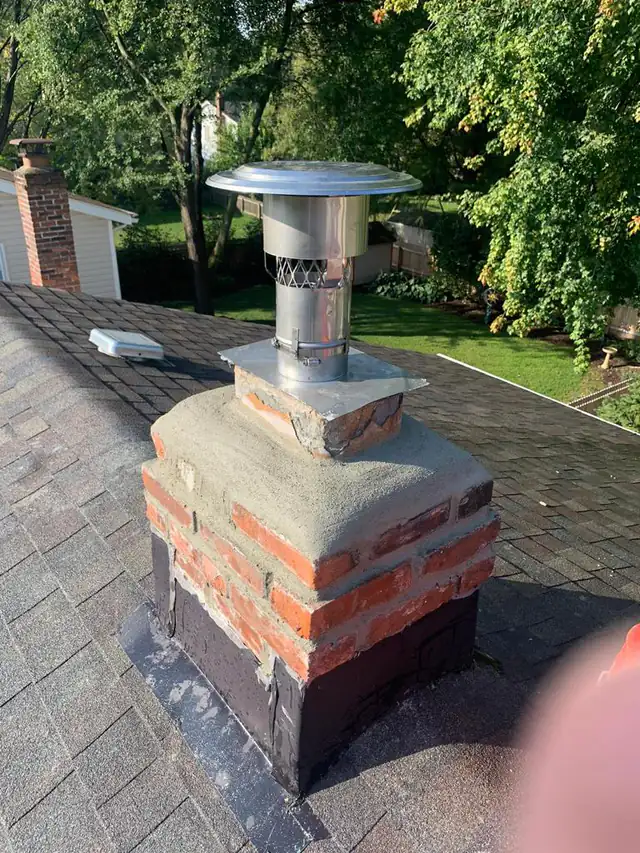
Stainless liner brought through a new crown, capped 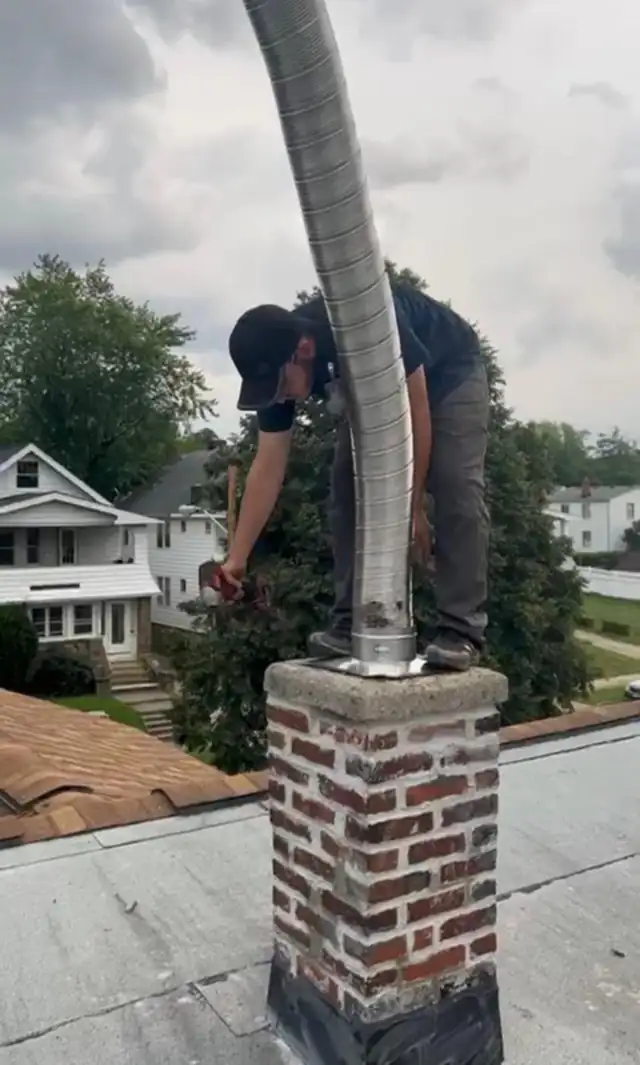
Feeding a new stainless liner down the flue
Meet the team
The people behind the work
Manny, Zack and Myke — meet the people behind Chimney Expert Solutions.
Our team and story →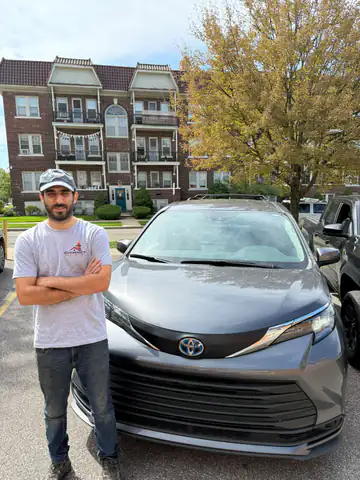
Manny
Owner
Zack
Manager
Myke
Technician
FAQ
Chimney Relining in Strongsville: questions we hear
We just bought in Strongsville and have no chimney records. Where do we start?
Sweep plus camera inspection, one visit. It resets the clock: the flue gets cleaned, its condition is documented in photographs, and you find out what if anything needs attention before your first winter of fires. From there it is a normal annual rhythm, and the first visit is the one that produces all the information.
Our damper barely moves. Live with it or fix it?
Fix it. A damper that will not close is heating money going up the flue every day of the winter, and one that will not open reliably is how smoke ends up in the family room. Depending on condition that is either freeing, cleaning and re-seating the original, or fitting a top-sealing damper at the top of the flue, which seals better than the original ever did and keeps rain and animals out as a bonus.
The fireplace smokes for the first few minutes every time. Is that a defect?
Usually it is a cold exterior flue rather than a fault, and it is common on this era of house. The chimney is full of cold, dense air that will not move until it warms. Holding a rolled newspaper torch up at the damper for a minute before lighting primes the flue and solves most of it, and it costs nothing. If it still smokes after that, the cause is something else and worth diagnosing properly.
Can one liner serve two appliances?
Sometimes, and it is governed by rules rather than preference — appliance types, fuels, input ratings and connection geometry all determine whether common venting is permitted. Plenty of existing shared arrangements in older Cleveland houses would not pass today. It is something we work out on site, and 'the old chimney did it this way' is not an answer.
Does a stainless liner need sweeping like clay?
Yes. Stainless is smoother and better insulated, so it usually builds less deposit and is easier to clean, but wood smoke still leaves creosote on it. What changes is the brush: a wire brush that is fine on clay tile can damage a stainless liner, so it needs a poly brush sized to the liner. Worth knowing if you ever hire a sweep who does not ask what your liner is.
Free estimate
Chimney Relining in Strongsville?
Tell us what you’re seeing and we’ll call or text back to schedule a look — with photos of what we find and an honest read on what’s urgent and what can wait. That evidence-first method is the way we work on every job.
Call and tell us what the chimney's doing — if we're up on a roof, we'll call you back. Other ways to reach us are on the contact page, and Strongsville is one of the communities we cover across Greater Cleveland.
Call216-647-1882