
Summit County, Ohio
Chimney Liner & Relining in Cuyahoga Falls, OH
Stainless steel relining for flues with cracked tiles, gaps, or no liner at all — sized to your appliance, insulated, done once.
What chimney relining involves in Cuyahoga Falls is set by the housing stock here: Older river-valley neighborhoods and postwar streets under a heavy mature canopy — blocked cap screens, permanently shaded masonry that never dries, tree-access animal entry, and draft affected by what is growing overhead.
Cuyahoga Falls follows the river gorge north of Akron, and the thing you notice about it from a roof is how much of the city is under trees. The older neighborhoods off Front Street and Portage Trail, the streets running down toward the gorge, and most of the postwar housing east and north of them all sit beneath a mature canopy that has had seventy or a hundred years to grow up over the rooflines.
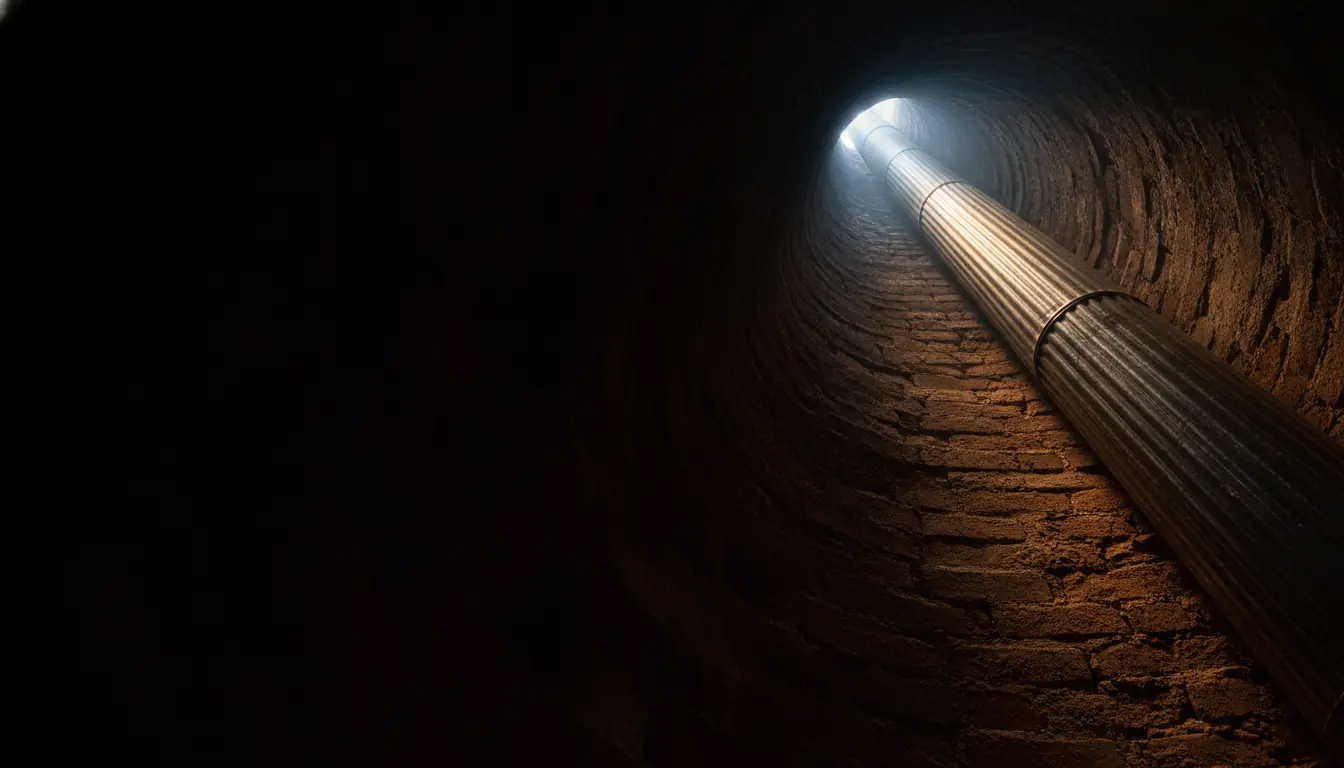
The liner is the part of the chimney that does the actual work. Everything else is structure; the liner is what contains the heat and the combustion gases and delivers them out of the house without letting either reach the brickwork or the framing around it. Most Cleveland chimneys were built with clay tile liners, and clay has a hard life here. Thermal shock cracks it, settlement shifts it, and moisture eats the mortar joints between tiles until the sections stop behaving as one continuous passage. A cracked or gapped liner is invisible without a camera, and it is the failure that turns into house fires and carbon monoxide.
What we find on Cuyahoga Falls chimneys that leads to chimney relining
Debris in the cap, and a stack that never dries
A chimney under a canopy collects everything the trees shed — seeds, samaras, needles, twigs, leaf litter — and it collects it in the spark screen of the cap, where it packs down into a mat. A blocked screen restricts the flue, which shows up as poor draft or smoke in the room, and on a heating flue a restriction is a carbon monoxide question rather than a comfort one. The same shade means the masonry stays wet after every rain. Masonry that does not dry between wettings freezes wetter, spalls faster, and grows the green and black film you can see from the yard. Neither is expensive to deal with; both are invisible from the ground.
Animals, and the ones you are not allowed to remove
Raccoons treat an uncapped chimney as a hollow tree and squirrels and starlings do much the same, and an accessible roof under branches is how they get there. There is one case that catches people out. Chimney swifts are a migratory bird protected under federal law, and an active nest with eggs or young cannot legally be removed — the honest answer, when we find one, is that the flue is out of service until the birds fledge, usually a matter of weeks, and then it gets cleaned and capped so it does not happen again. We would rather tell you that than quietly do something we should not.
Branches over the chimney top
Limbs hanging above or immediately beside a flue termination are worth dealing with for two separate reasons. The obvious one is embers: a wood fire sends sparks up the flue, a screened cap catches most of them, and dry foliage directly overhead is the one place you do not want the rest to land. The less obvious one is draft. A chimney needs clear air above it to work, and a dense canopy can create the same kind of turbulence and downward pressure a taller building would. If your fireplace draws noticeably better in winter than it does in early autumn, the leaves are a reasonable suspect.
Furnace and water heater flues: the Cleveland problem
This one affects tens of thousands of houses across Parma, Old Brooklyn, Euclid, Garfield Heights and every other postwar neighborhood, and almost nobody has been told about it. The sequence goes like this. The original furnace and the water heater both vented into the masonry chimney, and the flue was sized for the two of them together. The furnace gets replaced with a high-efficiency condensing unit, which vents through white PVC out a side wall. The water heater is left where it is.
Now a small appliance is venting into a flue sized for a large one. The exhaust volume is nowhere near enough to keep that flue warm, so it condenses on the way up. The condensate is acidic. It attacks the tile and the mortar joints, and over a decade it can take a flue apart from the inside while everything looks perfectly normal from the basement. The industry name for this is an orphaned water heater, and the standard fix is a correctly sized metal liner that matches the appliance rather than the chimney.
The signs are worth knowing: rust or scaling on the draft hood or the vent connector, dampness or white crusty deposits at the base of the chimney, tile fragments in the clean-out, or a chimney exterior that is staining on the outside near the top. If your furnace was upgraded in the last fifteen years and nobody looked at the chimney afterwards, that is the situation this section is describing.
What drives the cost of a reline
- Height and diameter. A liner is a manufactured product sold by the foot in a given diameter, and a three-story Cleveland Heights stack is materially more liner than a ranch.
- Insulation method. A wrapped liner and a pour-around insulation both cost more than an uninsulated drop, and both are usually the correct specification.
- Offsets and obstructions. A straight flue is a straightforward day. A chimney with a significant offset, or one where broken tile has to be removed to make room, is not.
- Whether tile has to be broken out. On tight older flues, opening the passage to accept the correct liner diameter is real, messy work.
- The appliance connection. A direct connect to a stove or insert, versus a fireplace connection, versus a shared utility flue that needs reconfiguring, are different scopes.
- Access at the top. Roof pitch and material change how the crew works from the moment they arrive.
- Whether the crown and cap need doing at the same time. They frequently do, and doing them in the same visit is cheaper than doing them separately later.
This page covers chimney relining as it plays out in Cuyahoga Falls. The full chimney liner & relining page walks the whole job — every stage, what changes the scope, and what we do about each of them. For everything else we handle in this suburb, see chimney services in Cuyahoga Falls.
What a relining job includes
- Camera inspection first — you see why (or whether) the flue needs relining
- Continuous stainless steel liner in the correct alloy, sized to the fireplace or appliance it serves
- Insulation wrap or pour so the flue drafts correctly and meets the liner's listing
- Existing flue cleared, and broken tile removed where it obstructs the run
- New top plate, storm collar and cap terminating the system
- Correct listed connection at the appliance — no improvised adapters
- Photos of the completed run top to bottom, and the liner's product documentation
Our work
Chimney Liner & Relining, photographed on the job
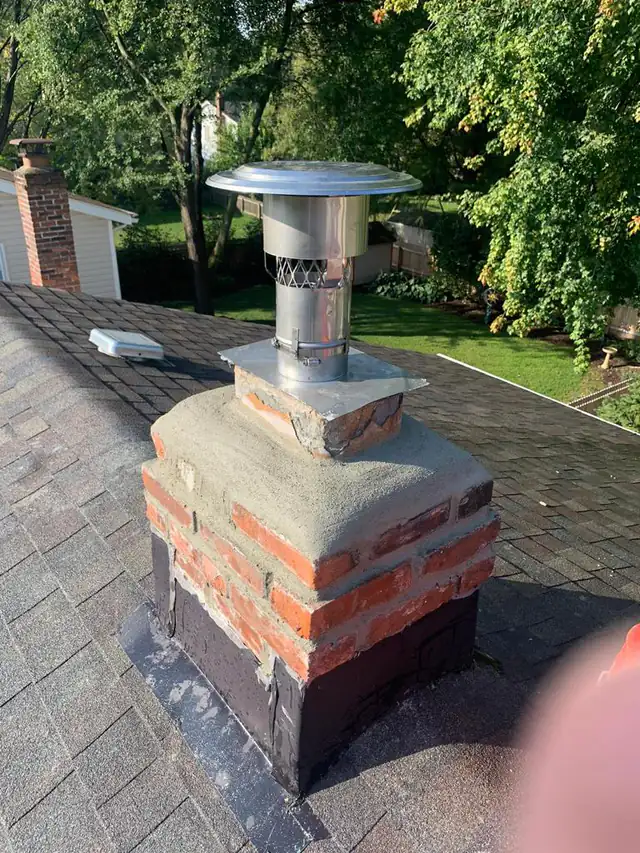
Stainless liner brought through a new crown, capped 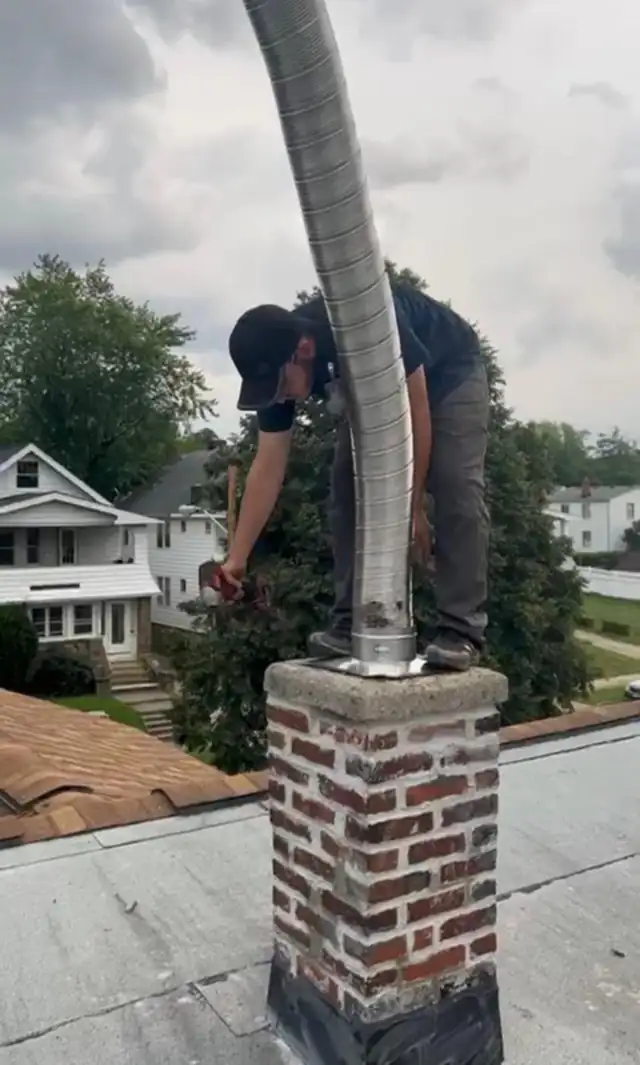
Feeding a new stainless liner down the flue
Meet the team
The people behind the work
Manny, Zack and Myke — meet the people behind Chimney Expert Solutions.
Our team and story →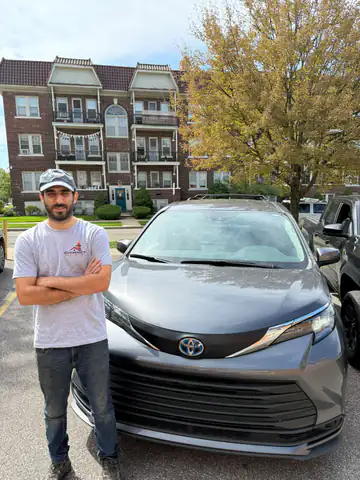
Manny
Owner
Zack
Manager
Myke
Technician
FAQ
Chimney Relining in Cuyahoga Falls: questions we hear
We hear scratching in the chimney. What happens next?
First we identify what it is, because that determines what can be done. Raccoons, squirrels and starlings can be dealt with and the flue cleaned and capped. Chimney swifts are federally protected migratory birds, and an active nest has to be left alone until the young fledge — after which the flue gets cleaned and a proper cap goes on so it does not recur. We will tell you which you have before quoting anything.
Do we really need a cap with a screen if we are surrounded by trees?
Especially if you are. The screen is what keeps embers in and animals and debris out, and under a canopy it is doing all three jobs constantly. What it does need is a look each year, because the same screen that catches seeds and leaf litter will pack solid over a season and restrict the flue. A cap is not a fit-and-forget component in this neighborhood.
Should we cut back the branches over the chimney?
Where it is practical, yes. Foliage directly above a flue is the worst place for a spark to land, and a dense canopy over the top can disturb the airflow the chimney needs to draw. A fireplace that works noticeably better once the leaves are down is telling you something. That said, tree work is not what we do — we will point out what is affecting the chimney and leave the arborist decision to you.
Why stainless instead of replacing the broken clay tiles?
Access. Clay tiles are stacked inside a sealed masonry shaft, so reaching a cracked one partway up means opening the chimney to get to it — which usually costs more than relining and leaves you with a repaired eighty-year-old flue. A stainless liner installs from the top, restores a continuous sealed passage in a day or two on most jobs, and the liner itself typically carries a manufacturer lifetime warranty.
How long does a reline take and is my house disrupted?
Most single-flue relines are a one- or two-day job, and the majority of the work happens on the roof. Inside, the disruption is at the fireplace or the appliance for the connection. If the chimney vents your water heater, we plan the sequence so it is not left without a vent overnight.
Free estimate
Chimney Relining in Cuyahoga Falls?
Tell us what you’re seeing and we’ll call or text back to schedule a look — with photos of what we find and an honest read on what’s urgent and what can wait. That evidence-first method is the way we work on every job.
Call and tell us what the chimney's doing — if we're up on a roof, we'll call you back. Other ways to reach us are on the contact page, and Cuyahoga Falls is one of the communities we cover across Greater Cleveland.
Call216-647-1882