
Lake County, Ohio
Chimney Liner & Relining in Willoughby, OH
Stainless steel relining for flues with cracked tiles, gaps, or no liner at all — sized to your appliance, insulated, done once.
What chimney relining involves in Willoughby is set by the housing stock here: A nineteenth-century downtown core plus decades of suburban growth, in a market where wood heat is genuinely used — a high concentration of stoves and inserts, many of them venting into oversized original flues.
Willoughby has a real nineteenth-century downtown — the Erie Street blocks by the Chagrin River, with brick commercial buildings and older houses on the streets behind them — and then decades of suburban building spreading east and south around it. What ties the market together is not a building era. It is that people here genuinely burn wood, and have for a long time, because Lake County winters make supplemental heat worth the trouble.
The liner is the part of the chimney that does the actual work. Everything else is structure; the liner is what contains the heat and the combustion gases and delivers them out of the house without letting either reach the brickwork or the framing around it. Most Cleveland chimneys were built with clay tile liners, and clay has a hard life here. Thermal shock cracks it, settlement shifts it, and moisture eats the mortar joints between tiles until the sections stop behaving as one continuous passage. A cracked or gapped liner is invisible without a camera, and it is the failure that turns into house fires and carbon monoxide.
What we find on Willoughby chimneys that leads to chimney relining
Inserts installed without a full-length liner
The common older installation was a slip connector or a short length of pipe from the insert's outlet up into the smoke chamber, venting into the original masonry flue. The problem is volume and temperature. A modern insert burns efficiently, so the exhaust leaves cooler and in far smaller quantity than an open fire's did, and it is now expanding into a flue several times larger than it needs. It slows, it cools, and it deposits creosote heavily up in the cold masonry where nobody can brush it. The current standard is a correctly sized stainless liner running the full height from the appliance to the top, insulated where the situation calls for it. It drafts better and it is dramatically easier to keep clean.
Nobody has looked behind the insert since it went in
An insert is a plug in the fireplace. Everything behind it — the original firebox, the damper area, the smoke chamber, the point where the connector enters the flue — is out of sight and out of mind, sometimes for decades. What we find back there when a unit finally comes out is the interesting part: creosote packed into the smoke shelf, a rusted damper frame, a connector that has come loose from its collar, deteriorated firebrick, and occasionally a masonry defect that has been getting worse in the dark since the Clinton administration. If your insert has never been pulled, that is the single highest-value thing to do to it.
Old downtown stacks against a neighboring wall
In the older Erie Street blocks and the streets right behind them, buildings sit close together or share walls, and chimneys were built into those walls. That changes the work in a few specific ways: one side of the stack may be inaccessible from either property, roof access sometimes has to be arranged with a neighbor, and flues in shared walls occasionally turn out to serve — or to have once served — the building next door. On older mixed commercial and residential buildings, sorting out which flue belongs to which occupancy is a real part of the first inspection rather than a formality.
What a relining job involves
Preparing the flue
The existing flue is swept and cleared. Where broken tile is obstructing the passage or protruding into it, it has to be removed or broken out so the liner can run straight. On some older chimneys with tight offsets, this is the part that takes the time, and it is the part a quote can get wrong if nobody looked first.
The liner and its insulation
A continuous stainless liner in the correct alloy for the fuel — 316Ti-grade stainless is the normal choice for wood and oil, and a listed alloy is used for high-efficiency condensing appliances, because condensate chemistry differs. It goes in insulated, either with a factory or field-applied wrap or a pour-around insulation mix. Insulation is not optional dressing: it is often required by the liner's own listing, it keeps the flue warm enough to draft properly, and it dramatically reduces condensation and creosote formation. An uninsulated liner rattling around inside an oversized masonry chase is a cheaper job and a worse chimney.
Termination at the top
A top plate seals the liner to the top of the chimney, a storm collar sheds water off the joint, and a cap sized to the new liner finishes it. Done properly, the top of the chimney is now sealed against rain for the first time in decades, which is a side benefit that quietly protects the masonry below.
The connection at the bottom
The liner is connected to the fireplace, stove or appliance with the correct listed components. Improvised adapters and unsupported connector pipe are common findings on older installations and they are exactly where the system leaks. On a fireplace, this usually means a connection at the smoke chamber; on an insert or stove, a direct connect to the appliance outlet.
Documentation
Photos of the completed run top to bottom, and the liner's product documentation handed over, so the manufacturer's warranty on the liner is something you actually hold rather than something you were told about.
What drives the cost of a reline
- Height and diameter. A liner is a manufactured product sold by the foot in a given diameter, and a three-story Cleveland Heights stack is materially more liner than a ranch.
- Insulation method. A wrapped liner and a pour-around insulation both cost more than an uninsulated drop, and both are usually the correct specification.
- Offsets and obstructions. A straight flue is a straightforward day. A chimney with a significant offset, or one where broken tile has to be removed to make room, is not.
- Whether tile has to be broken out. On tight older flues, opening the passage to accept the correct liner diameter is real, messy work.
- The appliance connection. A direct connect to a stove or insert, versus a fireplace connection, versus a shared utility flue that needs reconfiguring, are different scopes.
- Access at the top. Roof pitch and material change how the crew works from the moment they arrive.
- Whether the crown and cap need doing at the same time. They frequently do, and doing them in the same visit is cheaper than doing them separately later.
This page covers chimney relining as it plays out in Willoughby. The full chimney liner & relining page walks the whole job — every stage, what changes the scope, and what we do about each of them. For everything else we handle in this suburb, see chimney services in Willoughby.
What a relining job includes
- Camera inspection first — you see why (or whether) the flue needs relining
- Continuous stainless steel liner in the correct alloy, sized to the fireplace or appliance it serves
- Insulation wrap or pour so the flue drafts correctly and meets the liner's listing
- Existing flue cleared, and broken tile removed where it obstructs the run
- New top plate, storm collar and cap terminating the system
- Correct listed connection at the appliance — no improvised adapters
- Photos of the completed run top to bottom, and the liner's product documentation
Our work
Chimney Liner & Relining, photographed on the job
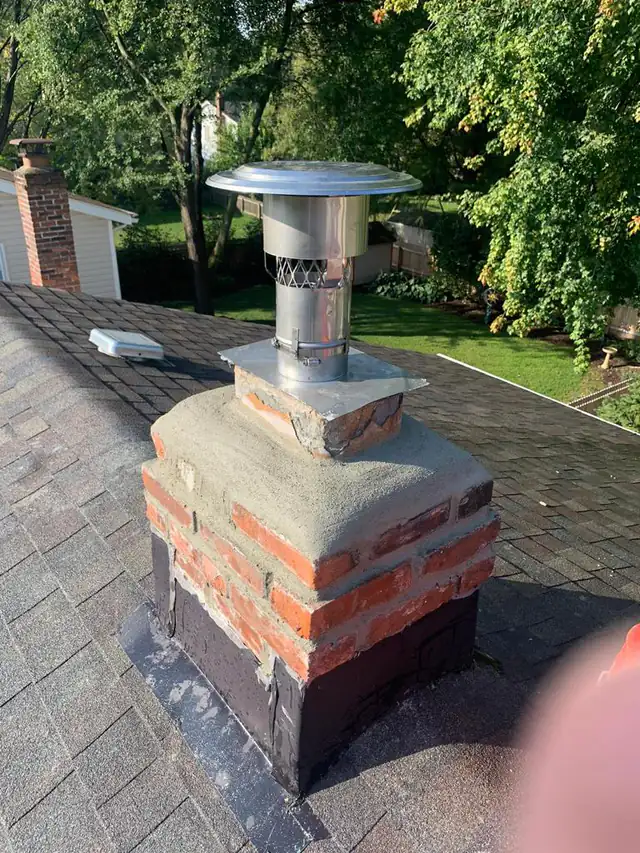
Stainless liner brought through a new crown, capped 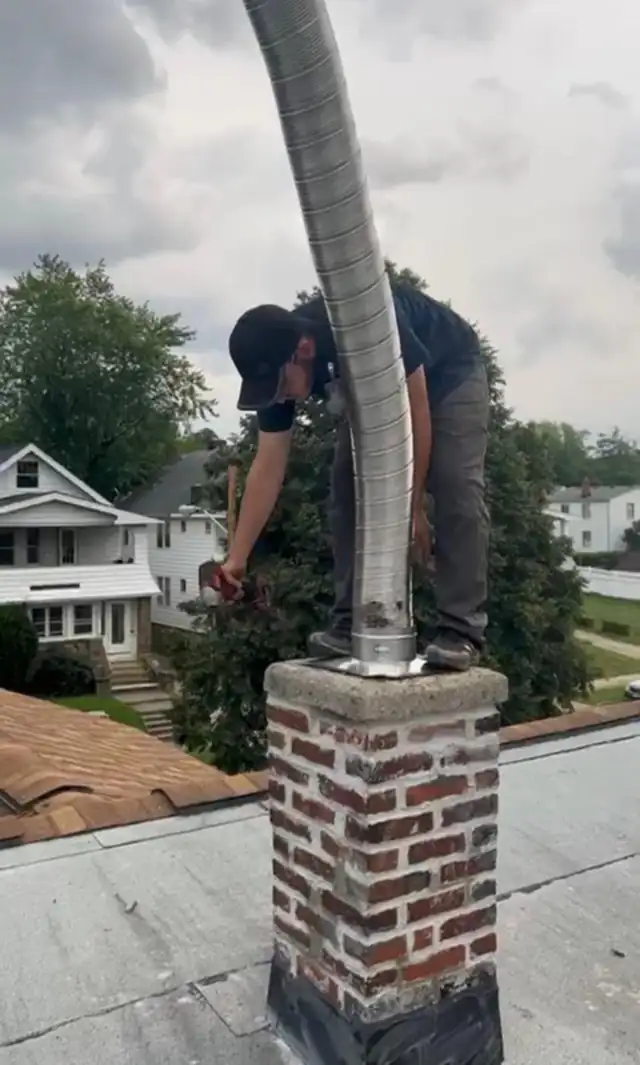
Feeding a new stainless liner down the flue
Meet the team
The people behind the work
Manny, Zack and Myke — meet the people behind Chimney Expert Solutions.
Our team and story →
Manny
Owner

Zack
Manager

Myke
Technician
FAQ
Chimney Relining in Willoughby: questions we hear
Our insert vents into the old flue with a short pipe. Is that acceptable?
It is a very common older arrangement and it is worth replacing. A modern insert produces cooler, lower-volume exhaust than the flue was built for, so it slows down in the oversized masonry, cools, and lays creosote in the part of the chimney nobody can brush. A full-height stainless liner sized to the appliance draws better, burns cleaner and is far easier to maintain. We will show you the camera footage before recommending it.
Does our fireplace insert need to be pulled out to be swept?
To be swept and genuinely inspected, in most cases yes. There is no other way to see the smoke chamber, the damper area and the connection into the flue, and those are the places deposits and defects accumulate. It is more work than a straightforward sweep, so we would rather tell you that when you book than surprise you with it at the door.
We're in one of the older downtown buildings. Do you work on those?
Yes, with the caveat that they take more planning. Shared and party walls mean access sometimes has to be arranged with the neighboring owner, and older mixed-use buildings can have flues whose history is genuinely unclear. The first visit is largely about establishing what is there and what serves what, and we document it so it does not have to be worked out again.
How long does a reline take and is my house disrupted?
Most single-flue relines are a one- or two-day job, and the majority of the work happens on the roof. Inside, the disruption is at the fireplace or the appliance for the connection. If the chimney vents your water heater, we plan the sequence so it is not left without a vent overnight.
Can one liner serve two appliances?
Sometimes, and it is governed by rules rather than preference — appliance types, fuels, input ratings and connection geometry all determine whether common venting is permitted. Plenty of existing shared arrangements in older Cleveland houses would not pass today. It is something we work out on site, and 'the old chimney did it this way' is not an answer.
Free estimate
Chimney Relining in Willoughby?
Tell us what you’re seeing and we’ll call or text back to schedule a look — with photos of what we find and an honest read on what’s urgent and what can wait. That evidence-first method is the way we work on every job.
Call and tell us what the chimney's doing — if we're up on a roof, we'll call you back. Other ways to reach us are on the contact page, and Willoughby is one of the communities we cover across Greater Cleveland.
Call216-647-1882