
Cuyahoga County, Ohio
Chimney Liner & Relining in Cleveland Heights, OH
Stainless steel relining for flues with cracked tiles, gaps, or no liner at all — sized to your appliance, insulated, done once.
What chimney relining involves in Cleveland Heights is set by the housing stock here: 1910s–20s Tudors and colonials with multiple fireplaces and tall, detailed multi-flue stacks — architectural chimneys on slate roofs, over clay flues that frequently need relining.
Cleveland Heights was built out as a streetcar suburb in the 1910s and 1920s, and the housing shows exactly that: brick Tudors, center-hall colonials and arts-and-crafts homes along Fairmount and through Cedar Fairmount, Coventry, Cedar Lee and the Forest Hill streets. These are houses with real masonry, and very often with more than one fireplace.
The liner is the part of the chimney that does the actual work. Everything else is structure; the liner is what contains the heat and the combustion gases and delivers them out of the house without letting either reach the brickwork or the framing around it. Most Cleveland chimneys were built with clay tile liners, and clay has a hard life here. Thermal shock cracks it, settlement shifts it, and moisture eats the mortar joints between tiles until the sections stop behaving as one continuous passage. A cracked or gapped liner is invisible without a camera, and it is the failure that turns into house fires and carbon monoxide.
What we find on Cleveland Heights chimneys that leads to chimney relining
Three flues, three different problems, one stack
Heights chimneys age unevenly because their flues do different work. The heating flue has run every winter for a century and is usually the one with condensation damage and eroded joints. The main fireplace flue has taken the thermal cycling. The bedroom fireplace flue may have been unused since the 1950s and may be housing a nest. Each one gets scanned and assessed separately, and the single most common outcome is a mixed verdict rather than a blanket one.
Slate and tile roofs, which cannot be walked on
A great many Cleveland Heights houses have slate or clay tile roofs, and those roofs break under foot. That changes chimney work materially: access has to be staged with roof ladders or scaffolding rather than by walking up to the stack, protection under the work area matters more, and any flashing repair has to be done by someone who understands how the counterflashing ties into a slate field. A contractor who is casual about walking your slate is telling you something about the rest of the job.
Ornamental brickwork that a generic rebuild erases
Corbelled courses, banding, decorative caps and clay pots are why these chimneys look the way they do, and they are the first thing to disappear in a rebuild quoted by someone who does not intend to reproduce them. Every one of those details can be rebuilt: it takes photographs of the existing work before demolition and a willingness to match rather than simplify. On a visible Heights chimney we quote it that way by default and would rather lose the job than flatten the house.
How we confirm a liner has actually failed
Camera first, always. Relining is a significant job and nobody should be selling one on a hunch or on what could be seen with a flashlight from the firebox. The scan is run the full length of the flue and it either shows you cracked tile, open joints, missing sections and gaps, or it shows you an intact flue. Both answers are useful and we say the second one out loud when it is the true one.
There is a specific version of this we want homeowners to be skeptical about: a photograph of a cracked flue that is not your flue. Footage from your chimney is identifiable, we walk you through it, and it should be part of every relining quote you receive from anyone.
What drives the cost of a reline
- Height and diameter. A liner is a manufactured product sold by the foot in a given diameter, and a three-story Cleveland Heights stack is materially more liner than a ranch.
- Insulation method. A wrapped liner and a pour-around insulation both cost more than an uninsulated drop, and both are usually the correct specification.
- Offsets and obstructions. A straight flue is a straightforward day. A chimney with a significant offset, or one where broken tile has to be removed to make room, is not.
- Whether tile has to be broken out. On tight older flues, opening the passage to accept the correct liner diameter is real, messy work.
- The appliance connection. A direct connect to a stove or insert, versus a fireplace connection, versus a shared utility flue that needs reconfiguring, are different scopes.
- Access at the top. Roof pitch and material change how the crew works from the moment they arrive.
- Whether the crown and cap need doing at the same time. They frequently do, and doing them in the same visit is cheaper than doing them separately later.
This page covers chimney relining as it plays out in Cleveland Heights. The full chimney liner & relining page walks the whole job — every stage, what changes the scope, and what we do about each of them. For everything else we handle in this suburb, see chimney services in Cleveland Heights.
What a relining job includes
- Camera inspection first — you see why (or whether) the flue needs relining
- Continuous stainless steel liner in the correct alloy, sized to the fireplace or appliance it serves
- Insulation wrap or pour so the flue drafts correctly and meets the liner's listing
- Existing flue cleared, and broken tile removed where it obstructs the run
- New top plate, storm collar and cap terminating the system
- Correct listed connection at the appliance — no improvised adapters
- Photos of the completed run top to bottom, and the liner's product documentation
Our work
Chimney Liner & Relining, photographed on the job
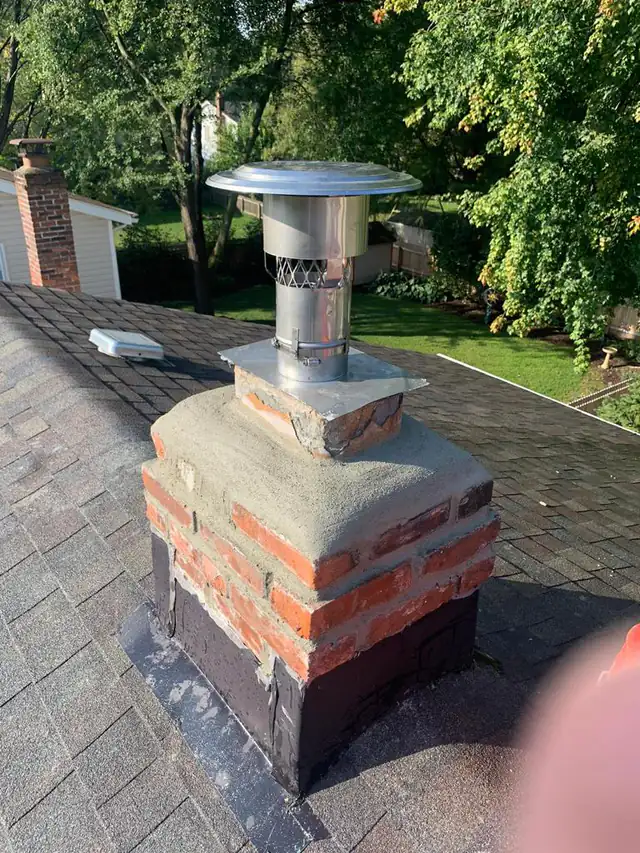
Stainless liner brought through a new crown, capped 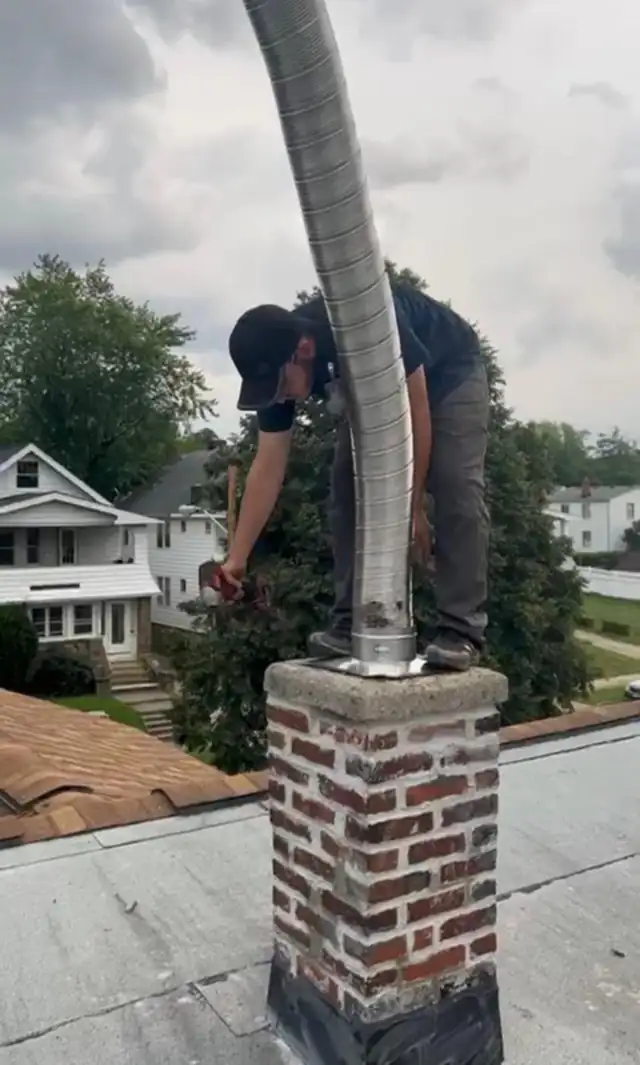
Feeding a new stainless liner down the flue
Meet the team
The people behind the work
Manny, Zack and Myke — meet the people behind Chimney Expert Solutions.
Our team and story →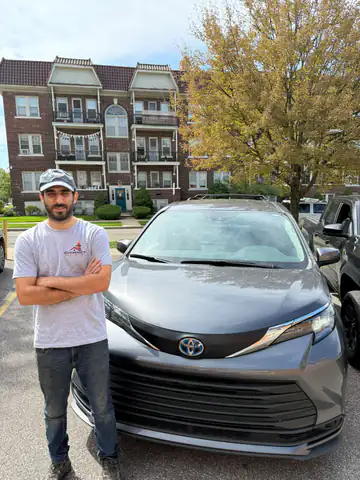
Manny
Owner
Zack
Manager
Myke
Technician
FAQ
Chimney Relining in Cleveland Heights: questions we hear
The upstairs fireplace hasn't been used since we bought the house. Is that a problem?
It is unknown territory rather than a problem, which is the reason to scan it before lighting anything. Long-unused Heights flues commonly turn out to contain nests, a damper rusted shut, cracked tile from a fire nobody documented, or an abandoned connection left open. Any of those is straightforward to deal with once it is on camera.
Our house has three flues in one chimney. Does each need its own service?
Each is inspected and treated on its own, because they age independently — in the Heights it is normal to find one flue in fair shape, one cracked and one abandoned. The efficiency is that one visit and one set-up covers all of them, and separate caps can often be replaced with a single custom multi-flue cover that also protects the crown.
Can one liner serve two appliances?
Sometimes, and it is governed by rules rather than preference — appliance types, fuels, input ratings and connection geometry all determine whether common venting is permitted. Plenty of existing shared arrangements in older Cleveland houses would not pass today. It is something we work out on site, and 'the old chimney did it this way' is not an answer.
The chimney is being rebuilt anyway. Do the liner at the same time?
Almost always yes. A rebuild is the one moment the flue is open and accessible, and doing both together avoids paying twice for access, staging and roof protection. If we are rebuilding the top of a stack and the camera shows a compromised flue below it, we will say so before the scope is agreed rather than after.
Free estimate
Chimney Relining in Cleveland Heights?
Tell us what you’re seeing and we’ll call or text back to schedule a look — with photos of what we find and an honest read on what’s urgent and what can wait. That evidence-first method is the way we work on every job.
Call and tell us what the chimney's doing — if we're up on a roof, we'll call you back. Other ways to reach us are on the contact page, and Cleveland Heights is one of the communities we cover across Greater Cleveland.
Call216-647-1882