
Geauga County, Ohio
Chimney Services in Chardon, OH
A nineteenth-century square, older village housing and rural township properties in Ohio's heaviest snow belt — households that burn seriously, with heavy and often glazed deposits, plus outbuilding stoves that rarely get inspected.
Chardon sits on the Geauga County highlands, and it takes more snow than anywhere else in Ohio. The elevation and the position downwind of the lake combine to produce winters that are longer, deeper and colder than what falls thirty miles west, and that single fact changes how people here heat their houses. Wood is not decorative in Chardon. Stoves run through the night, fireplaces run all weekend, and outbuildings and shops have their own flues.
The town itself is built around a genuine nineteenth-century square, with older houses in the streets off it, and the surrounding township and county are rural — properties on well water and propane, with woodlots on them and a real incentive to use what is standing in the back forty. That produces a burn volume you do not see in the inner-ring suburbs, and burn volume is what fills a chimney.
The consequence is that sweeping here is a different job. It is not the light annual dusting that a fireplace lit six times a season needs. On a hard-worked flue the deposit is heavier, it is often the wrong kind, and getting it out sometimes takes more than a brush and a drop cloth.
What goes wrong with chimneys in Chardon
Glazed creosote, which a brush will not touch
Creosote comes in stages. Loose soot and flaky deposit sweep out easily. But when a stove is damped down for a long overnight burn, or when the wood is wetter than it should be, the smoke leaves cool and loaded with unburned material and it condenses on the flue as a hard, shiny, tar-like glaze. That is third-stage creosote, it is fuel, and a chimney brush polishes it rather than removing it. Taking it off means a rotary system with chains or a chemical treatment applied over a period of burns to make it friable first, sometimes both. It also means the burning practice needs to change, or it will come straight back.
Wet wood, and how much difference it actually makes
Freshly cut hardwood is roughly half water by weight. Burning it means a large part of the fire's energy goes into boiling that water off instead of into the room, which lowers the flue temperature, which is exactly the condition that deposits creosote instead of carrying it out as smoke. Wood that has been split, stacked off the ground and covered on top for a full year — two for oak — burns hotter, cleaner and produces a fraction of the deposit. It is the cheapest chimney maintenance available and it is entirely within the homeowner's control. A moisture meter costs less than a service call.
Shop, barn and outbuilding flues nobody inspects
Out in the townships around Chardon it is normal to have a stove in a garage, a barn or a workshop, venting through a metal chimney that was installed years ago and has never been looked at since. These are the flues that get the hardest use and the least attention: the fires are hot and irregular, the fuel is whatever is around including scrap, and there is often no smoke alarm and nobody sleeping nearby to notice a problem developing. If it burns and it has a flue, it wants the same annual look the house gets.
What we do here
Every chimney service we cover in Chardon
One crew for the whole system, so the diagnosis and the repair come from the same people. The pages marked for Chardon go into what this suburb’s housing stock does to that particular job; the rest cover the work across our whole service area.
Chimney Sweep & Cleaning
Full mechanical sweep of the flue, smoke chamber and firebox — creosote out, dust contained, and a look at the whole system while we're in it.
Chimney Sweep in ChardonChimney Inspection
Camera inspection of the full flue, plus the firebox, damper, crown, cap and flashing — documented in photos, explained in plain language.
Chimney Inspection in ChardonChimney Repair & Rebuilds
Masonry repair from spot fixes to full stack rebuilds — spalled brick, failed joints, and chimneys the freeze-thaw cycle has taken apart.
Chimney Repair in ChardonChimney Liner & Relining
Stainless steel relining for flues with cracked tiles, gaps, or no liner at all — sized to your appliance, insulated, done once.
Chimney Relining in ChardonChimney Leak Repair & Waterproofing
Finding where the water actually gets in — crown, cap, flashing, masonry or condensation — and fixing that, not caulking symptoms.
Chimney Leak Repair in ChardonChimney Caps & Crown Repair
The two parts that protect everything below them — stainless caps fitted right, and crowns rebuilt to actually shed water.
Chimney Caps & Crown RepairTuckpointing & Repointing
Grinding out failed mortar joints and repacking them properly — matched in strength, color and profile, not smeared over the brick.
Tuckpointing & RepointingFireplace & Damper Repair
Fireboxes rebuilt, refractory panels replaced, dampers that open, close and seal — the room side of the system, done right.
Fireplace & Damper Repair
Not sure which of these you need? That is what an inspection is for — or see how the whole chimney fits together and the way we work.
Working with us
What every Chardon job comes with
Evidence, not assertions
Photographs of every finding before you decide anything — including the parts of your chimney you have never seen.
Free estimates on repair work
Honest triage on what we find: urgent, plan-for, or fine.
One crew, whole system
One crew for the whole chimney — sweep, inspection, masonry, liner, crown, cap and flashing, with one person responsible for all of it.
Our work
The work Chardon chimneys usually need
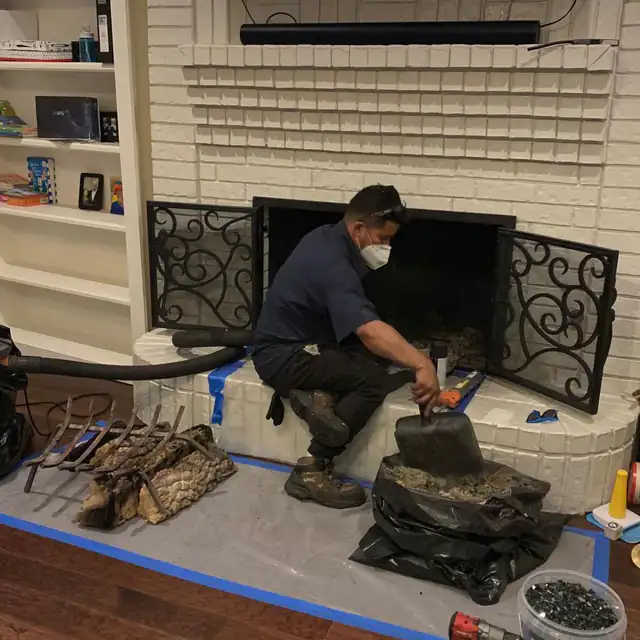
Drop cloths down and a vacuum on the hearth before anything is opened 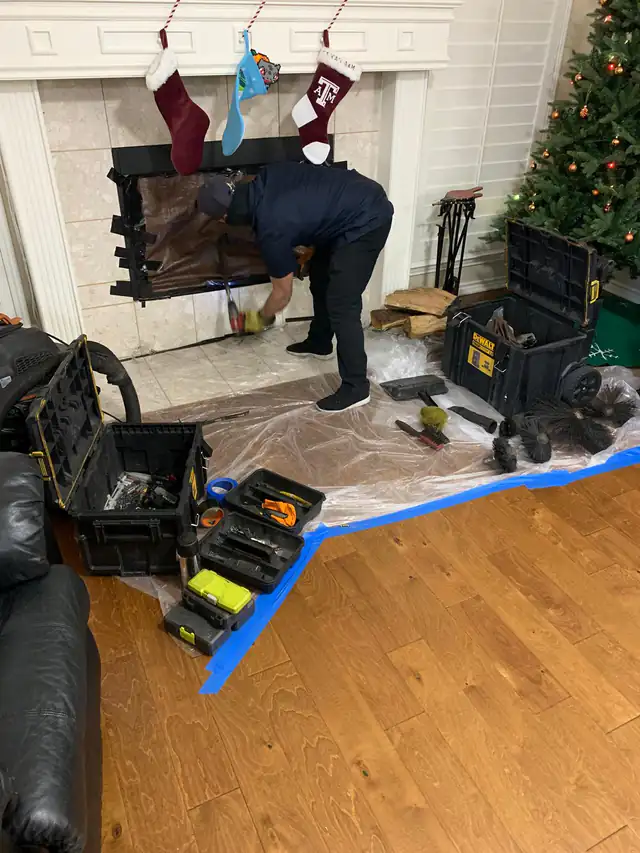
Working at the protected fireplace opening, with brushes and tools on covered floors 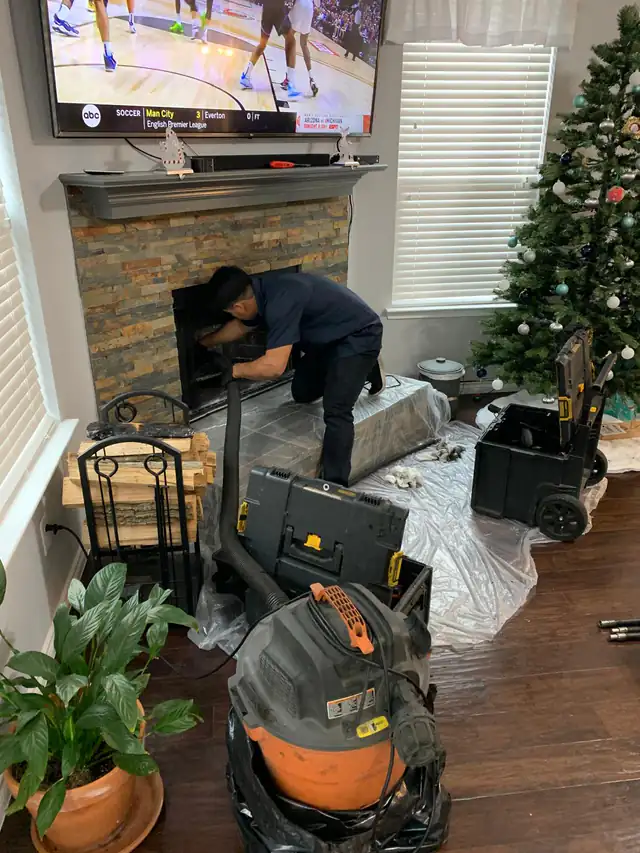
At the stone-front fireplace, with the hearth covered and a vacuum alongside
Meet the team
The people behind the work
Manny, Zack and Myke — meet the people behind Chimney Expert Solutions.
Our team and story →
Manny
Owner
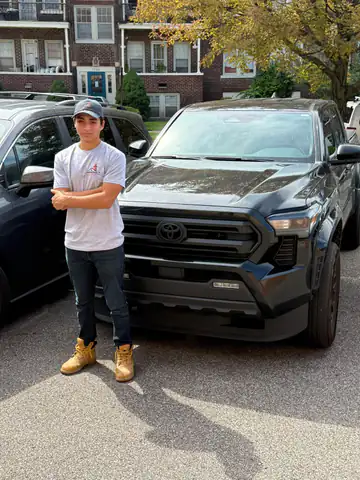
Zack
Manager
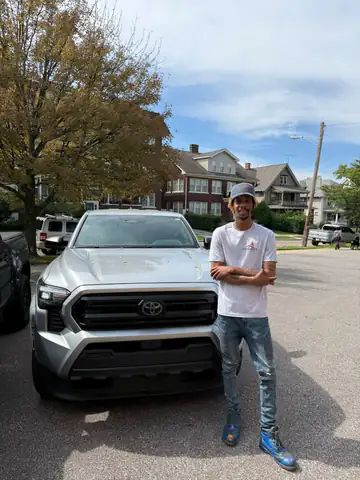
Myke
Technician
Service area
Chardon is inside our service area
36 communities across Northeast Ohio · based in Cleveland Heights
- Cleveland
- Lakewood
- Cleveland Heights
- Shaker Heights
- Parma
- Rocky River
- Westlake
- Strongsville
- Euclid
- South Euclid
- University Heights
- Beachwood
- Bedford
- Garfield Heights
- North Olmsted
- Mentor
- Willoughby
- Painesville
- Chardon
- Elyria
- Lorain
- Avon Lake
- Medina
- Brunswick
- Akron
- Cuyahoga Falls
- Hudson
- Kent
- Canton
- Wooster
- Warren
- Youngstown
- Boardman
- Sandusky
- Mansfield
- Ashland
FAQ
Chardon chimney questions
We burn most nights all winter. How often should the chimney be swept?
More than once a season is normal at that volume, and the right interval is set by what actually accumulates rather than by a rule. The practical approach is to have it swept and measured after the first full season of your burning habits and your wood supply, then set the schedule from what came out. A household burning several cords is on a different footing from one burning half a cord.
What is glazed creosote and why can't it just be brushed out?
It is creosote that condensed as a liquid tar and then hardened into a shiny layer bonded to the flue. A brush slides over it. Removing it takes a rotary tool with chains, or a chemical treatment that is burned over several fires to make the glaze crumbly enough to sweep, and often a combination. It is also a signal about how the appliance is being run, so we would talk about the burn as well as the cleaning.
How can I tell if my firewood is dry enough?
Seasoned wood is noticeably lighter than green, has visible checking and cracks across the end grain, and knocks together with a sharp sound rather than a dull one. If you want to be certain, an inexpensive moisture meter on a freshly split face should read around twenty percent or below. Split, stacked off the ground and covered on top only — for a full year, and two for oak.
Do you service stoves in barns and workshops as well as houses?
Yes, and they usually need it more. Outbuilding stoves get hot irregular fires, mixed fuel and no attention, and they are typically the flue on the property nobody has ever inspected. Same visit, same camera, same photographs — it is worth adding to the house call rather than leaving it for a year that never comes.
Free estimate
Chimney trouble in Chardon?
Tell us what you're seeing and we'll call or text back to schedule a look — with photos of what we find and an honest read on what's urgent and what can wait.
Call and tell us what the chimney's doing — if we're up on a roof, we'll call you back. You can also reach us on the contact page, or look through the other communities we serve if you are calling about a second property.
Call216-647-1882