
Lake County, Ohio
Chimney Repair & Rebuilds in Painesville, OH
Masonry repair from spot fixes to full stack rebuilds — spalled brick, failed joints, and chimneys the freeze-thaw cycle has taken apart.
What chimney repair involves in Painesville is set by the housing stock here: A nineteenth-century county seat of Italianate and Queen Anne houses — tall exposed stacks that deteriorate from the top down, apartment conversions with layers of added flues, and balloon-framed walls with no firestopping.
Painesville is the Lake County seat, and it looks it: a courthouse square, streets of Italianate and Queen Anne houses around it, Lake Erie College, and a downtown built when this was the center of gravity for the whole county. The residential stock through the older districts is substantially nineteenth century, and Victorian chimneys are a different animal from anything else in this service area.
Northeast Ohio is close to a worst case for exterior masonry. A Cleveland chimney runs through dozens of freeze-thaw cycles every winter: water finds a hairline crack or an open joint, freezes, expands by about nine percent, and levers the masonry apart a little more each time. Repeat that across eighty winters on the most weather-exposed brickwork the house owns, and you get the local pattern. Brick faces shed, mortar goes soft and sandy, top courses shift, and eventually a stack that was fine at the last home sale needs rebuilding.
What we find on Painesville chimneys that leads to chimney repair
The top of a tall Victorian stack fails first and fails alone
On these chimneys the deterioration is concentrated in the portion above the roof, and heavily concentrated in the top three or four courses. That is the masonry that is wet most often, freezes most often, dries slowest and is furthest from any lateral support. Below the roofline the same chimney is frequently in fine condition, protected by the building and never freezing. That has a practical consequence worth knowing before you get a quote: rebuilding from the roofline up is a legitimate, complete repair for a great many Painesville chimneys, and it costs a fraction of what a full-height rebuild does. Anyone quoting the whole stack should be able to show you why the lower section needs it.
Grand houses divided into apartments, with the flues to match
A lot of the large houses in the older districts were subdivided into apartments during the twentieth century, and each division tended to add heating equipment. The result is stacks with more flues than the house was built with, connections made at different eras with different standards, and abandoned openings left where a unit's arrangement changed again. On these buildings the first inspection is genuinely a survey: every flue scanned, every connection traced to its appliance, everything abandoned identified and properly closed. It usually takes longer than a single-family visit and it produces a document the owner should keep.
Balloon framing turns a wall cavity into a chimney of its own
In a house framed this way, the stud bays run uninterrupted from the basement to the attic. Where those bays sit alongside a chimney with a cracked flue, a defective thimble or an open abandoned connection, there is a clear vertical path for heat, smoke and embers to reach the roof structure — which is the mechanism behind a lot of historic house fires that started at a chimney. The same open path lets water from a leaking stack travel two floors before it appears. Firestopping at each floor line and sealing the flue properly are what break the path.
What drives the cost of masonry work
- Scope. Repointing, a partial rebuild above the roofline, and a full rebuild are different orders of work, and honest quoting means establishing which one you actually need first.
- Height and access. A chimney on a single-story ranch with a walkable roof, versus a three-story stack on slate that needs staging, is the largest single swing in this trade.
- Roof material. Slate, clay tile and standing-seam metal cannot be walked on, which changes how the work is staged and protected.
- Brick match. Sourcing or salvaging a close match for a visible 1920s chimney takes time that a plain utility stack does not.
- Detailing. Corbelled courses, stone banding, clay pots and decorative caps all have to be rebuilt rather than approximated.
- What is found on the way down. Flue tile condition and hidden deterioration are genuinely not fully knowable until the stack is opened, which is why we photograph as we go and talk before we deviate from the scope.
- Season. Work scheduled into the shoulder of the masonry season sometimes needs protection and heat, which is real cost.
What happens if the masonry is left
The failure curve is not linear. A chimney with a few open joints deteriorates slowly, because the water is only reaching a small volume of masonry. Once the joints are open across a face, water enters the middle of the wall, and the number of surfaces available to freeze multiplies. That is when a stack goes from needing repointing to needing rebuilding in a handful of seasons.
There are three costs to waiting and only one of them is the masonry. The second is water inside the house: a chimney taking on water at the top delivers it to the ceiling, the framing and the drywall around the chase, and rot in the framing next to a chimney is both expensive and hard to see. The third is safety. Loose brickwork forty feet up over a driveway or a walkway is a different category of problem from a maintenance item, and a stack that has started to lean should not be left through a winter of ice loading.
This page covers chimney repair as it plays out in Painesville. The full chimney repair & rebuilds page walks the whole job — every stage, what changes the scope, and what we do about each of them. For everything else we handle in this suburb, see chimney services in Painesville.
Repair and rebuild work we take on
- Spalled and cracked brick replacement, matched to the existing brick
- Partial rebuilds from the roofline or shoulder up
- Full chimney rebuilds where the stack is beyond saving
- Crown replacement as part of any rebuild — a rebuild under a bad crown is wasted money
- Flue tile replacement while the stack is open, where it is warranted
- Firebox masonry and refractory panel repair
- Written scope with photos before, during and after the work
Our work
Chimney Repair & Rebuilds, photographed on the job
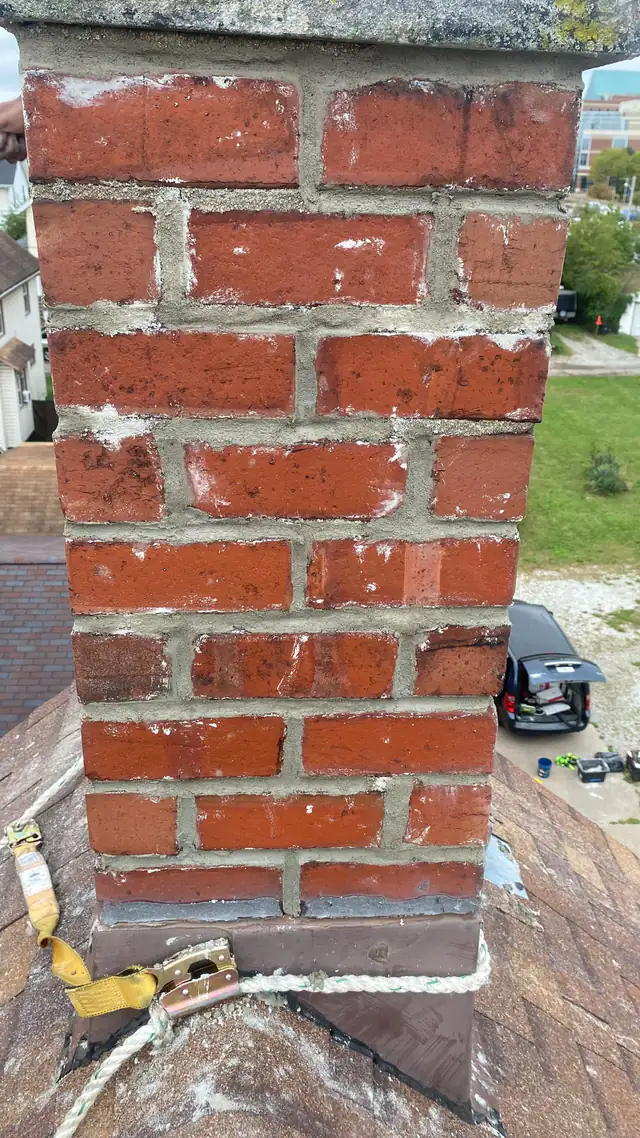
Roped in on a steep roof — repointed, flashing sealed 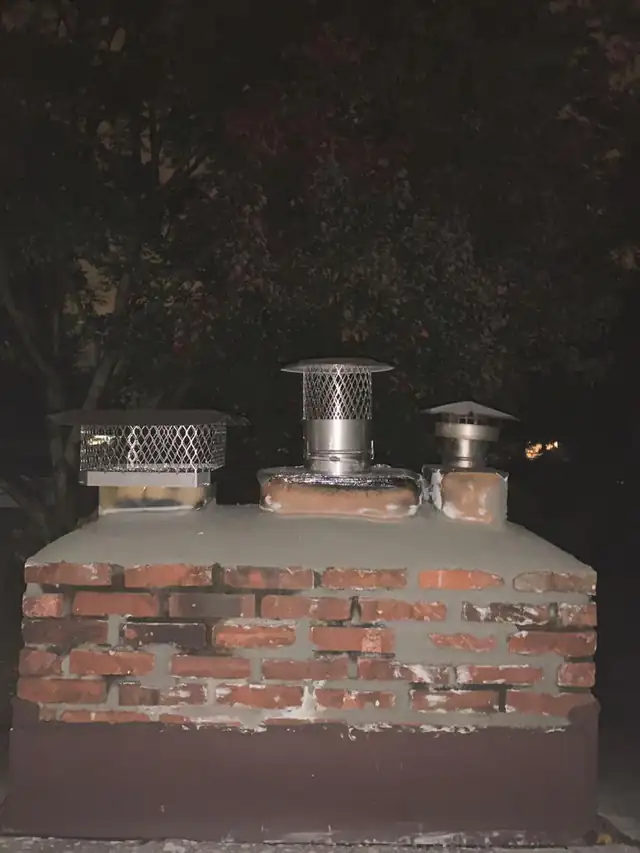
Three flues, three caps, one new crown 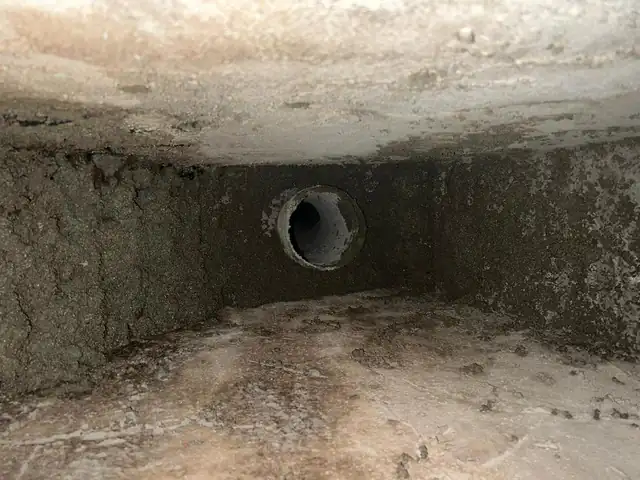
Inside the smoke chamber — the flue opening above the firebox 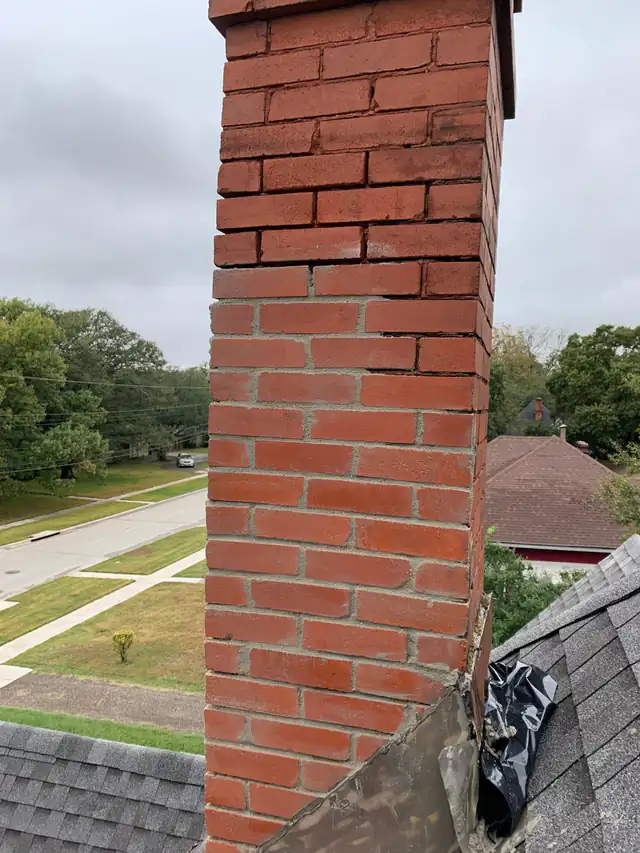
Mid-job — fresh joints below, the old eroded joints still waiting above 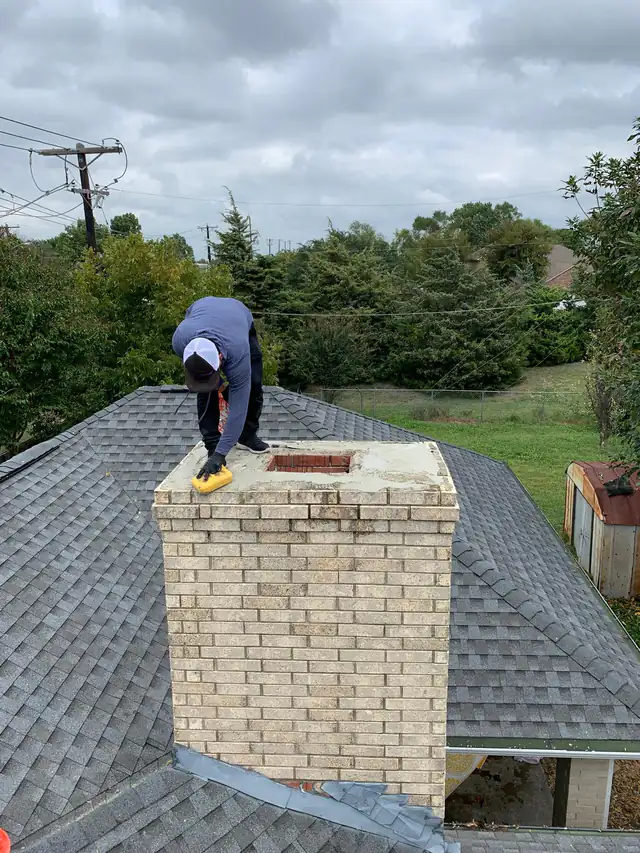
Finishing a fresh crown around the flue 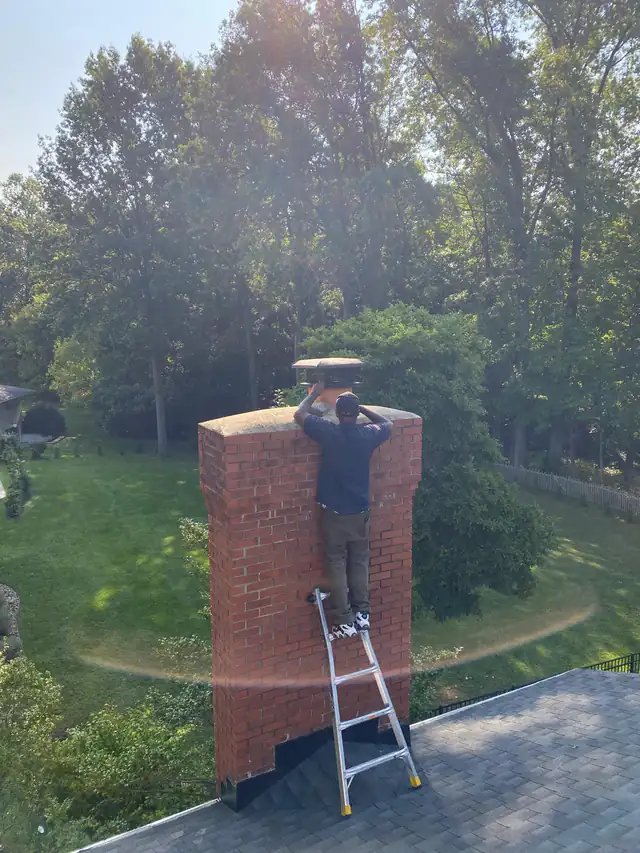
Ladder work on a tall stack — fitting the cap
Meet the team
The people behind the work
Manny, Zack and Myke — meet the people behind Chimney Expert Solutions.
Our team and story →
Manny
Owner
Zack
Manager

Myke
Technician
FAQ
Chimney Repair in Painesville: questions we hear
We were quoted a full rebuild. Is that always necessary on an old chimney?
Not usually on this housing. The section above the roof does nearly all the weathering, and the section inside the house is often sound because it never freezes. A rebuild from the roofline up is a complete repair in a lot of these cases. It is a fair question to put to any bidder: show me, in photographs, what is wrong with the part below the roof.
Can the decorative brickwork on top be reproduced?
Yes, and on a house of this period it should be. Corbelled courses, banding and shaped tops are all rebuildable if the existing detail is photographed and measured before anything comes down. The part to confirm with any contractor is whether the detailing is inside their number or whether they intend to top it out square and call it done.
Does chimney repair need a permit in Cuyahoga County?
It depends on the municipality and on the scope — like-for-like repair is generally treated differently from structural rebuilding, and the inner-ring suburbs vary quite a bit in how they handle exterior work. We raise it during the quote for anything structural, and the requirements are worth confirming with your city's building department, because they do change.
Can a leaning chimney be straightened instead of rebuilt?
Generally not. A lean means the joints have failed and the courses have moved, and there is no way to push masonry back into plane and have it stay. What can be done is establishing where sound masonry begins and rebuilding from there, which on most leaning stacks is at or just below the roofline.
Free estimate
Chimney Repair in Painesville?
Tell us what you’re seeing and we’ll call or text back to schedule a look — with photos of what we find and an honest read on what’s urgent and what can wait. That evidence-first method is the way we work on every job.
Call and tell us what the chimney's doing — if we're up on a roof, we'll call you back. Other ways to reach us are on the contact page, and Painesville is one of the communities we cover across Greater Cleveland.
Call216-647-1882