
Lake County, Ohio
Chimney Inspection in Painesville, OH
Camera inspection of the full flue, plus the firebox, damper, crown, cap and flashing — documented in photos, explained in plain language.
What chimney inspection involves in Painesville is set by the housing stock here: A nineteenth-century county seat of Italianate and Queen Anne houses — tall exposed stacks that deteriorate from the top down, apartment conversions with layers of added flues, and balloon-framed walls with no firestopping.
Painesville is the Lake County seat, and it looks it: a courthouse square, streets of Italianate and Queen Anne houses around it, Lake Erie College, and a downtown built when this was the center of gravity for the whole county. The residential stock through the older districts is substantially nineteenth century, and Victorian chimneys are a different animal from anything else in this service area.
You cannot see the part of the chimney that matters most. From the ground a stack can look perfectly sound while the flue tiles inside are cracked, shifted, or missing their mortar joints entirely. A compromised flue is exactly how heat and combustion gases reach the wood framing that surrounds every masonry chimney, and there is no version of that story with a good ending. An inspection puts a camera up the full length of the flue and eyes on every accessible part of the system, and gives you the photographs rather than just a verdict.
What we find on Painesville chimneys that leads to chimney inspection
Grand houses divided into apartments, with the flues to match
A lot of the large houses in the older districts were subdivided into apartments during the twentieth century, and each division tended to add heating equipment. The result is stacks with more flues than the house was built with, connections made at different eras with different standards, and abandoned openings left where a unit's arrangement changed again. On these buildings the first inspection is genuinely a survey: every flue scanned, every connection traced to its appliance, everything abandoned identified and properly closed. It usually takes longer than a single-family visit and it produces a document the owner should keep.
Balloon framing turns a wall cavity into a chimney of its own
In a house framed this way, the stud bays run uninterrupted from the basement to the attic. Where those bays sit alongside a chimney with a cracked flue, a defective thimble or an open abandoned connection, there is a clear vertical path for heat, smoke and embers to reach the roof structure — which is the mechanism behind a lot of historic house fires that started at a chimney. The same open path lets water from a leaking stack travel two floors before it appears. Firestopping at each floor line and sealing the flue properly are what break the path.
The top of a tall Victorian stack fails first and fails alone
On these chimneys the deterioration is concentrated in the portion above the roof, and heavily concentrated in the top three or four courses. That is the masonry that is wet most often, freezes most often, dries slowest and is furthest from any lateral support. Below the roofline the same chimney is frequently in fine condition, protected by the building and never freezing. That has a practical consequence worth knowing before you get a quote: rebuilding from the roofline up is a legitimate, complete repair for a great many Painesville chimneys, and it costs a fraction of what a full-height rebuild does. Anyone quoting the whole stack should be able to show you why the lower section needs it.
Buying or selling a house in Greater Cleveland
This is some of the highest-value work in the trade and it is chronically skipped. A general home inspection explicitly excludes the flue interior. The inspector looks at the visible exterior, maybe puts a light past the damper, and writes a line about the chimney. That line is not an assessment of the thing that costs money.
The housing stock here makes it worse. Across Cleveland, Lakewood, Cleveland Heights, Shaker Heights and Euclid, a large share of houses predate 1940, which means unlined chimneys and clay flues that have taken eighty-plus winters. A camera scan inside your inspection contingency window turns an invisible five-figure problem into either a negotiating position or genuine peace of mind. If you are selling, the same scan removes the ambiguity a buyer would otherwise use against you, and it is cheap relative to what a late-stage surprise does to a deal.
If your city runs a point-of-sale inspection, the chimney may come up separately in that process. Confirm the current requirements with the municipality — they vary from suburb to suburb and they change.
After a chimney fire, a storm, or years of disuse
A chimney fire does not have to be dramatic to do damage. Many are brief and quiet enough that nobody in the house realizes what happened, and the harm is done to the flue tiles by thermal shock: a rapid temperature spike cracks them, and the crack does not close when it cools. That is why the standard calls for a Level 2 after an operating malfunction rather than leaving it to how bad it looked.
Storms are the other trigger. A lightning strike on a chimney can crack masonry from the inside out, and high wind can shift a top course or tear flashing loose without leaving anything visible from the yard. And a fireplace that has sat unused since the last owner is genuinely unknown territory, and the common findings are a nest, a damper rusted shut, a flue abandoned mid-conversion, or a liner that stops partway up. None of that is visible from the hearth.
This page covers chimney inspection as it plays out in Painesville. The full chimney inspection page walks the whole job — every stage, what changes the scope, and what we do about each of them. For everything else we handle in this suburb, see chimney services in Painesville.
What an inspection covers
- Camera scan of the full flue interior — every tile joint, documented
- Firebox, damper, smoke chamber and appliance connection condition
- Crown, cap, and the top courses of masonry photographed from the roof
- Flashing and the roofline intersection — the most common leak path
- Exterior masonry: spalling brick, open mortar joints, efflorescence
- A photo report with findings ranked: urgent, plan-for, fine
Meet the team
The people behind the work
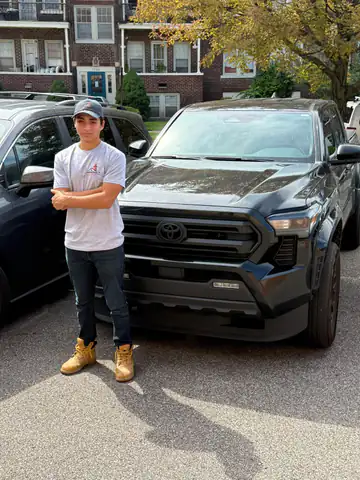
Manny, Zack and Myke — meet the people behind Chimney Expert Solutions.
Our team and story →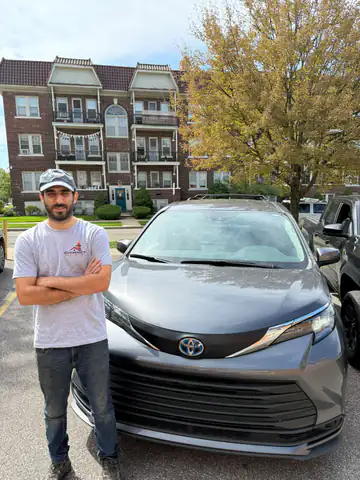
Manny
Owner
Zack
Manager

Myke
Technician
FAQ
Chimney Inspection in Painesville: questions we hear
Our building has several apartments and one chimney. Where do we start?
With a full survey rather than a single flue. Each flue gets scanned, each appliance connection gets traced to what it actually serves, and anything abandoned gets identified and closed properly. Multi-unit buildings accumulate arrangements over the decades and nobody has a complete picture — the point of the first visit is to produce one you can keep.
Do I get anything in writing?
Yes — photographs of what we found with an explanation of each item and where it sits on the urgent-to-fine scale. That document is what makes a chimney conversation verifiable instead of something you have to take on trust, and it is what you hand to a buyer, a seller or an insurer if it ever comes to that.
Can you inspect a chimney in winter?
Usually yes, and the inspection itself is not weather-dependent the way masonry work is. Snow, ice and steep roofs can push the roof-level portion, and anything we find that needs mortar will have to wait for temperatures above roughly 40°F. Finding it in January still beats finding it in an emergency.
Free estimate
Chimney Inspection in Painesville?
Tell us what you’re seeing and we’ll call or text back to schedule a look — with photos of what we find and an honest read on what’s urgent and what can wait. That evidence-first method is the way we work on every job.
Call and tell us what the chimney's doing — if we're up on a roof, we'll call you back. Other ways to reach us are on the contact page, and Painesville is one of the communities we cover across Greater Cleveland.
Call216-647-1882