
Lake County, Ohio
Chimney Repair & Rebuilds in Willoughby, OH
Masonry repair from spot fixes to full stack rebuilds — spalled brick, failed joints, and chimneys the freeze-thaw cycle has taken apart.
What chimney repair involves in Willoughby is set by the housing stock here: A nineteenth-century downtown core plus decades of suburban growth, in a market where wood heat is genuinely used — a high concentration of stoves and inserts, many of them venting into oversized original flues.
Willoughby has a real nineteenth-century downtown — the Erie Street blocks by the Chagrin River, with brick commercial buildings and older houses on the streets behind them — and then decades of suburban building spreading east and south around it. What ties the market together is not a building era. It is that people here genuinely burn wood, and have for a long time, because Lake County winters make supplemental heat worth the trouble.
Northeast Ohio is close to a worst case for exterior masonry. A Cleveland chimney runs through dozens of freeze-thaw cycles every winter: water finds a hairline crack or an open joint, freezes, expands by about nine percent, and levers the masonry apart a little more each time. Repeat that across eighty winters on the most weather-exposed brickwork the house owns, and you get the local pattern. Brick faces shed, mortar goes soft and sandy, top courses shift, and eventually a stack that was fine at the last home sale needs rebuilding.
What we find on Willoughby chimneys that leads to chimney repair
Nobody has looked behind the insert since it went in
An insert is a plug in the fireplace. Everything behind it — the original firebox, the damper area, the smoke chamber, the point where the connector enters the flue — is out of sight and out of mind, sometimes for decades. What we find back there when a unit finally comes out is the interesting part: creosote packed into the smoke shelf, a rusted damper frame, a connector that has come loose from its collar, deteriorated firebrick, and occasionally a masonry defect that has been getting worse in the dark since the Clinton administration. If your insert has never been pulled, that is the single highest-value thing to do to it.
Inserts installed without a full-length liner
The common older installation was a slip connector or a short length of pipe from the insert's outlet up into the smoke chamber, venting into the original masonry flue. The problem is volume and temperature. A modern insert burns efficiently, so the exhaust leaves cooler and in far smaller quantity than an open fire's did, and it is now expanding into a flue several times larger than it needs. It slows, it cools, and it deposits creosote heavily up in the cold masonry where nobody can brush it. The current standard is a correctly sized stainless liner running the full height from the appliance to the top, insulated where the situation calls for it. It drafts better and it is dramatically easier to keep clean.
Old downtown stacks against a neighboring wall
In the older Erie Street blocks and the streets right behind them, buildings sit close together or share walls, and chimneys were built into those walls. That changes the work in a few specific ways: one side of the stack may be inaccessible from either property, roof access sometimes has to be arranged with a neighbor, and flues in shared walls occasionally turn out to serve — or to have once served — the building next door. On older mixed commercial and residential buildings, sorting out which flue belongs to which occupancy is a real part of the first inspection rather than a formality.
Matching brick and mortar on older Cleveland houses
On the pre-war housing stock in Cleveland, Lakewood, Cleveland Heights and Shaker Heights, matching is not a cosmetic nicety. A chimney is one of the most visible elements on the front elevation of a Tudor or a foursquare, and a rebuild in the wrong brick blend is something you look at for the next thirty years. Much of the brick used across this housing stock has close modern equivalents, and salvaged brick is available for the rest. Mortar can be tinted and struck to match the original joint color and profile.
The technical half of matching matters more than the visual half. Mortar must always be softer than the brick around it. Pre-war Cleveland brick was fired softer and more porous than modern brick, and it was laid in lime-rich mortar that could move and breathe with it. Point that wall with hard modern Portland-heavy mortar and the joints become stronger than the units. Seasonal movement and trapped moisture then have to escape through the brick instead of the joint, and the brick faces spall off. A great deal of the spalling on inner-ring suburb chimneys was caused by a repointing job that was supposed to help.
The masonry season in Northeast Ohio
Mortar cures through a chemical reaction that needs sustained temperatures above roughly 40°F. Below that it does not simply cure slowly; it can be damaged permanently, and freshly laid mortar that freezes before it has set never reaches the strength it was supposed to. That gives Greater Cleveland a working masonry season of roughly April through November, with the ends of it dependent on the actual weather rather than the calendar.
The practical consequence is a scheduling one. If your chimney needs structural work, the queue and the season run out at the same time in the fall. A chimney assessed in spring gets fixed that year. The same chimney assessed in late October frequently waits until spring, taking one more winter of freeze-thaw with an open path for water.
This page covers chimney repair as it plays out in Willoughby. The full chimney repair & rebuilds page walks the whole job — every stage, what changes the scope, and what we do about each of them. For everything else we handle in this suburb, see chimney services in Willoughby.
Repair and rebuild work we take on
- Spalled and cracked brick replacement, matched to the existing brick
- Partial rebuilds from the roofline or shoulder up
- Full chimney rebuilds where the stack is beyond saving
- Crown replacement as part of any rebuild — a rebuild under a bad crown is wasted money
- Flue tile replacement while the stack is open, where it is warranted
- Firebox masonry and refractory panel repair
- Written scope with photos before, during and after the work
Our work
Chimney Repair & Rebuilds, photographed on the job
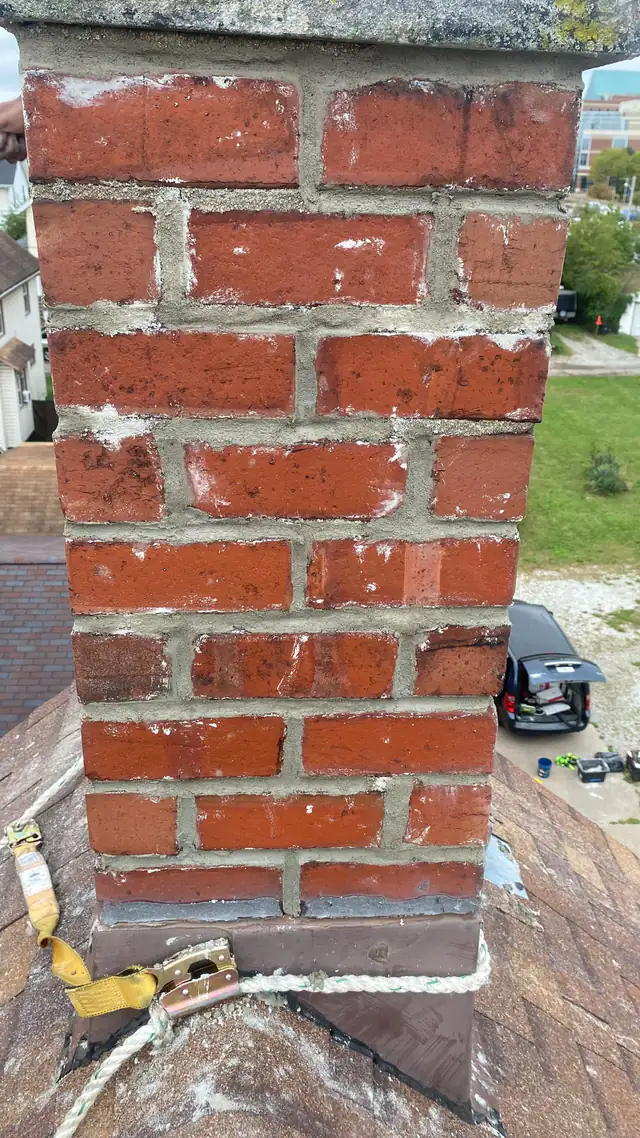
Roped in on a steep roof — repointed, flashing sealed 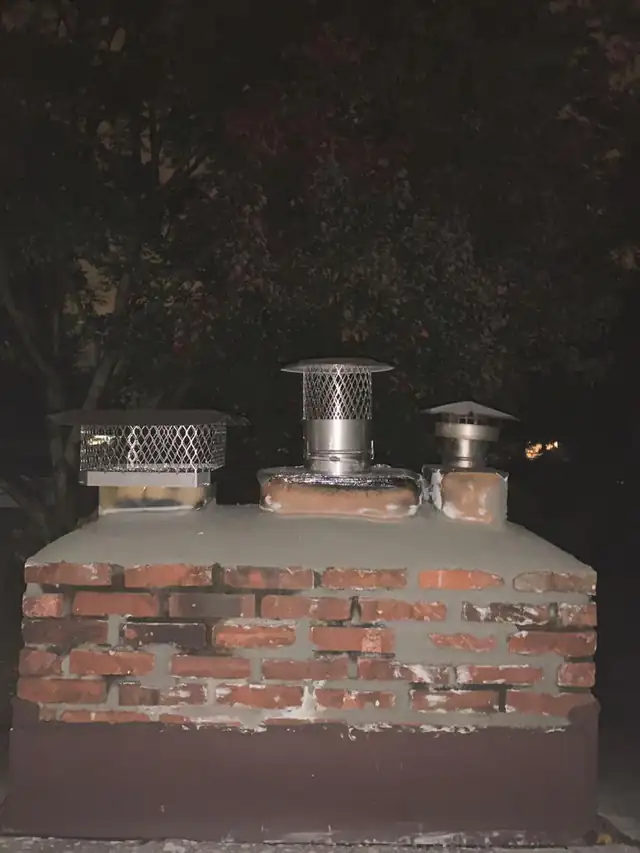
Three flues, three caps, one new crown 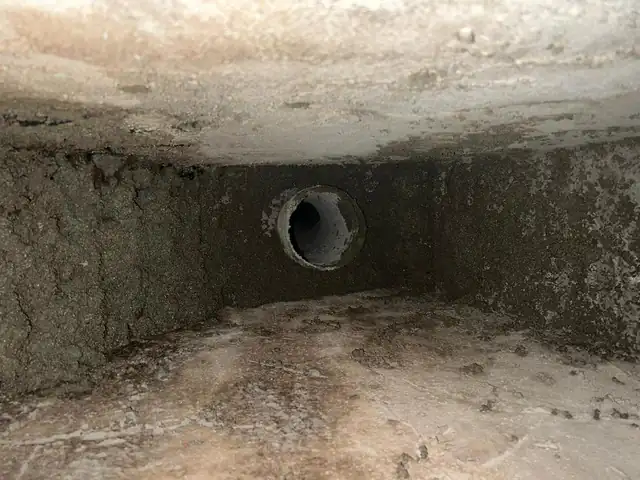
Inside the smoke chamber — the flue opening above the firebox 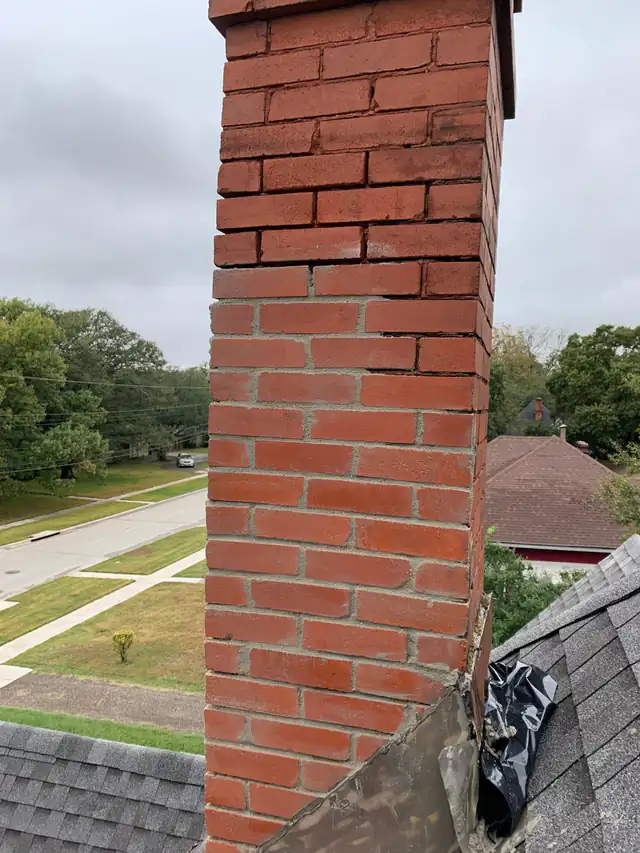
Mid-job — fresh joints below, the old eroded joints still waiting above 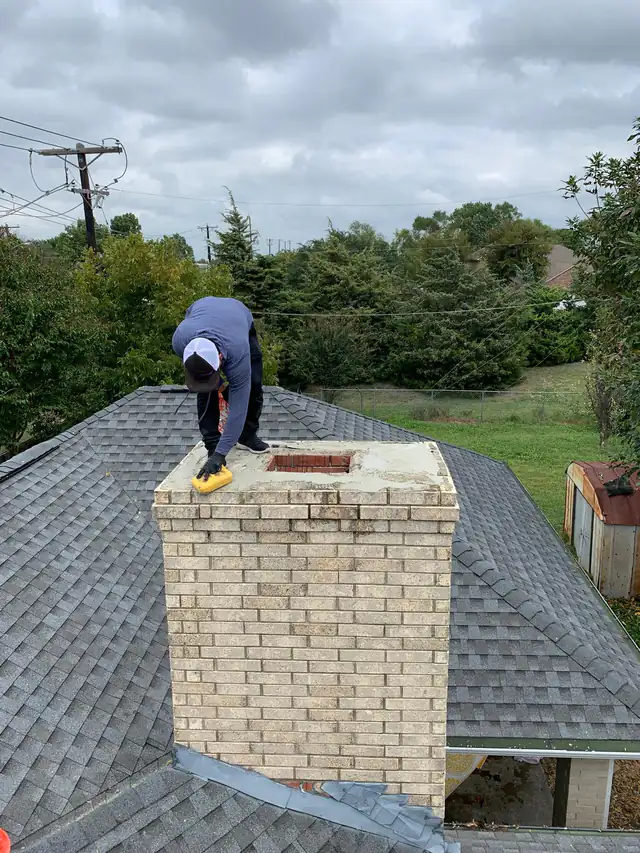
Finishing a fresh crown around the flue 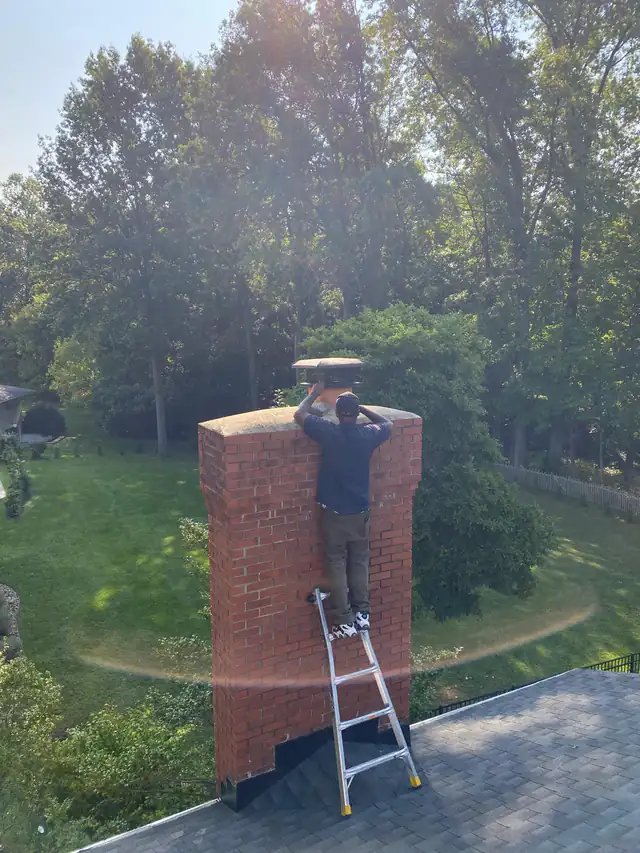
Ladder work on a tall stack — fitting the cap
Meet the team
The people behind the work
Manny, Zack and Myke — meet the people behind Chimney Expert Solutions.
Our team and story →
Manny
Owner

Zack
Manager

Myke
Technician
FAQ
Chimney Repair in Willoughby: questions we hear
Our insert vents into the old flue with a short pipe. Is that acceptable?
It is a very common older arrangement and it is worth replacing. A modern insert produces cooler, lower-volume exhaust than the flue was built for, so it slows down in the oversized masonry, cools, and lays creosote in the part of the chimney nobody can brush. A full-height stainless liner sized to the appliance draws better, burns cleaner and is far easier to maintain. We will show you the camera footage before recommending it.
Can we still use the fireplace while the chimney is being rebuilt?
No — the flue is open at the top and the stack is partly dismantled. If the chimney also serves a furnace or water heater, that has to be planned around before the work starts, and it is one of the first things we check on a quote visit. Nobody should discover mid-rebuild that the water heater has nowhere to vent.
Does chimney repair need a permit in Cuyahoga County?
It depends on the municipality and on the scope — like-for-like repair is generally treated differently from structural rebuilding, and the inner-ring suburbs vary quite a bit in how they handle exterior work. We raise it during the quote for anything structural, and the requirements are worth confirming with your city's building department, because they do change.
Free estimate
Chimney Repair in Willoughby?
Tell us what you’re seeing and we’ll call or text back to schedule a look — with photos of what we find and an honest read on what’s urgent and what can wait. That evidence-first method is the way we work on every job.
Call and tell us what the chimney's doing — if we're up on a roof, we'll call you back. Other ways to reach us are on the contact page, and Willoughby is one of the communities we cover across Greater Cleveland.
Call216-647-1882