
Lake County, Ohio
Chimney Repair & Rebuilds in Mentor, OH
Masonry repair from spot fixes to full stack rebuilds — spalled brick, failed joints, and chimneys the freeze-thaw cycle has taken apart.
What chimney repair involves in Mentor is set by the housing stock here: Mostly 1960s–90s subdivision housing under serious snow-belt loading — ice damming at chimney flashing, missing crickets behind wide stacks, and caps and chase covers taking sliding snow every winter.
Mentor is the largest city in Lake County and most of it is subdivision housing built from the 1960s through the 1990s, spreading off Mentor Avenue and Route 306 north toward the Headlands and south past the Great Lakes Mall. The houses are generally sound, the chimneys are generally younger than the county average, and the thing that dominates the work is not the building era. It is the snow.
Northeast Ohio is close to a worst case for exterior masonry. A Cleveland chimney runs through dozens of freeze-thaw cycles every winter: water finds a hairline crack or an open joint, freezes, expands by about nine percent, and levers the masonry apart a little more each time. Repeat that across eighty winters on the most weather-exposed brickwork the house owns, and you get the local pattern. Brick faces shed, mortar goes soft and sandy, top courses shift, and eventually a stack that was fine at the last home sale needs rebuilding.
What we find on Mentor chimneys that leads to chimney repair
No cricket behind a wide chimney
A chimney wider than about thirty inches sitting on a sloped roof needs a cricket — a small peaked structure built behind it that splits water and snow and sends it around each side. Plenty of houses here were built without one, or had it flattened during a re-roof. Without a cricket, snow packs into the uphill corner and stays there for months, meltwater sits against the masonry, and the back of the chimney rots its flashing and saturates its brick while the front three faces look perfect. If you have ever noticed the back of your stack is the ugly side, this is usually why.
Ice dams pushing water back up under the counterflashing
Roof flashing is designed to shed water running downhill. It is not designed to hold back standing water, and that is exactly what an ice dam creates: melt from the warm upper roof runs down, refreezes at the cold eave, and backs a pond of water up the slope. When that pond reaches the chimney it gets under the step flashing and behind the counterflashing, and it appears indoors as a stain at the ceiling near the stack. The chimney did not fail; it was asked to be a dam. The fixes are a combination of getting the flashing details right at the chimney and getting the heat and ventilation right in the attic above it.
What a rebuild actually involves
Protecting the house first
Roof protection under the work area, the flue capped or sealed so debris does not fall down into the firebox and through the house, and a plan for getting brick and rubble down that does not involve the roof surface. On a slate or tile roof this part is most of the planning.
Down to sound masonry
The stack comes down course by course to a level where the brick and joints are genuinely sound, not to a level that was decided from the ground. Existing brick is salvaged where it is worth salvaging, and the flue tiles get evaluated as they are exposed — a rebuild is the one moment when replacing damaged tile is straightforward, and skipping that step because it was not in the original quote is a mistake you live with.
Rebuilding
New masonry laid with mortar matched to the original in strength and appearance, joints tooled to the same profile, and any original detailing reproduced. Flue tiles set with proper joints. Where the design calls for it, corbelling and decorative courses get rebuilt rather than simplified away.
The parts that make it last
A rebuild finishes with a proper cast crown with a drip edge and an expansion joint at the flue, a stainless cap on every flue, and flashing sorted at the roofline. A rebuild under a bad crown or with old failed flashing is money spent on a chimney that will start deteriorating again immediately. We treat those three as part of the scope, not as upsells at the end.
What drives the cost of masonry work
- Scope. Repointing, a partial rebuild above the roofline, and a full rebuild are different orders of work, and honest quoting means establishing which one you actually need first.
- Height and access. A chimney on a single-story ranch with a walkable roof, versus a three-story stack on slate that needs staging, is the largest single swing in this trade.
- Roof material. Slate, clay tile and standing-seam metal cannot be walked on, which changes how the work is staged and protected.
- Brick match. Sourcing or salvaging a close match for a visible 1920s chimney takes time that a plain utility stack does not.
- Detailing. Corbelled courses, stone banding, clay pots and decorative caps all have to be rebuilt rather than approximated.
- What is found on the way down. Flue tile condition and hidden deterioration are genuinely not fully knowable until the stack is opened, which is why we photograph as we go and talk before we deviate from the scope.
- Season. Work scheduled into the shoulder of the masonry season sometimes needs protection and heat, which is real cost.
This page covers chimney repair as it plays out in Mentor. The full chimney repair & rebuilds page walks the whole job — every stage, what changes the scope, and what we do about each of them. For everything else we handle in this suburb, see chimney services in Mentor.
Repair and rebuild work we take on
- Spalled and cracked brick replacement, matched to the existing brick
- Partial rebuilds from the roofline or shoulder up
- Full chimney rebuilds where the stack is beyond saving
- Crown replacement as part of any rebuild — a rebuild under a bad crown is wasted money
- Flue tile replacement while the stack is open, where it is warranted
- Firebox masonry and refractory panel repair
- Written scope with photos before, during and after the work
Our work
Chimney Repair & Rebuilds, photographed on the job
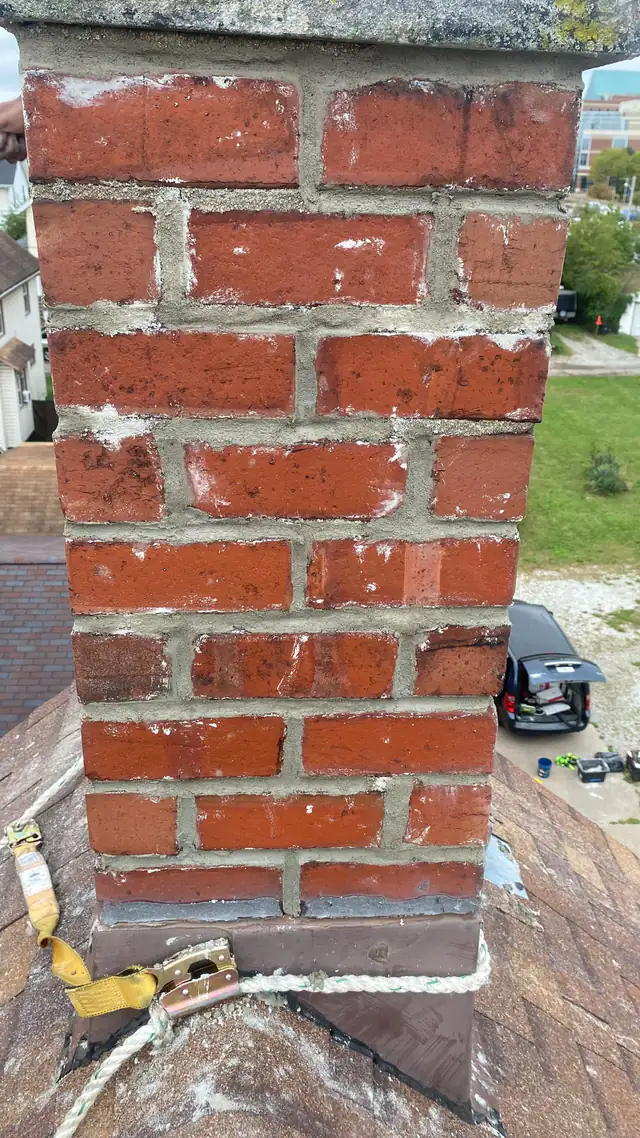
Roped in on a steep roof — repointed, flashing sealed 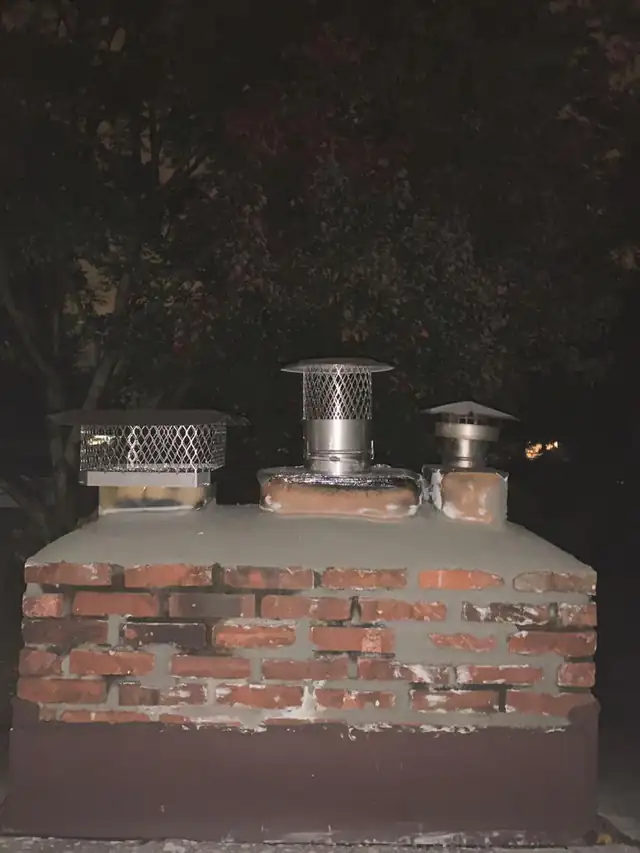
Three flues, three caps, one new crown 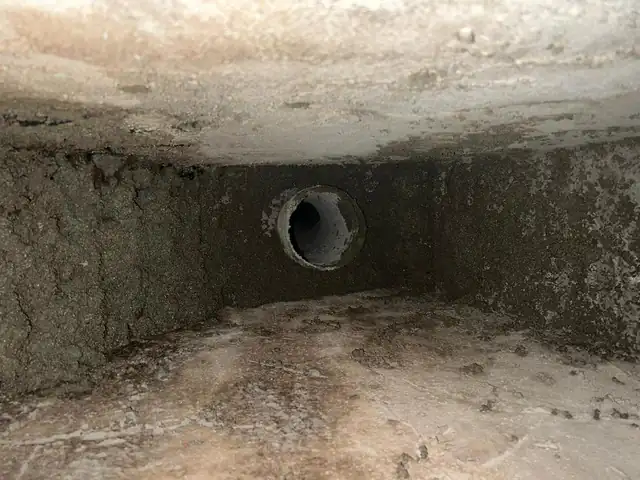
Inside the smoke chamber — the flue opening above the firebox 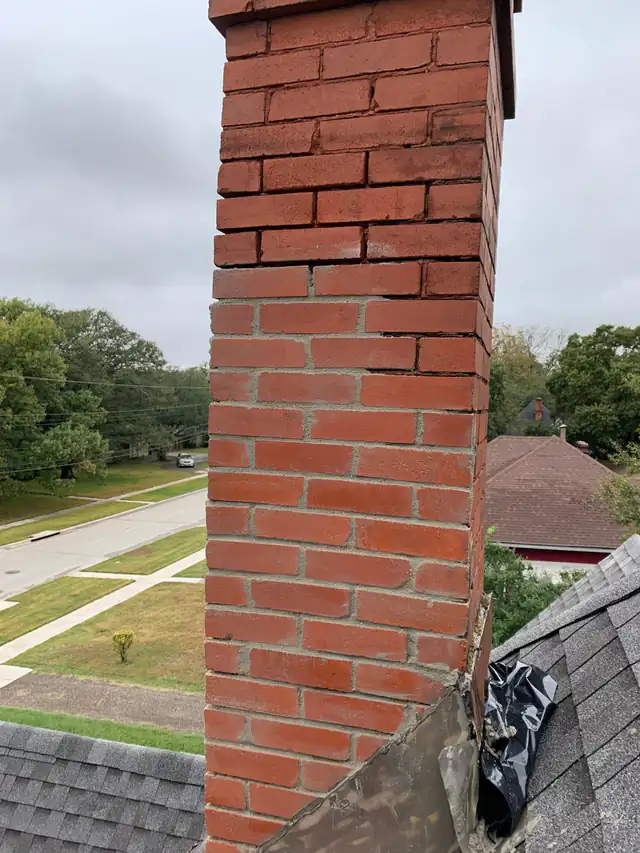
Mid-job — fresh joints below, the old eroded joints still waiting above 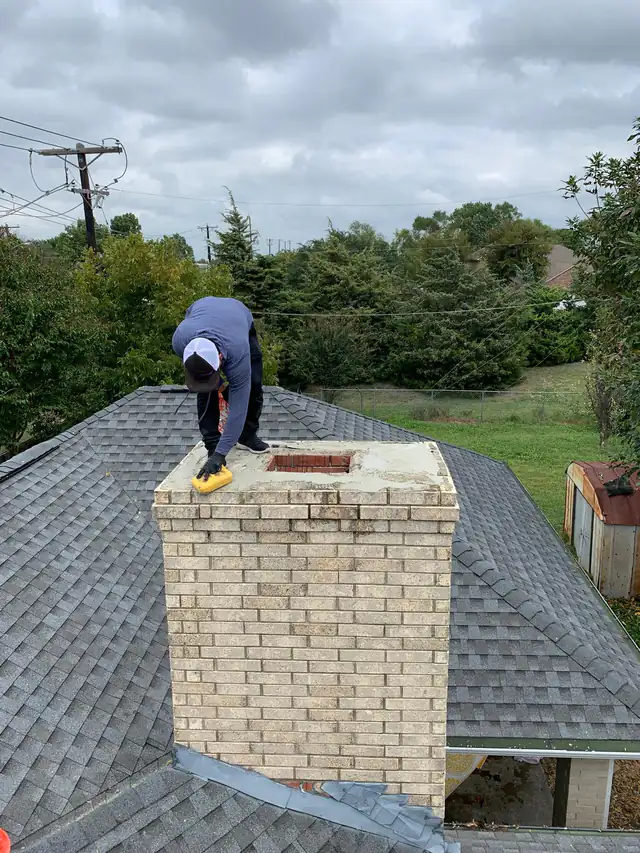
Finishing a fresh crown around the flue 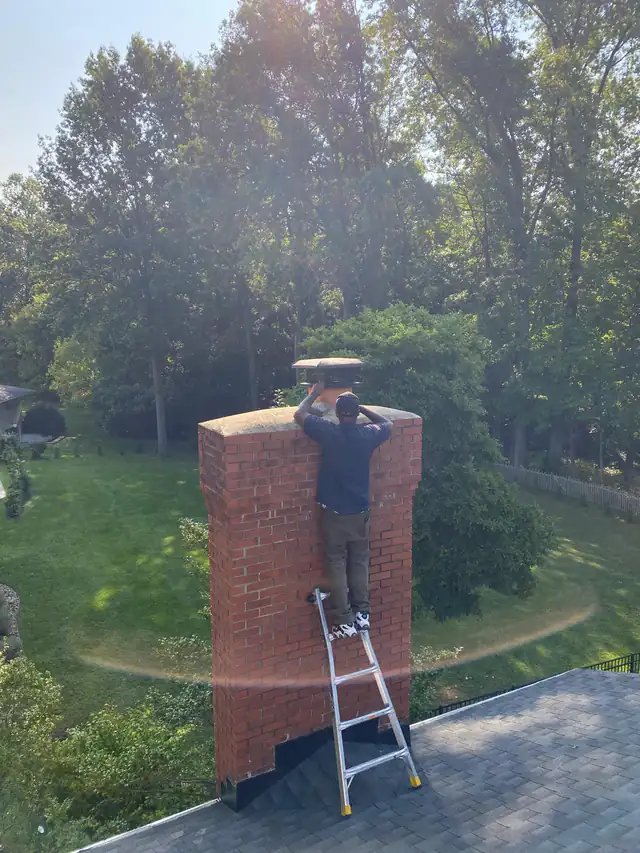
Ladder work on a tall stack — fitting the cap
Meet the team
The people behind the work
Manny, Zack and Myke — meet the people behind Chimney Expert Solutions.
Our team and story →
Manny
Owner
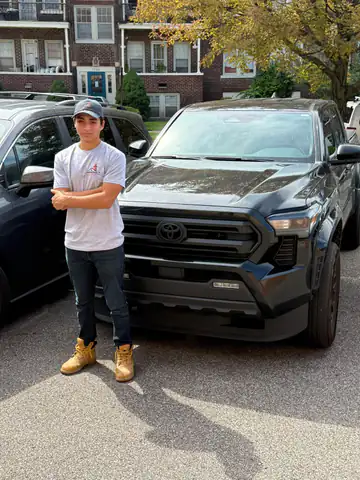
Zack
Manager

Myke
Technician
FAQ
Chimney Repair in Mentor: questions we hear
Should we get the chimney looked at before winter or after?
Before, if the choice is yours. Fall is when a missing cap, a dented cover, an open joint or a cracked crown can still be corrected before it takes on a season of snow and freeze cycles, and it is also when mortar work is still possible — masonry needs sustained temperatures above roughly 40°F to cure properly, so the season here effectively closes in November.
Water comes in near the chimney only in winter. Is the chimney leaking?
Usually not in the way people mean. A leak that appears in thaw conditions and never in summer downpours is the signature of an ice dam backing water up under the flashing rather than a defect in the crown or the masonry. We look at the flashing details and at what the attic is doing above them, because insulation and ventilation are usually half the answer.
Does more snow actually mean more chimney damage?
It means more of the specific kinds. Snow sits in contact with masonry for weeks rather than running off in an afternoon, so it melts and refreezes against the same joints repeatedly, and it loads the roof in ways that move flashing and shear off caps. The flue's interior condition is not much affected by snowfall; everything from the roofline up very much is.
How long does a chimney rebuild take?
A partial rebuild above the roofline on a straightforward stack is usually a small number of working days, weather permitting. A full rebuild, a difficult roof, or a chimney with detailing to reproduce takes longer. The unpredictable variable is weather rather than labor: mortar work stops for rain and for cold, and we would rather lose a day than lay masonry that will not cure.
Can we still use the fireplace while the chimney is being rebuilt?
No — the flue is open at the top and the stack is partly dismantled. If the chimney also serves a furnace or water heater, that has to be planned around before the work starts, and it is one of the first things we check on a quote visit. Nobody should discover mid-rebuild that the water heater has nowhere to vent.
Free estimate
Chimney Repair in Mentor?
Tell us what you’re seeing and we’ll call or text back to schedule a look — with photos of what we find and an honest read on what’s urgent and what can wait. That evidence-first method is the way we work on every job.
Call and tell us what the chimney's doing — if we're up on a roof, we'll call you back. Other ways to reach us are on the contact page, and Mentor is one of the communities we cover across Greater Cleveland.
Call216-647-1882