
Lake County, Ohio
Chimney Sweep & Cleaning in Mentor, OH
Full mechanical sweep of the flue, smoke chamber and firebox — creosote out, dust contained, and a look at the whole system while we're in it.
What chimney sweep involves in Mentor is set by the housing stock here: Mostly 1960s–90s subdivision housing under serious snow-belt loading — ice damming at chimney flashing, missing crickets behind wide stacks, and caps and chase covers taking sliding snow every winter.
Mentor is the largest city in Lake County and most of it is subdivision housing built from the 1960s through the 1990s, spreading off Mentor Avenue and Route 306 north toward the Headlands and south past the Great Lakes Mall. The houses are generally sound, the chimneys are generally younger than the county average, and the thing that dominates the work is not the building era. It is the snow.
Creosote is what wood smoke leaves behind on the inside of a flue, and it is the fuel in nearly every chimney fire. It leaves the fire as vapor, condenses on any flue wall cool enough to catch it, and hardens over a season into something closer to tar than soot. A real sweep takes the flue back to bare liner with rods and brushes sized to that specific flue, works the smoke chamber and smoke shelf where the deposits sit heaviest, and finishes in the firebox, with the room sealed off and a HEPA vacuum running the whole time.
What we find on Mentor chimneys that leads to chimney sweep
Snow sliding into caps, covers and storm collars
A slab of snow releasing off a steep roof carries real force, and the components at the top of a chimney are thin metal. We see rain caps torn off, chase covers dented into a shape that ponds water, storm collars pushed down or off the pipe entirely, and spark screens flattened. Most owners never look, because these parts are only visible from the roof, and a missing cap does not announce itself until a spring rain is running down the flue. A fall check of the top of the chimney is a small thing that catches all of it before the snow arrives.
No cricket behind a wide chimney
A chimney wider than about thirty inches sitting on a sloped roof needs a cricket — a small peaked structure built behind it that splits water and snow and sends it around each side. Plenty of houses here were built without one, or had it flattened during a re-roof. Without a cricket, snow packs into the uphill corner and stays there for months, meltwater sits against the masonry, and the back of the chimney rots its flashing and saturates its brick while the front three faces look perfect. If you have ever noticed the back of your stack is the ugly side, this is usually why.
How we decide whether a flue actually needs sweeping
The working standard in the trade is that about an eighth of an inch of accumulation warrants sweeping, and a quarter inch means stop burning until it is done. We measure rather than assume, and the answer genuinely varies. A chimney that sat unused for two years may need very little brushing and a serious camera inspection instead, because the risk there is a nest, a shifted tile or a rusted damper, not creosote. A chimney that heated a house all winter on borderline wood can need a second visit before spring.
If we get in there and the flue does not need brushing, you get told that. There is no version of this trade where inventing work is good business, and the photos make the call verifiable either way.
What happens if it does not get done
Two failure paths, and they look nothing alike. The first is fire. Creosote ignites at temperatures an ordinary hot fire reaches without trying, and a chimney fire is often not the dramatic roaring event people expect. Plenty of them are slow and nearly silent, and the only evidence is found later: puffed, honeycombed deposits, warped damper, cracked flue tiles, a cap discolored by heat. The tiles are the problem. Once thermal shock has cracked them, the flue no longer contains what it is supposed to contain, and the next fire has a path toward the framing that surrounds every masonry chimney.
The second is blockage, and it kills quietly. Nests, leaf litter, fallen tile shards and heavy deposits all reduce the usable flue area. Exhaust that cannot get out comes back in, and with any fuel-burning appliance that means carbon monoxide. This is why we look at furnace and water-heater flues with the same seriousness as fireplaces, and why working CO alarms on every level of the house, near the sleeping areas, are not optional in a home with any combustion appliance.
This page covers chimney sweep as it plays out in Mentor. The full chimney sweep & cleaning page walks the whole job — every stage, what changes the scope, and what we do about each of them. For everything else we handle in this suburb, see chimney services in Mentor.
What a sweep with us includes
- Drop cloths, sealed fireplace opening and HEPA dust control before a brush touches the flue
- Mechanical sweep of the full flue length, with brush size and shape matched to your liner
- Smoke chamber and smoke shelf hand-cleaned — the corners most sweeps skip
- Firebox and ash dump cleared, damper cleaned and operated through full travel
- A visual once-over of the whole system, with photos of anything that needs attention
- Straight advice at the end: what's urgent, what can wait, what's fine
Our work
Chimney Sweep & Cleaning, photographed on the job
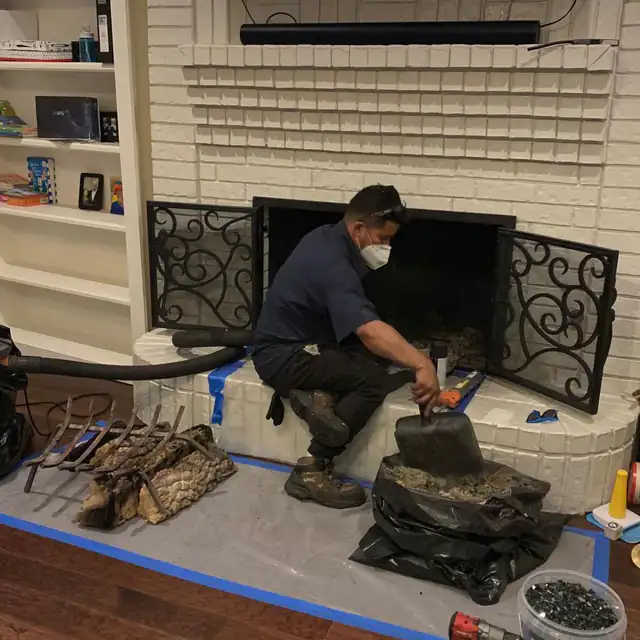
Drop cloths down and a vacuum on the hearth before anything is opened 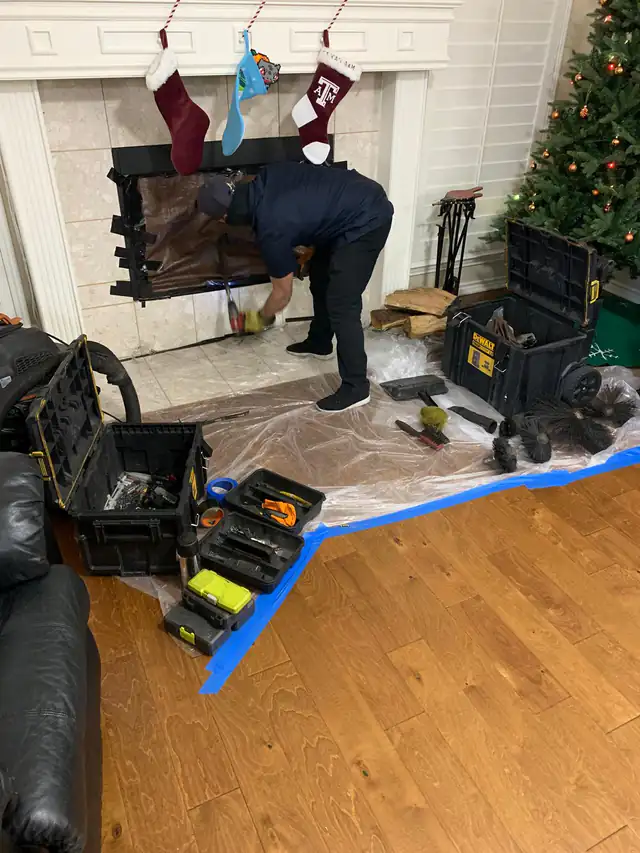
Working at the protected fireplace opening, with brushes and tools on covered floors 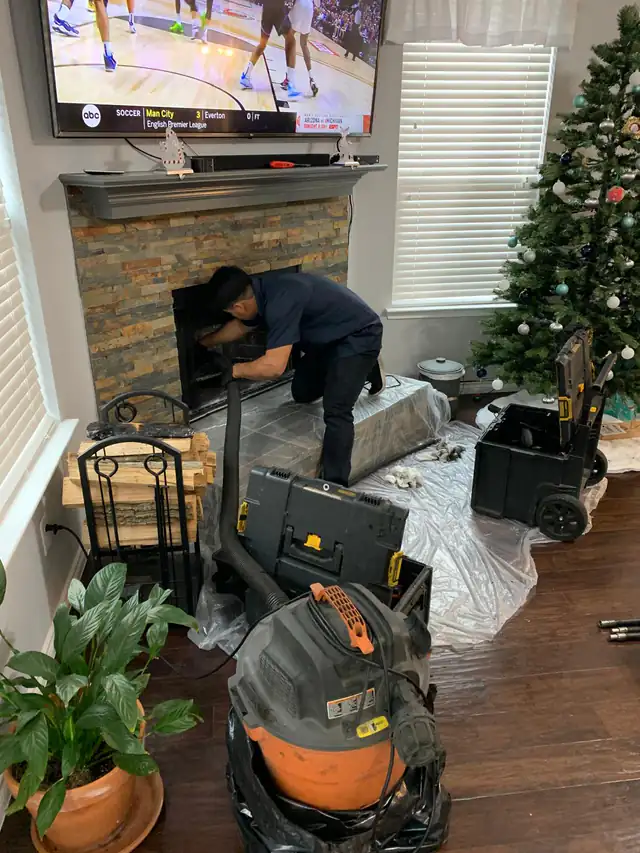
At the stone-front fireplace, with the hearth covered and a vacuum alongside 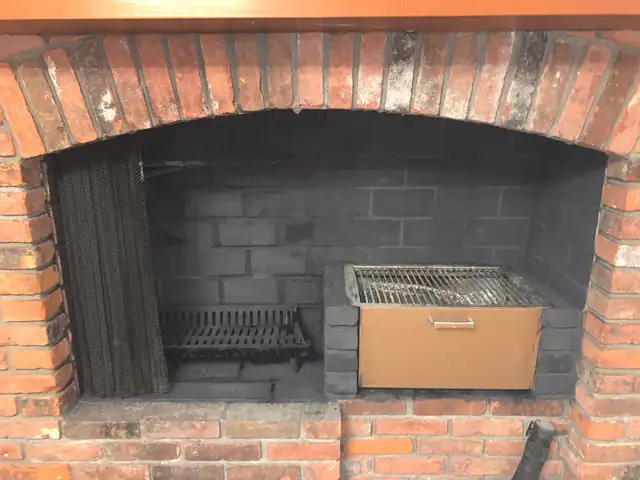
Firebox cleaned back to the brick, damper working 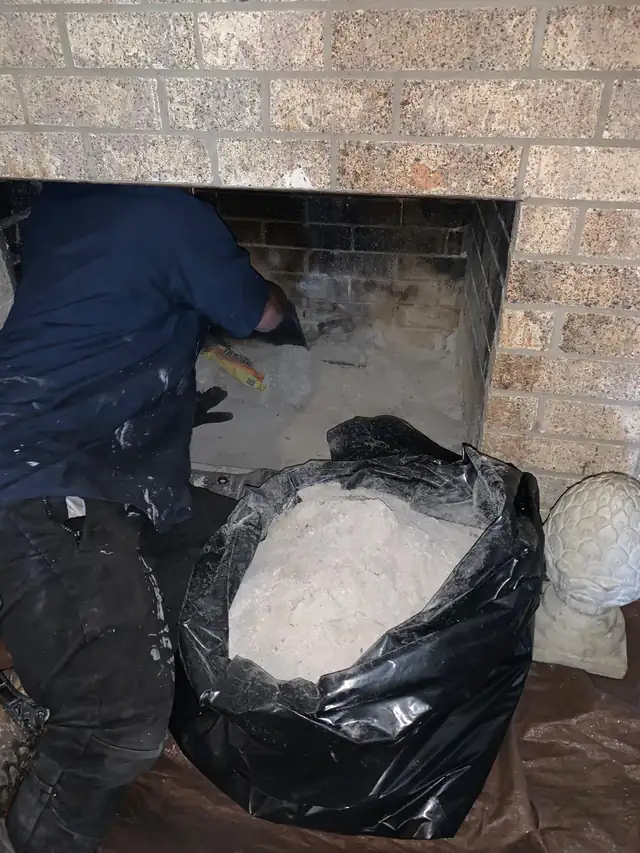
Clearing the firebox down to bare brick, floors covered
Meet the team
The people behind the work
Manny, Zack and Myke — meet the people behind Chimney Expert Solutions.
Our team and story →
Manny
Owner

Zack
Manager

Myke
Technician
FAQ
Chimney Sweep in Mentor: questions we hear
Water comes in near the chimney only in winter. Is the chimney leaking?
Usually not in the way people mean. A leak that appears in thaw conditions and never in summer downpours is the signature of an ice dam backing water up under the flashing rather than a defect in the crown or the masonry. We look at the flashing details and at what the attic is doing above them, because insulation and ventilation are usually half the answer.
Does more snow actually mean more chimney damage?
It means more of the specific kinds. Snow sits in contact with masonry for weeks rather than running off in an afternoon, so it melts and refreezes against the same joints repeatedly, and it loads the roof in ways that move flashing and shear off caps. The flue's interior condition is not much affected by snowfall; everything from the roofline up very much is.
Do you sweep from the roof or from inside the house?
Whichever puts less risk in your house. Roof access, cap design and the pitch and material of the roof all factor in — we will not walk a slate roof that will break underfoot. Both directions clean the same flue; the part that decides whether your living room stays clean is the sealed opening and the vacuum at the firebox, not which end the rods go in.
Do those creosote-sweeping logs work?
Partly, and not as a replacement. Creosote-modifying products can dry out and loosen stage-three glaze, which genuinely makes a subsequent sweep more effective. What they cannot do is remove anything. The deposit still has to be brushed loose and carried out of the flue by someone with rods and a vacuum.
Free estimate
Chimney Sweep in Mentor?
Tell us what you’re seeing and we’ll call or text back to schedule a look — with photos of what we find and an honest read on what’s urgent and what can wait. That evidence-first method is the way we work on every job.
Call and tell us what the chimney's doing — if we're up on a roof, we'll call you back. Other ways to reach us are on the contact page, and Mentor is one of the communities we cover across Greater Cleveland.
Call216-647-1882