
Lorain County, Ohio
Chimney Sweep & Cleaning in Lorain, OH
Full mechanical sweep of the flue, smoke chamber and firebox — creosote out, dust contained, and a look at the whole system while we're in it.
What chimney sweep involves in Lorain is set by the housing stock here: Dense mill and harbor-era housing with an unusual concentration of 1920s rebuilding — small stacks with hollow-tile backup, open lake exposure from the north, and flues that have outlived several generations of heating equipment.
Lorain is a mill and harbor city at the mouth of the Black River, and its housing tells that story block by block: dense, modest, closely spaced houses built for people who worked the steel plant and the shipyards, laid out in tight grids from the waterfront south, with more spacious later neighborhoods further out. These are small houses with small chimneys, and they were built to a budget by people who did not waste material.
Creosote is what wood smoke leaves behind on the inside of a flue, and it is the fuel in nearly every chimney fire. It leaves the fire as vapor, condenses on any flue wall cool enough to catch it, and hardens over a season into something closer to tar than soot. A real sweep takes the flue back to bare liner with rods and brushes sized to that specific flue, works the smoke chamber and smoke shelf where the deposits sit heaviest, and finishes in the firebox, with the room sealed off and a HEPA vacuum running the whole time.
What we find on Lorain chimneys that leads to chimney sweep
Small stacks, small flues, and a modern appliance
These houses were built with a single modest chimney sized around a coal-burning heating plant and, in some cases, a kitchen range. Every conversion since — coal to gas, gravity to forced air, standard furnace to high-efficiency — changed what the flue is being asked to do without changing the flue. What is left in a lot of Lorain basements is an appliance connected to a masonry flue that is either far too large for it, or in a couple of cases genuinely too small, with a connector arrangement improvised in whichever decade the last change happened. It wants sizing properly and lining to match, and the basement is where that assessment starts.
A whole cohort of chimneys the same age
Where a city rebuilds after a disaster, it rebuilds fast and it rebuilds all at once. That is useful to know because it makes the condition of your neighbors' chimneys genuinely informative about your own in a way it usually is not — same year, same brick, same mortar, same crown detail, same hundred winters. When we start seeing the same failure at the same height on the same brick across several blocks, it is not a coincidence and it is not bad luck. It means a design life has been reached, and the sensible move is to get ahead of it rather than wait for the pieces to land in the yard.
Hollow clay tile behind the brick face
Structural clay tile — hollow rectangular blocks — was a common, economical backup material in this era, used behind a single wythe of face brick in walls and in chimneys. It is not a bad material, but it fails differently from solid masonry. Water that gets past the brick collects in the hollow cells, freezes, and breaks the thin webs inside the tile where nobody can see it, so a chimney can be substantially hollowed out internally while the outside face still looks presentable. When a stack like this finally moves, it moves suddenly. Finding it changes the assessment, which is why we look at what is behind the face rather than just at it.
What creosote is, and why it changes the job
Wood does not burn completely. Volatile gases leave the fire unburned, travel up the flue as vapor, and condense wherever the flue wall drops below roughly 250°F. Every fire adds a layer. What that layer becomes depends on how the chimney runs: a hot, well-drafted flue burning dry wood makes very little, and a cool flue full of smoldering smoke makes a lot of the worst kind.
The stage of the deposit decides the tools, the time, and sometimes whether the flue can be cleaned at all. This is why an honest sweep looks before quoting anything beyond the standard visit.
Stage one: soot and fine flake
Dry, dusty, sometimes velvety. It brushes off the liner easily and vacuums up without a fight. A fireplace burning properly seasoned hardwood in a warm flue mostly produces this, and an annual sweep keeps it at this stage indefinitely.
Stage two: hard flake and crust
Shiny black flakes that snap rather than crumble, often thick enough to feel ridged against a brush. This is the most common thing we find on Cleveland fireplaces that have gone two or three seasons. It comes off with a proper mechanical sweep, but a nylon brush pushed quickly through the flue will not do it.
Stage three: glaze
A hard, tarry coating fused to the liner, sometimes running in drips. It will not brush off. Removing it takes rotary chain or whip heads run at the right speed, sometimes preceded by a chemical modifier to dry it out, and occasionally more than one visit. Glaze is also the single most dangerous deposit, because it holds an enormous amount of fuel in a thin layer. If a flue is glazed badly enough and the tile underneath is already compromised, the honest answer is not more brushing — it is a camera inspection and a conversation about relining.
What makes a chimney build creosote faster
If you have been told you need sweeping more often than a neighbour with the same house, one of these is usually why. Fixing the cause is cheaper than sweeping around it.
- Wet wood. Freshly cut wood is roughly half water by weight; seasoned firewood should be near 20%. Wood that has not been split, stacked and covered for a year spends the first part of every fire boiling water instead of making heat, and cool smoke deposits fast.
- Smoldering fires. Damping a stove or insert right down overnight is the classic creosote factory — long, cool, oxygen-starved burns put the maximum amount of unburned gas up a cold flue.
- An oversized flue. Common in Cleveland after a wood fireplace is converted to gas, or a big open firebox is replaced with a small insert. Exhaust slows, cools, and condenses on the way out.
- An exterior chimney. A stack running up the outside of the house never holds heat the way an interior one does. On a January night in a lake-effect wind, that flue is a condenser.
- A short or poorly terminated chimney. Draft comes from height and temperature difference. A stack that barely clears the roofline never develops much of either.
- Soft woods and construction scrap. Pine and spruce leave more resin; painted, glued or treated wood leaves deposits you do not want in a flue at all.
This page covers chimney sweep as it plays out in Lorain. The full chimney sweep & cleaning page walks the whole job — every stage, what changes the scope, and what we do about each of them. For everything else we handle in this suburb, see chimney services in Lorain.
What a sweep with us includes
- Drop cloths, sealed fireplace opening and HEPA dust control before a brush touches the flue
- Mechanical sweep of the full flue length, with brush size and shape matched to your liner
- Smoke chamber and smoke shelf hand-cleaned — the corners most sweeps skip
- Firebox and ash dump cleared, damper cleaned and operated through full travel
- A visual once-over of the whole system, with photos of anything that needs attention
- Straight advice at the end: what's urgent, what can wait, what's fine
Our work
Chimney Sweep & Cleaning, photographed on the job
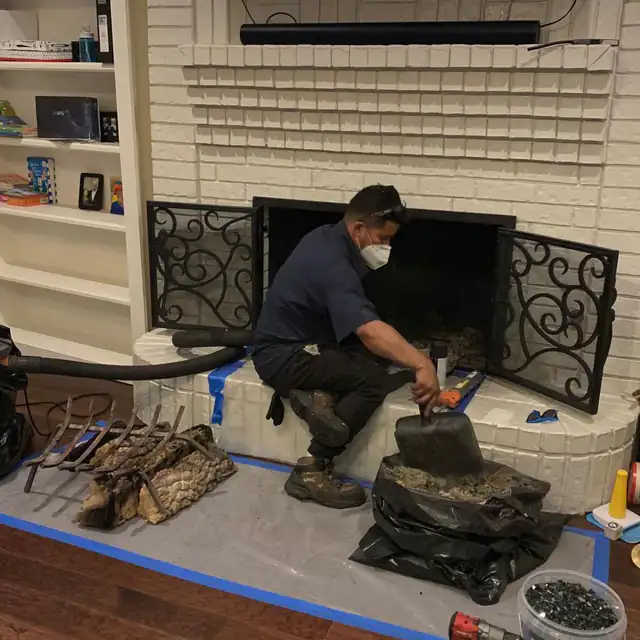
Drop cloths down and a vacuum on the hearth before anything is opened 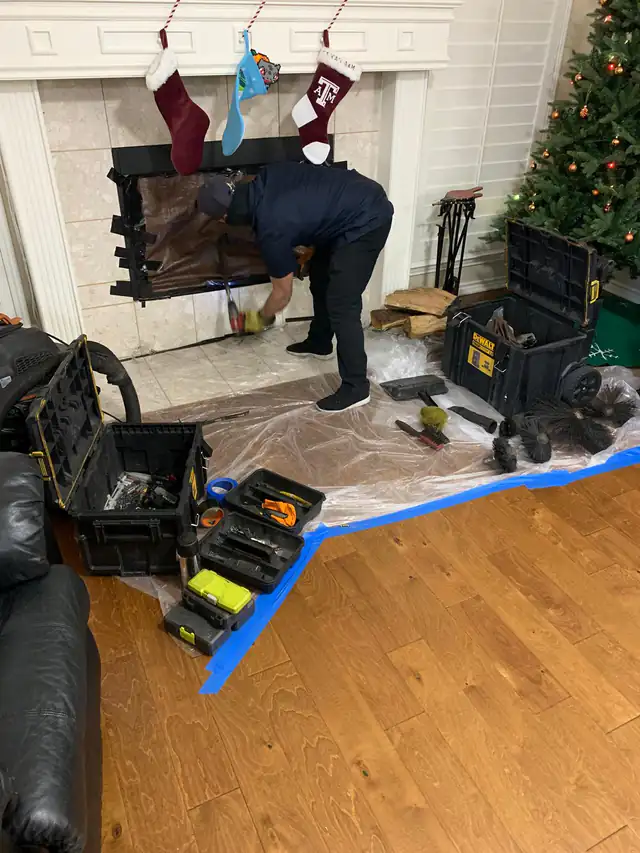
Working at the protected fireplace opening, with brushes and tools on covered floors 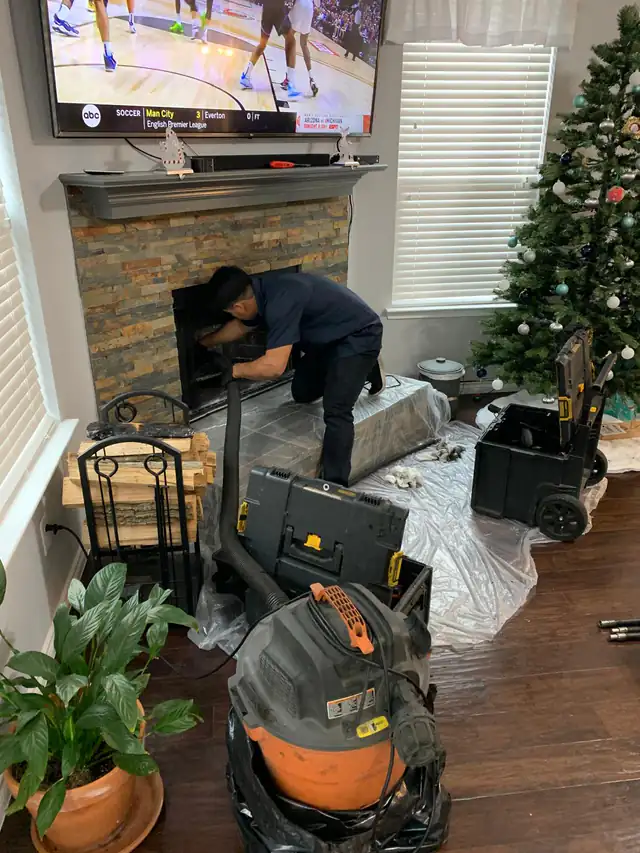
At the stone-front fireplace, with the hearth covered and a vacuum alongside 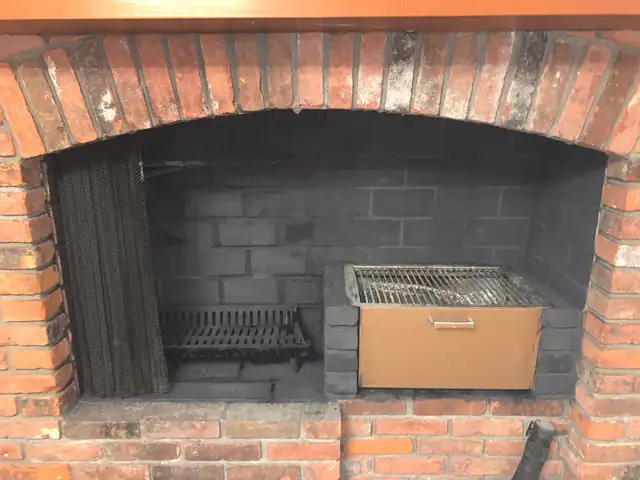
Firebox cleaned back to the brick, damper working 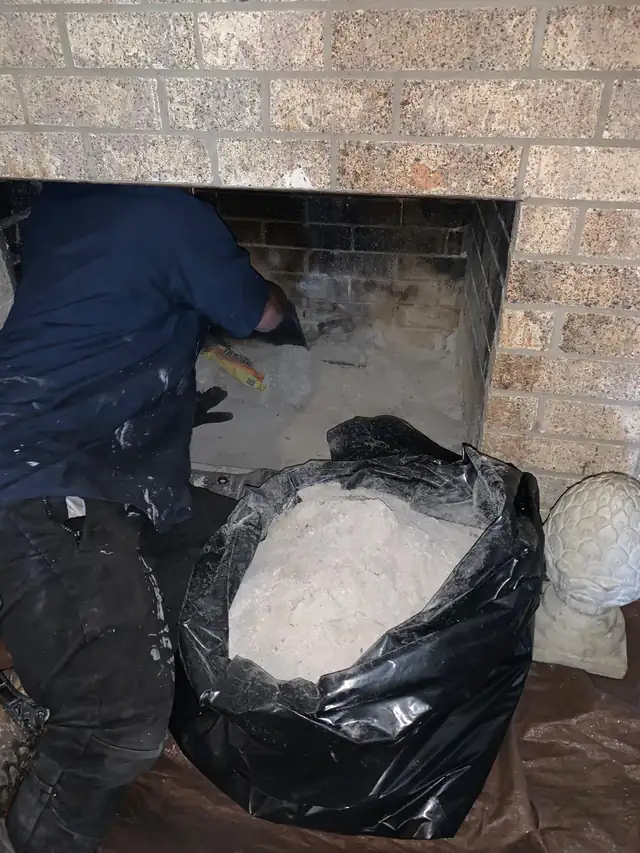
Clearing the firebox down to bare brick, floors covered
Meet the team
The people behind the work
Manny, Zack and Myke — meet the people behind Chimney Expert Solutions.
Our team and story →
Manny
Owner

Zack
Manager

Myke
Technician
FAQ
Chimney Sweep in Lorain: questions we hear
How can a chimney look fine and still be unsound?
It happens most often where the stack is built with hollow clay tile behind a brick face. Water gets in, freezes in the hollow cells and breaks the internal webs, so the structure is being eaten from the inside while the visible face stays reasonably intact. It is one of the reasons a proper assessment includes the top, the interior of the flue and the base rather than a look from the driveway.
Our furnace vents into the old chimney. Is that still appropriate?
It depends entirely on what the appliance is and what the flue measures. A modern furnace on a flue sized for a coal plant is far too large a passage — the exhaust cools, condenses and corrodes the tile from inside. The answer is usually a metal liner sized to the appliance, but the sizing has to come from the actual equipment and the actual flue, not from an assumption. We look at both.
Does the lakefront exposure matter for a chimney a few streets back?
Some. The open north exposure means driven rain and snow reach the stack with force rather than falling on it, and it concentrates on one face. The practical effect is asymmetric wear — one side of a chimney much worse than the other — and a shorter useful life for caps and crowns. It is a reason to check the top of the chimney on a regular schedule rather than waiting for a symptom indoors.
What should I do before you arrive?
Do not burn for at least 24 hours, and 48 is better — a warm firebox is a miserable place to work and hot ash and drop cloths do not mix. Clear a path to the fireplace, take fragile things off the mantel, and keep pets in another room. If you have an insert or a stove, tell us the make and model when you book so the right brushes are on the truck.
The fireplace was converted to gas years ago. Does the old creosote still matter?
Yes. Wood-era deposits stay where they are and stay combustible, and a conversion usually leaves the flue badly oversized for the new appliance — so it runs cold and condenses moisture onto exactly those deposits. Conversions are a good reason for a sweep and a camera look, not a reason to skip one.
Free estimate
Chimney Sweep in Lorain?
Tell us what you’re seeing and we’ll call or text back to schedule a look — with photos of what we find and an honest read on what’s urgent and what can wait. That evidence-first method is the way we work on every job.
Call and tell us what the chimney's doing — if we're up on a roof, we'll call you back. Other ways to reach us are on the contact page, and Lorain is one of the communities we cover across Greater Cleveland.
Call216-647-1882