
Lorain County, Ohio
Chimney Sweep & Cleaning in Avon Lake, OH
Full mechanical sweep of the flue, smoke chamber and firebox — creosote out, dust contained, and a look at the whole system while we're in it.
What chimney sweep involves in Avon Lake is set by the housing stock here: Open lakefront exposure with no shelter from the north — steady wind that beats chimney draft, houses under pressure that pull air back down unused flues, and converted seasonal cottages carrying year-round heating loads.
Avon Lake runs along the shoreline west of the county line, with older housing on and around Lake Road — a lot of it originally built as summer places — and large stretches of newer subdivision south of it toward Walker Road and the highway. The chimney work here is shaped less by building era than by the fact that there is nothing between these houses and the open water.
Creosote is what wood smoke leaves behind on the inside of a flue, and it is the fuel in nearly every chimney fire. It leaves the fire as vapor, condenses on any flue wall cool enough to catch it, and hardens over a season into something closer to tar than soot. A real sweep takes the flue back to bare liner with rods and brushes sized to that specific flue, works the smoke chamber and smoke shelf where the deposits sit heaviest, and finishes in the firebox, with the room sealed off and a HEPA vacuum running the whole time.
What we find on Avon Lake chimneys that leads to chimney sweep
The fireplace we never use, and the smell
The most common Avon Lake call has nothing to do with fire. A house under negative pressure — from wind on the lee side, from bath and kitchen exhaust, from the stack effect of warm air rising in winter — pulls replacement air in wherever it can, and an open flue is a large, easy opening. Air comes down the chimney, passes over old deposits in the smoke chamber and the firebox, and delivers the smell into the room. Cleaning removes the source, but the airflow is the actual cause, and the durable fix is a top-sealing damper that closes the flue at the top rather than at the throat. It also stops you heating the outdoors through the winter.
Wind pushing the draft back down the flue
Steady onshore wind striking a roof creates a zone of downward pressure on the lee side and turbulence over the ridge, and if the chimney terminates inside that zone the wind wins. The symptom is unmistakable once you know it: the fireplace draws perfectly on calm days and backpuffs or refuses to start when it is blowing, always from roughly the same direction. There are two levers. One is height — getting the flue termination up out of the turbulent layer, which means at least two feet above anything within ten feet of it. The other is the cap: wind-directional and vacuum-style caps use the wind itself to pull the flue rather than fight it, and on an exposed lakefront they earn their place.
Cottages that became houses
A good number of the older places near the shore began as seasonal cottages and were converted to year-round living over the decades, gaining insulation, a real heating system and often a fireplace along the way. The masonry frequently did not keep up with the conversion. We find chimneys built for occasional summer use now venting a heating appliance through every Ohio winter, foundations and footings that were adequate for a light seasonal structure carrying a full-height stack, and flue arrangements assembled in stages by different people. None of that is necessarily unsafe, but it does mean the chimney deserves to be assessed on what it is doing now rather than on what it was built to do.
What makes a chimney build creosote faster
If you have been told you need sweeping more often than a neighbour with the same house, one of these is usually why. Fixing the cause is cheaper than sweeping around it.
- Wet wood. Freshly cut wood is roughly half water by weight; seasoned firewood should be near 20%. Wood that has not been split, stacked and covered for a year spends the first part of every fire boiling water instead of making heat, and cool smoke deposits fast.
- Smoldering fires. Damping a stove or insert right down overnight is the classic creosote factory — long, cool, oxygen-starved burns put the maximum amount of unburned gas up a cold flue.
- An oversized flue. Common in Cleveland after a wood fireplace is converted to gas, or a big open firebox is replaced with a small insert. Exhaust slows, cools, and condenses on the way out.
- An exterior chimney. A stack running up the outside of the house never holds heat the way an interior one does. On a January night in a lake-effect wind, that flue is a condenser.
- A short or poorly terminated chimney. Draft comes from height and temperature difference. A stack that barely clears the roofline never develops much of either.
- Soft woods and construction scrap. Pine and spruce leave more resin; painted, glued or treated wood leaves deposits you do not want in a flue at all.
What actually happens when we sweep your chimney
Before a brush touches the flue
Drop cloths go down over the hearth and the floor in front of it. The fireplace opening is sealed, and a HEPA vacuum runs at the firebox for the entire job so the flue is held under slight negative pressure. That is the whole trick to a clean sweep: air moves from the room into the chimney, never the other way. If soot ends up on your furniture, the setup was wrong, not the chimney.
The flue
Rods and brushes are run the full length of the liner, either down from the top or up from the firebox depending on roof access and what is on top of the stack. Brush size and shape matter more than most homeowners expect. A round brush swept through a rectangular clay tile leaves the four corners untouched, and the corners are exactly where deposits collect. We match the head to the liner: round for stainless, square or rectangular for clay tile, wire or poly depending on what the liner can take.
The smoke chamber and smoke shelf
This is the part that gets skipped, and it is the part that matters. The smoke chamber is the funnel-shaped space above the damper and below the first flue tile, usually built from corbelled brick with rough, stepped surfaces that catch everything. Behind it sits the smoke shelf, the ledge that collects whatever falls back down. Both get hand-brushed and vacuumed. A chimney with a clean flue and a loaded smoke chamber has not been swept, it has been rodded.
The firebox and damper
Firebox swept out, ash dump cleared if there is one, damper operated through its full travel and cleaned where soot has built on the plate and frame. A damper that will not seat is a heating bill and a draft problem, and it is easier to catch it here than in December.
The walkthrough at the end
Before we leave you get told what we saw, with photos of anything that needs attention: liner condition, firebox joints, smoke chamber, damper, and if we were on the roof, the crown, cap and flashing. Findings get ranked plainly. Urgent, plan for it, fine. No verdict without a picture behind it.
This page covers chimney sweep as it plays out in Avon Lake. The full chimney sweep & cleaning page walks the whole job — every stage, what changes the scope, and what we do about each of them. For everything else we handle in this suburb, see chimney services in Avon Lake.
What a sweep with us includes
- Drop cloths, sealed fireplace opening and HEPA dust control before a brush touches the flue
- Mechanical sweep of the full flue length, with brush size and shape matched to your liner
- Smoke chamber and smoke shelf hand-cleaned — the corners most sweeps skip
- Firebox and ash dump cleared, damper cleaned and operated through full travel
- A visual once-over of the whole system, with photos of anything that needs attention
- Straight advice at the end: what's urgent, what can wait, what's fine
Our work
Chimney Sweep & Cleaning, photographed on the job
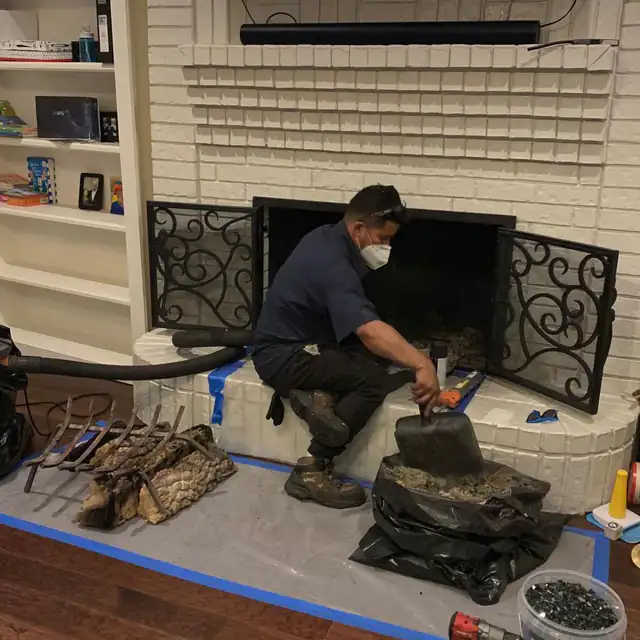
Drop cloths down and a vacuum on the hearth before anything is opened 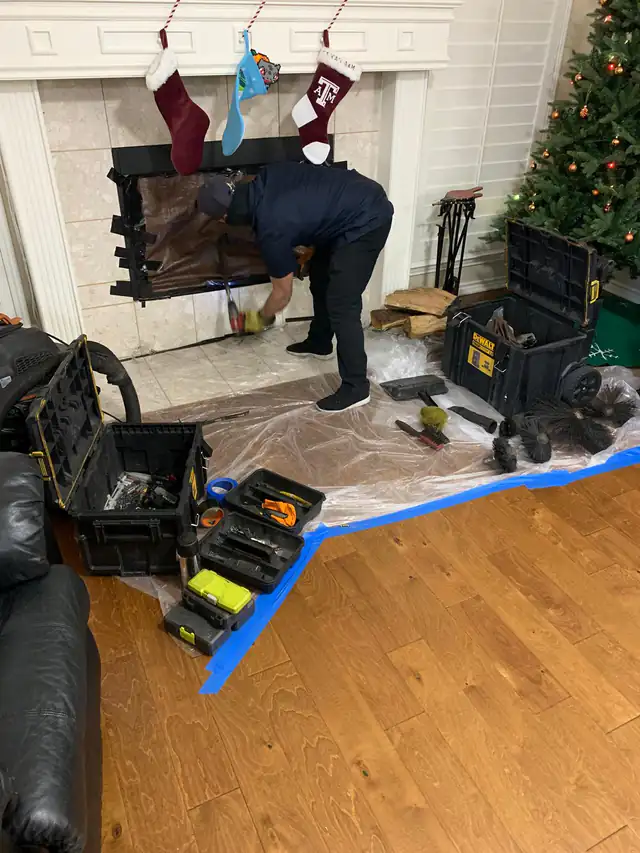
Working at the protected fireplace opening, with brushes and tools on covered floors 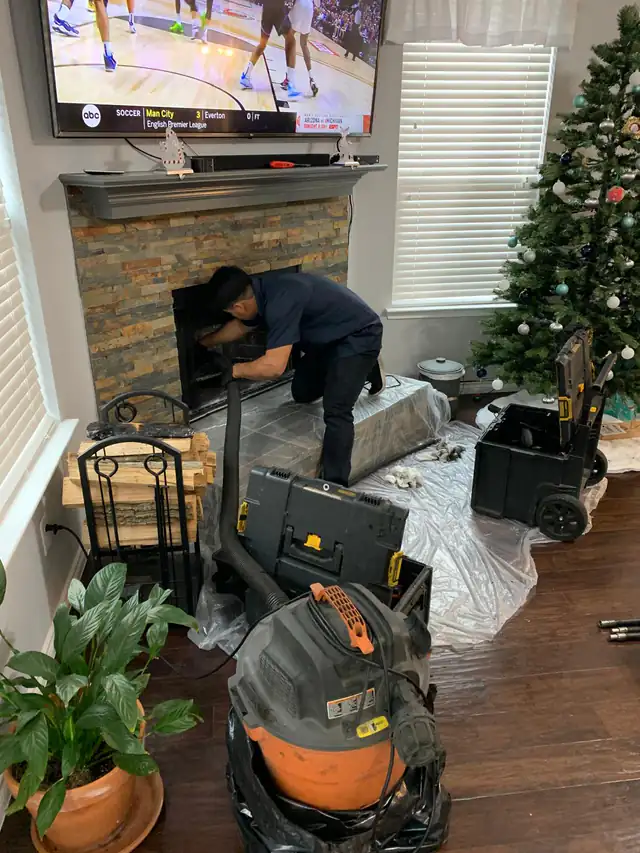
At the stone-front fireplace, with the hearth covered and a vacuum alongside 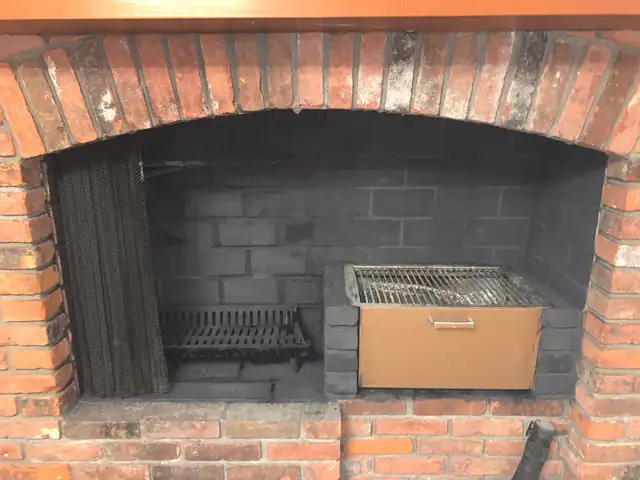
Firebox cleaned back to the brick, damper working 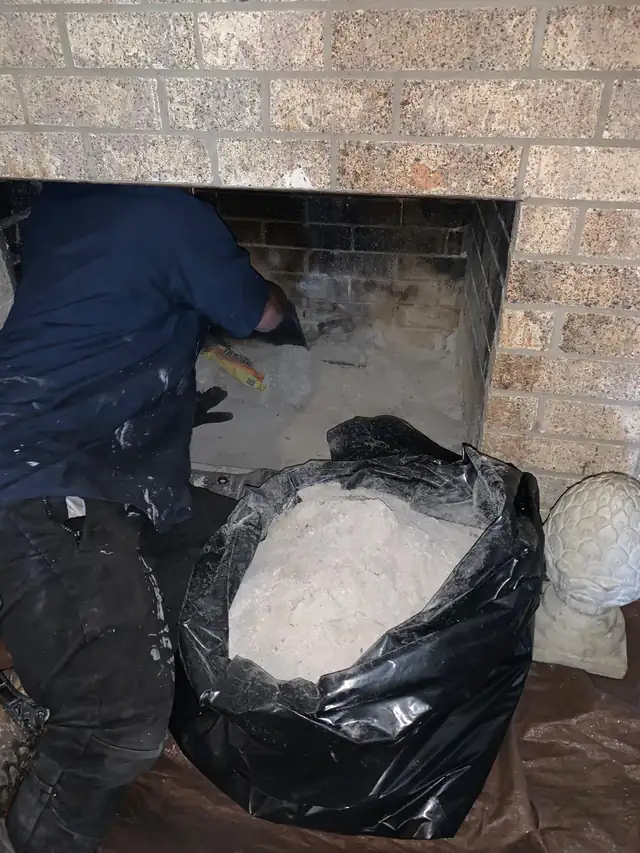
Clearing the firebox down to bare brick, floors covered
Meet the team
The people behind the work
Manny, Zack and Myke — meet the people behind Chimney Expert Solutions.
Our team and story →
Manny
Owner

Zack
Manager

Myke
Technician
FAQ
Chimney Sweep in Avon Lake: questions we hear
We smell the fireplace indoors even in summer. What is that?
Air coming down the flue rather than going up it, carrying odor off old deposits. It happens when the house is at lower pressure than the outside — which wind, exhaust fans and the stack effect all cause. Sweeping removes most of the smell source. A top-sealing damper, which seals the flue at the top rather than at the throat, is what stops the airflow itself.
Our fireplace only misbehaves when the wind is up. Is the chimney blocked?
Probably not, and a scan will settle it quickly. A fireplace that draws well on calm days and fails in wind from a particular direction is describing a pressure problem, not an obstruction. The usual causes are a flue that terminates too low relative to the ridge or a nearby structure, and a cap that fights the wind instead of using it. Both are fixable without touching the masonry below.
Would a taller chimney really fix a wind problem?
Often, yes, because it gets the flue termination out of the turbulent air rolling over the roof. The rule of thumb is that a chimney should stand three feet above where it passes through the roof and two feet above anything within ten feet of it. Where height alone is not enough or is not practical, a wind-directional cap does the rest. We measure before recommending either.
Do those creosote-sweeping logs work?
Partly, and not as a replacement. Creosote-modifying products can dry out and loosen stage-three glaze, which genuinely makes a subsequent sweep more effective. What they cannot do is remove anything. The deposit still has to be brushed loose and carried out of the flue by someone with rods and a vacuum.
What if you find damage while you're in there?
You get photos, a plain explanation of what it is and what it does if left alone, and a written scope. No scare tactics: most of what we find can be scheduled rather than panicked over. What we will not do is sweep a chimney that is not safe to use and say nothing about it.
Free estimate
Chimney Sweep in Avon Lake?
Tell us what you’re seeing and we’ll call or text back to schedule a look — with photos of what we find and an honest read on what’s urgent and what can wait. That evidence-first method is the way we work on every job.
Call and tell us what the chimney's doing — if we're up on a roof, we'll call you back. Other ways to reach us are on the contact page, and Avon Lake is one of the communities we cover across Greater Cleveland.
Call216-647-1882