
Cuyahoga County, Ohio
Chimney Sweep & Cleaning in Cleveland, OH
Full mechanical sweep of the flue, smoke chamber and firebox — creosote out, dust contained, and a look at the whole system while we're in it.
What chimney sweep involves in Cleveland is set by the housing stock here: 1890s–1950s stock across most neighborhoods: soft pre-war brick, unlined or clay-tile flues, doubles with multi-flue stacks, and utility chimneys serving furnaces and water heaters.
Cleveland is a chimney town, and the reason is in the building dates. Ohio City, Tremont, Detroit-Shoreway, Old Brooklyn, West Park, Slavic Village and Collinwood were largely built out between the 1890s and the 1950s, in an era when every house got at least one masonry chimney and a great many got two or three. Those stacks are now anywhere from seventy to a hundred and thirty years old, and they have spent every one of those winters in one of the harder masonry climates in the country.
Creosote is what wood smoke leaves behind on the inside of a flue, and it is the fuel in nearly every chimney fire. It leaves the fire as vapor, condenses on any flue wall cool enough to catch it, and hardens over a season into something closer to tar than soot. A real sweep takes the flue back to bare liner with rods and brushes sized to that specific flue, works the smoke chamber and smoke shelf where the deposits sit heaviest, and finishes in the firebox, with the room sealed off and a HEPA vacuum running the whole time.
What we find on Cleveland chimneys that leads to chimney sweep
Unlined and clay-tile flues in the pre-1940 stock
Flue liners were not universal building practice here until well into the twentieth century, and a substantial share of Cleveland chimneys from before the war have bare brick flues with washed-out mortar joints between the courses. Where clay tile was used, eight decades of thermal cycling and moisture have generally cracked it and eaten the joints. Neither condition is visible from the firebox or the yard, and both mean combustion gases are in contact with masonry that was never meant to contain them.
Doubles, and nobody sure which flue does what
On a Cleveland Double it is common to find one stack with three or four flues: an upstairs fireplace, a downstairs fireplace, the furnace, and sometimes an abandoned one from a coal or a gravity system nobody remembers. They age independently, so a scan frequently finds one sound, one cracked, and one that was disconnected mid-conversion and left open at the top. Sorting out which flue serves what is genuinely part of the first visit, and it is not something a homeowner can be expected to know.
Utility flues orphaned by furnace upgrades
When an old gravity or mid-efficiency furnace is replaced with a high-efficiency unit venting through PVC out a side wall, the water heater is usually left on the masonry chimney by itself. A small appliance on a flue sized for two runs cool, condenses acidic moisture on its own walls, and dissolves the tile and mortar from the inside over a decade while everything looks fine from the basement. The failure mode there is carbon monoxide, not a fire you would notice.
What creosote is, and why it changes the job
Wood does not burn completely. Volatile gases leave the fire unburned, travel up the flue as vapor, and condense wherever the flue wall drops below roughly 250°F. Every fire adds a layer. What that layer becomes depends on how the chimney runs: a hot, well-drafted flue burning dry wood makes very little, and a cool flue full of smoldering smoke makes a lot of the worst kind.
The stage of the deposit decides the tools, the time, and sometimes whether the flue can be cleaned at all. This is why an honest sweep looks before quoting anything beyond the standard visit.
Stage one: soot and fine flake
Dry, dusty, sometimes velvety. It brushes off the liner easily and vacuums up without a fight. A fireplace burning properly seasoned hardwood in a warm flue mostly produces this, and an annual sweep keeps it at this stage indefinitely.
Stage two: hard flake and crust
Shiny black flakes that snap rather than crumble, often thick enough to feel ridged against a brush. This is the most common thing we find on Cleveland fireplaces that have gone two or three seasons. It comes off with a proper mechanical sweep, but a nylon brush pushed quickly through the flue will not do it.
Stage three: glaze
A hard, tarry coating fused to the liner, sometimes running in drips. It will not brush off. Removing it takes rotary chain or whip heads run at the right speed, sometimes preceded by a chemical modifier to dry it out, and occasionally more than one visit. Glaze is also the single most dangerous deposit, because it holds an enormous amount of fuel in a thin layer. If a flue is glazed badly enough and the tile underneath is already compromised, the honest answer is not more brushing — it is a camera inspection and a conversation about relining.
What drives the cost of a sweep
Sweeping is one of the more predictable jobs in the trade, and we would rather explain the variables than have you compare two numbers that were never quoting the same work.
- Number of flues. Older Cleveland and Heights homes routinely have two or three in one stack, and each is a separate job.
- Access. A walkable asphalt roof on a ranch is one thing. A steep slate roof on a three-story Tudor, where walking the slate would break it, means roof ladders and staging.
- Appliance type. An insert or stove with no direct liner connection usually has to be pulled out, swept, and re-seated with fresh gasket, which is real extra labor.
- Deposit stage. Stage one and two are inside the standard visit. Stage three glaze is rotary work, sometimes with a chemical pre-treatment and a return trip, and we will not quote it sight unseen.
- Condition. A flue with cracked or loose tiles cannot take aggressive brushing. Sometimes the right sequence is inspect first, stabilise, then clean.
- How long it has been. Ten years of accumulation is not ten times the work of one, but it is not the same visit either.
This page covers chimney sweep as it plays out in Cleveland. The full chimney sweep & cleaning page walks the whole job — every stage, what changes the scope, and what we do about each of them. For everything else we handle in this suburb, see chimney services in Cleveland.
What a sweep with us includes
- Drop cloths, sealed fireplace opening and HEPA dust control before a brush touches the flue
- Mechanical sweep of the full flue length, with brush size and shape matched to your liner
- Smoke chamber and smoke shelf hand-cleaned — the corners most sweeps skip
- Firebox and ash dump cleared, damper cleaned and operated through full travel
- A visual once-over of the whole system, with photos of anything that needs attention
- Straight advice at the end: what's urgent, what can wait, what's fine
Our work
Chimney Sweep & Cleaning, photographed on the job
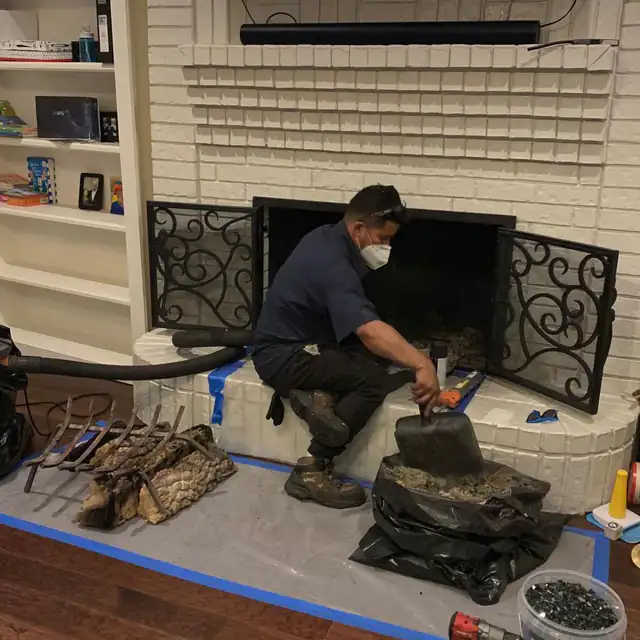
Drop cloths down and a vacuum on the hearth before anything is opened 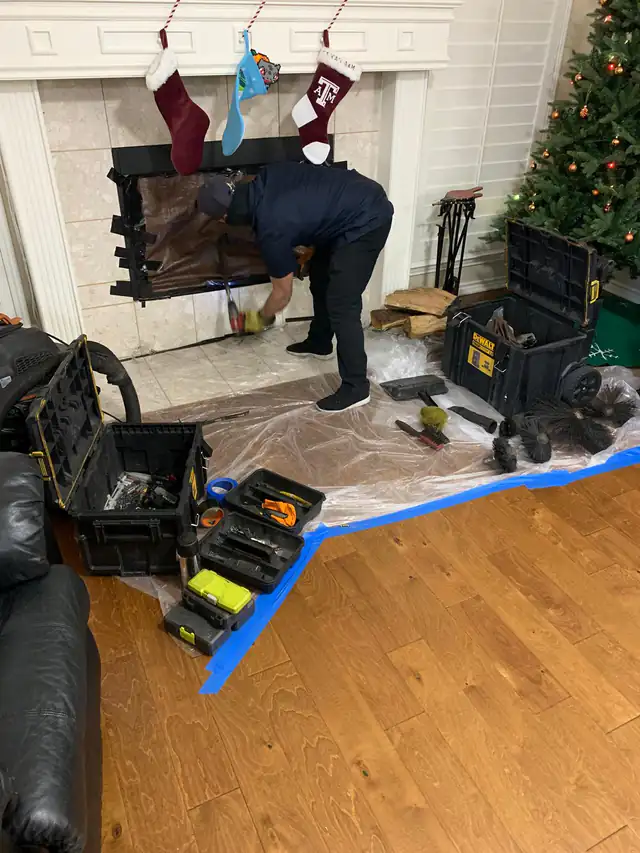
Working at the protected fireplace opening, with brushes and tools on covered floors 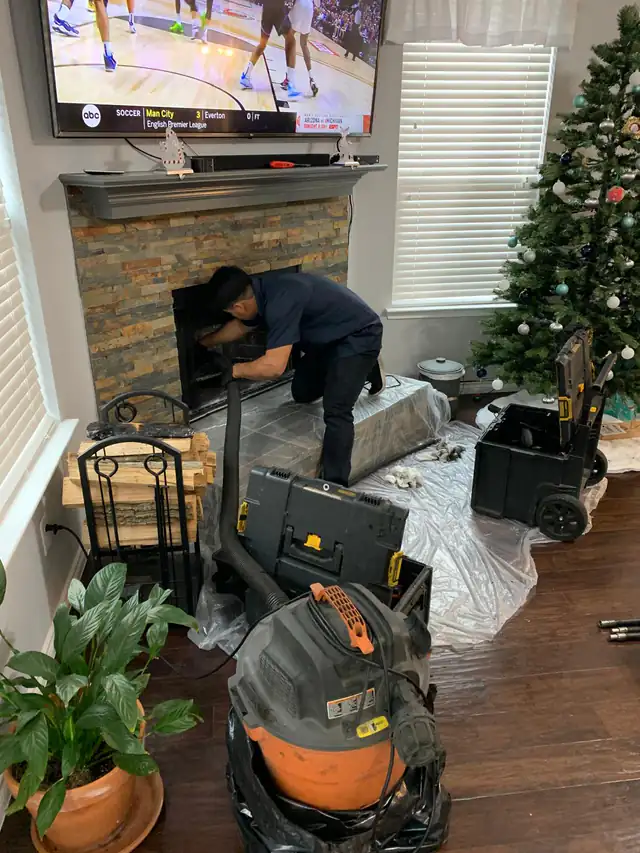
At the stone-front fireplace, with the hearth covered and a vacuum alongside 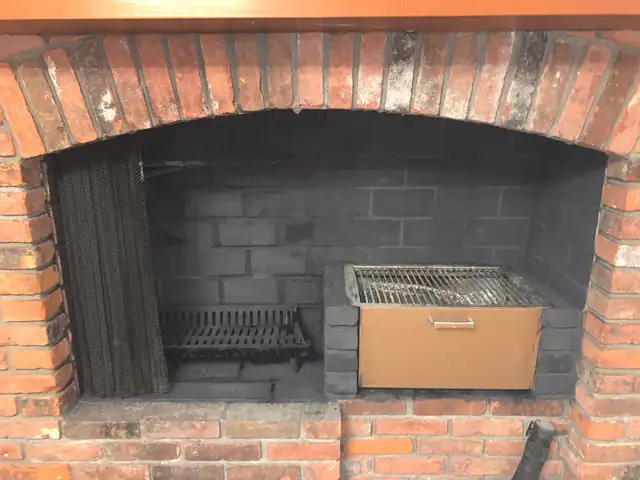
Firebox cleaned back to the brick, damper working 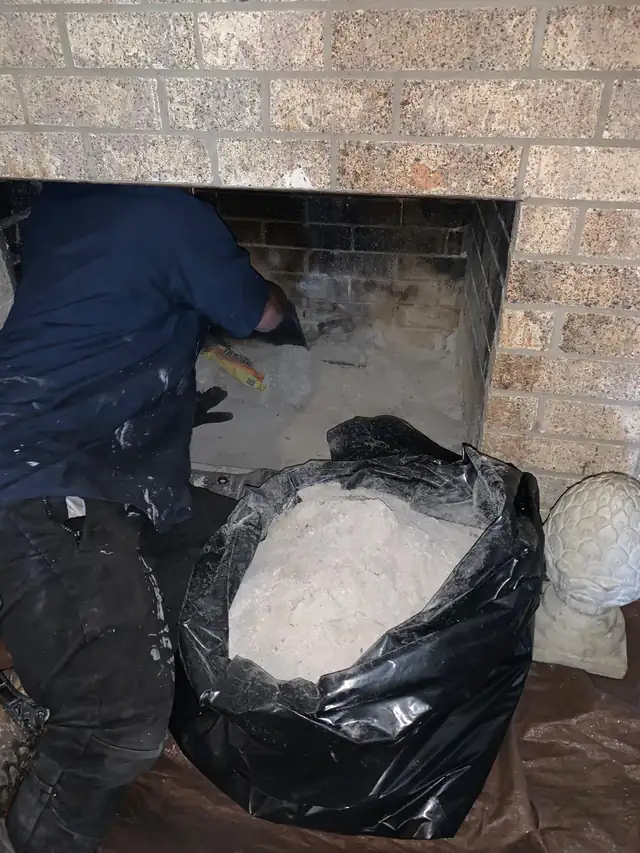
Clearing the firebox down to bare brick, floors covered
Meet the team
The people behind the work
Manny, Zack and Myke — meet the people behind Chimney Expert Solutions.
Our team and story →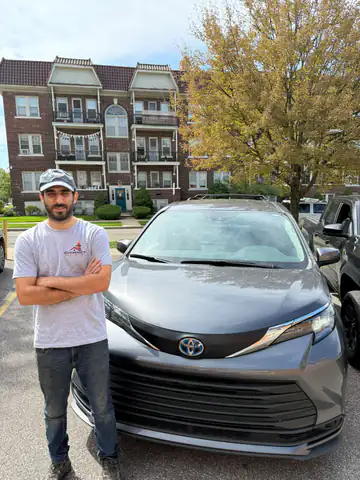
Manny
Owner
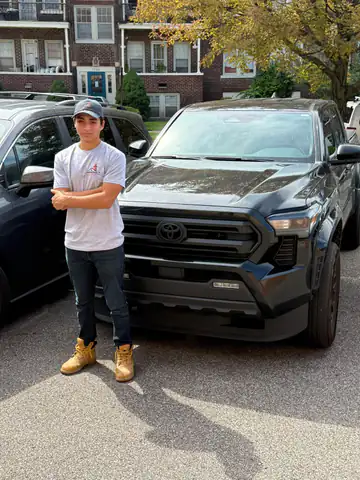
Zack
Manager

Myke
Technician
FAQ
Chimney Sweep in Cleveland: questions we hear
Do you work in all Cleveland neighborhoods?
East side, west side and everywhere between. A lot of the work runs through the pre-war neighborhoods where the housing and its chimneys are oldest — Ohio City, Tremont, Old Brooklyn, West Park, Slavic Village, Collinwood and the streets around them — because that is where the unlined flues and the century-old masonry are.
My chimney only vents the furnace. Does it still need service?
Yes, and it is the most under-inspected chimney in the average Cleveland house. Old oversized flues condense acidic exhaust that eats clay tile and mortar from inside, and a restricted or collapsing utility flue is a carbon monoxide problem rather than a comfort one. If the furnace or water heater was replaced in the last decade and nobody looked at the chimney afterwards, that is worth a camera scan on its own.
We're buying a house in Cleveland. Is a chimney inspection worth it separately?
On this housing stock, it is one of the highest-value things you can spend inspection-contingency money on. A general home inspection explicitly excludes the flue interior, and on a pre-1940 Cleveland house the flue is exactly where the expensive surprises live. A camera scan turns an invisible problem into either a negotiating position or genuine peace of mind.
Do you sweep from the roof or from inside the house?
Whichever puts less risk in your house. Roof access, cap design and the pitch and material of the roof all factor in — we will not walk a slate roof that will break underfoot. Both directions clean the same flue; the part that decides whether your living room stays clean is the sealed opening and the vacuum at the firebox, not which end the rods go in.
Do those creosote-sweeping logs work?
Partly, and not as a replacement. Creosote-modifying products can dry out and loosen stage-three glaze, which genuinely makes a subsequent sweep more effective. What they cannot do is remove anything. The deposit still has to be brushed loose and carried out of the flue by someone with rods and a vacuum.
Free estimate
Chimney Sweep in Cleveland?
Tell us what you’re seeing and we’ll call or text back to schedule a look — with photos of what we find and an honest read on what’s urgent and what can wait. That evidence-first method is the way we work on every job.
Call and tell us what the chimney's doing — if we're up on a roof, we'll call you back. Other ways to reach us are on the contact page, and Cleveland is one of the communities we cover across Greater Cleveland.
Call216-647-1882