
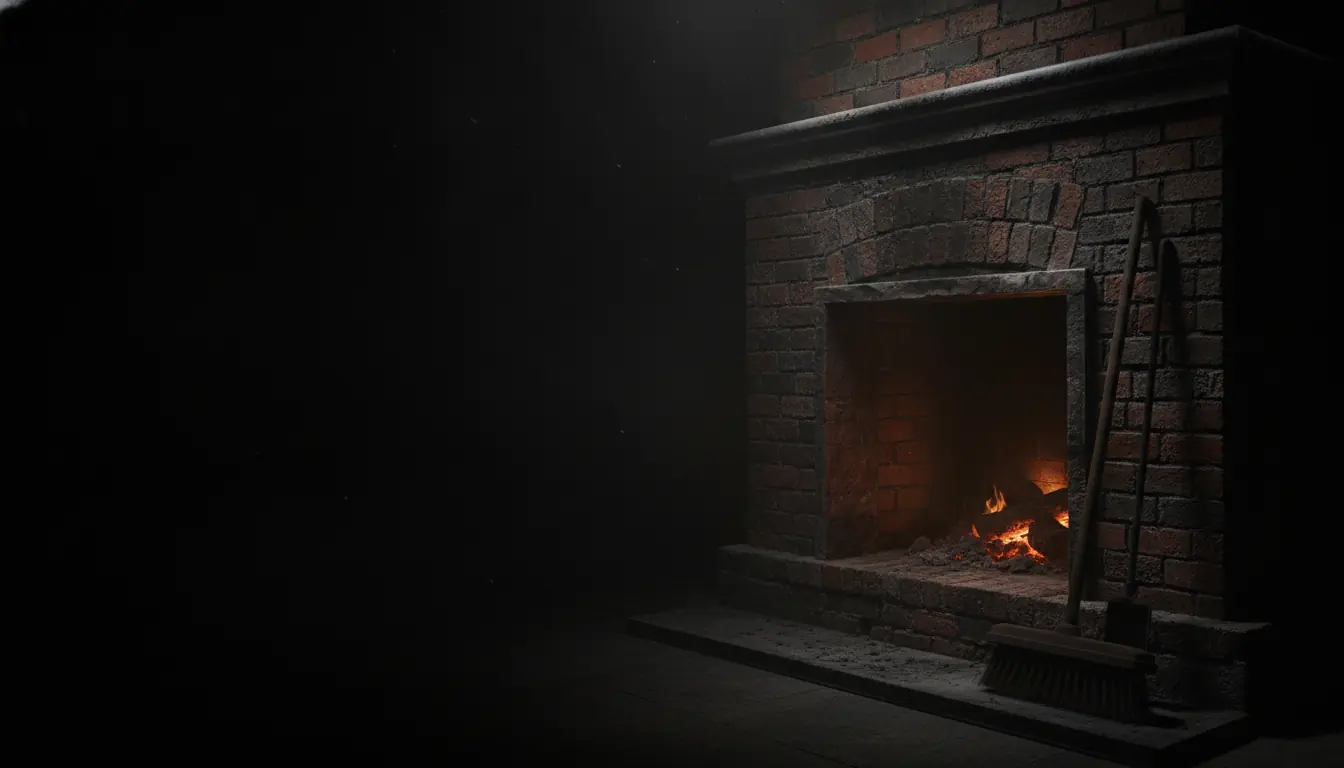
Cuyahoga County, Ohio
Chimney Sweep & Cleaning in Garfield Heights, OH
Full mechanical sweep of the flue, smoke chamber and firebox — creosote out, dust contained, and a look at the whole system while we're in it.
What chimney sweep involves in Garfield Heights is set by the housing stock here: 1920s–50s brick bungalows and Capes with warm interior stacks — decades of tar and roof-cement patching, leaks that surface at second-floor ceilings, and flues repurposed after heating conversions.
Garfield Heights sits on the high ground east of the Cuyahoga valley, above Mill Creek and the Garfield Park Reservation, and its housing is largely the brick bungalow and Cape Cod belt of the 1920s through the 1950s along Turney, Granger and the streets between them. It is well-built, unpretentious housing, and the chimneys are the same: a single sturdy interior stack, a fireplace flue on some houses and not on others, and a heating flue that has been in service continuously for the better part of a century.
Creosote is what wood smoke leaves behind on the inside of a flue, and it is the fuel in nearly every chimney fire. It leaves the fire as vapor, condenses on any flue wall cool enough to catch it, and hardens over a season into something closer to tar than soot. A real sweep takes the flue back to bare liner with rods and brushes sized to that specific flue, works the smoke chamber and smoke shelf where the deposits sit heaviest, and finishes in the firebox, with the room sealed off and a HEPA vacuum running the whole time.
What we find on Garfield Heights chimneys that leads to chimney sweep
Clothes dryers vented into an unused flue
It happens more here than most places, usually because the house had a spare flue after a heating conversion and a dryer needed to go somewhere. It is a bad arrangement on every count. A dryer produces a large volume of warm, wet, lint-laden air with a weak fan behind it; a masonry flue is rough, cold, and often much larger than the duct, so the air slows, the moisture condenses, and lint packs into the joints and the offsets where it cannot be reached. That is a fire load in a chimney and a moisture load in the masonry at the same time. A dryer belongs in smooth rigid metal duct going the shortest reasonable path to the outdoors.
Roof cement and tar applied as a chimney repair
Black roof cement smeared over a cracked crown, around a flue tile, or across a spalled brick face is the most common thing we find on these stacks, often two or three layers of it from different decades. It is not a repair. It is impermeable, so the water already in the masonry cannot get out and the masonry cannot dry; it is far more rigid than the brick, so it cracks and debonds at the edges and channels water into the joint; and it hides the actual condition underneath. Chimneys that have been tarred for twenty years are usually in worse shape than untouched ones, and the scope of the real repair starts with removing it.
An interior stack leaks in the wrong place
When an exterior chimney leaks, you get a stain at the flashing and everyone knows where to look. When an interior stack leaks, water comes in at the crown or an uncapped flue, runs down inside the masonry, and appears as a stain on a second-floor ceiling, a damp patch on the chimney breast, or white efflorescence blooming on plaster in a bedroom — several feet from the roof and nowhere near a roof penetration. People replace roofs over this. The diagnosis runs top-down: crown, cap, flue condition, then the interior evidence, photographed together so the path is visible rather than asserted.
What makes a chimney build creosote faster
If you have been told you need sweeping more often than a neighbour with the same house, one of these is usually why. Fixing the cause is cheaper than sweeping around it.
- Wet wood. Freshly cut wood is roughly half water by weight; seasoned firewood should be near 20%. Wood that has not been split, stacked and covered for a year spends the first part of every fire boiling water instead of making heat, and cool smoke deposits fast.
- Smoldering fires. Damping a stove or insert right down overnight is the classic creosote factory — long, cool, oxygen-starved burns put the maximum amount of unburned gas up a cold flue.
- An oversized flue. Common in Cleveland after a wood fireplace is converted to gas, or a big open firebox is replaced with a small insert. Exhaust slows, cools, and condenses on the way out.
- An exterior chimney. A stack running up the outside of the house never holds heat the way an interior one does. On a January night in a lake-effect wind, that flue is a condenser.
- A short or poorly terminated chimney. Draft comes from height and temperature difference. A stack that barely clears the roofline never develops much of either.
- Soft woods and construction scrap. Pine and spruce leave more resin; painted, glued or treated wood leaves deposits you do not want in a flue at all.
How we decide whether a flue actually needs sweeping
The working standard in the trade is that about an eighth of an inch of accumulation warrants sweeping, and a quarter inch means stop burning until it is done. We measure rather than assume, and the answer genuinely varies. A chimney that sat unused for two years may need very little brushing and a serious camera inspection instead, because the risk there is a nest, a shifted tile or a rusted damper, not creosote. A chimney that heated a house all winter on borderline wood can need a second visit before spring.
If we get in there and the flue does not need brushing, you get told that. There is no version of this trade where inventing work is good business, and the photos make the call verifiable either way.
This page covers chimney sweep as it plays out in Garfield Heights. The full chimney sweep & cleaning page walks the whole job — every stage, what changes the scope, and what we do about each of them. For everything else we handle in this suburb, see chimney services in Garfield Heights.
What a sweep with us includes
- Drop cloths, sealed fireplace opening and HEPA dust control before a brush touches the flue
- Mechanical sweep of the full flue length, with brush size and shape matched to your liner
- Smoke chamber and smoke shelf hand-cleaned — the corners most sweeps skip
- Firebox and ash dump cleared, damper cleaned and operated through full travel
- A visual once-over of the whole system, with photos of anything that needs attention
- Straight advice at the end: what's urgent, what can wait, what's fine
Our work
Chimney Sweep & Cleaning, photographed on the job
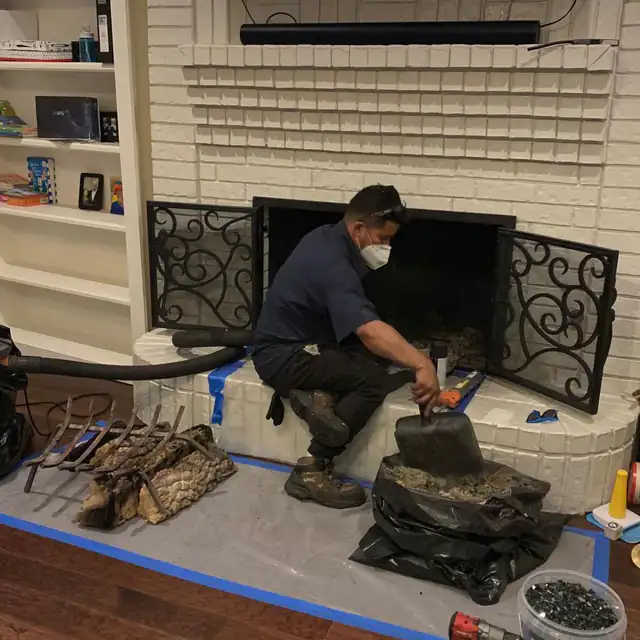
Drop cloths down and a vacuum on the hearth before anything is opened 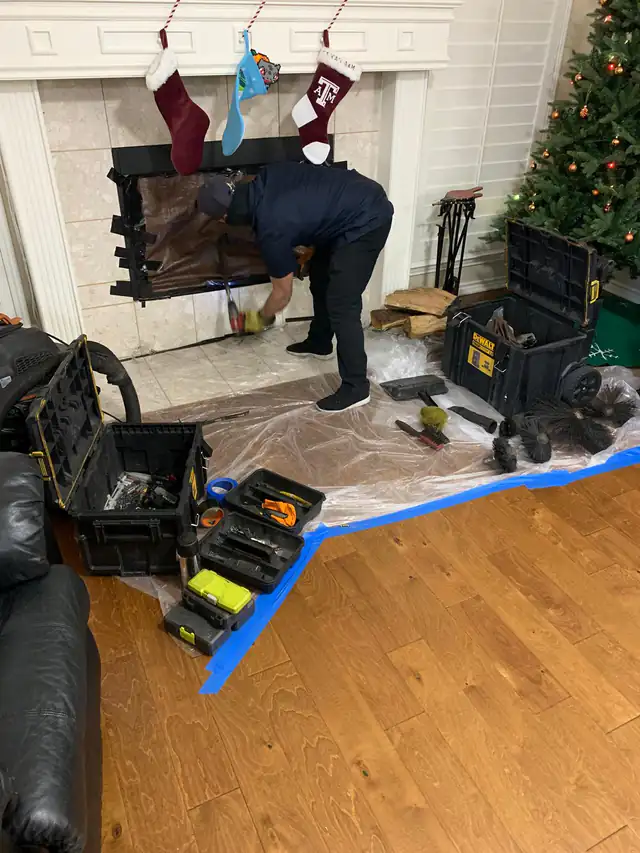
Working at the protected fireplace opening, with brushes and tools on covered floors 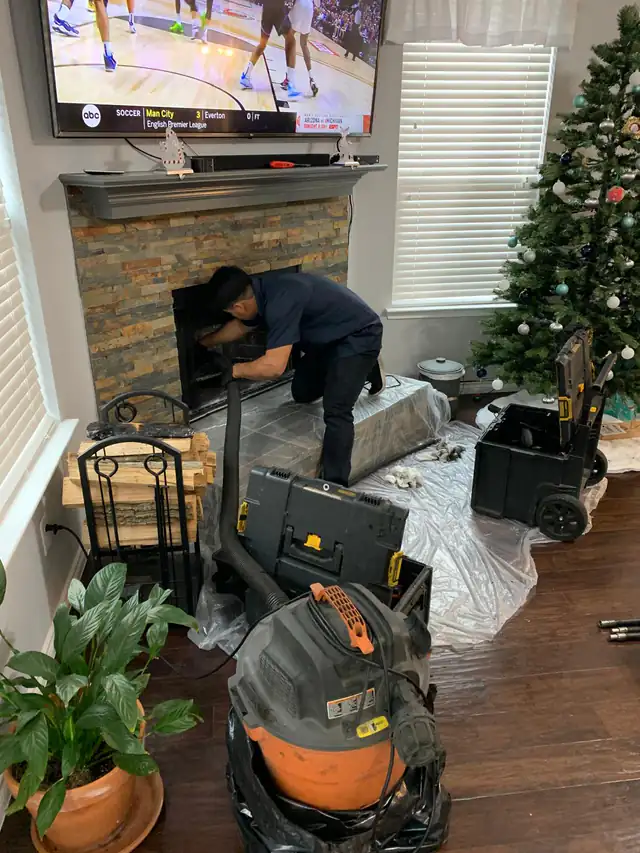
At the stone-front fireplace, with the hearth covered and a vacuum alongside 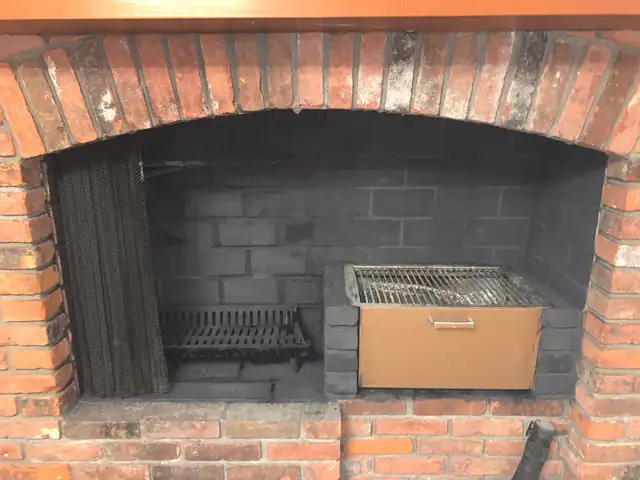
Firebox cleaned back to the brick, damper working 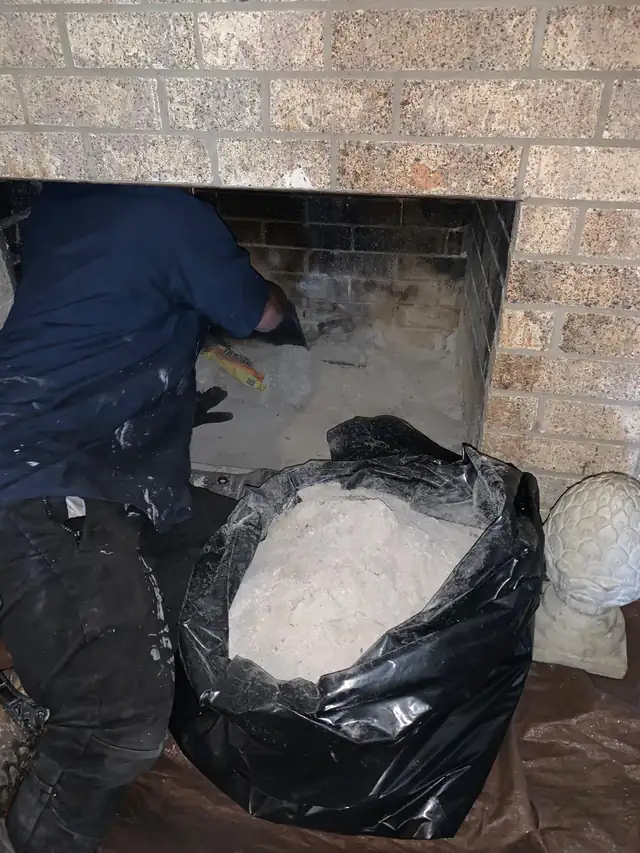
Clearing the firebox down to bare brick, floors covered
Meet the team
The people behind the work
Manny, Zack and Myke — meet the people behind Chimney Expert Solutions.
Our team and story →
Manny
Owner

Zack
Manager

Myke
Technician
FAQ
Chimney Sweep in Garfield Heights: questions we hear
Can our dryer keep venting into the old chimney flue?
We would move it. A masonry flue is too large, too cold and too rough for dryer exhaust: the air slows, the moisture condenses in the joints and the lint collects in places nobody can clean. That combination is both a fire load and a water problem in the stack. Rigid metal duct on the shortest sensible route outside is the right answer — and once the dryer is out, the flue it was using should be swept and capped, which is our side of the job.
Our chimney only serves the furnace and water heater. Is an inspection worthwhile?
It is the one most worth doing, because nothing about it is visible day to day. Heating flues in this stock have run continuously for decades, they have usually been through at least one appliance change, and the failure mode when they deteriorate is carbon monoxide rather than something you would smell or see. A camera scan and a look at the vent connectors in the basement covers it.
We have a stain on an upstairs ceiling and a new roof. How is the chimney involved?
On an interior stack that is the classic pattern. Water entering at a cracked crown or an uncapped flue travels down inside the masonry and shows up at the ceiling line, well away from any roof penetration, so a roof replacement does not touch it. We check the crown, cap and flue from above and match what we find to where the stain is, with photographs of both.
The fireplace was converted to gas years ago. Does the old creosote still matter?
Yes. Wood-era deposits stay where they are and stay combustible, and a conversion usually leaves the flue badly oversized for the new appliance — so it runs cold and condenses moisture onto exactly those deposits. Conversions are a good reason for a sweep and a camera look, not a reason to skip one.
What if you find damage while you're in there?
You get photos, a plain explanation of what it is and what it does if left alone, and a written scope. No scare tactics: most of what we find can be scheduled rather than panicked over. What we will not do is sweep a chimney that is not safe to use and say nothing about it.
Free estimate
Chimney Sweep in Garfield Heights?
Tell us what you’re seeing and we’ll call or text back to schedule a look — with photos of what we find and an honest read on what’s urgent and what can wait. That evidence-first method is the way we work on every job.
Call and tell us what the chimney's doing — if we're up on a roof, we'll call you back. Other ways to reach us are on the contact page, and Garfield Heights is one of the communities we cover across Greater Cleveland.
Call216-647-1882