
Cuyahoga County, Ohio
Chimney Sweep & Cleaning in Parma, OH
Full mechanical sweep of the flue, smoke chamber and firebox — creosote out, dust contained, and a look at the whole system while we're in it.
What chimney sweep involves in Parma is set by the housing stock here: Postwar bungalows, Capes and ranches — sturdy single stacks with cracked struck-mortar crowns, one badly weathered face, and thousands of orphaned water-heater flues corroding after furnace upgrades.
Parma is Cleveland's largest suburb and most of it went up in the two decades after the Second World War: brick bungalows, Cape Cods and ranches built quickly and solidly along Ridge, State, Broadview and the streets that filled in between them. The chimneys of that era are usually a single sturdy stack serving the furnace, often with a modest fireplace flue alongside it.
Creosote is what wood smoke leaves behind on the inside of a flue, and it is the fuel in nearly every chimney fire. It leaves the fire as vapor, condenses on any flue wall cool enough to catch it, and hardens over a season into something closer to tar than soot. A real sweep takes the flue back to bare liner with rods and brushes sized to that specific flue, works the smoke chamber and smoke shelf where the deposits sit heaviest, and finishes in the firebox, with the room sealed off and a HEPA vacuum running the whole time.
What we find on Parma chimneys that leads to chimney sweep
Orphaned water heater flues
The sequence is the same in house after house. The original furnace and the water heater both vented into the masonry chimney, and the flue was sized for the pair. The furnace gets replaced with a high-efficiency condensing unit that vents through white PVC out a side wall, and the water heater is left where it is. Now a small appliance is venting into a flue sized for a large one, so the exhaust never warms it, condenses on the way up, and the acidic condensate dissolves tile and mortar joints from the inside. If your furnace was upgraded and nobody looked at the chimney afterwards, this is your chimney.
Seventy-year-old crowns reaching the end together
Almost every crown on a 1950s Parma stack was struck flat out of leftover mortar the day the chimney was topped out, with no overhang past the brick and no gap around the flue tile. That assembly cracks, and once it does it channels water down into the top of the brickwork instead of shedding it. This is the single cheapest repair with the biggest downstream effect on a postwar stack, and it is the one most owners have never seen a photograph of.
Spalling concentrated on one face
On Parma's bungalows and ranches the damage is rarely even. The weather-facing side of the stack takes the driven rain and does the freeze-thaw work, so it is common to find one face shedding brick faces while the sheltered side looks nearly new. That asymmetry is useful diagnostically and it also means the repair is often smaller than it looks from the driveway — a reason to get it assessed rather than assume the worst.
What creosote is, and why it changes the job
Wood does not burn completely. Volatile gases leave the fire unburned, travel up the flue as vapor, and condense wherever the flue wall drops below roughly 250°F. Every fire adds a layer. What that layer becomes depends on how the chimney runs: a hot, well-drafted flue burning dry wood makes very little, and a cool flue full of smoldering smoke makes a lot of the worst kind.
The stage of the deposit decides the tools, the time, and sometimes whether the flue can be cleaned at all. This is why an honest sweep looks before quoting anything beyond the standard visit.
Stage one: soot and fine flake
Dry, dusty, sometimes velvety. It brushes off the liner easily and vacuums up without a fight. A fireplace burning properly seasoned hardwood in a warm flue mostly produces this, and an annual sweep keeps it at this stage indefinitely.
Stage two: hard flake and crust
Shiny black flakes that snap rather than crumble, often thick enough to feel ridged against a brush. This is the most common thing we find on Cleveland fireplaces that have gone two or three seasons. It comes off with a proper mechanical sweep, but a nylon brush pushed quickly through the flue will not do it.
Stage three: glaze
A hard, tarry coating fused to the liner, sometimes running in drips. It will not brush off. Removing it takes rotary chain or whip heads run at the right speed, sometimes preceded by a chemical modifier to dry it out, and occasionally more than one visit. Glaze is also the single most dangerous deposit, because it holds an enormous amount of fuel in a thin layer. If a flue is glazed badly enough and the tile underneath is already compromised, the honest answer is not more brushing — it is a camera inspection and a conversation about relining.
How we decide whether a flue actually needs sweeping
The working standard in the trade is that about an eighth of an inch of accumulation warrants sweeping, and a quarter inch means stop burning until it is done. We measure rather than assume, and the answer genuinely varies. A chimney that sat unused for two years may need very little brushing and a serious camera inspection instead, because the risk there is a nest, a shifted tile or a rusted damper, not creosote. A chimney that heated a house all winter on borderline wood can need a second visit before spring.
If we get in there and the flue does not need brushing, you get told that. There is no version of this trade where inventing work is good business, and the photos make the call verifiable either way.
This page covers chimney sweep as it plays out in Parma. The full chimney sweep & cleaning page walks the whole job — every stage, what changes the scope, and what we do about each of them. For everything else we handle in this suburb, see chimney services in Parma.
What a sweep with us includes
- Drop cloths, sealed fireplace opening and HEPA dust control before a brush touches the flue
- Mechanical sweep of the full flue length, with brush size and shape matched to your liner
- Smoke chamber and smoke shelf hand-cleaned — the corners most sweeps skip
- Firebox and ash dump cleared, damper cleaned and operated through full travel
- A visual once-over of the whole system, with photos of anything that needs attention
- Straight advice at the end: what's urgent, what can wait, what's fine
Our work
Chimney Sweep & Cleaning, photographed on the job
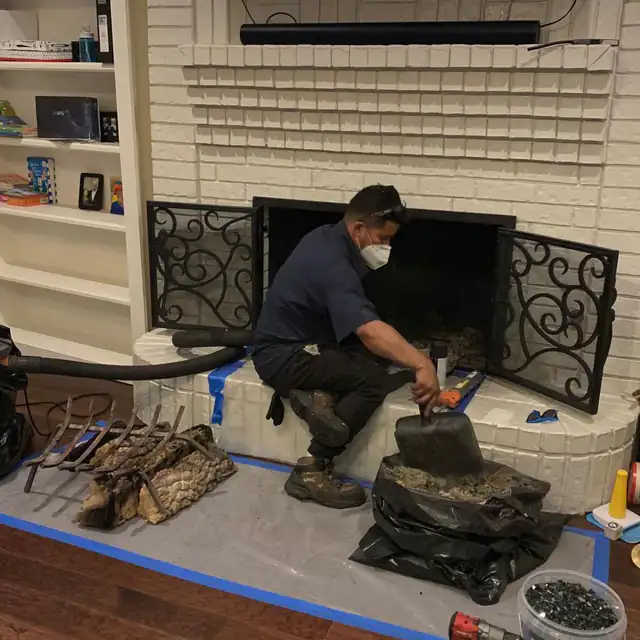
Drop cloths down and a vacuum on the hearth before anything is opened 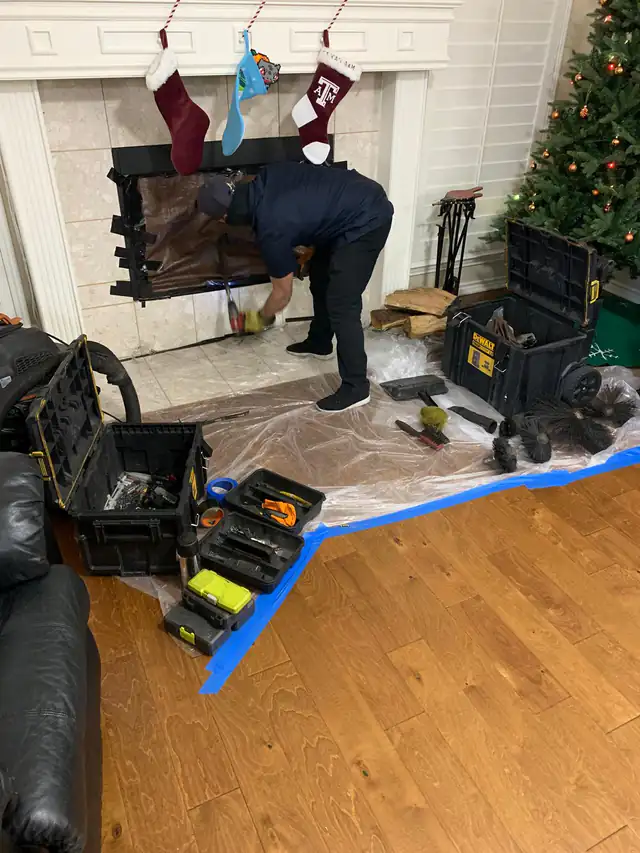
Working at the protected fireplace opening, with brushes and tools on covered floors 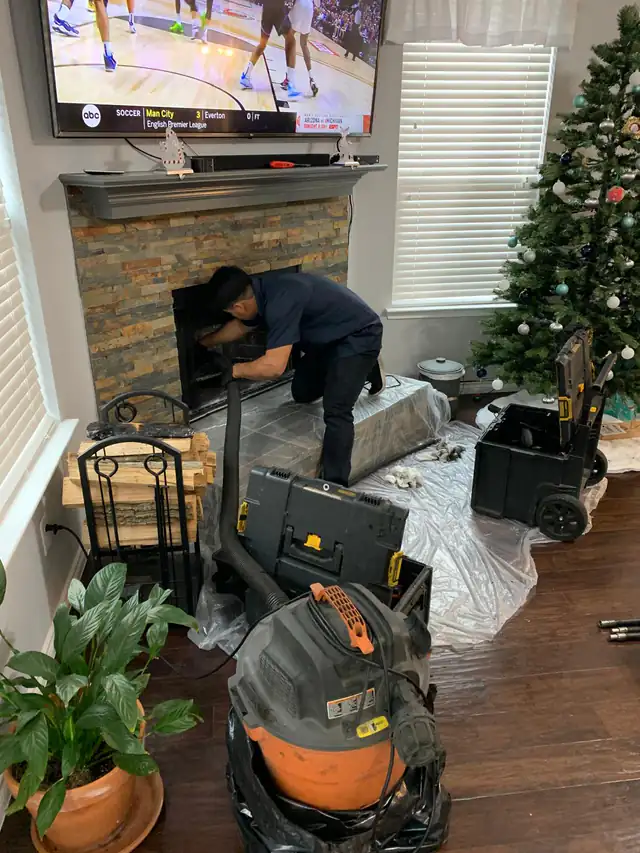
At the stone-front fireplace, with the hearth covered and a vacuum alongside 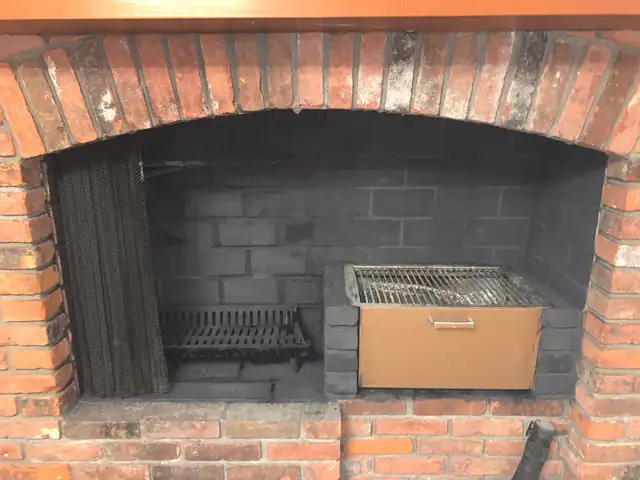
Firebox cleaned back to the brick, damper working 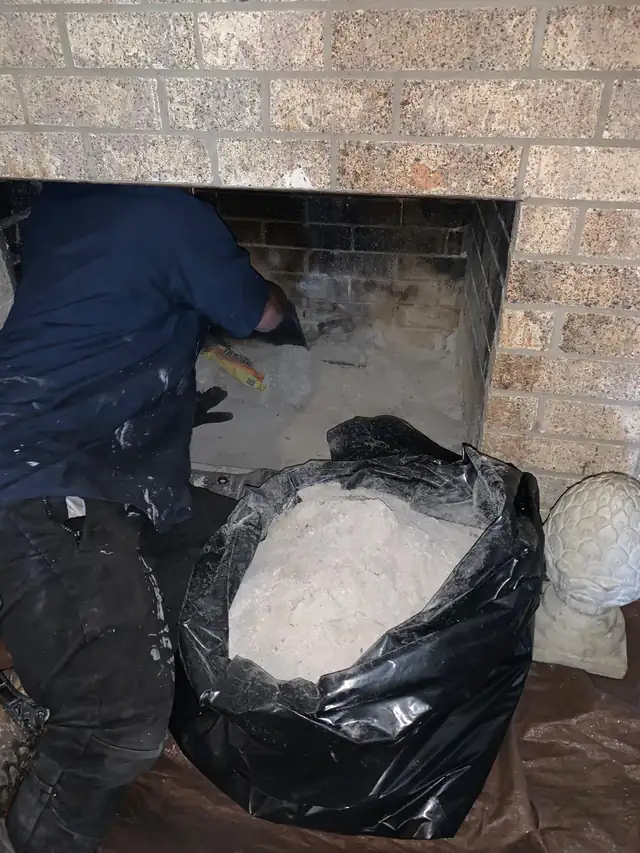
Clearing the firebox down to bare brick, floors covered
Meet the team
The people behind the work
Manny, Zack and Myke — meet the people behind Chimney Expert Solutions.
Our team and story →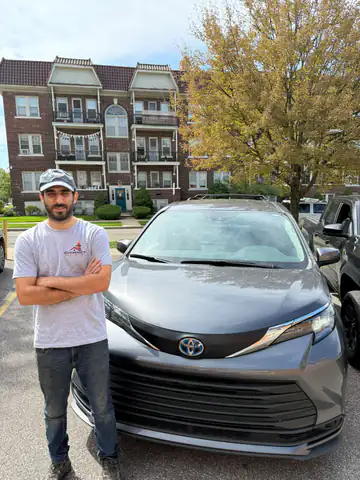
Manny
Owner
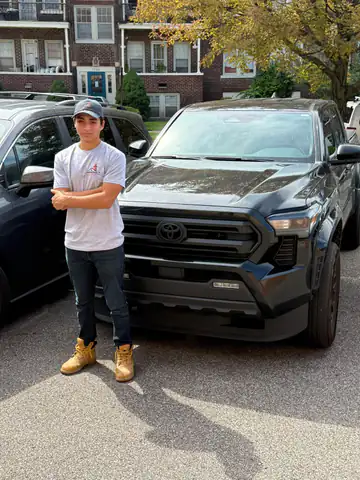
Zack
Manager

Myke
Technician
FAQ
Chimney Sweep in Parma: questions we hear
We never use the fireplace. Can we just cap the chimney and forget it?
Capping it is a good idea and forgetting it is not, especially if the water heater still vents into the same stack. Even a genuinely dead flue needs a cap and a sound crown, because an open flue funnels rain into the middle of the house and frost-damages the masonry above the roof. If anything still vents into that chimney, it needs more than a cap.
How do I know if I have an orphaned water heater flue?
Look at how the furnace vents. If it goes out through white plastic pipe in a side wall rather than up the chimney, the chimney is now serving the water heater alone. The confirming signs are rust or scaling on the vent connector and draft hood, dampness or white crusty deposits at the base of the chimney, and tile fragments in the clean-out. The fix is a correctly sized metal liner matched to the appliance.
Do postwar chimneys need relining as often as older ones?
Different reason, similar frequency. Pre-war chimneys get relined because the flue was never lined or the tile has cracked from heat. Postwar utility flues get relined because they are the wrong size for what now vents into them and the condensate has eaten them. On Parma's housing stock, the second reason is by far the more common one.
How long does it take, and do I need to be home?
A single straightforward fireplace flue usually runs a couple of hours including setup, cleanup and the walkthrough. Multiple flues, an insert that has to be pulled, or heavy deposits take longer. Someone should be home to let us in and to hear the findings at the end — that conversation is half the value of the visit.
Do those creosote-sweeping logs work?
Partly, and not as a replacement. Creosote-modifying products can dry out and loosen stage-three glaze, which genuinely makes a subsequent sweep more effective. What they cannot do is remove anything. The deposit still has to be brushed loose and carried out of the flue by someone with rods and a vacuum.
Free estimate
Chimney Sweep in Parma?
Tell us what you’re seeing and we’ll call or text back to schedule a look — with photos of what we find and an honest read on what’s urgent and what can wait. That evidence-first method is the way we work on every job.
Call and tell us what the chimney's doing — if we're up on a roof, we'll call you back. Other ways to reach us are on the contact page, and Parma is one of the communities we cover across Greater Cleveland.
Call216-647-1882