
Cuyahoga County, Ohio
Chimney Repair & Rebuilds in Garfield Heights, OH
Masonry repair from spot fixes to full stack rebuilds — spalled brick, failed joints, and chimneys the freeze-thaw cycle has taken apart.
What chimney repair involves in Garfield Heights is set by the housing stock here: 1920s–50s brick bungalows and Capes with warm interior stacks — decades of tar and roof-cement patching, leaks that surface at second-floor ceilings, and flues repurposed after heating conversions.
Garfield Heights sits on the high ground east of the Cuyahoga valley, above Mill Creek and the Garfield Park Reservation, and its housing is largely the brick bungalow and Cape Cod belt of the 1920s through the 1950s along Turney, Granger and the streets between them. It is well-built, unpretentious housing, and the chimneys are the same: a single sturdy interior stack, a fireplace flue on some houses and not on others, and a heating flue that has been in service continuously for the better part of a century.
Northeast Ohio is close to a worst case for exterior masonry. A Cleveland chimney runs through dozens of freeze-thaw cycles every winter: water finds a hairline crack or an open joint, freezes, expands by about nine percent, and levers the masonry apart a little more each time. Repeat that across eighty winters on the most weather-exposed brickwork the house owns, and you get the local pattern. Brick faces shed, mortar goes soft and sandy, top courses shift, and eventually a stack that was fine at the last home sale needs rebuilding.
What we find on Garfield Heights chimneys that leads to chimney repair
Roof cement and tar applied as a chimney repair
Black roof cement smeared over a cracked crown, around a flue tile, or across a spalled brick face is the most common thing we find on these stacks, often two or three layers of it from different decades. It is not a repair. It is impermeable, so the water already in the masonry cannot get out and the masonry cannot dry; it is far more rigid than the brick, so it cracks and debonds at the edges and channels water into the joint; and it hides the actual condition underneath. Chimneys that have been tarred for twenty years are usually in worse shape than untouched ones, and the scope of the real repair starts with removing it.
An interior stack leaks in the wrong place
When an exterior chimney leaks, you get a stain at the flashing and everyone knows where to look. When an interior stack leaks, water comes in at the crown or an uncapped flue, runs down inside the masonry, and appears as a stain on a second-floor ceiling, a damp patch on the chimney breast, or white efflorescence blooming on plaster in a bedroom — several feet from the roof and nowhere near a roof penetration. People replace roofs over this. The diagnosis runs top-down: crown, cap, flue condition, then the interior evidence, photographed together so the path is visible rather than asserted.
Clothes dryers vented into an unused flue
It happens more here than most places, usually because the house had a spare flue after a heating conversion and a dryer needed to go somewhere. It is a bad arrangement on every count. A dryer produces a large volume of warm, wet, lint-laden air with a weak fan behind it; a masonry flue is rough, cold, and often much larger than the duct, so the air slows, the moisture condenses, and lint packs into the joints and the offsets where it cannot be reached. That is a fire load in a chimney and a moisture load in the masonry at the same time. A dryer belongs in smooth rigid metal duct going the shortest reasonable path to the outdoors.
Reading the damage: what your chimney is telling you
Spalling
Brick faces flaking, popping or crumbling away, leaving the softer core exposed. This is water damage that has already progressed — the face is what protects the brick, and once it is gone the unit absorbs water faster and deteriorates at an accelerating rate. Chips of brick on the roof or in the flower bed under the chimney mean it is happening now, not five years ago.
Open and eroded joints
Mortar recessed back from the face of the brick, or soft enough to rake out with a key. Mortar is meant to be the sacrificial material, so this is the system working as designed, right up until the joints open enough to let water into the middle of the wall. That is the moment repointing changes from maintenance to urgency.
Efflorescence
The white, chalky bloom on the brick face. It is salt carried out of the masonry by water moving through it and deposited when the water evaporates. Efflorescence is not itself damage. It is proof that water is actively traveling through the chimney, which is the more useful information.
Shifted, leaning or stepped top courses
When the joints in the top few courses have failed completely, the bricks stop acting as a wall and start acting as a stack of loose objects. Wind and ice do the rest. A visibly leaning stack or a top course that has slid out of plane is past repointing, and it is a genuine safety issue rather than a maintenance item.
A cracked or missing crown
Almost every serious masonry failure on an older Cleveland chimney can be traced back to the crown. It is the concrete or mortar cap that seals the top of the stack around the flue tiles, and when it cracks it feeds water straight down into the brickwork. If the crown is gone, everything below it is on a countdown.
What a rebuild actually involves
Protecting the house first
Roof protection under the work area, the flue capped or sealed so debris does not fall down into the firebox and through the house, and a plan for getting brick and rubble down that does not involve the roof surface. On a slate or tile roof this part is most of the planning.
Down to sound masonry
The stack comes down course by course to a level where the brick and joints are genuinely sound, not to a level that was decided from the ground. Existing brick is salvaged where it is worth salvaging, and the flue tiles get evaluated as they are exposed — a rebuild is the one moment when replacing damaged tile is straightforward, and skipping that step because it was not in the original quote is a mistake you live with.
Rebuilding
New masonry laid with mortar matched to the original in strength and appearance, joints tooled to the same profile, and any original detailing reproduced. Flue tiles set with proper joints. Where the design calls for it, corbelling and decorative courses get rebuilt rather than simplified away.
The parts that make it last
A rebuild finishes with a proper cast crown with a drip edge and an expansion joint at the flue, a stainless cap on every flue, and flashing sorted at the roofline. A rebuild under a bad crown or with old failed flashing is money spent on a chimney that will start deteriorating again immediately. We treat those three as part of the scope, not as upsells at the end.
This page covers chimney repair as it plays out in Garfield Heights. The full chimney repair & rebuilds page walks the whole job — every stage, what changes the scope, and what we do about each of them. For everything else we handle in this suburb, see chimney services in Garfield Heights.
Repair and rebuild work we take on
- Spalled and cracked brick replacement, matched to the existing brick
- Partial rebuilds from the roofline or shoulder up
- Full chimney rebuilds where the stack is beyond saving
- Crown replacement as part of any rebuild — a rebuild under a bad crown is wasted money
- Flue tile replacement while the stack is open, where it is warranted
- Firebox masonry and refractory panel repair
- Written scope with photos before, during and after the work
Our work
Chimney Repair & Rebuilds, photographed on the job
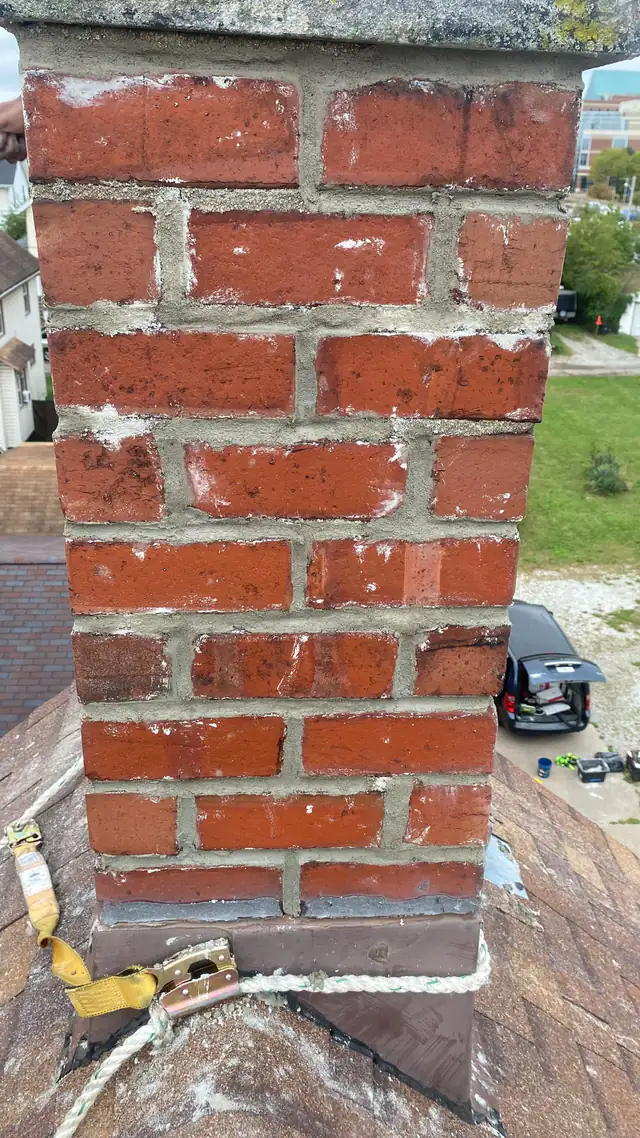
Roped in on a steep roof — repointed, flashing sealed 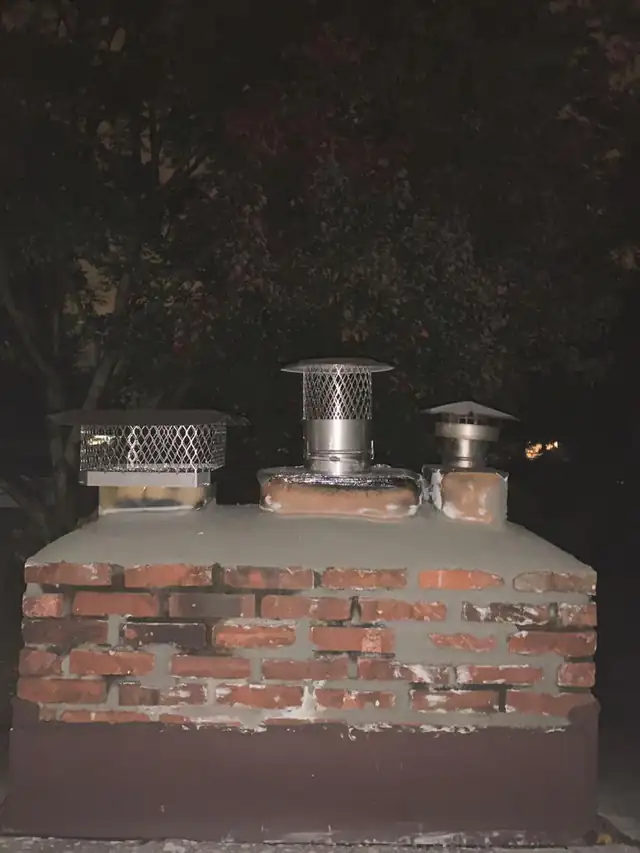
Three flues, three caps, one new crown 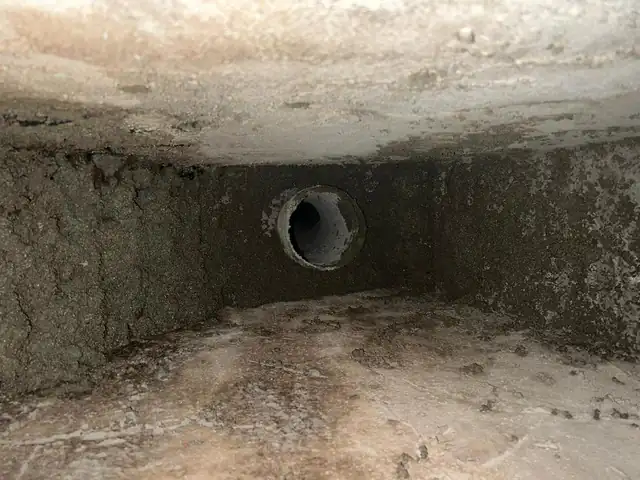
Inside the smoke chamber — the flue opening above the firebox 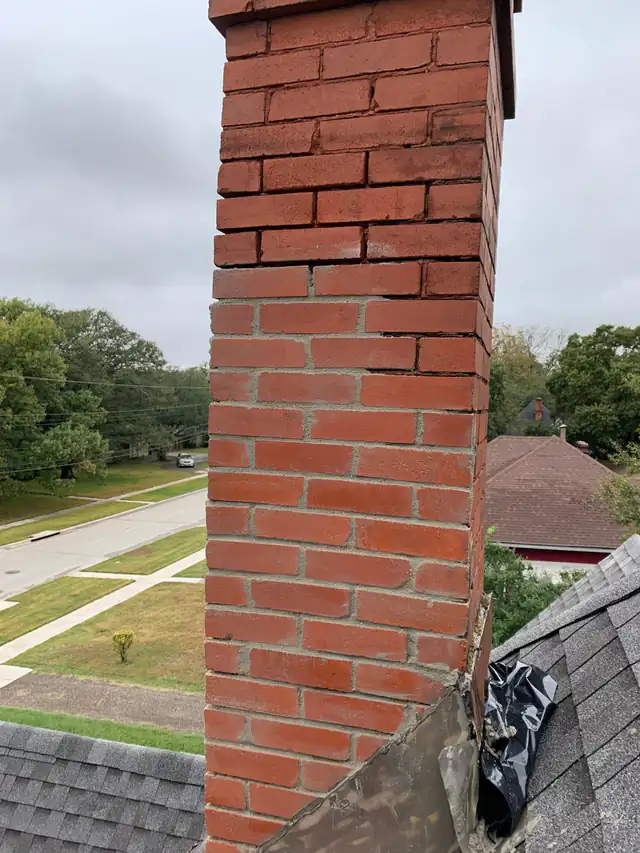
Mid-job — fresh joints below, the old eroded joints still waiting above 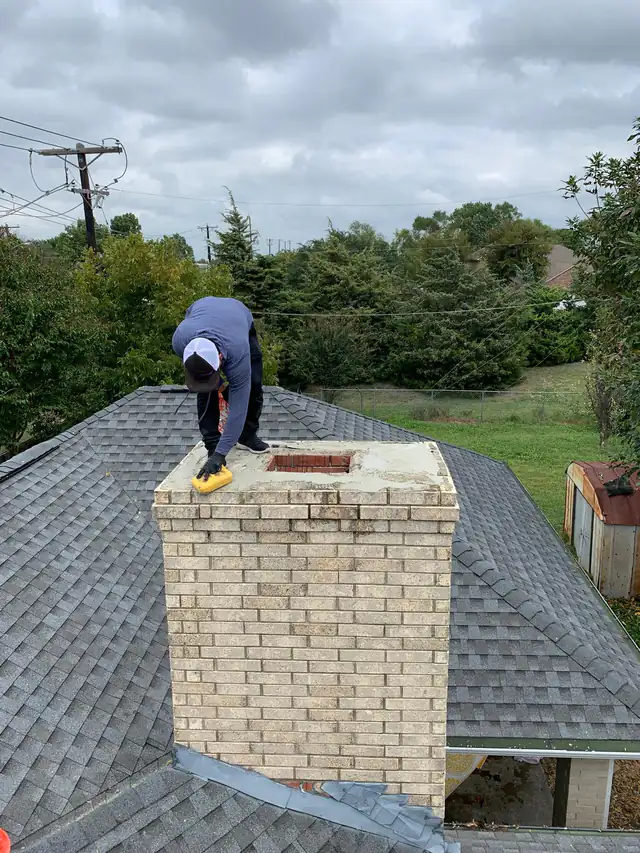
Finishing a fresh crown around the flue 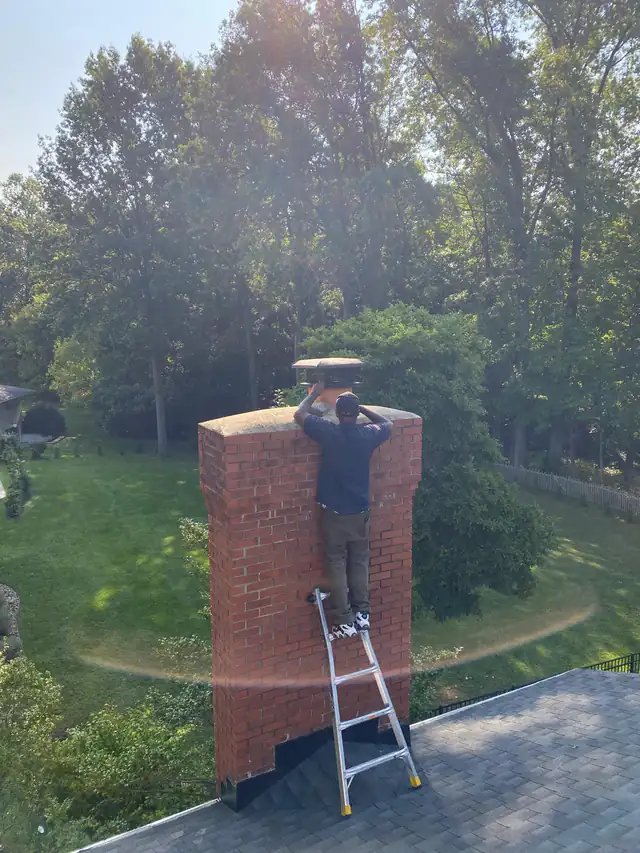
Ladder work on a tall stack — fitting the cap
Meet the team
The people behind the work
Manny, Zack and Myke — meet the people behind Chimney Expert Solutions.
Our team and story →
Manny
Owner

Zack
Manager

Myke
Technician
FAQ
Chimney Repair in Garfield Heights: questions we hear
We have a stain on an upstairs ceiling and a new roof. How is the chimney involved?
On an interior stack that is the classic pattern. Water entering at a cracked crown or an uncapped flue travels down inside the masonry and shows up at the ceiling line, well away from any roof penetration, so a roof replacement does not touch it. We check the crown, cap and flue from above and match what we find to where the stain is, with photographs of both.
Can our dryer keep venting into the old chimney flue?
We would move it. A masonry flue is too large, too cold and too rough for dryer exhaust: the air slows, the moisture condenses in the joints and the lint collects in places nobody can clean. That combination is both a fire load and a water problem in the stack. Rigid metal duct on the shortest sensible route outside is the right answer — and once the dryer is out, the flue it was using should be swept and capped, which is our side of the job.
Someone tarred our chimney. Should it be removed?
Usually yes, as part of doing the repair properly. Roof cement seals moisture into masonry that needs to breathe, cracks away at its edges and hides the condition of everything beneath it. What we cannot tell you before looking is how much damage accumulated underneath while it was on there — that is exactly what the inspection is for, and it is better to know than to add another layer.
Can a leaning chimney be straightened instead of rebuilt?
Generally not. A lean means the joints have failed and the courses have moved, and there is no way to push masonry back into plane and have it stay. What can be done is establishing where sound masonry begins and rebuilding from there, which on most leaning stacks is at or just below the roofline.
How long does a chimney rebuild take?
A partial rebuild above the roofline on a straightforward stack is usually a small number of working days, weather permitting. A full rebuild, a difficult roof, or a chimney with detailing to reproduce takes longer. The unpredictable variable is weather rather than labor: mortar work stops for rain and for cold, and we would rather lose a day than lay masonry that will not cure.
Free estimate
Chimney Repair in Garfield Heights?
Tell us what you’re seeing and we’ll call or text back to schedule a look — with photos of what we find and an honest read on what’s urgent and what can wait. That evidence-first method is the way we work on every job.
Call and tell us what the chimney's doing — if we're up on a roof, we'll call you back. Other ways to reach us are on the contact page, and Garfield Heights is one of the communities we cover across Greater Cleveland.
Call216-647-1882