
Cuyahoga County, Ohio
Chimney Sweep & Cleaning in Bedford, OH
Full mechanical sweep of the flue, smoke chamber and firebox — creosote out, dust contained, and a look at the whole system while we're in it.
What chimney sweep involves in Bedford is set by the housing stock here: Nineteenth-century Western Reserve houses around the old town center — narrow unlined stove flues, plastered-over thimbles hidden in walls, corbelled stacks with no footing, plus a postwar ring with conventional postwar chimneys.
Bedford is one of the older settlements in Cuyahoga County, and the housing around the square and the Broadway corridor shows it: Western Reserve frame houses, Greek Revival details, brick from the second half of the nineteenth century, with the Tinkers Creek valley and the Metroparks reservation cutting through below. Newer neighborhoods fill in around that core, but the old center is why chimney work here is genuinely different from the rest of the county.
Creosote is what wood smoke leaves behind on the inside of a flue, and it is the fuel in nearly every chimney fire. It leaves the fire as vapor, condenses on any flue wall cool enough to catch it, and hardens over a season into something closer to tar than soot. A real sweep takes the flue back to bare liner with rods and brushes sized to that specific flue, works the smoke chamber and smoke shelf where the deposits sit heaviest, and finishes in the firebox, with the room sealed off and a HEPA vacuum running the whole time.
What we find on Bedford chimneys that leads to chimney sweep
Plastered-over stove thimbles inside finished walls
An old stove connection that was blocked with a sheet-metal cover, a piece of tin, a rag or nothing at all and then plastered over is a hole into a live flue sitting behind your wallboard. If the chimney still vents anything, that is a path for combustion gases and for a chimney fire into the wall cavity. They are common in this housing and they do not show up in a visual inspection of the firebox or the roof — the way we find them is with a camera in the flue, looking sideways for the openings, and then matching them to floor levels. Closing one properly means a masonry or listed plug, not a cover plate.
Stacks corbelled out of the framing instead of standing on a footing
Upper-floor stove flues in this era were frequently started partway up the house, with the brick corbelled — stepped out course by course — from a wall or carried on a wood beam, rather than built from a footing in the ground. It works until the wood shrinks, the framing sags or someone removes a wall in a renovation. The tells are a chimney that stops at a ceiling in the basement or first floor instead of continuing down, a diagonal crack pattern in the plaster below it, or a stack visibly out of plumb. That is a structural assessment, not a mortar repair, and it is worth knowing before anyone starts a kitchen remodel.
Chimneys taken down to the roof and abandoned in the attic
A very common history on these houses: at some re-roof decades ago, a redundant stack was demolished down to just below the roofline, decked over, and the rest of it left standing in the attic. Sometimes the flue was capped, often it was not. What is left is a masonry column sitting on old framing, collecting nothing, supported by nothing in particular, and occasionally still connected to something in the basement that people assume vents elsewhere. If your house has a chimney breast on a wall but no chimney on the roof, that is worth tracing before it is worth ignoring.
What creosote is, and why it changes the job
Wood does not burn completely. Volatile gases leave the fire unburned, travel up the flue as vapor, and condense wherever the flue wall drops below roughly 250°F. Every fire adds a layer. What that layer becomes depends on how the chimney runs: a hot, well-drafted flue burning dry wood makes very little, and a cool flue full of smoldering smoke makes a lot of the worst kind.
The stage of the deposit decides the tools, the time, and sometimes whether the flue can be cleaned at all. This is why an honest sweep looks before quoting anything beyond the standard visit.
Stage one: soot and fine flake
Dry, dusty, sometimes velvety. It brushes off the liner easily and vacuums up without a fight. A fireplace burning properly seasoned hardwood in a warm flue mostly produces this, and an annual sweep keeps it at this stage indefinitely.
Stage two: hard flake and crust
Shiny black flakes that snap rather than crumble, often thick enough to feel ridged against a brush. This is the most common thing we find on Cleveland fireplaces that have gone two or three seasons. It comes off with a proper mechanical sweep, but a nylon brush pushed quickly through the flue will not do it.
Stage three: glaze
A hard, tarry coating fused to the liner, sometimes running in drips. It will not brush off. Removing it takes rotary chain or whip heads run at the right speed, sometimes preceded by a chemical modifier to dry it out, and occasionally more than one visit. Glaze is also the single most dangerous deposit, because it holds an enormous amount of fuel in a thin layer. If a flue is glazed badly enough and the tile underneath is already compromised, the honest answer is not more brushing — it is a camera inspection and a conversation about relining.
What actually happens when we sweep your chimney
Before a brush touches the flue
Drop cloths go down over the hearth and the floor in front of it. The fireplace opening is sealed, and a HEPA vacuum runs at the firebox for the entire job so the flue is held under slight negative pressure. That is the whole trick to a clean sweep: air moves from the room into the chimney, never the other way. If soot ends up on your furniture, the setup was wrong, not the chimney.
The flue
Rods and brushes are run the full length of the liner, either down from the top or up from the firebox depending on roof access and what is on top of the stack. Brush size and shape matter more than most homeowners expect. A round brush swept through a rectangular clay tile leaves the four corners untouched, and the corners are exactly where deposits collect. We match the head to the liner: round for stainless, square or rectangular for clay tile, wire or poly depending on what the liner can take.
The smoke chamber and smoke shelf
This is the part that gets skipped, and it is the part that matters. The smoke chamber is the funnel-shaped space above the damper and below the first flue tile, usually built from corbelled brick with rough, stepped surfaces that catch everything. Behind it sits the smoke shelf, the ledge that collects whatever falls back down. Both get hand-brushed and vacuumed. A chimney with a clean flue and a loaded smoke chamber has not been swept, it has been rodded.
The firebox and damper
Firebox swept out, ash dump cleared if there is one, damper operated through its full travel and cleaned where soot has built on the plate and frame. A damper that will not seat is a heating bill and a draft problem, and it is easier to catch it here than in December.
The walkthrough at the end
Before we leave you get told what we saw, with photos of anything that needs attention: liner condition, firebox joints, smoke chamber, damper, and if we were on the roof, the crown, cap and flashing. Findings get ranked plainly. Urgent, plan for it, fine. No verdict without a picture behind it.
This page covers chimney sweep as it plays out in Bedford. The full chimney sweep & cleaning page walks the whole job — every stage, what changes the scope, and what we do about each of them. For everything else we handle in this suburb, see chimney services in Bedford.
What a sweep with us includes
- Drop cloths, sealed fireplace opening and HEPA dust control before a brush touches the flue
- Mechanical sweep of the full flue length, with brush size and shape matched to your liner
- Smoke chamber and smoke shelf hand-cleaned — the corners most sweeps skip
- Firebox and ash dump cleared, damper cleaned and operated through full travel
- A visual once-over of the whole system, with photos of anything that needs attention
- Straight advice at the end: what's urgent, what can wait, what's fine
Our work
Chimney Sweep & Cleaning, photographed on the job
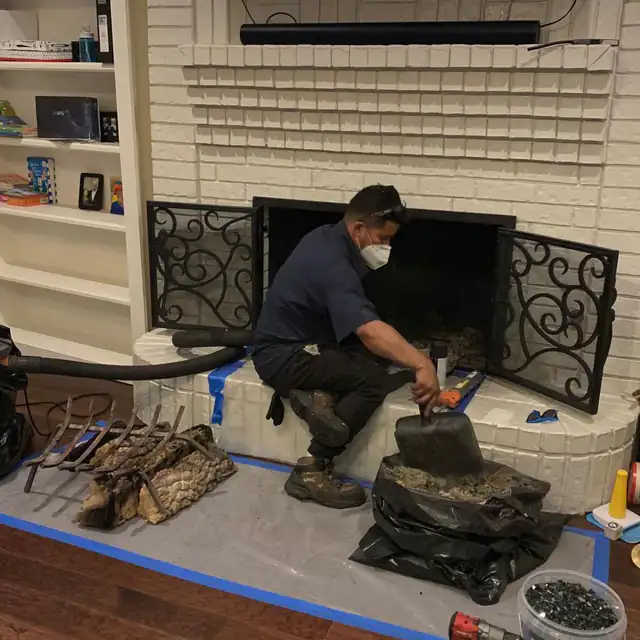
Drop cloths down and a vacuum on the hearth before anything is opened 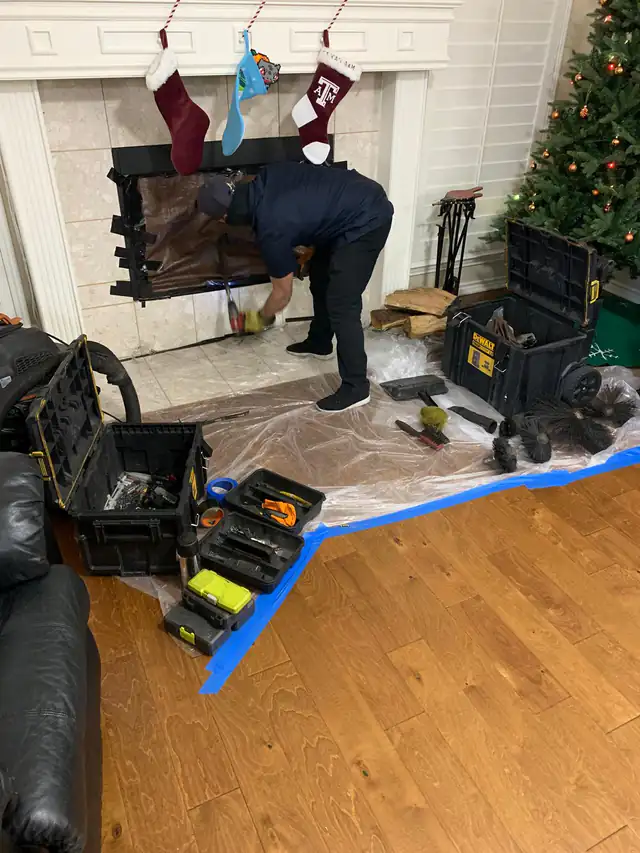
Working at the protected fireplace opening, with brushes and tools on covered floors 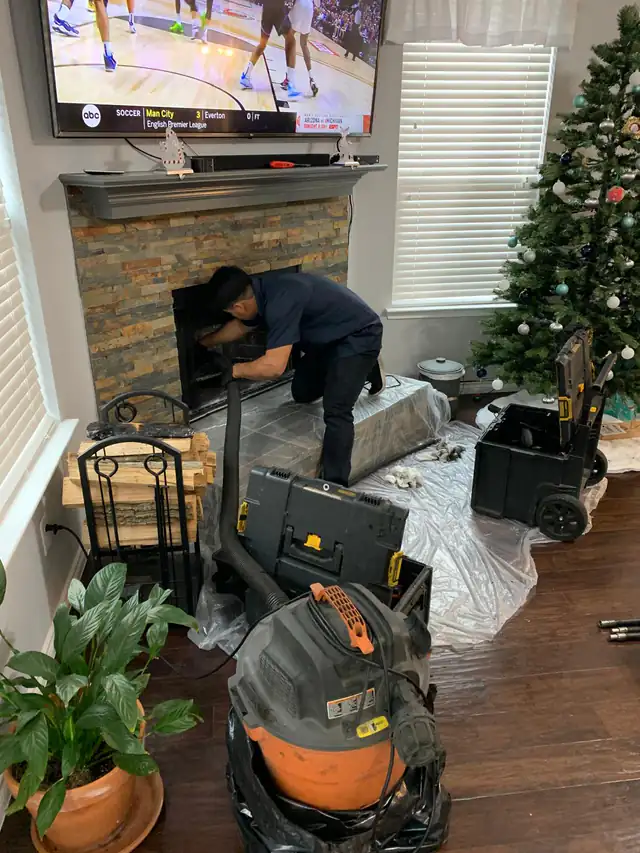
At the stone-front fireplace, with the hearth covered and a vacuum alongside 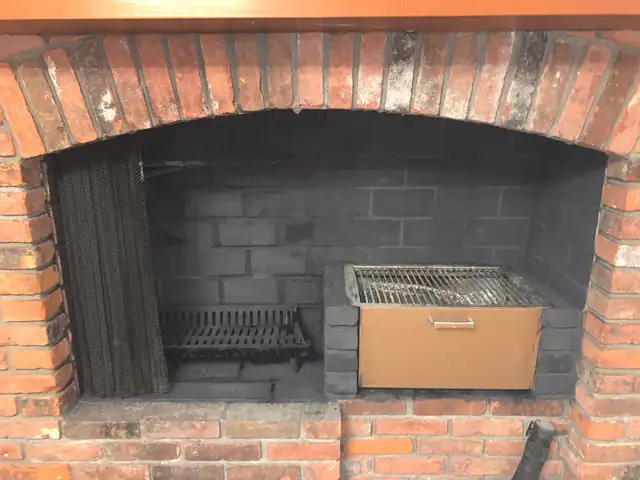
Firebox cleaned back to the brick, damper working 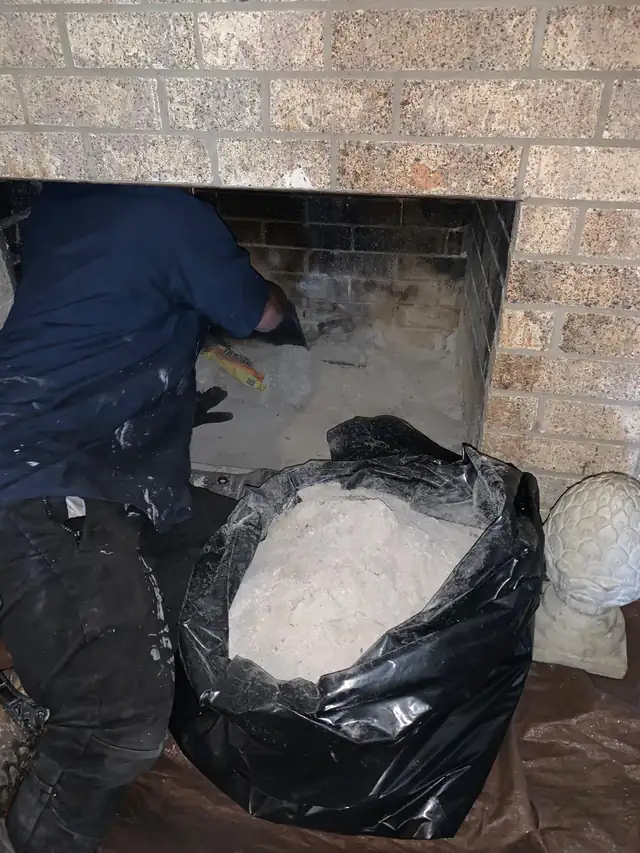
Clearing the firebox down to bare brick, floors covered
Meet the team
The people behind the work
Manny, Zack and Myke — meet the people behind Chimney Expert Solutions.
Our team and story →
Manny
Owner

Zack
Manager

Myke
Technician
FAQ
Chimney Sweep in Bedford: questions we hear
Our old house has a chimney breast upstairs but nothing on the roof. What is that?
Usually a stack that was demolished to just under the roofline at some past re-roof, with the rest left in place. Worth tracing rather than ignoring: we want to know whether the flue was capped, whether anything is still connected to it lower down, and what the remaining masonry is standing on. It is a common and usually manageable finding — it is just not one you want to discover during a renovation.
There's a round patch on the plaster near where a stove used to be. Does it matter?
It can, and it is worth a look. That is very likely an old stovepipe thimble — an opening into the flue that was covered over rather than sealed. If the chimney still vents an appliance, it is a route for combustion gases and heat into the wall cavity. Properly closing one is straightforward once we know where it is and what the flue behind it is doing.
Can a nineteenth-century flue be brought back into use?
Frequently, and a stainless liner is usually how. These flues were built narrow, unlined and for stoves, so they generally cannot serve a modern appliance as they stand. What decides it is what the camera shows: the flue's actual dimensions, its condition, how it is routed, and whether there are openings or framing issues to resolve first. We will tell you plainly if the honest answer is that it should stay decommissioned.
Do those creosote-sweeping logs work?
Partly, and not as a replacement. Creosote-modifying products can dry out and loosen stage-three glaze, which genuinely makes a subsequent sweep more effective. What they cannot do is remove anything. The deposit still has to be brushed loose and carried out of the flue by someone with rods and a vacuum.
The fireplace was converted to gas years ago. Does the old creosote still matter?
Yes. Wood-era deposits stay where they are and stay combustible, and a conversion usually leaves the flue badly oversized for the new appliance — so it runs cold and condenses moisture onto exactly those deposits. Conversions are a good reason for a sweep and a camera look, not a reason to skip one.
Free estimate
Chimney Sweep in Bedford?
Tell us what you’re seeing and we’ll call or text back to schedule a look — with photos of what we find and an honest read on what’s urgent and what can wait. That evidence-first method is the way we work on every job.
Call and tell us what the chimney's doing — if we're up on a roof, we'll call you back. Other ways to reach us are on the contact page, and Bedford is one of the communities we cover across Greater Cleveland.
Call216-647-1882