
Lake County, Ohio
Chimney Leak Repair & Waterproofing in Willoughby, OH
Finding where the water actually gets in — crown, cap, flashing, masonry or condensation — and fixing that, not caulking symptoms.
What chimney leak repair involves in Willoughby is set by the housing stock here: A nineteenth-century downtown core plus decades of suburban growth, in a market where wood heat is genuinely used — a high concentration of stoves and inserts, many of them venting into oversized original flues.
Willoughby has a real nineteenth-century downtown — the Erie Street blocks by the Chagrin River, with brick commercial buildings and older houses on the streets behind them — and then decades of suburban building spreading east and south around it. What ties the market together is not a building era. It is that people here genuinely burn wood, and have for a long time, because Lake County winters make supplemental heat worth the trouble.
A leaking chimney is a symptom with at least five different causes, and fixing the wrong one is why so many chimney leaks come back. Water can enter through a cracked crown, a missing or undersized cap, failed flashing where the chimney meets the roof, saturated porous masonry, or condensation forming inside an oversized flue. Each of those has a different repair, and none of them is solved by sealant on whatever surface was easiest to reach. Our leak work starts with diagnosis at roof level and inside the house, so the fix targets the actual entry point.
What we find on Willoughby chimneys that leads to chimney leak repair
Nobody has looked behind the insert since it went in
An insert is a plug in the fireplace. Everything behind it — the original firebox, the damper area, the smoke chamber, the point where the connector enters the flue — is out of sight and out of mind, sometimes for decades. What we find back there when a unit finally comes out is the interesting part: creosote packed into the smoke shelf, a rusted damper frame, a connector that has come loose from its collar, deteriorated firebrick, and occasionally a masonry defect that has been getting worse in the dark since the Clinton administration. If your insert has never been pulled, that is the single highest-value thing to do to it.
Inserts installed without a full-length liner
The common older installation was a slip connector or a short length of pipe from the insert's outlet up into the smoke chamber, venting into the original masonry flue. The problem is volume and temperature. A modern insert burns efficiently, so the exhaust leaves cooler and in far smaller quantity than an open fire's did, and it is now expanding into a flue several times larger than it needs. It slows, it cools, and it deposits creosote heavily up in the cold masonry where nobody can brush it. The current standard is a correctly sized stainless liner running the full height from the appliance to the top, insulated where the situation calls for it. It drafts better and it is dramatically easier to keep clean.
The fixes, matched to the cause
- Cracked but structurally sound crown: a flexible elastomeric crown coating bridges the crazing and seals it for years.
- Failed or never-adequate crown: a full recast in reinforced concrete, with a drip edge overhanging the brick and an expansion joint around the flue tile so thermal movement does not crack it again.
- No cap or a failed cap: a stainless cap sized and anchored to the flue, with screen. This one repair often ends the leak entirely.
- Failed flashing: proper step flashing and counterflashing reset into a cut reglet in the mortar joint, not sealant over the old work. Where the roof is at the end of its life, this gets coordinated with the roofing rather than done twice.
- Open joints and spalled brick on the weather face: repointing and unit replacement, because a repellent over open joints is a waste of a product.
- Genuinely porous but sound masonry: a vapor-permeable siloxane-type water repellent that sheds driven rain while letting the wall dry outward.
- Condensation in an oversized flue: correctly sized liner, which is a relining job rather than a waterproofing one.
- A wide chimney with no cricket on the up-slope side: a cricket, the small saddle roof that diverts water and snow around the stack instead of letting it pool against it.
Why sealing the whole chimney is usually a mistake
The instinct when a masonry chimney leaks is to coat it, and the products that come to hand at a hardware store are mostly film-forming: acrylic sealers, masonry paint, silicone. In a freeze-thaw climate these do real damage. Brick and mortar have to be able to release moisture outward. A film-forming coating stops that while doing nothing about the water arriving from the crown or the flashing, so the moisture that gets in stays in — and every freeze then works on masonry that cannot dry. Painted and sealed chimneys spall spectacularly, and the damage shows up across the whole face rather than at one entry point.
Where a repellent is genuinely appropriate, the product class matters: silane and siloxane repellents penetrate and repel liquid water while remaining vapor permeable, so the wall still breathes. And it is applied after the joints are sound, never as a substitute for pointing them. A repellent is a raincoat, not a roof, and it will never fix a crown or a piece of flashing.
This page covers chimney leak repair as it plays out in Willoughby. The full chimney leak repair & waterproofing page walks the whole job — every stage, what changes the scope, and what we do about each of them. For everything else we handle in this suburb, see chimney services in Willoughby.
How we handle a leaking chimney
- Roof-level diagnosis: crown, cap, flashing, masonry and shoulder — photographed
- Interior check: firebox, smoke chamber and damper for staining, rust and damp
- Flashing repair or a full re-flash where the roofline seal has failed
- Crown repair or full recast with a drip edge and an expansion joint at the flue
- Vapor-permeable masonry repellent on porous brick — never paint or film-forming sealers
- An honest call on whether the 'leak' is actually flue condensation
- The fix in writing, matched to the diagnosed entry point
Our work
Chimney Leak Repair & Waterproofing, photographed on the job
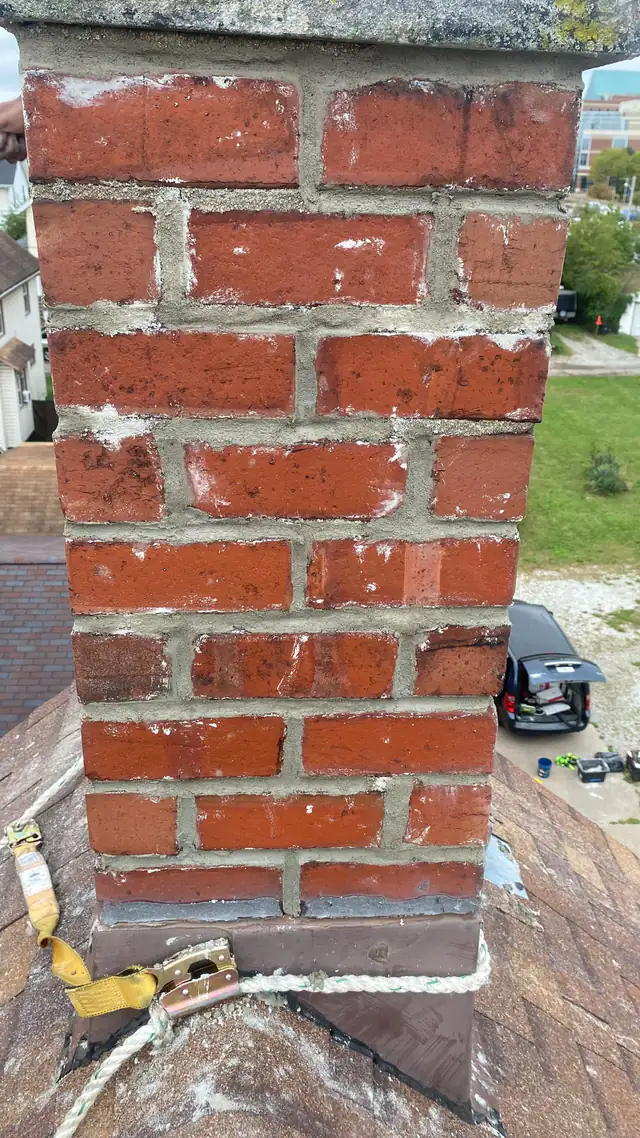
Roped in on a steep roof — repointed, flashing sealed 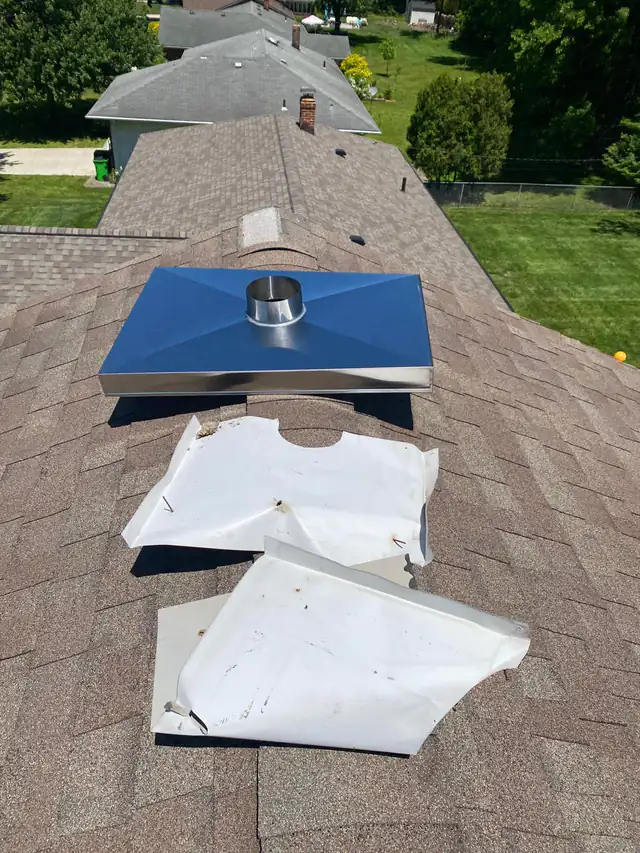
Replacement chase cover beside the removed cover sections on the roof 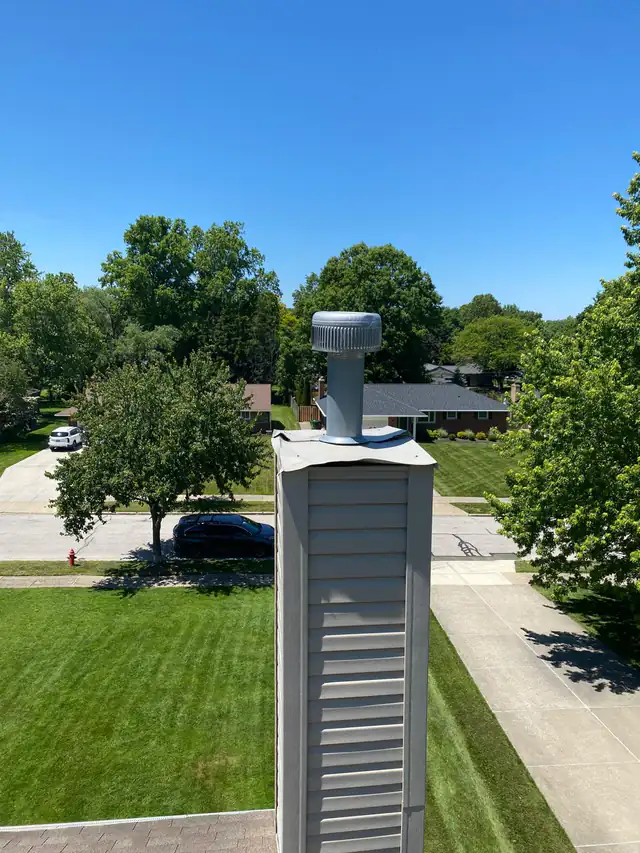
Before — the old chase cover, with bent and raised edges around the vent 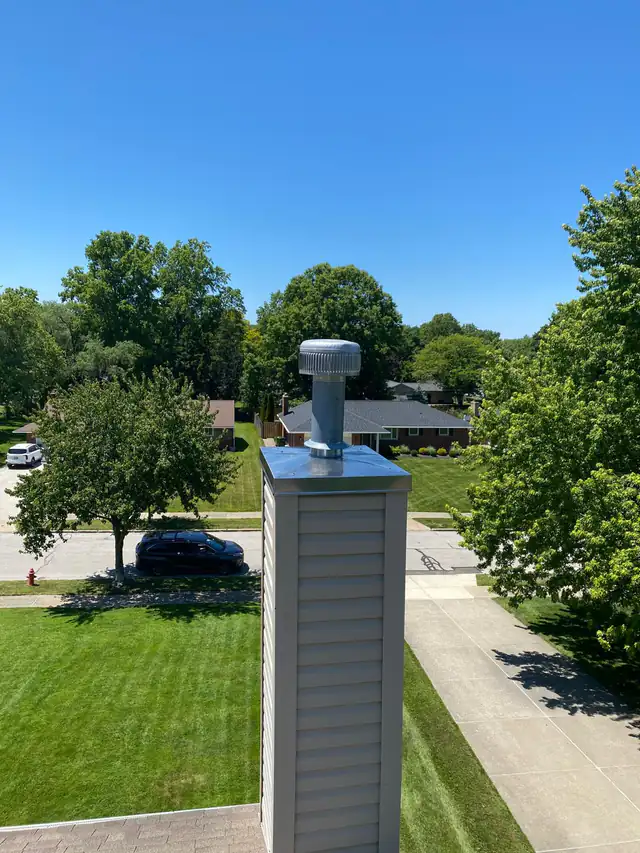
After — replacement chase cover fitted around the vent 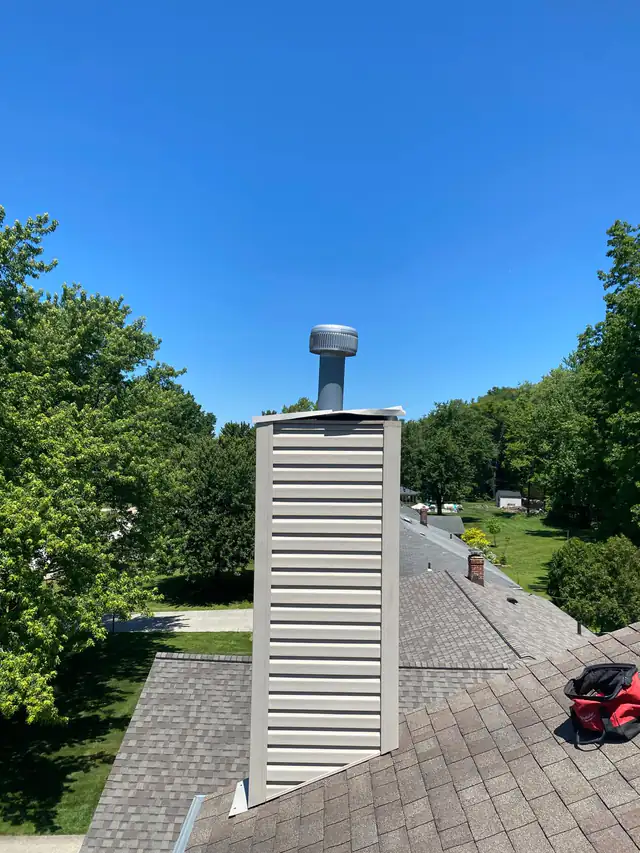
Before — the old cover from the roof side, with a raised edge 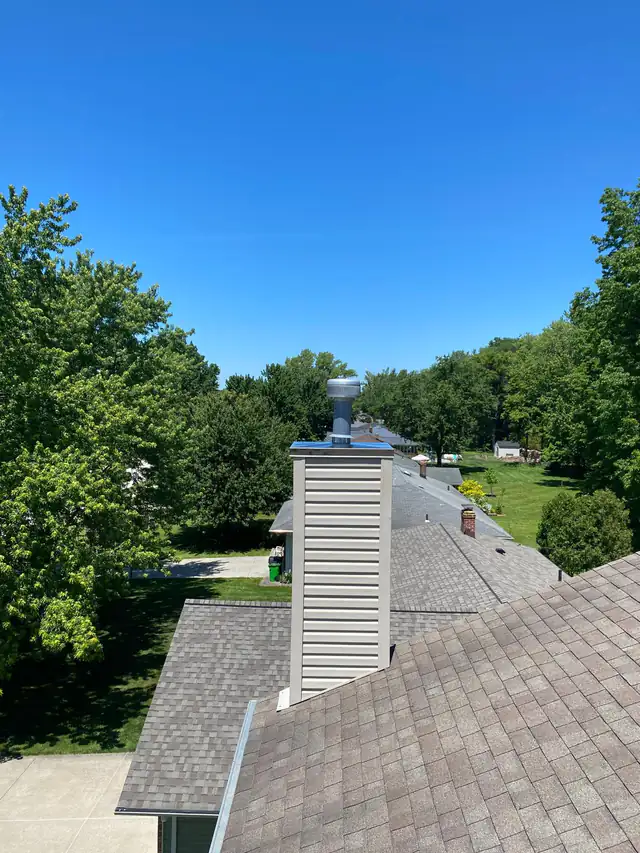
After — the replacement cover and chase, viewed from the roof
Meet the team
The people behind the work
Manny, Zack and Myke — meet the people behind Chimney Expert Solutions.
Our team and story →
Manny
Owner

Zack
Manager

Myke
Technician
FAQ
Chimney Leak Repair in Willoughby: questions we hear
Does our fireplace insert need to be pulled out to be swept?
To be swept and genuinely inspected, in most cases yes. There is no other way to see the smoke chamber, the damper area and the connection into the flue, and those are the places deposits and defects accumulate. It is more work than a straightforward sweep, so we would rather tell you that when you book than surprise you with it at the door.
Our insert vents into the old flue with a short pipe. Is that acceptable?
It is a very common older arrangement and it is worth replacing. A modern insert produces cooler, lower-volume exhaust than the flue was built for, so it slows down in the oversized masonry, cools, and lays creosote in the part of the chimney nobody can brush. A full-height stainless liner sized to the appliance draws better, burns cleaner and is far easier to maintain. We will show you the camera footage before recommending it.
It leaked once and hasn't since. Do I still need it looked at?
Yes, and the intermittency is a clue rather than a reassurance. A leak that only appears under specific conditions usually means a directional entry point, most often driven rain on one face or ice damming at the roofline. The path is still there between events, and it is still admitting the water that does the freeze-thaw damage.
Can you fix a chimney leak in winter?
Some of it. Caps, some flashing work and temporary measures can be done in cold weather. Anything involving mortar or a concrete crown recast needs sustained temperatures above roughly 40°F to cure, so a winter diagnosis often means a temporary fix now and the permanent one in spring. We will tell you which category yours is in rather than laying masonry that will not set.
Free estimate
Chimney Leak Repair in Willoughby?
Tell us what you’re seeing and we’ll call or text back to schedule a look — with photos of what we find and an honest read on what’s urgent and what can wait. That evidence-first method is the way we work on every job.
Call and tell us what the chimney's doing — if we're up on a roof, we'll call you back. Other ways to reach us are on the contact page, and Willoughby is one of the communities we cover across Greater Cleveland.
Call216-647-1882