
Medina County, Ohio
Chimney Inspection in Medina, OH
Camera inspection of the full flue, plus the firebox, damper, crown, cap and flashing — documented in photos, explained in plain language.
What chimney inspection involves in Medina is set by the housing stock here: A Victorian square and its nineteenth-century streets alongside three decades of new subdivisions — traditional tall masonry stacks on one side of town and unserviced sealed direct-vent gas appliances on the other.
Medina is two towns wearing one name, and the chimney work splits cleanly along the same line. There is the old city — the Victorian square with its gaslights and storefronts, and the streets of nineteenth-century houses radiating out from it — and there is everything built since about 1990, which is a very large amount of subdivision housing pushing out toward Route 18 and the highway in every direction.
You cannot see the part of the chimney that matters most. From the ground a stack can look perfectly sound while the flue tiles inside are cracked, shifted, or missing their mortar joints entirely. A compromised flue is exactly how heat and combustion gases reach the wood framing that surrounds every masonry chimney, and there is no version of that story with a good ending. An inspection puts a camera up the full length of the flue and eyes on every accessible part of the system, and gives you the photographs rather than just a verdict.
What we find on Medina chimneys that leads to chimney inspection
Horizontal terminations at head height
The vent for a direct-vent fireplace exits through an exterior wall, often only a few feet above the ground and often on a side of the house nobody walks past. That location invites problems a rooftop flue never has. Birds nest in the termination in spring. Snow drifts against it and blocks it, which on a sealed system stops combustion air as well as exhaust. Shrubs grow over it. Deck furniture gets stacked in front of it. And the exhaust stains the siding above it, which people usually notice long before they connect it to the fireplace. Keeping the required clearance around the termination clear is genuinely part of owning one of these.
Nineteenth-century stacks around the square
The older housing here has the full set of Victorian chimney conditions — tall exposed masonry above the roof, decorative corbelled tops, and clay flues that have carried a century and a half of use. What is different about Medina is the standard the repair is held to. These are visible chimneys on houses in a district that is looked after, so brick blend, joint profile and the shape of the top are part of the job rather than optional refinements. Photograph the existing detail before anything is dismantled, and confirm with the city what review, if any, applies to your property before scheduling a rebuild.
What happens during the visit
From the roof
The top of the chimney is where the damage starts and where almost no homeowner has ever looked. We photograph the crown, the cap or its absence, the top courses of brick, the flue tile terminations and the flashing at the roofline. Half the findings on a typical Cleveland inspection come from this single vantage point, and most owners have never seen a picture of it.
The camera scan
A camera on a rod or a cable is run the full length of each flue, and the footage gets watched, not skimmed. What it resolves is joint condition: whether the mortar between clay tiles is intact, whether tiles have cracked, spalled, shifted or dropped, whether there is a gap where a section has failed, and whether anything is obstructing the passage. On a stack with several flues, each one is scanned separately, because they age independently.
The room side
Firebox brick and joints, refractory panels if the fireplace is factory-built, damper condition and operation, smoke chamber shape and surface, hearth extension, and the clearance between the chimney and combustible framing wherever it can be seen. If there is an appliance connected, the connection itself gets checked, because improvised adapters and unsupported connector pipe are common and dangerous findings.
The report
Photographs of what we found, in plain language, with every finding sorted into one of three buckets: do not burn until this is fixed, plan this repair, this is fine. That ranking is the useful part. Anyone can produce a list of defects; the value is in an honest read of which ones actually change what you should do this winter.
After a chimney fire, a storm, or years of disuse
A chimney fire does not have to be dramatic to do damage. Many are brief and quiet enough that nobody in the house realizes what happened, and the harm is done to the flue tiles by thermal shock: a rapid temperature spike cracks them, and the crack does not close when it cools. That is why the standard calls for a Level 2 after an operating malfunction rather than leaving it to how bad it looked.
Storms are the other trigger. A lightning strike on a chimney can crack masonry from the inside out, and high wind can shift a top course or tear flashing loose without leaving anything visible from the yard. And a fireplace that has sat unused since the last owner is genuinely unknown territory, and the common findings are a nest, a damper rusted shut, a flue abandoned mid-conversion, or a liner that stops partway up. None of that is visible from the hearth.
This page covers chimney inspection as it plays out in Medina. The full chimney inspection page walks the whole job — every stage, what changes the scope, and what we do about each of them. For everything else we handle in this suburb, see chimney services in Medina.
What an inspection covers
- Camera scan of the full flue interior — every tile joint, documented
- Firebox, damper, smoke chamber and appliance connection condition
- Crown, cap, and the top courses of masonry photographed from the roof
- Flashing and the roofline intersection — the most common leak path
- Exterior masonry: spalling brick, open mortar joints, efflorescence
- A photo report with findings ranked: urgent, plan-for, fine
Meet the team
The people behind the work
Manny, Zack and Myke — meet the people behind Chimney Expert Solutions.
Our team and story →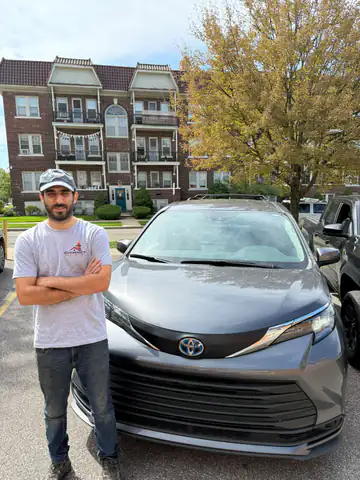
Manny
Owner

Zack
Manager

Myke
Technician
FAQ
Chimney Inspection in Medina: questions we hear
Can you work on both the old masonry chimneys and the newer gas units?
Yes — they are different jobs and we treat them that way. Masonry gets the camera, the crown and cap assessment, and the mortar and matching conversation. A sealed gas appliance gets its glass, gasket, burner, safety controls and vent termination gone through. Tell us which you have when you book so the right parts and tools come with us.
Do I get anything in writing?
Yes — photographs of what we found with an explanation of each item and where it sits on the urgent-to-fine scale. That document is what makes a chimney conversation verifiable instead of something you have to take on trust, and it is what you hand to a buyer, a seller or an insurer if it ever comes to that.
The furnace flue has never been inspected. Is that a real risk?
It is the most under-inspected chimney in the average Cleveland house. Utility flues fail silently: acidic exhaust condensate eats clay tile and mortar from the inside, tile shards drop and restrict the passage, and the failure mode is carbon monoxide rather than a fire you would notice. If the furnace or water heater was replaced in the last decade and nobody evaluated the chimney, that is worth a scan on its own.
Free estimate
Chimney Inspection in Medina?
Tell us what you’re seeing and we’ll call or text back to schedule a look — with photos of what we find and an honest read on what’s urgent and what can wait. That evidence-first method is the way we work on every job.
Call and tell us what the chimney's doing — if we're up on a roof, we'll call you back. Other ways to reach us are on the contact page, and Medina is one of the communities we cover across Greater Cleveland.
Call216-647-1882