
Medina County, Ohio
Chimney Sweep & Cleaning in Medina, OH
Full mechanical sweep of the flue, smoke chamber and firebox — creosote out, dust contained, and a look at the whole system while we're in it.
What chimney sweep involves in Medina is set by the housing stock here: A Victorian square and its nineteenth-century streets alongside three decades of new subdivisions — traditional tall masonry stacks on one side of town and unserviced sealed direct-vent gas appliances on the other.
Medina is two towns wearing one name, and the chimney work splits cleanly along the same line. There is the old city — the Victorian square with its gaslights and storefronts, and the streets of nineteenth-century houses radiating out from it — and there is everything built since about 1990, which is a very large amount of subdivision housing pushing out toward Route 18 and the highway in every direction.
Creosote is what wood smoke leaves behind on the inside of a flue, and it is the fuel in nearly every chimney fire. It leaves the fire as vapor, condenses on any flue wall cool enough to catch it, and hardens over a season into something closer to tar than soot. A real sweep takes the flue back to bare liner with rods and brushes sized to that specific flue, works the smoke chamber and smoke shelf where the deposits sit heaviest, and finishes in the firebox, with the room sealed off and a HEPA vacuum running the whole time.
What we find on Medina chimneys that leads to chimney sweep
Direct-vent gas fireplaces that have never been serviced
The belief that a gas appliance is maintenance-free is the single most common thing we correct in the newer subdivisions. A direct-vent unit is a sealed combustion system, and every part of that seal is a service item. The gasket around the glass hardens and lets the seal go. The oxygen depletion sensor and thermocouple foul and stop proving. The burner ports clog with lint and pet hair drawn in around the surround. The fan, where there is one, packs with dust. Symptoms are a pilot that will not hold, a unit that lights and drops out, sooting on the inside of the glass, or a faint gas smell — all of which are service items rather than replacements if they are caught.
Horizontal terminations at head height
The vent for a direct-vent fireplace exits through an exterior wall, often only a few feet above the ground and often on a side of the house nobody walks past. That location invites problems a rooftop flue never has. Birds nest in the termination in spring. Snow drifts against it and blocks it, which on a sealed system stops combustion air as well as exhaust. Shrubs grow over it. Deck furniture gets stacked in front of it. And the exhaust stains the siding above it, which people usually notice long before they connect it to the fireplace. Keeping the required clearance around the termination clear is genuinely part of owning one of these.
Nineteenth-century stacks around the square
The older housing here has the full set of Victorian chimney conditions — tall exposed masonry above the roof, decorative corbelled tops, and clay flues that have carried a century and a half of use. What is different about Medina is the standard the repair is held to. These are visible chimneys on houses in a district that is looked after, so brick blend, joint profile and the shape of the top are part of the job rather than optional refinements. Photograph the existing detail before anything is dismantled, and confirm with the city what review, if any, applies to your property before scheduling a rebuild.
What actually happens when we sweep your chimney
Before a brush touches the flue
Drop cloths go down over the hearth and the floor in front of it. The fireplace opening is sealed, and a HEPA vacuum runs at the firebox for the entire job so the flue is held under slight negative pressure. That is the whole trick to a clean sweep: air moves from the room into the chimney, never the other way. If soot ends up on your furniture, the setup was wrong, not the chimney.
The flue
Rods and brushes are run the full length of the liner, either down from the top or up from the firebox depending on roof access and what is on top of the stack. Brush size and shape matter more than most homeowners expect. A round brush swept through a rectangular clay tile leaves the four corners untouched, and the corners are exactly where deposits collect. We match the head to the liner: round for stainless, square or rectangular for clay tile, wire or poly depending on what the liner can take.
The smoke chamber and smoke shelf
This is the part that gets skipped, and it is the part that matters. The smoke chamber is the funnel-shaped space above the damper and below the first flue tile, usually built from corbelled brick with rough, stepped surfaces that catch everything. Behind it sits the smoke shelf, the ledge that collects whatever falls back down. Both get hand-brushed and vacuumed. A chimney with a clean flue and a loaded smoke chamber has not been swept, it has been rodded.
The firebox and damper
Firebox swept out, ash dump cleared if there is one, damper operated through its full travel and cleaned where soot has built on the plate and frame. A damper that will not seat is a heating bill and a draft problem, and it is easier to catch it here than in December.
The walkthrough at the end
Before we leave you get told what we saw, with photos of anything that needs attention: liner condition, firebox joints, smoke chamber, damper, and if we were on the roof, the crown, cap and flashing. Findings get ranked plainly. Urgent, plan for it, fine. No verdict without a picture behind it.
How we decide whether a flue actually needs sweeping
The working standard in the trade is that about an eighth of an inch of accumulation warrants sweeping, and a quarter inch means stop burning until it is done. We measure rather than assume, and the answer genuinely varies. A chimney that sat unused for two years may need very little brushing and a serious camera inspection instead, because the risk there is a nest, a shifted tile or a rusted damper, not creosote. A chimney that heated a house all winter on borderline wood can need a second visit before spring.
If we get in there and the flue does not need brushing, you get told that. There is no version of this trade where inventing work is good business, and the photos make the call verifiable either way.
This page covers chimney sweep as it plays out in Medina. The full chimney sweep & cleaning page walks the whole job — every stage, what changes the scope, and what we do about each of them. For everything else we handle in this suburb, see chimney services in Medina.
What a sweep with us includes
- Drop cloths, sealed fireplace opening and HEPA dust control before a brush touches the flue
- Mechanical sweep of the full flue length, with brush size and shape matched to your liner
- Smoke chamber and smoke shelf hand-cleaned — the corners most sweeps skip
- Firebox and ash dump cleared, damper cleaned and operated through full travel
- A visual once-over of the whole system, with photos of anything that needs attention
- Straight advice at the end: what's urgent, what can wait, what's fine
Our work
Chimney Sweep & Cleaning, photographed on the job
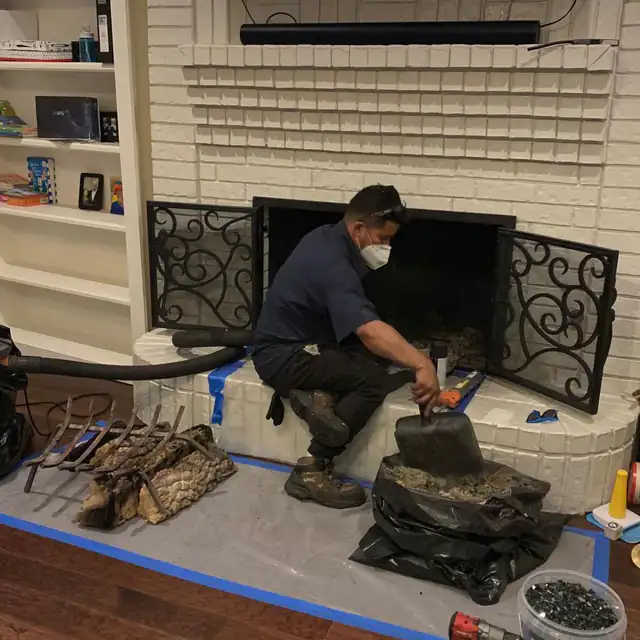
Drop cloths down and a vacuum on the hearth before anything is opened 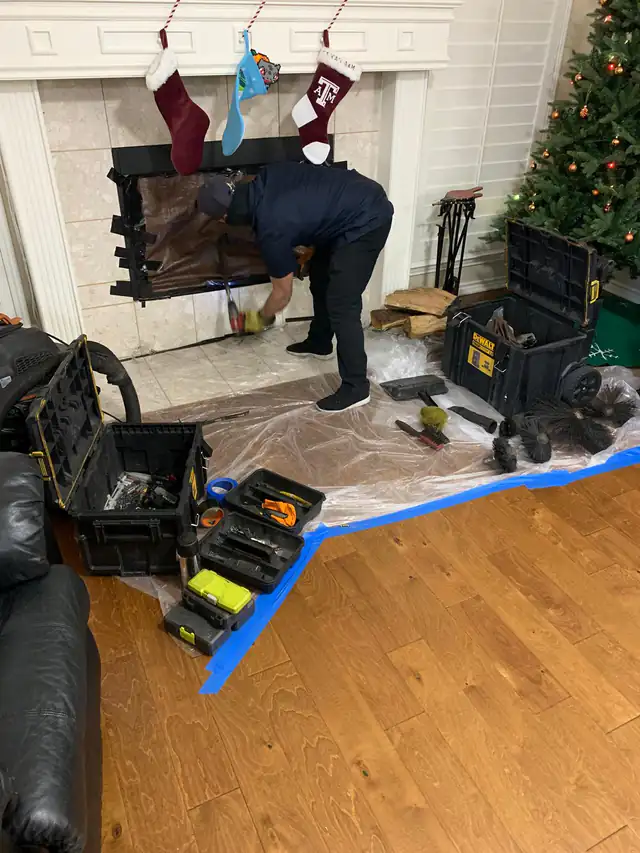
Working at the protected fireplace opening, with brushes and tools on covered floors 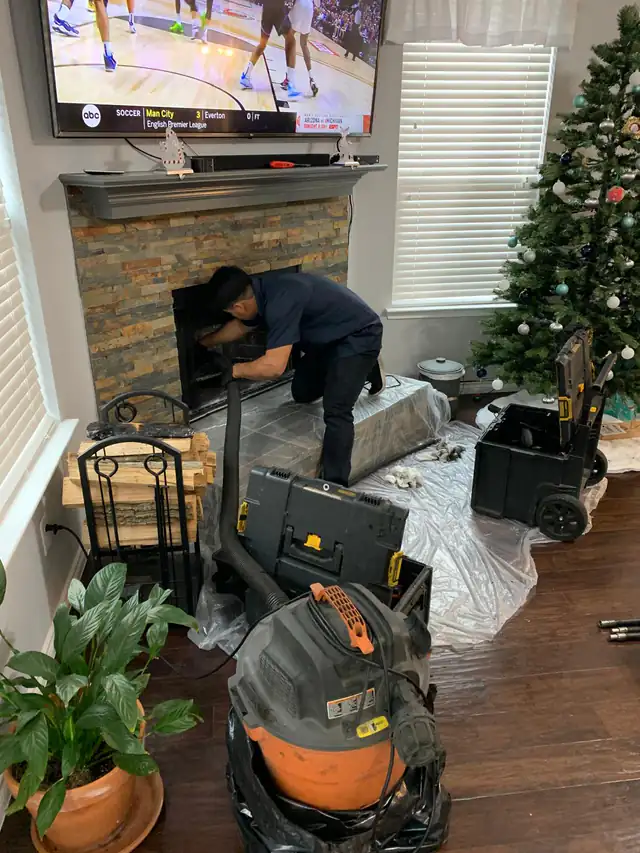
At the stone-front fireplace, with the hearth covered and a vacuum alongside 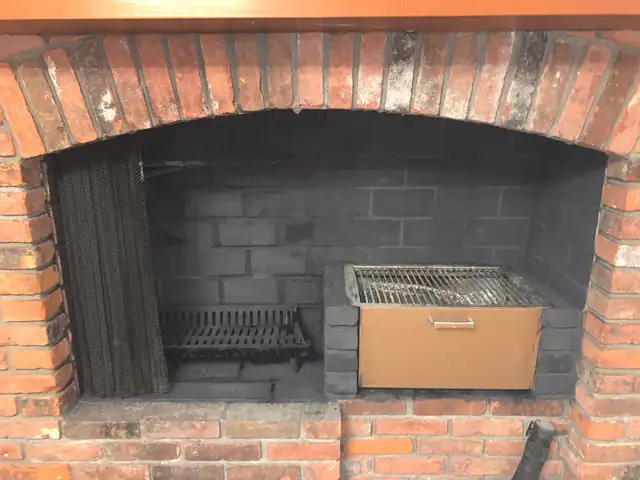
Firebox cleaned back to the brick, damper working 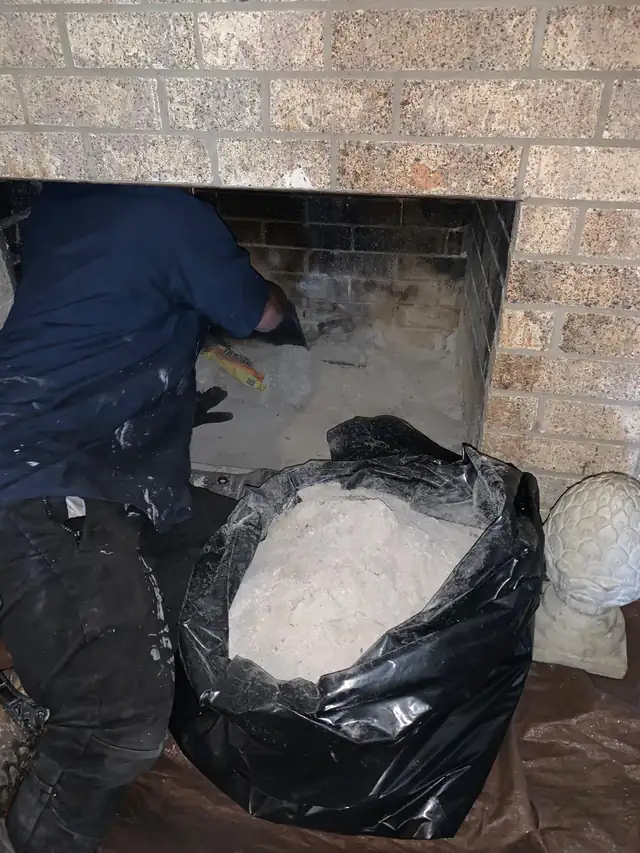
Clearing the firebox down to bare brick, floors covered
Meet the team
The people behind the work
Manny, Zack and Myke — meet the people behind Chimney Expert Solutions.
Our team and story →
Manny
Owner

Zack
Manager

Myke
Technician
FAQ
Chimney Sweep in Medina: questions we hear
Our gas fireplace vents out the side wall. Does it need servicing?
Yes. A direct-vent unit is a sealed system and the seal is exactly what wears: the glass gasket hardens, the pilot assembly and safety sensors foul, burner ports clog with household dust and pet hair, and the vent termination outside collects nests and debris. None of that is visible from the room, and all of it is routine to service once a year.
Do we need approval before repairing a chimney on an older house here?
It depends on the property and on whether it sits in a district with exterior review, and those rules vary and change. We would rather you confirm the current position with the city's building or planning department than take our word for it. Practically, we quote period masonry as a match to the existing detail anyway, which is usually what a review process is looking for.
Can you work on both the old masonry chimneys and the newer gas units?
Yes — they are different jobs and we treat them that way. Masonry gets the camera, the crown and cap assessment, and the mortar and matching conversation. A sealed gas appliance gets its glass, gasket, burner, safety controls and vent termination gone through. Tell us which you have when you book so the right parts and tools come with us.
The fireplace was converted to gas years ago. Does the old creosote still matter?
Yes. Wood-era deposits stay where they are and stay combustible, and a conversion usually leaves the flue badly oversized for the new appliance — so it runs cold and condenses moisture onto exactly those deposits. Conversions are a good reason for a sweep and a camera look, not a reason to skip one.
Do you sweep from the roof or from inside the house?
Whichever puts less risk in your house. Roof access, cap design and the pitch and material of the roof all factor in — we will not walk a slate roof that will break underfoot. Both directions clean the same flue; the part that decides whether your living room stays clean is the sealed opening and the vacuum at the firebox, not which end the rods go in.
Free estimate
Chimney Sweep in Medina?
Tell us what you’re seeing and we’ll call or text back to schedule a look — with photos of what we find and an honest read on what’s urgent and what can wait. That evidence-first method is the way we work on every job.
Call and tell us what the chimney's doing — if we're up on a roof, we'll call you back. Other ways to reach us are on the contact page, and Medina is one of the communities we cover across Greater Cleveland.
Call216-647-1882