
Cuyahoga County, Ohio
Chimney Inspection in Cleveland Heights, OH
Camera inspection of the full flue, plus the firebox, damper, crown, cap and flashing — documented in photos, explained in plain language.
What chimney inspection involves in Cleveland Heights is set by the housing stock here: 1910s–20s Tudors and colonials with multiple fireplaces and tall, detailed multi-flue stacks — architectural chimneys on slate roofs, over clay flues that frequently need relining.
Cleveland Heights was built out as a streetcar suburb in the 1910s and 1920s, and the housing shows exactly that: brick Tudors, center-hall colonials and arts-and-crafts homes along Fairmount and through Cedar Fairmount, Coventry, Cedar Lee and the Forest Hill streets. These are houses with real masonry, and very often with more than one fireplace.
You cannot see the part of the chimney that matters most. From the ground a stack can look perfectly sound while the flue tiles inside are cracked, shifted, or missing their mortar joints entirely. A compromised flue is exactly how heat and combustion gases reach the wood framing that surrounds every masonry chimney, and there is no version of that story with a good ending. An inspection puts a camera up the full length of the flue and eyes on every accessible part of the system, and gives you the photographs rather than just a verdict.
What we find on Cleveland Heights chimneys that leads to chimney inspection
Three flues, three different problems, one stack
Heights chimneys age unevenly because their flues do different work. The heating flue has run every winter for a century and is usually the one with condensation damage and eroded joints. The main fireplace flue has taken the thermal cycling. The bedroom fireplace flue may have been unused since the 1950s and may be housing a nest. Each one gets scanned and assessed separately, and the single most common outcome is a mixed verdict rather than a blanket one.
Slate and tile roofs, which cannot be walked on
A great many Cleveland Heights houses have slate or clay tile roofs, and those roofs break under foot. That changes chimney work materially: access has to be staged with roof ladders or scaffolding rather than by walking up to the stack, protection under the work area matters more, and any flashing repair has to be done by someone who understands how the counterflashing ties into a slate field. A contractor who is casual about walking your slate is telling you something about the rest of the job.
What we are actually looking for
- Cracked, shifted or missing clay flue tiles, and open joints between them — the failure that only a camera finds.
- Evidence of a past chimney fire: puffy honeycombed deposits, heat-warped damper components, discolored cap, tile cracked in a spiral pattern.
- Water damage: efflorescence, spalled brick faces, deteriorated mortar, a cracked or missing crown, rust at the damper or the base of a utility flue.
- Smoke chamber condition, including rough corbelled brick that was never parged and is quietly restricting draft.
- Firebox joints and refractory panel cracks, which are heat paths, not cosmetic flaws.
- Blockage: nests, leaves, fallen debris, a closed or collapsed damper, or in a converted flue, an abandoned connector left in place.
- Sizing and appliance match — whether the flue is correct for what is now venting into it.
- The chimney's height and termination relative to the roof, and its clearance to combustible framing wherever that can be observed.
What drives the cost of an inspection
- The level. A visual check and a full camera scan are not the same visit.
- How many flues. A three-flue Cleveland Heights stack is three separate scans and three separate assessments.
- Roof access and pitch. Slate, tile, steep pitches and three-story stacks need staging or roof ladders and take longer to work safely.
- Whether the flue needs sweeping first. A camera cannot see through creosote — on a heavily loaded flue, the sweep has to happen before the scan is meaningful, which is why the two are usually booked together.
- Whether an appliance has to be disconnected to see the connection and the base of the flue.
- Documentation depth. A scan for your own information and a photo report you are handing to a buyer's agent are different amounts of work.
This page covers chimney inspection as it plays out in Cleveland Heights. The full chimney inspection page walks the whole job — every stage, what changes the scope, and what we do about each of them. For everything else we handle in this suburb, see chimney services in Cleveland Heights.
What an inspection covers
- Camera scan of the full flue interior — every tile joint, documented
- Firebox, damper, smoke chamber and appliance connection condition
- Crown, cap, and the top courses of masonry photographed from the roof
- Flashing and the roofline intersection — the most common leak path
- Exterior masonry: spalling brick, open mortar joints, efflorescence
- A photo report with findings ranked: urgent, plan-for, fine
Meet the team
The people behind the work
Manny, Zack and Myke — meet the people behind Chimney Expert Solutions.
Our team and story →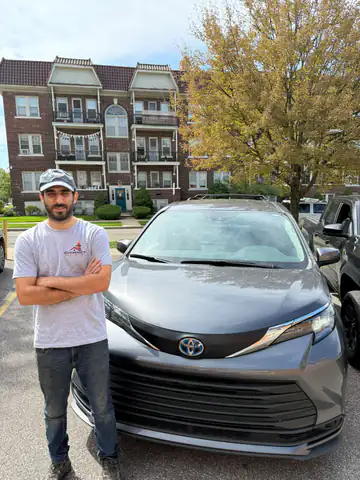
Manny
Owner
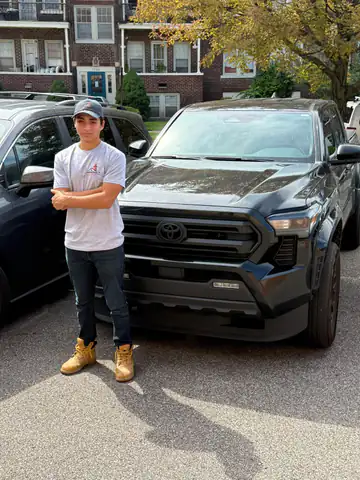
Zack
Manager

Myke
Technician
FAQ
Chimney Inspection in Cleveland Heights: questions we hear
The upstairs fireplace hasn't been used since we bought the house. Is that a problem?
It is unknown territory rather than a problem, which is the reason to scan it before lighting anything. Long-unused Heights flues commonly turn out to contain nests, a damper rusted shut, cracked tile from a fire nobody documented, or an abandoned connection left open. Any of those is straightforward to deal with once it is on camera.
Our house has three flues in one chimney. Does each need its own service?
Each is inspected and treated on its own, because they age independently — in the Heights it is normal to find one flue in fair shape, one cracked and one abandoned. The efficiency is that one visit and one set-up covers all of them, and separate caps can often be replaced with a single custom multi-flue cover that also protects the crown.
Do I get anything in writing?
Yes — photographs of what we found with an explanation of each item and where it sits on the urgent-to-fine scale. That document is what makes a chimney conversation verifiable instead of something you have to take on trust, and it is what you hand to a buyer, a seller or an insurer if it ever comes to that.
The furnace flue has never been inspected. Is that a real risk?
It is the most under-inspected chimney in the average Cleveland house. Utility flues fail silently: acidic exhaust condensate eats clay tile and mortar from the inside, tile shards drop and restrict the passage, and the failure mode is carbon monoxide rather than a fire you would notice. If the furnace or water heater was replaced in the last decade and nobody evaluated the chimney, that is worth a scan on its own.
Free estimate
Chimney Inspection in Cleveland Heights?
Tell us what you’re seeing and we’ll call or text back to schedule a look — with photos of what we find and an honest read on what’s urgent and what can wait. That evidence-first method is the way we work on every job.
Call and tell us what the chimney's doing — if we're up on a roof, we'll call you back. Other ways to reach us are on the contact page, and Cleveland Heights is one of the communities we cover across Greater Cleveland.
Call216-647-1882