
Cuyahoga County, Ohio
Chimney Sweep & Cleaning in Cleveland Heights, OH
Full mechanical sweep of the flue, smoke chamber and firebox — creosote out, dust contained, and a look at the whole system while we're in it.
What chimney sweep involves in Cleveland Heights is set by the housing stock here: 1910s–20s Tudors and colonials with multiple fireplaces and tall, detailed multi-flue stacks — architectural chimneys on slate roofs, over clay flues that frequently need relining.
Cleveland Heights was built out as a streetcar suburb in the 1910s and 1920s, and the housing shows exactly that: brick Tudors, center-hall colonials and arts-and-crafts homes along Fairmount and through Cedar Fairmount, Coventry, Cedar Lee and the Forest Hill streets. These are houses with real masonry, and very often with more than one fireplace.
Creosote is what wood smoke leaves behind on the inside of a flue, and it is the fuel in nearly every chimney fire. It leaves the fire as vapor, condenses on any flue wall cool enough to catch it, and hardens over a season into something closer to tar than soot. A real sweep takes the flue back to bare liner with rods and brushes sized to that specific flue, works the smoke chamber and smoke shelf where the deposits sit heaviest, and finishes in the firebox, with the room sealed off and a HEPA vacuum running the whole time.
What we find on Cleveland Heights chimneys that leads to chimney sweep
Three flues, three different problems, one stack
Heights chimneys age unevenly because their flues do different work. The heating flue has run every winter for a century and is usually the one with condensation damage and eroded joints. The main fireplace flue has taken the thermal cycling. The bedroom fireplace flue may have been unused since the 1950s and may be housing a nest. Each one gets scanned and assessed separately, and the single most common outcome is a mixed verdict rather than a blanket one.
Slate and tile roofs, which cannot be walked on
A great many Cleveland Heights houses have slate or clay tile roofs, and those roofs break under foot. That changes chimney work materially: access has to be staged with roof ladders or scaffolding rather than by walking up to the stack, protection under the work area matters more, and any flashing repair has to be done by someone who understands how the counterflashing ties into a slate field. A contractor who is casual about walking your slate is telling you something about the rest of the job.
Ornamental brickwork that a generic rebuild erases
Corbelled courses, banding, decorative caps and clay pots are why these chimneys look the way they do, and they are the first thing to disappear in a rebuild quoted by someone who does not intend to reproduce them. Every one of those details can be rebuilt: it takes photographs of the existing work before demolition and a willingness to match rather than simplify. On a visible Heights chimney we quote it that way by default and would rather lose the job than flatten the house.
What actually happens when we sweep your chimney
Before a brush touches the flue
Drop cloths go down over the hearth and the floor in front of it. The fireplace opening is sealed, and a HEPA vacuum runs at the firebox for the entire job so the flue is held under slight negative pressure. That is the whole trick to a clean sweep: air moves from the room into the chimney, never the other way. If soot ends up on your furniture, the setup was wrong, not the chimney.
The flue
Rods and brushes are run the full length of the liner, either down from the top or up from the firebox depending on roof access and what is on top of the stack. Brush size and shape matter more than most homeowners expect. A round brush swept through a rectangular clay tile leaves the four corners untouched, and the corners are exactly where deposits collect. We match the head to the liner: round for stainless, square or rectangular for clay tile, wire or poly depending on what the liner can take.
The smoke chamber and smoke shelf
This is the part that gets skipped, and it is the part that matters. The smoke chamber is the funnel-shaped space above the damper and below the first flue tile, usually built from corbelled brick with rough, stepped surfaces that catch everything. Behind it sits the smoke shelf, the ledge that collects whatever falls back down. Both get hand-brushed and vacuumed. A chimney with a clean flue and a loaded smoke chamber has not been swept, it has been rodded.
The firebox and damper
Firebox swept out, ash dump cleared if there is one, damper operated through its full travel and cleaned where soot has built on the plate and frame. A damper that will not seat is a heating bill and a draft problem, and it is easier to catch it here than in December.
The walkthrough at the end
Before we leave you get told what we saw, with photos of anything that needs attention: liner condition, firebox joints, smoke chamber, damper, and if we were on the roof, the crown, cap and flashing. Findings get ranked plainly. Urgent, plan for it, fine. No verdict without a picture behind it.
Wood stoves, inserts, and what changes with gas
Stoves and inserts run hotter and load their flues faster than open fireplaces, and they are usually connected to a stainless liner that requires a different brush than clay tile. Many older Cleveland installations have an insert simply slid into an existing masonry fireplace with no liner at all, venting into a flue several times too large for it. Those build deposits quickly in the smoke chamber and the bottom of the flue, and they are worth a camera look before another season.
Gas is a different conversation and we will not oversell it. A gas fireplace or a gas-fired appliance does not make creosote. What it does produce is scale, rust flake, and corrosion at the base of an oversized flue, and its flue is still an attractive place for a bird or a squirrel. The annual look stays the same standard; the brushing schedule honestly does not.
This page covers chimney sweep as it plays out in Cleveland Heights. The full chimney sweep & cleaning page walks the whole job — every stage, what changes the scope, and what we do about each of them. For everything else we handle in this suburb, see chimney services in Cleveland Heights.
What a sweep with us includes
- Drop cloths, sealed fireplace opening and HEPA dust control before a brush touches the flue
- Mechanical sweep of the full flue length, with brush size and shape matched to your liner
- Smoke chamber and smoke shelf hand-cleaned — the corners most sweeps skip
- Firebox and ash dump cleared, damper cleaned and operated through full travel
- A visual once-over of the whole system, with photos of anything that needs attention
- Straight advice at the end: what's urgent, what can wait, what's fine
Our work
Chimney Sweep & Cleaning, photographed on the job
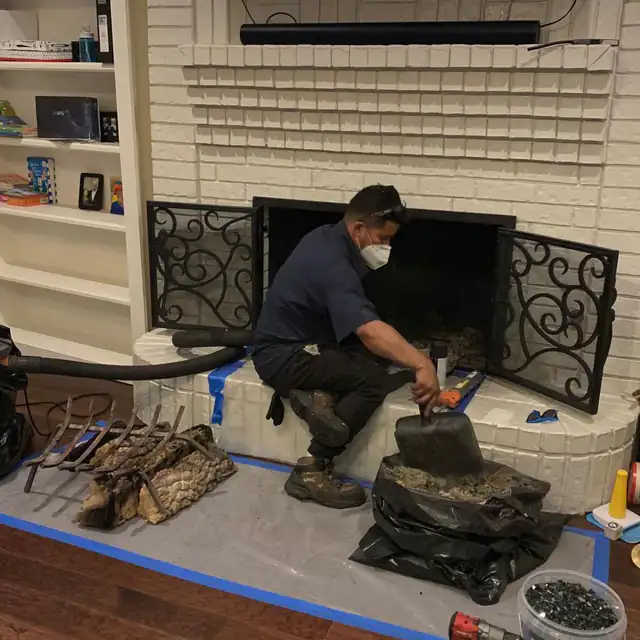
Drop cloths down and a vacuum on the hearth before anything is opened 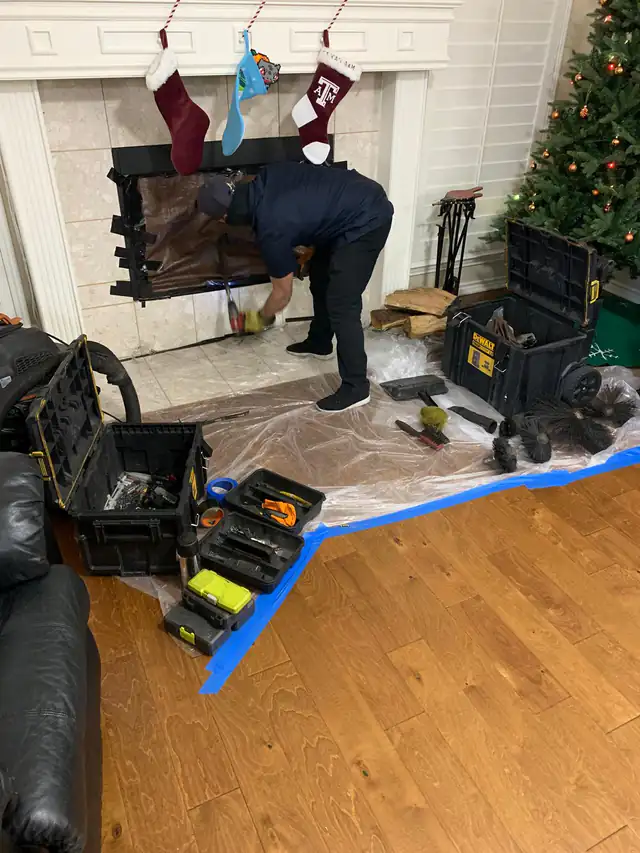
Working at the protected fireplace opening, with brushes and tools on covered floors 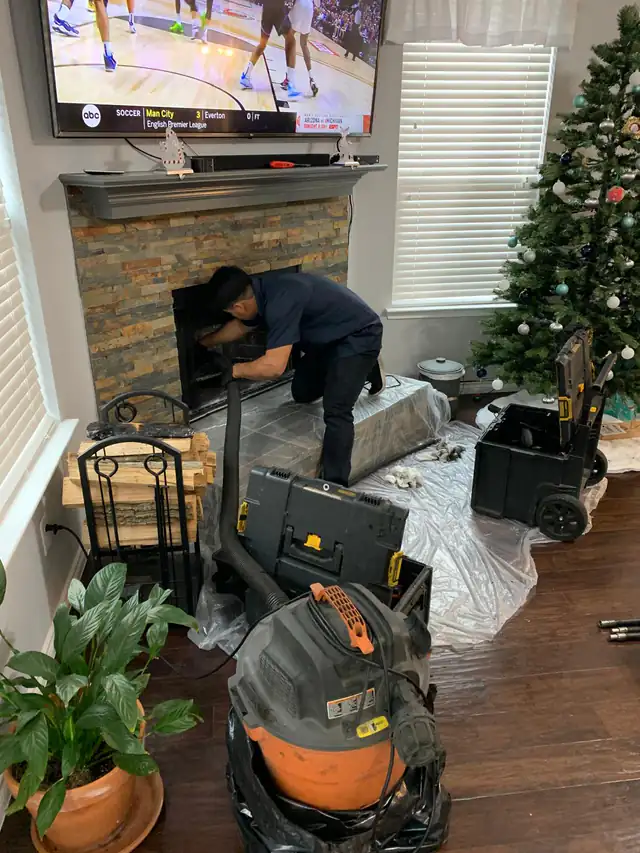
At the stone-front fireplace, with the hearth covered and a vacuum alongside 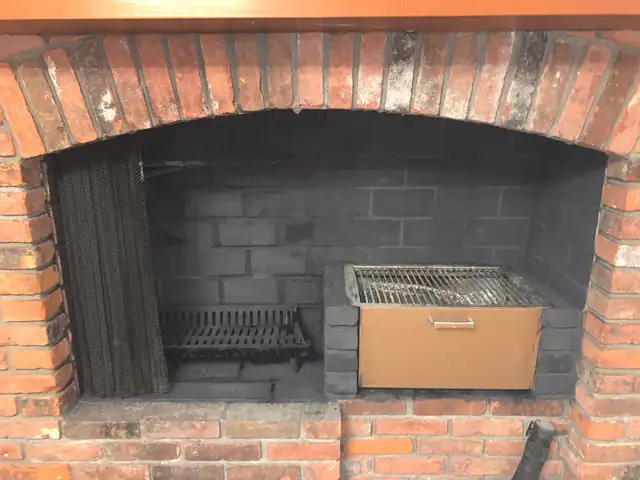
Firebox cleaned back to the brick, damper working 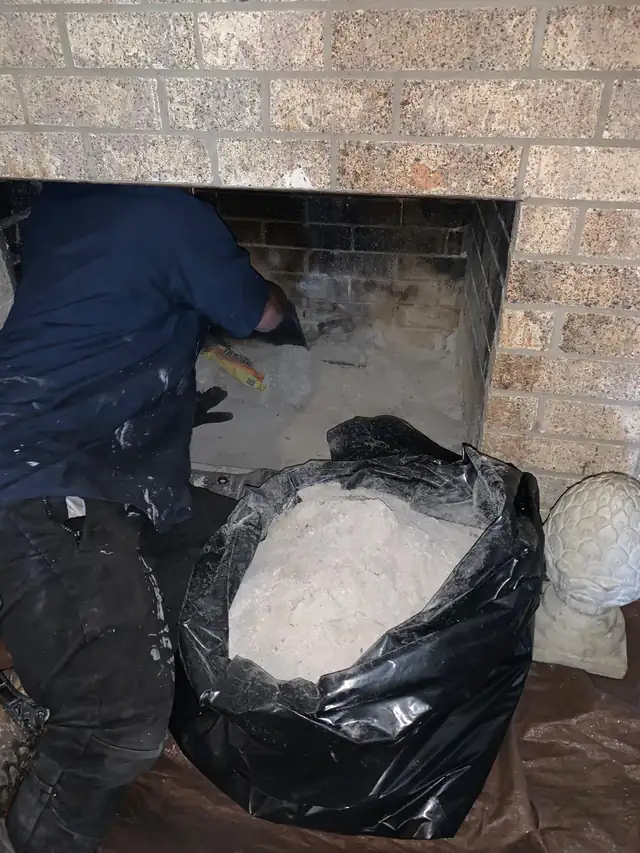
Clearing the firebox down to bare brick, floors covered
Meet the team
The people behind the work
Manny, Zack and Myke — meet the people behind Chimney Expert Solutions.
Our team and story →
Manny
Owner

Zack
Manager

Myke
Technician
FAQ
Chimney Sweep in Cleveland Heights: questions we hear
The upstairs fireplace hasn't been used since we bought the house. Is that a problem?
It is unknown territory rather than a problem, which is the reason to scan it before lighting anything. Long-unused Heights flues commonly turn out to contain nests, a damper rusted shut, cracked tile from a fire nobody documented, or an abandoned connection left open. Any of those is straightforward to deal with once it is on camera.
Our house has three flues in one chimney. Does each need its own service?
Each is inspected and treated on its own, because they age independently — in the Heights it is normal to find one flue in fair shape, one cracked and one abandoned. The efficiency is that one visit and one set-up covers all of them, and separate caps can often be replaced with a single custom multi-flue cover that also protects the crown.
Can you keep the original look if the chimney needs rebuilding?
Yes, and on these houses it is the point. Corbelling, brick blend, joint profile and chimney pots can all be reproduced. What it takes is documenting the existing detail in photographs before anything is dismantled, and a mason willing to match rather than simplify. It is worth asking any bidder specifically whether the detailing is in their number.
What should I do before you arrive?
Do not burn for at least 24 hours, and 48 is better — a warm firebox is a miserable place to work and hot ash and drop cloths do not mix. Clear a path to the fireplace, take fragile things off the mantel, and keep pets in another room. If you have an insert or a stove, tell us the make and model when you book so the right brushes are on the truck.
What if you find damage while you're in there?
You get photos, a plain explanation of what it is and what it does if left alone, and a written scope. No scare tactics: most of what we find can be scheduled rather than panicked over. What we will not do is sweep a chimney that is not safe to use and say nothing about it.
Free estimate
Chimney Sweep in Cleveland Heights?
Tell us what you’re seeing and we’ll call or text back to schedule a look — with photos of what we find and an honest read on what’s urgent and what can wait. That evidence-first method is the way we work on every job.
Call and tell us what the chimney's doing — if we're up on a roof, we'll call you back. Other ways to reach us are on the contact page, and Cleveland Heights is one of the communities we cover across Greater Cleveland.
Call216-647-1882