
Cuyahoga County, Ohio
Chimney Sweep & Cleaning in Shaker Heights, OH
Full mechanical sweep of the flue, smoke chamber and firebox — creosote out, dust contained, and a look at the whole system while we're in it.
What chimney sweep involves in Shaker Heights is set by the housing stock here: Planned-suburb 1920s architecture with prominent detailed chimneys — multi-fireplace houses, aging clay flues, slate roofs, and a neighborhood standard that makes matched masonry non-negotiable.
Shaker Heights was laid out by the Van Sweringen brothers as a planned garden suburb, built around rapid transit lines that still run down the middle of Shaker and Van Aken. The 1920s Tudors, Georgians and French-influenced houses that define Fernway, Lomond, Malvern, Ludlow, Onaway and the Boulevard neighborhoods were built with serious masonry: slate roofs, real brick and stone, and chimneys designed as part of the elevation rather than as a vent that had to go somewhere.
Creosote is what wood smoke leaves behind on the inside of a flue, and it is the fuel in nearly every chimney fire. It leaves the fire as vapor, condenses on any flue wall cool enough to catch it, and hardens over a season into something closer to tar than soot. A real sweep takes the flue back to bare liner with rods and brushes sized to that specific flue, works the smoke chamber and smoke shelf where the deposits sit heaviest, and finishes in the firebox, with the room sealed off and a HEPA vacuum running the whole time.
What we find on Shaker Heights chimneys that leads to chimney sweep
Century-old clay flues in multi-fireplace houses
A Shaker house with four fireplaces has four independent flue histories inside one or two stacks, and they were all built with clay tile in the 1920s. The joints between tile sections are the weak point, and a hundred years of heating cycles, condensation and freeze-thaw at the top of the stack washes them out. The result is a flue that is a series of separate tiles with gaps rather than a continuous passage. It is invisible without a camera and it is the single most common serious finding here.
Selling a Shaker house with an unknown chimney
If your sale involves a municipal point-of-sale inspection, the chimney is one of the items most likely to generate a question nobody can answer. A camera scan before listing resolves it on your terms rather than a buyer's, and on a house at this price point the ambiguity is worth more to a buyer's agent than the repair usually costs. Requirements vary between suburbs and they change, so confirm the current process with the city.
How we decide whether a flue actually needs sweeping
The working standard in the trade is that about an eighth of an inch of accumulation warrants sweeping, and a quarter inch means stop burning until it is done. We measure rather than assume, and the answer genuinely varies. A chimney that sat unused for two years may need very little brushing and a serious camera inspection instead, because the risk there is a nest, a shifted tile or a rusted damper, not creosote. A chimney that heated a house all winter on borderline wood can need a second visit before spring.
If we get in there and the flue does not need brushing, you get told that. There is no version of this trade where inventing work is good business, and the photos make the call verifiable either way.
The Northeast Ohio timing problem
Every chimney company in Greater Cleveland gets the same phone calls in the same two weeks of October, and nothing about that is good for homeowners. Booking a sweep between late spring and early fall gets you a real appointment slot instead of a queue position.
The bigger reason to go early is what happens if the sweep finds masonry work. Mortar needs sustained temperatures above roughly 40°F to cure properly, so the masonry season here runs about April through November. A failed crown discovered in late September may not get properly rebuilt until spring. Found in June, it is a scheduled repair rather than a winter of water going into the stack.
This page covers chimney sweep as it plays out in Shaker Heights. The full chimney sweep & cleaning page walks the whole job — every stage, what changes the scope, and what we do about each of them. For everything else we handle in this suburb, see chimney services in Shaker Heights.
What a sweep with us includes
- Drop cloths, sealed fireplace opening and HEPA dust control before a brush touches the flue
- Mechanical sweep of the full flue length, with brush size and shape matched to your liner
- Smoke chamber and smoke shelf hand-cleaned — the corners most sweeps skip
- Firebox and ash dump cleared, damper cleaned and operated through full travel
- A visual once-over of the whole system, with photos of anything that needs attention
- Straight advice at the end: what's urgent, what can wait, what's fine
Our work
Chimney Sweep & Cleaning, photographed on the job
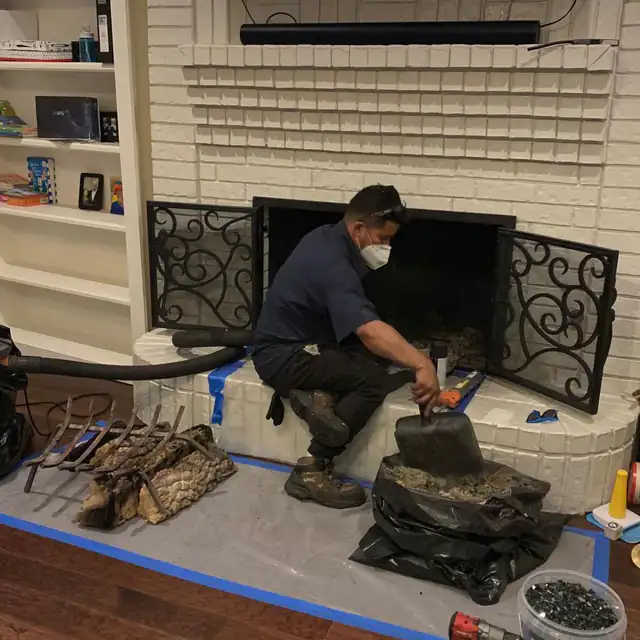
Drop cloths down and a vacuum on the hearth before anything is opened 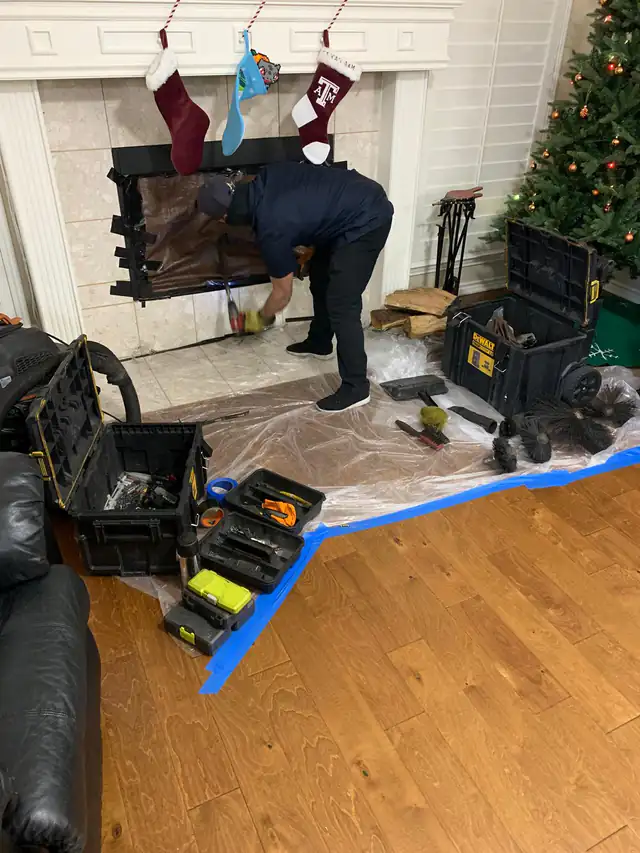
Working at the protected fireplace opening, with brushes and tools on covered floors 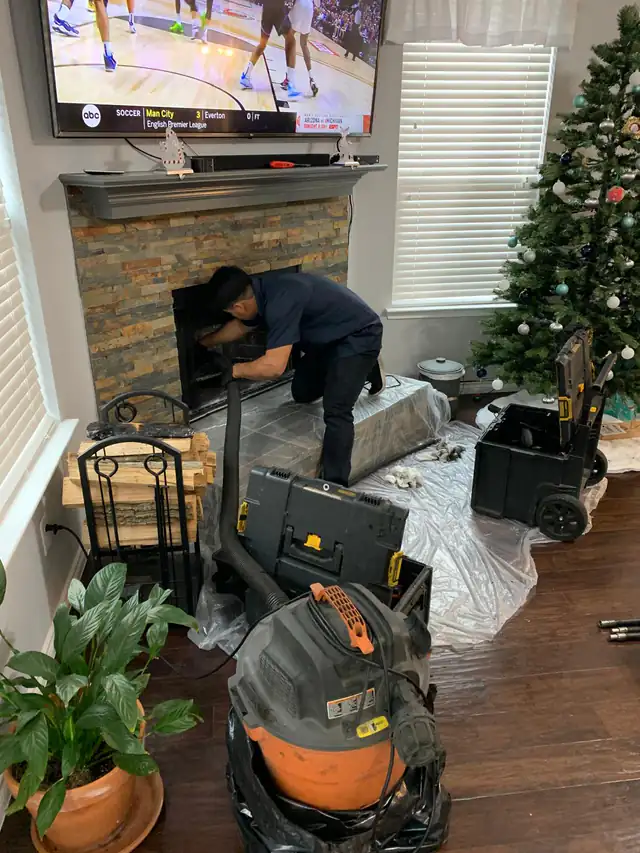
At the stone-front fireplace, with the hearth covered and a vacuum alongside 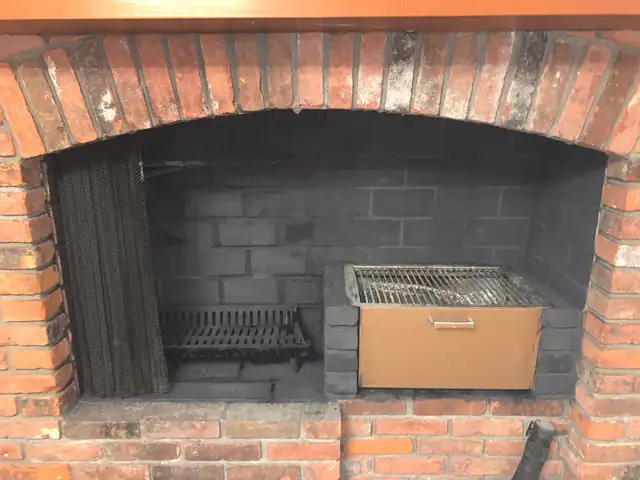
Firebox cleaned back to the brick, damper working 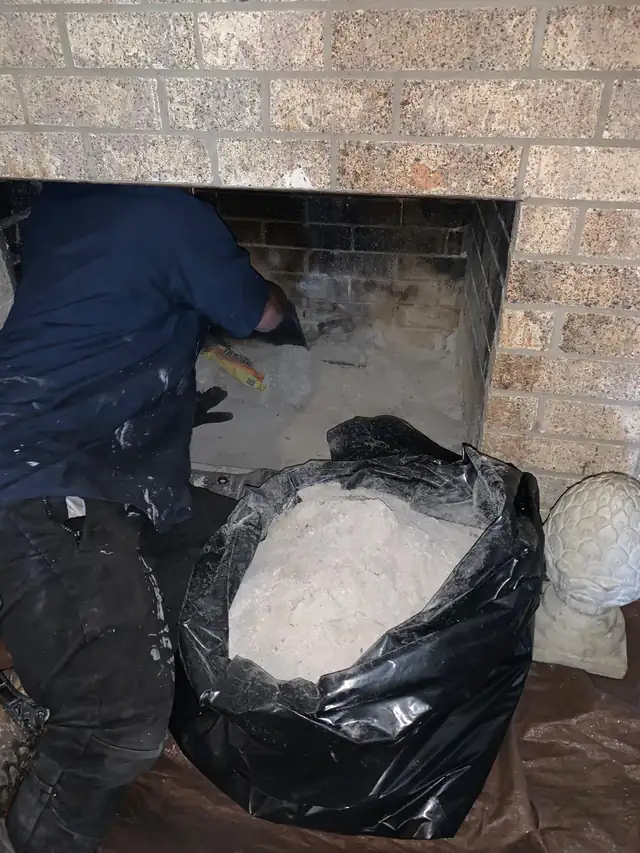
Clearing the firebox down to bare brick, floors covered
Meet the team
The people behind the work
Manny, Zack and Myke — meet the people behind Chimney Expert Solutions.
Our team and story →
Manny
Owner

Zack
Manager

Myke
Technician
FAQ
Chimney Sweep in Shaker Heights: questions we hear
Is it worth relining a fireplace we only use a few times a year?
If the flue is damaged, yes — frequency does not change what a cracked liner does during the fires you do light, and the risk is per-fire rather than per-year. If the flue is sound, we will tell you that instead. Sorting out which of those two you have is exactly what an inspection is for, and it is a much smaller decision than the reline.
How disruptive is chimney work on a house this size?
Most of it happens outside and above you. The parts that come indoors are the inspection, the sweep and any firebox or damper work, all of which are set up with drop cloths and dust control. For rebuild work, the planning conversation is about access, protection of the roof and grounds, and where material stages — which on a Shaker lot is usually straightforward.
Can original chimney pots be kept?
Yes, and they should be where they are part of the design. Pots can be reset, and where one has cracked, salvage and reproduction options exist. What a pot does not do is keep rain out — it is an open flue that happens to be taller — so it still wants a cap, and there are caps made to sit with a pot without ruining the look.
Do you sweep from the roof or from inside the house?
Whichever puts less risk in your house. Roof access, cap design and the pitch and material of the roof all factor in — we will not walk a slate roof that will break underfoot. Both directions clean the same flue; the part that decides whether your living room stays clean is the sealed opening and the vacuum at the firebox, not which end the rods go in.
What should I do before you arrive?
Do not burn for at least 24 hours, and 48 is better — a warm firebox is a miserable place to work and hot ash and drop cloths do not mix. Clear a path to the fireplace, take fragile things off the mantel, and keep pets in another room. If you have an insert or a stove, tell us the make and model when you book so the right brushes are on the truck.
Free estimate
Chimney Sweep in Shaker Heights?
Tell us what you’re seeing and we’ll call or text back to schedule a look — with photos of what we find and an honest read on what’s urgent and what can wait. That evidence-first method is the way we work on every job.
Call and tell us what the chimney's doing — if we're up on a roof, we'll call you back. Other ways to reach us are on the contact page, and Shaker Heights is one of the communities we cover across Greater Cleveland.
Call216-647-1882