
Cuyahoga County, Ohio
Chimney Leak Repair & Waterproofing in Shaker Heights, OH
Finding where the water actually gets in — crown, cap, flashing, masonry or condensation — and fixing that, not caulking symptoms.
What chimney leak repair involves in Shaker Heights is set by the housing stock here: Planned-suburb 1920s architecture with prominent detailed chimneys — multi-fireplace houses, aging clay flues, slate roofs, and a neighborhood standard that makes matched masonry non-negotiable.
Shaker Heights was laid out by the Van Sweringen brothers as a planned garden suburb, built around rapid transit lines that still run down the middle of Shaker and Van Aken. The 1920s Tudors, Georgians and French-influenced houses that define Fernway, Lomond, Malvern, Ludlow, Onaway and the Boulevard neighborhoods were built with serious masonry: slate roofs, real brick and stone, and chimneys designed as part of the elevation rather than as a vent that had to go somewhere.
A leaking chimney is a symptom with at least five different causes, and fixing the wrong one is why so many chimney leaks come back. Water can enter through a cracked crown, a missing or undersized cap, failed flashing where the chimney meets the roof, saturated porous masonry, or condensation forming inside an oversized flue. Each of those has a different repair, and none of them is solved by sealant on whatever surface was easiest to reach. Our leak work starts with diagnosis at roof level and inside the house, so the fix targets the actual entry point.
What we find on Shaker Heights chimneys that leads to chimney leak repair
Century-old clay flues in multi-fireplace houses
A Shaker house with four fireplaces has four independent flue histories inside one or two stacks, and they were all built with clay tile in the 1920s. The joints between tile sections are the weak point, and a hundred years of heating cycles, condensation and freeze-thaw at the top of the stack washes them out. The result is a flue that is a series of separate tiles with gaps rather than a continuous passage. It is invisible without a camera and it is the single most common serious finding here.
Repair that has to survive the streetscape as well as the winter
Shaker takes exteriors seriously and so do its homeowners, which means like-for-like matching is effectively the standard for any visible chimney work. Practically that suits us, since matched materials and reproduced profiles are how we quote period masonry regardless. What it does mean is that a low bid which quietly assumes modern brick and a simplified top is not comparable to a bid that includes the match. Confirm any current exterior-review or permit requirements with the city's building department before a rebuild.
Why sealing the whole chimney is usually a mistake
The instinct when a masonry chimney leaks is to coat it, and the products that come to hand at a hardware store are mostly film-forming: acrylic sealers, masonry paint, silicone. In a freeze-thaw climate these do real damage. Brick and mortar have to be able to release moisture outward. A film-forming coating stops that while doing nothing about the water arriving from the crown or the flashing, so the moisture that gets in stays in — and every freeze then works on masonry that cannot dry. Painted and sealed chimneys spall spectacularly, and the damage shows up across the whole face rather than at one entry point.
Where a repellent is genuinely appropriate, the product class matters: silane and siloxane repellents penetrate and repel liquid water while remaining vapor permeable, so the wall still breathes. And it is applied after the joints are sound, never as a substitute for pointing them. A repellent is a raincoat, not a roof, and it will never fix a crown or a piece of flashing.
What water does if the leak is left
The stain on the ceiling is the least of it. Once water has an established route into a chimney, three things happen in parallel. The masonry deteriorates faster, because every wet freeze widens the path the water is already using. The framing around the chimney takes moisture it was never designed to take, and rot in a concealed chase around a chimney is both slow and expensive to find. And inside the flue, water attacks mortar joints between the flue tiles, so a water problem at the top becomes a liner problem in the middle.
There is a fourth, less obvious one: a chimney with water in it smells. The musty odour that shows up in a fireplace in warm weather is damp deposits, and it is a reliable early sign of a water path that has not yet produced a visible stain. Leak repairs sit near the top of the fix-this-season list, not because a small stain is an emergency, but because the path is established and Cleveland winters are very good at widening established paths.
This page covers chimney leak repair as it plays out in Shaker Heights. The full chimney leak repair & waterproofing page walks the whole job — every stage, what changes the scope, and what we do about each of them. For everything else we handle in this suburb, see chimney services in Shaker Heights.
How we handle a leaking chimney
- Roof-level diagnosis: crown, cap, flashing, masonry and shoulder — photographed
- Interior check: firebox, smoke chamber and damper for staining, rust and damp
- Flashing repair or a full re-flash where the roofline seal has failed
- Crown repair or full recast with a drip edge and an expansion joint at the flue
- Vapor-permeable masonry repellent on porous brick — never paint or film-forming sealers
- An honest call on whether the 'leak' is actually flue condensation
- The fix in writing, matched to the diagnosed entry point
Our work
Chimney Leak Repair & Waterproofing, photographed on the job
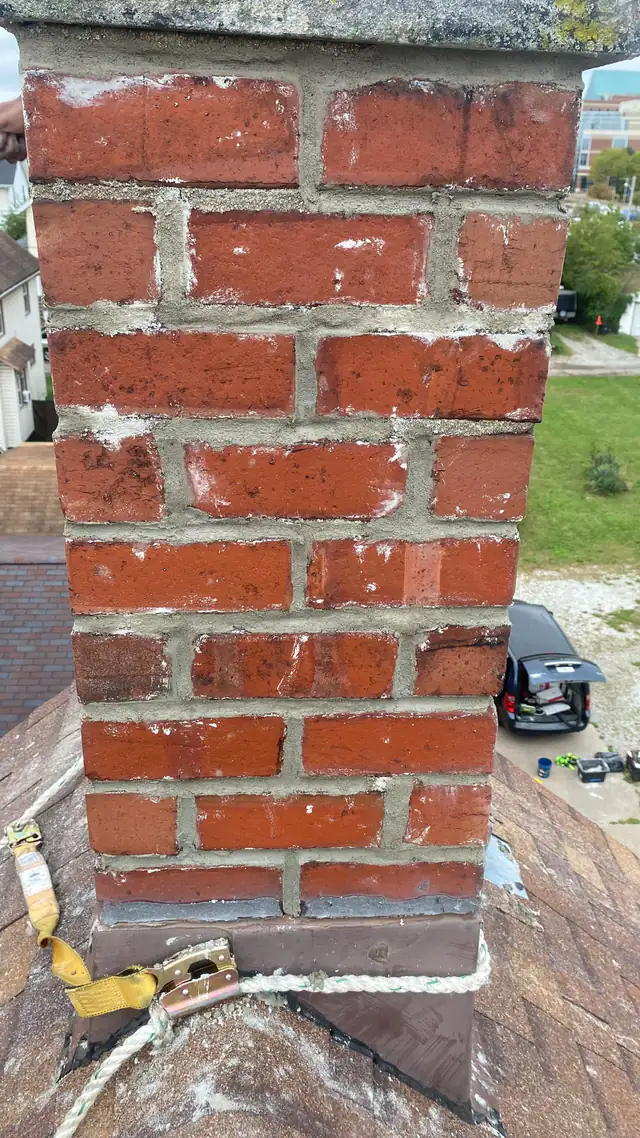
Roped in on a steep roof — repointed, flashing sealed 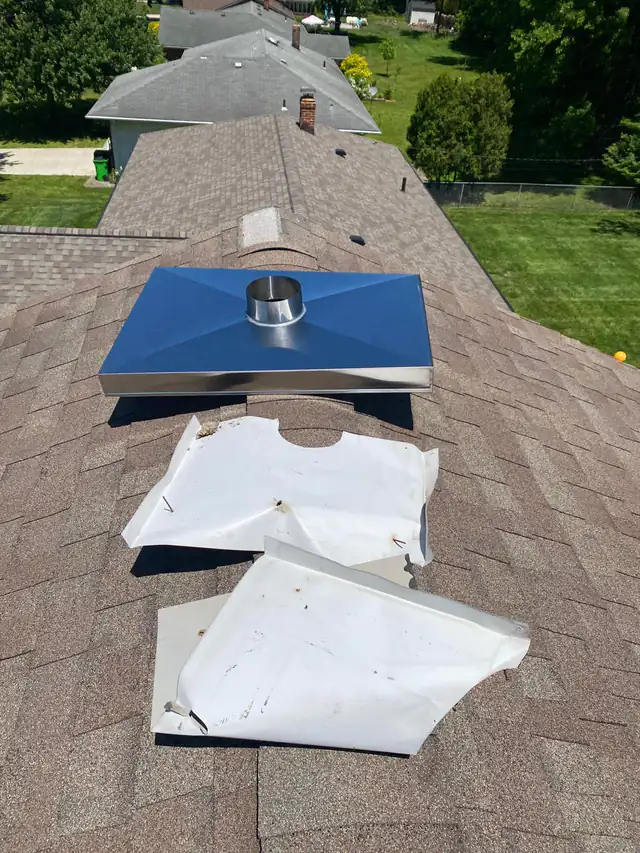
Replacement chase cover beside the removed cover sections on the roof 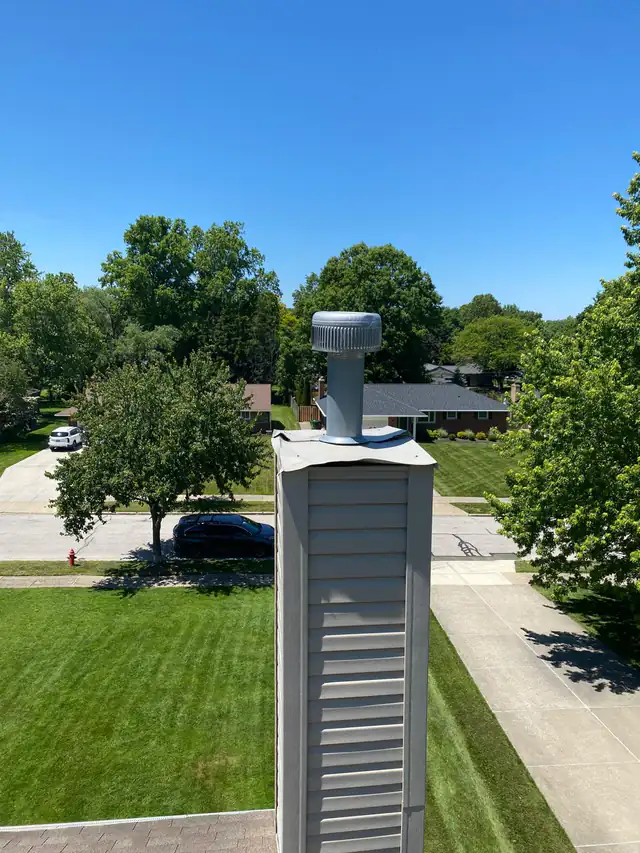
Before — the old chase cover, with bent and raised edges around the vent 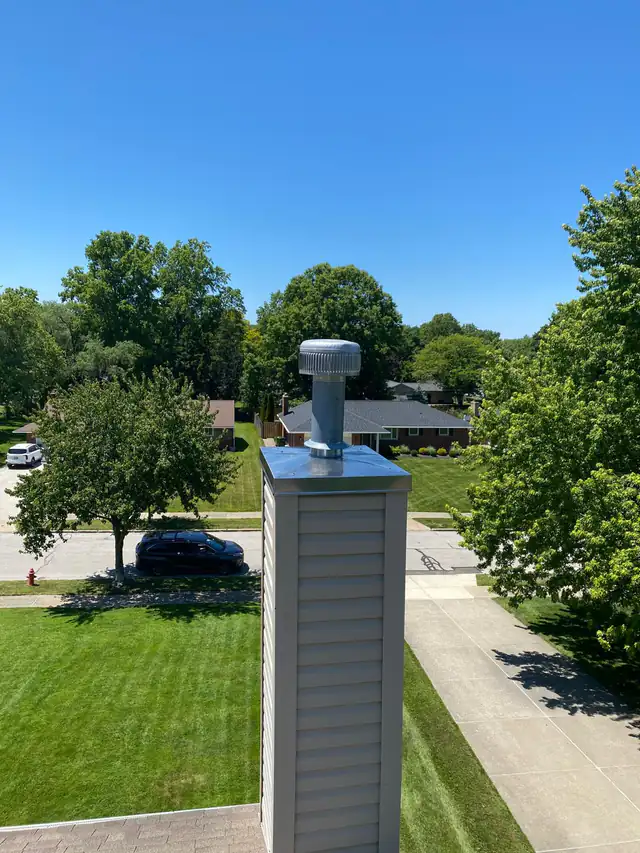
After — replacement chase cover fitted around the vent 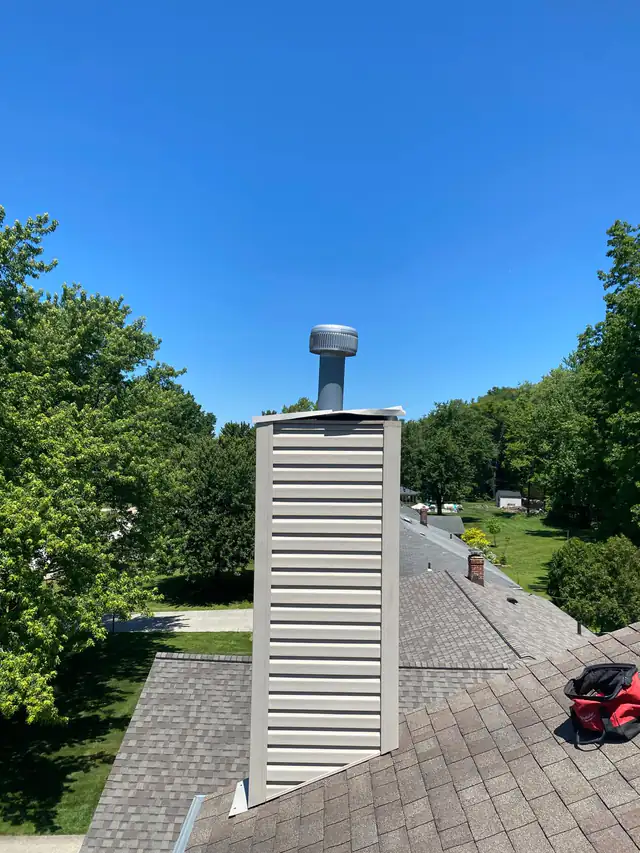
Before — the old cover from the roof side, with a raised edge 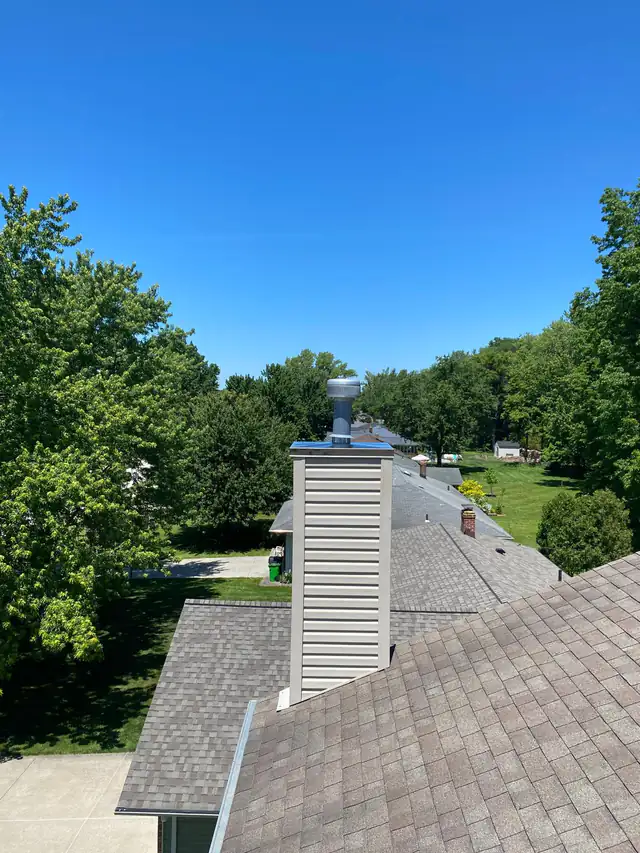
After — the replacement cover and chase, viewed from the roof
Meet the team
The people behind the work
Manny, Zack and Myke — meet the people behind Chimney Expert Solutions.
Our team and story →
Manny
Owner

Zack
Manager

Myke
Technician
FAQ
Chimney Leak Repair in Shaker Heights: questions we hear
Can original chimney pots be kept?
Yes, and they should be where they are part of the design. Pots can be reset, and where one has cracked, salvage and reproduction options exist. What a pot does not do is keep rain out — it is an open flue that happens to be taller — so it still wants a cap, and there are caps made to sit with a pot without ruining the look.
How disruptive is chimney work on a house this size?
Most of it happens outside and above you. The parts that come indoors are the inspection, the sweep and any firebox or damper work, all of which are set up with drop cloths and dust control. For rebuild work, the planning conversation is about access, protection of the roof and grounds, and where material stages — which on a Shaker lot is usually straightforward.
Should the chimney be waterproofed as routine maintenance?
Not as routine, no. A repellent is worth doing on masonry that is genuinely absorbing water and is otherwise sound, and it is pointless or harmful anywhere else. On a chimney with open joints, the joints get pointed first. On a chimney with a cracked crown, the crown is the actual hole. Selling a spray-on treatment to a chimney that needs masonry work is one of the more common bad practices in this trade.
My roofer says it's the chimney and the chimney guy says it's the roof. Who's right?
That standoff almost always means flashing, the one joint where the two trades meet and neither owns it. We diagnose the whole intersection together — flashing, counterflashing, crown, cap and masonry — and give you one answer with photographs behind it. If the finding genuinely is the roof, we will tell you that too.
Free estimate
Chimney Leak Repair in Shaker Heights?
Tell us what you’re seeing and we’ll call or text back to schedule a look — with photos of what we find and an honest read on what’s urgent and what can wait. That evidence-first method is the way we work on every job.
Call and tell us what the chimney's doing — if we're up on a roof, we'll call you back. Other ways to reach us are on the contact page, and Shaker Heights is one of the communities we cover across Greater Cleveland.
Call216-647-1882