
Cuyahoga County, Ohio
Chimney Repair & Rebuilds in Cleveland, OH
Masonry repair from spot fixes to full stack rebuilds — spalled brick, failed joints, and chimneys the freeze-thaw cycle has taken apart.
What chimney repair involves in Cleveland is set by the housing stock here: 1890s–1950s stock across most neighborhoods: soft pre-war brick, unlined or clay-tile flues, doubles with multi-flue stacks, and utility chimneys serving furnaces and water heaters.
Cleveland is a chimney town, and the reason is in the building dates. Ohio City, Tremont, Detroit-Shoreway, Old Brooklyn, West Park, Slavic Village and Collinwood were largely built out between the 1890s and the 1950s, in an era when every house got at least one masonry chimney and a great many got two or three. Those stacks are now anywhere from seventy to a hundred and thirty years old, and they have spent every one of those winters in one of the harder masonry climates in the country.
Northeast Ohio is close to a worst case for exterior masonry. A Cleveland chimney runs through dozens of freeze-thaw cycles every winter: water finds a hairline crack or an open joint, freezes, expands by about nine percent, and levers the masonry apart a little more each time. Repeat that across eighty winters on the most weather-exposed brickwork the house owns, and you get the local pattern. Brick faces shed, mortar goes soft and sandy, top courses shift, and eventually a stack that was fine at the last home sale needs rebuilding.
What we find on Cleveland chimneys that leads to chimney repair
Unlined and clay-tile flues in the pre-1940 stock
Flue liners were not universal building practice here until well into the twentieth century, and a substantial share of Cleveland chimneys from before the war have bare brick flues with washed-out mortar joints between the courses. Where clay tile was used, eight decades of thermal cycling and moisture have generally cracked it and eaten the joints. Neither condition is visible from the firebox or the yard, and both mean combustion gases are in contact with masonry that was never meant to contain them.
Utility flues orphaned by furnace upgrades
When an old gravity or mid-efficiency furnace is replaced with a high-efficiency unit venting through PVC out a side wall, the water heater is usually left on the masonry chimney by itself. A small appliance on a flue sized for two runs cool, condenses acidic moisture on its own walls, and dissolves the tile and mortar from the inside over a decade while everything looks fine from the basement. The failure mode there is carbon monoxide, not a fire you would notice.
Doubles, and nobody sure which flue does what
On a Cleveland Double it is common to find one stack with three or four flues: an upstairs fireplace, a downstairs fireplace, the furnace, and sometimes an abandoned one from a coal or a gravity system nobody remembers. They age independently, so a scan frequently finds one sound, one cracked, and one that was disconnected mid-conversion and left open at the top. Sorting out which flue serves what is genuinely part of the first visit, and it is not something a homeowner can be expected to know.
How freeze-thaw takes a chimney apart
Brick and mortar are porous. They take on water in a rain and give it back in dry weather, and in a normal climate that is fine. The problem is what happens when the water is still in there and the temperature crosses freezing. Ice occupies more space than the water it came from, so every wet freeze pushes outward from inside the pore structure. One cycle does nothing measurable. A few thousand cycles reduce the face of a brick to something that flakes off in sheets.
Greater Cleveland is unusually good at generating those cycles. Lake-effect weather keeps masonry wet for long stretches, and our winters swing across the freeze line repeatedly rather than settling below it. That combination — wet masonry and frequent crossings — is worse for brick than a colder, drier winter would be.
The chimney gets the worst of it for structural reasons. It is exposed on all four sides instead of one, it has no roof over it except its own crown, it sits at the highest and windiest point of the house, and it is the one masonry element that also has hot gas running through the middle of it. Chimneys fail first, and they fail from the top down.
Matching brick and mortar on older Cleveland houses
On the pre-war housing stock in Cleveland, Lakewood, Cleveland Heights and Shaker Heights, matching is not a cosmetic nicety. A chimney is one of the most visible elements on the front elevation of a Tudor or a foursquare, and a rebuild in the wrong brick blend is something you look at for the next thirty years. Much of the brick used across this housing stock has close modern equivalents, and salvaged brick is available for the rest. Mortar can be tinted and struck to match the original joint color and profile.
The technical half of matching matters more than the visual half. Mortar must always be softer than the brick around it. Pre-war Cleveland brick was fired softer and more porous than modern brick, and it was laid in lime-rich mortar that could move and breathe with it. Point that wall with hard modern Portland-heavy mortar and the joints become stronger than the units. Seasonal movement and trapped moisture then have to escape through the brick instead of the joint, and the brick faces spall off. A great deal of the spalling on inner-ring suburb chimneys was caused by a repointing job that was supposed to help.
This page covers chimney repair as it plays out in Cleveland. The full chimney repair & rebuilds page walks the whole job — every stage, what changes the scope, and what we do about each of them. For everything else we handle in this suburb, see chimney services in Cleveland.
Repair and rebuild work we take on
- Spalled and cracked brick replacement, matched to the existing brick
- Partial rebuilds from the roofline or shoulder up
- Full chimney rebuilds where the stack is beyond saving
- Crown replacement as part of any rebuild — a rebuild under a bad crown is wasted money
- Flue tile replacement while the stack is open, where it is warranted
- Firebox masonry and refractory panel repair
- Written scope with photos before, during and after the work
Our work
Chimney Repair & Rebuilds, photographed on the job
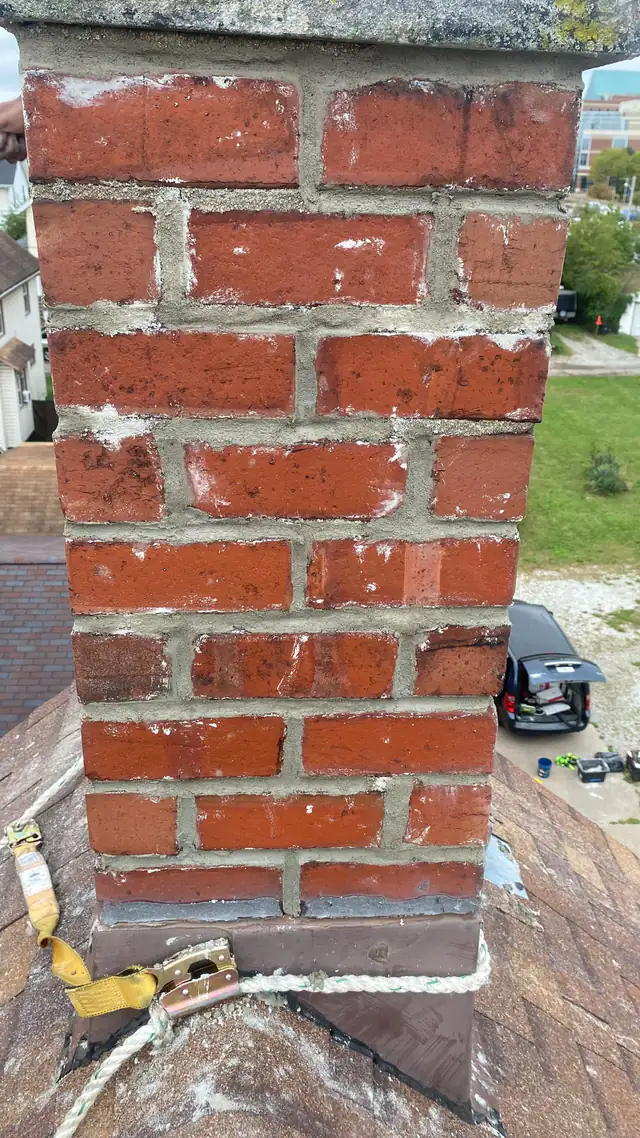
Roped in on a steep roof — repointed, flashing sealed 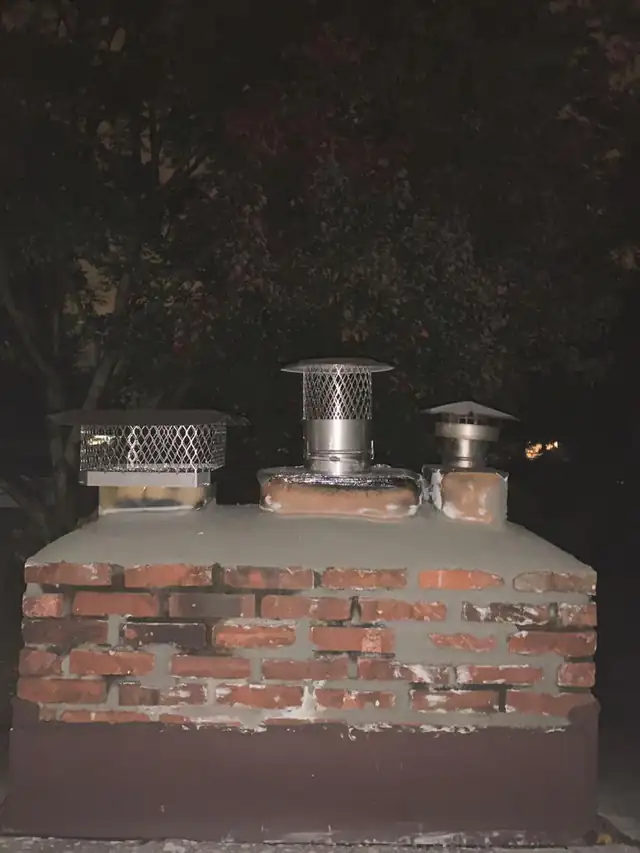
Three flues, three caps, one new crown 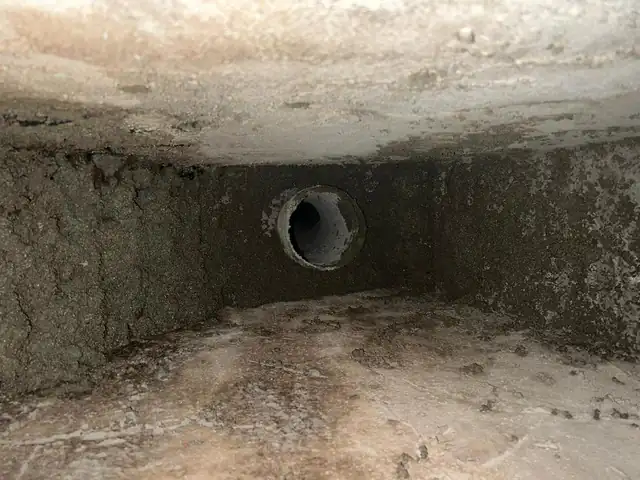
Inside the smoke chamber — the flue opening above the firebox 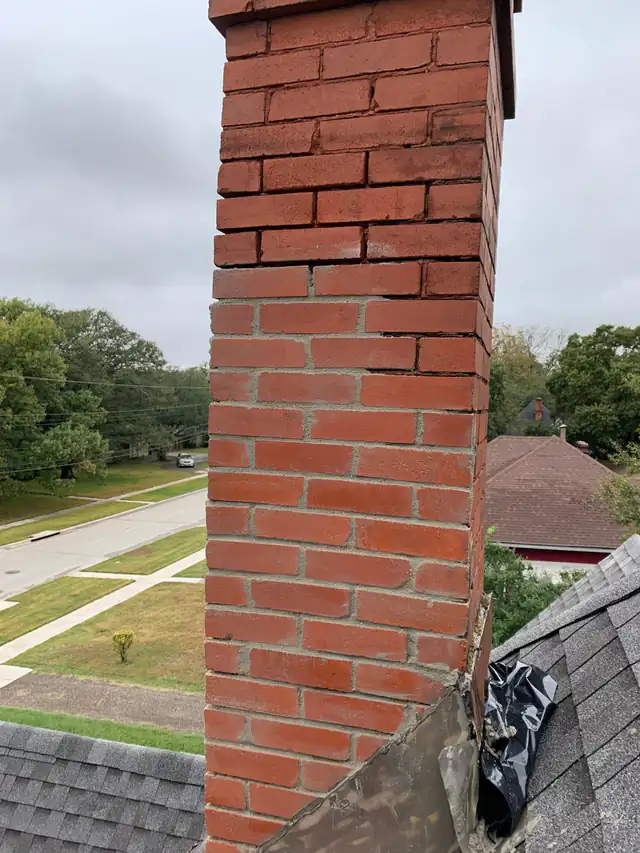
Mid-job — fresh joints below, the old eroded joints still waiting above 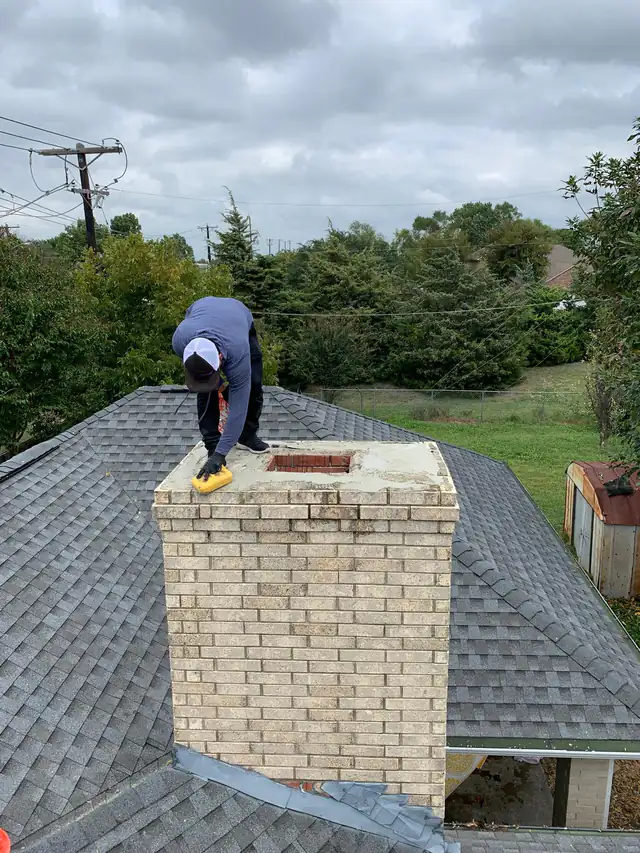
Finishing a fresh crown around the flue 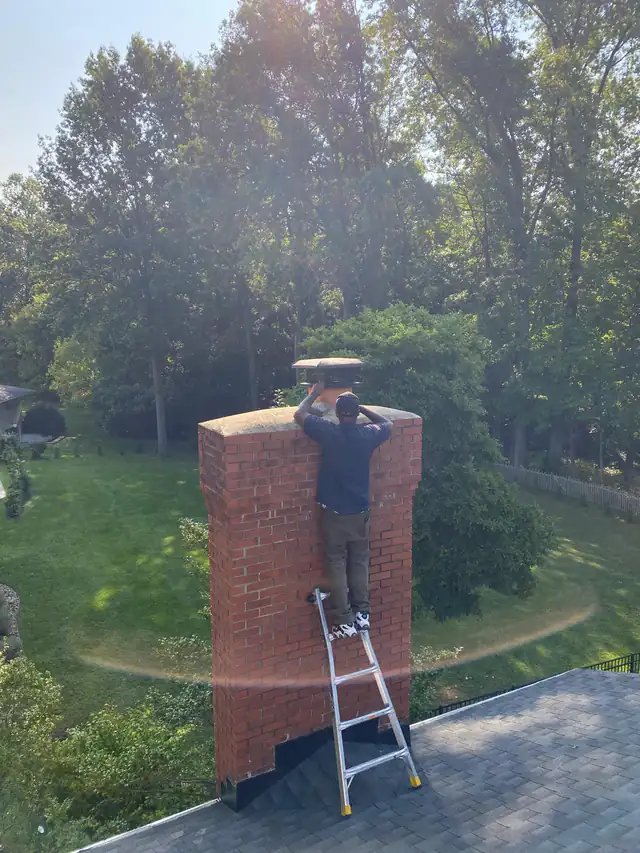
Ladder work on a tall stack — fitting the cap
Meet the team
The people behind the work
Manny, Zack and Myke — meet the people behind Chimney Expert Solutions.
Our team and story →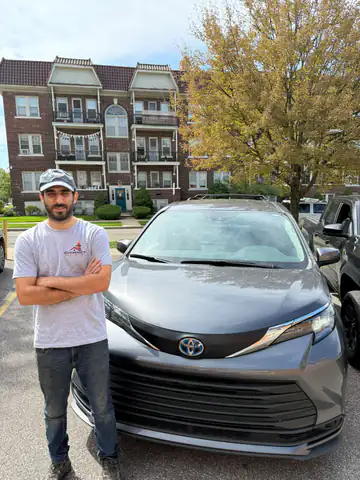
Manny
Owner
Zack
Manager
Myke
Technician
FAQ
Chimney Repair in Cleveland: questions we hear
When should I book ahead of winter?
Late spring through early fall. Every chimney calendar in Northeast Ohio fills in the same two weeks of October. Booking off-season also leaves runway for anything the sweep turns up, because mortar work needs sustained temperatures above roughly 40°F and the masonry season here ends around November whether the queue is finished or not.
Do you work in all Cleveland neighborhoods?
East side, west side and everywhere between. A lot of the work runs through the pre-war neighborhoods where the housing and its chimneys are oldest — Ohio City, Tremont, Old Brooklyn, West Park, Slavic Village, Collinwood and the streets around them — because that is where the unlined flues and the century-old masonry are.
My chimney only vents the furnace. Does it still need service?
Yes, and it is the most under-inspected chimney in the average Cleveland house. Old oversized flues condense acidic exhaust that eats clay tile and mortar from inside, and a restricted or collapsing utility flue is a carbon monoxide problem rather than a comfort one. If the furnace or water heater was replaced in the last decade and nobody looked at the chimney afterwards, that is worth a camera scan on its own.
How long does a chimney rebuild take?
A partial rebuild above the roofline on a straightforward stack is usually a small number of working days, weather permitting. A full rebuild, a difficult roof, or a chimney with detailing to reproduce takes longer. The unpredictable variable is weather rather than labor: mortar work stops for rain and for cold, and we would rather lose a day than lay masonry that will not cure.
Does chimney repair need a permit in Cuyahoga County?
It depends on the municipality and on the scope — like-for-like repair is generally treated differently from structural rebuilding, and the inner-ring suburbs vary quite a bit in how they handle exterior work. We raise it during the quote for anything structural, and the requirements are worth confirming with your city's building department, because they do change.
Free estimate
Chimney Repair in Cleveland?
Tell us what you’re seeing and we’ll call or text back to schedule a look — with photos of what we find and an honest read on what’s urgent and what can wait. That evidence-first method is the way we work on every job.
Call and tell us what the chimney's doing — if we're up on a roof, we'll call you back. Other ways to reach us are on the contact page, and Cleveland is one of the communities we cover across Greater Cleveland.
Call216-647-1882