
Cuyahoga County, Ohio
Chimney Sweep & Cleaning in Lakewood, OH
Full mechanical sweep of the flue, smoke chamber and firebox — creosote out, dust contained, and a look at the whole system while we're in it.
What chimney sweep involves in Lakewood is set by the housing stock here: Pre-1930 colonials, foursquares and doubles almost wall to wall — soft brick, original struck-mortar crowns, unlined flues, and stacks that have outlived several owners' memories of what they vent.
Lakewood is one of the most densely populated cities in Ohio, and almost all of it went up before 1930. Colonials, foursquares and the classic Lakewood doubles line the grid from Detroit and Madison up to Clifton and Lake, with the Birdtown streets in the southeast corner among the oldest of it. Nearly every one of those houses has original masonry chimneys that are now closing on a century of lake weather.
Creosote is what wood smoke leaves behind on the inside of a flue, and it is the fuel in nearly every chimney fire. It leaves the fire as vapor, condenses on any flue wall cool enough to catch it, and hardens over a season into something closer to tar than soot. A real sweep takes the flue back to bare liner with rods and brushes sized to that specific flue, works the smoke chamber and smoke shelf where the deposits sit heaviest, and finishes in the firebox, with the room sealed off and a HEPA vacuum running the whole time.
What we find on Lakewood chimneys that leads to chimney sweep
Sealed fireplaces people want back
Bringing a long-closed Lakewood fireplace back into use is one of the most common requests on these streets, and the answer is genuinely condition-dependent rather than a foregone conclusion. The sequence is camera inspection first, because the flue decides everything, then usually a sweep, a stainless liner if the tile has failed or was never there, damper work, and a cap. Sometimes the flue turns out to be sound and the job is small. Either way you see the footage before deciding anything.
Doubles: one stack, two units, several flues
The Lakewood double puts two households on one chimney, and after a century of furnace replacements, fireplace conversions and unit-by-unit renovations, it is normal to find flues nobody can account for. We routinely scan a double's stack and find one flue in fair shape, one cracked, and one abandoned and left open at the top, collecting rain into the middle of the house. Establishing what serves what is the first job, and it usually surprises the owner.
Soft pre-war brick and the wrong mortar
This is the defining Lakewood repair problem. Brick fired before the war is softer and more porous than modern brick, and it was laid in lime-rich mortar that could move and breathe with it. A great deal of the spalling on Lakewood chimneys was caused by a well-meant repointing job done in hard modern Portland-heavy mix: the joint ends up stronger than the brick, so moisture and movement escape through the brick faces instead, and they pop off. On a Lakewood chimney the mortar mix is an engineering decision, not a detail.
What makes a chimney build creosote faster
If you have been told you need sweeping more often than a neighbour with the same house, one of these is usually why. Fixing the cause is cheaper than sweeping around it.
- Wet wood. Freshly cut wood is roughly half water by weight; seasoned firewood should be near 20%. Wood that has not been split, stacked and covered for a year spends the first part of every fire boiling water instead of making heat, and cool smoke deposits fast.
- Smoldering fires. Damping a stove or insert right down overnight is the classic creosote factory — long, cool, oxygen-starved burns put the maximum amount of unburned gas up a cold flue.
- An oversized flue. Common in Cleveland after a wood fireplace is converted to gas, or a big open firebox is replaced with a small insert. Exhaust slows, cools, and condenses on the way out.
- An exterior chimney. A stack running up the outside of the house never holds heat the way an interior one does. On a January night in a lake-effect wind, that flue is a condenser.
- A short or poorly terminated chimney. Draft comes from height and temperature difference. A stack that barely clears the roofline never develops much of either.
- Soft woods and construction scrap. Pine and spruce leave more resin; painted, glued or treated wood leaves deposits you do not want in a flue at all.
What happens if it does not get done
Two failure paths, and they look nothing alike. The first is fire. Creosote ignites at temperatures an ordinary hot fire reaches without trying, and a chimney fire is often not the dramatic roaring event people expect. Plenty of them are slow and nearly silent, and the only evidence is found later: puffed, honeycombed deposits, warped damper, cracked flue tiles, a cap discolored by heat. The tiles are the problem. Once thermal shock has cracked them, the flue no longer contains what it is supposed to contain, and the next fire has a path toward the framing that surrounds every masonry chimney.
The second is blockage, and it kills quietly. Nests, leaf litter, fallen tile shards and heavy deposits all reduce the usable flue area. Exhaust that cannot get out comes back in, and with any fuel-burning appliance that means carbon monoxide. This is why we look at furnace and water-heater flues with the same seriousness as fireplaces, and why working CO alarms on every level of the house, near the sleeping areas, are not optional in a home with any combustion appliance.
This page covers chimney sweep as it plays out in Lakewood. The full chimney sweep & cleaning page walks the whole job — every stage, what changes the scope, and what we do about each of them. For everything else we handle in this suburb, see chimney services in Lakewood.
What a sweep with us includes
- Drop cloths, sealed fireplace opening and HEPA dust control before a brush touches the flue
- Mechanical sweep of the full flue length, with brush size and shape matched to your liner
- Smoke chamber and smoke shelf hand-cleaned — the corners most sweeps skip
- Firebox and ash dump cleared, damper cleaned and operated through full travel
- A visual once-over of the whole system, with photos of anything that needs attention
- Straight advice at the end: what's urgent, what can wait, what's fine
Our work
Chimney Sweep & Cleaning, photographed on the job
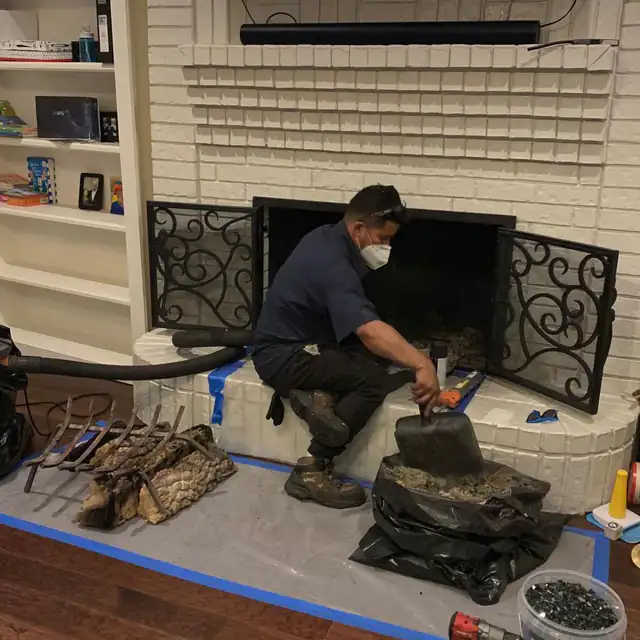
Drop cloths down and a vacuum on the hearth before anything is opened 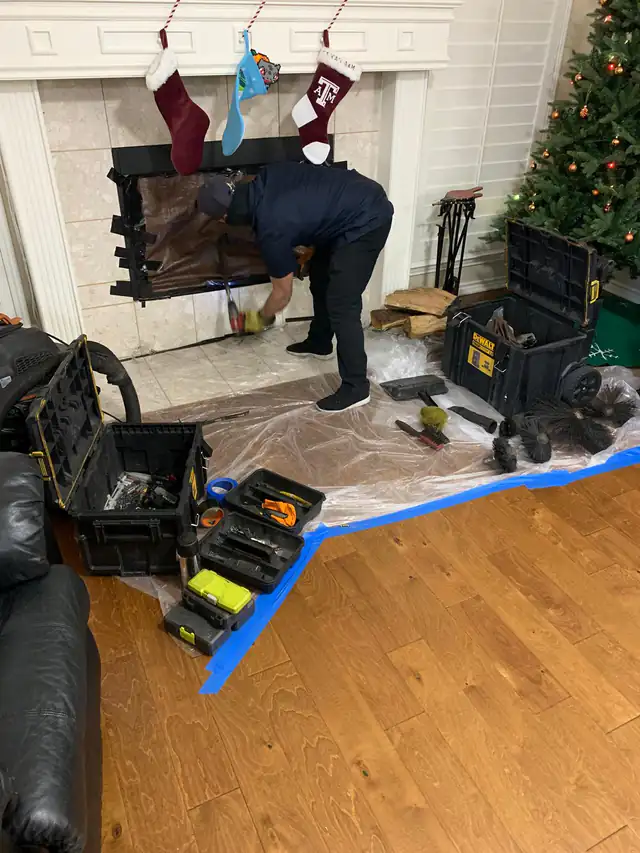
Working at the protected fireplace opening, with brushes and tools on covered floors 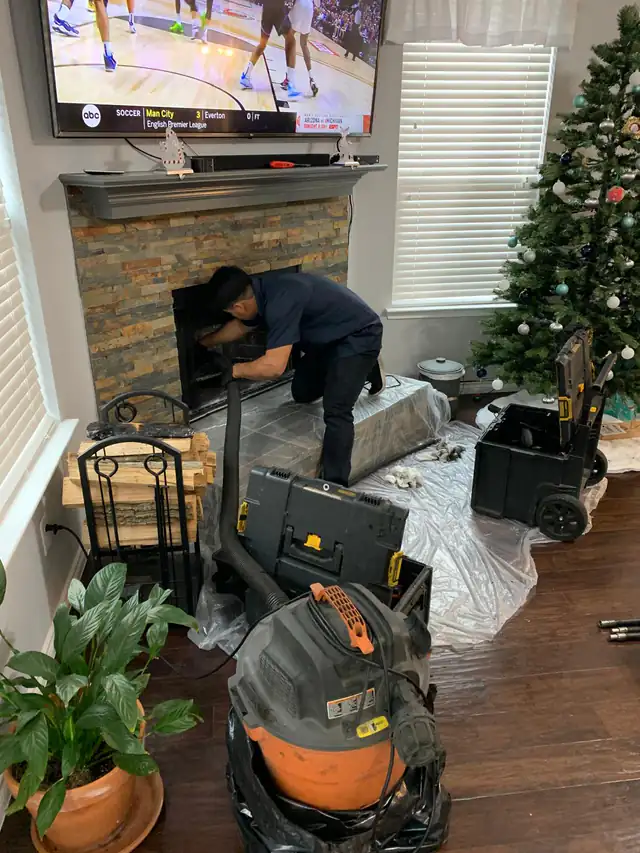
At the stone-front fireplace, with the hearth covered and a vacuum alongside 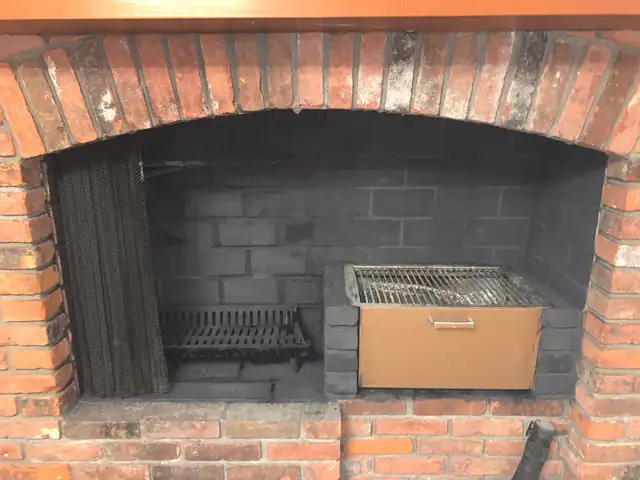
Firebox cleaned back to the brick, damper working 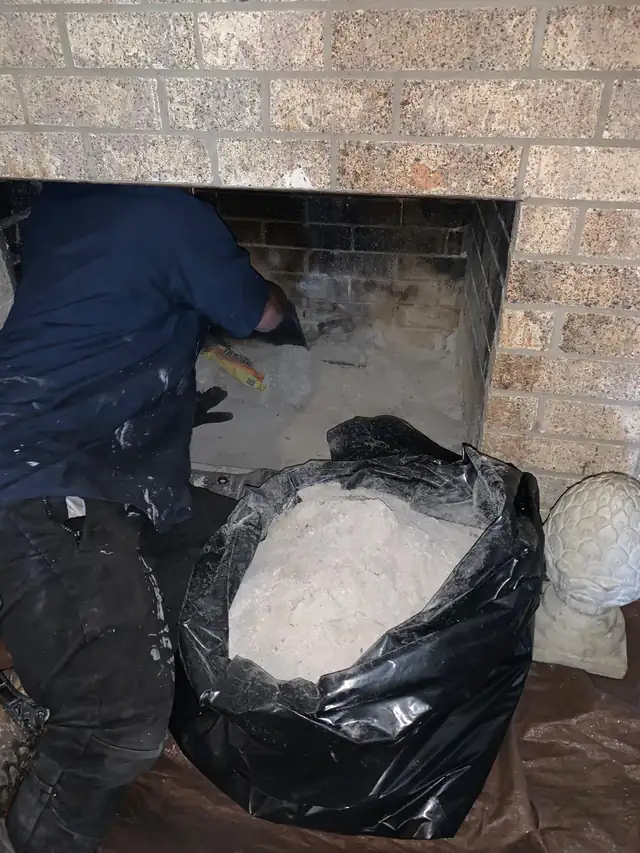
Clearing the firebox down to bare brick, floors covered
Meet the team
The people behind the work
Manny, Zack and Myke — meet the people behind Chimney Expert Solutions.
Our team and story →
Manny
Owner

Zack
Manager

Myke
Technician
FAQ
Chimney Sweep in Lakewood: questions we hear
Why does repointing keep failing on our Lakewood chimney?
Two usual causes, and often both. The first is mortar that is too hard for century-old brick, which turns a repair into an accelerant. The second is that the joints were skim-coated rather than cut out — new mortar buttered over old failed joints has nothing to bond into and sheds within a few winters. Correct-strength mortar, cut back to sound depth, is what lasts.
Our house is a double. Do we need to inspect every flue?
Each flue gets scanned on its own, because they age independently and they serve different things. The efficient part is that it is one visit and one set of access — a stack with three flues is three assessments, not three appointments, and caps can often be combined into one custom multi-flue cover.
There's barely any room between our house and the neighbour's. Is that a problem for chimney work?
It is a planning question rather than an obstacle, and Lakewood is where we plan for it as standard. Tight side yards and shared drives affect how material goes up, how debris comes down, and what has to be protected below. We would rather work that out on the quote visit than discover it on the morning of a rebuild.
How long does it take, and do I need to be home?
A single straightforward fireplace flue usually runs a couple of hours including setup, cleanup and the walkthrough. Multiple flues, an insert that has to be pulled, or heavy deposits take longer. Someone should be home to let us in and to hear the findings at the end — that conversation is half the value of the visit.
The fireplace was converted to gas years ago. Does the old creosote still matter?
Yes. Wood-era deposits stay where they are and stay combustible, and a conversion usually leaves the flue badly oversized for the new appliance — so it runs cold and condenses moisture onto exactly those deposits. Conversions are a good reason for a sweep and a camera look, not a reason to skip one.
Free estimate
Chimney Sweep in Lakewood?
Tell us what you’re seeing and we’ll call or text back to schedule a look — with photos of what we find and an honest read on what’s urgent and what can wait. That evidence-first method is the way we work on every job.
Call and tell us what the chimney's doing — if we're up on a roof, we'll call you back. Other ways to reach us are on the contact page, and Lakewood is one of the communities we cover across Greater Cleveland.
Call216-647-1882