
Summit County, Ohio
Chimney Sweep & Cleaning in Akron, OH
Full mechanical sweep of the flue, smoke chamber and firebox — creosote out, dust contained, and a look at the whole system while we're in it.
What chimney sweep involves in Akron is set by the housing stock here: Company-era and boom-era housing built fast in the rubber years — unlined coal-built flues, mortar carrying a century of sulfate attack with leaning and bowing stacks to show for it, and two-family conversions sharing undersized flues.
Akron's residential neighborhoods were largely built in one extraordinary rush. The rubber industry pulled tens of thousands of workers into the city in the years around the First World War, and the housing went up as fast as it could be framed — Goodyear Heights and Firestone Park laid out by the companies themselves, plus North Hill, Kenmore, Highland Square and the streets between them. It is honest, modest housing built at speed on hilly ground, and its chimneys are exactly what you would expect: functional, unadorned, and built for coal.
Creosote is what wood smoke leaves behind on the inside of a flue, and it is the fuel in nearly every chimney fire. It leaves the fire as vapor, condenses on any flue wall cool enough to catch it, and hardens over a season into something closer to tar than soot. A real sweep takes the flue back to bare liner with rods and brushes sized to that specific flue, works the smoke chamber and smoke shelf where the deposits sit heaviest, and finishes in the firebox, with the room sealed off and a HEPA vacuum running the whole time.
What we find on Akron chimneys that leads to chimney sweep
Stacks that lean or bow from sulfate expansion
A chimney that has vented coal for decades can have sulfates concentrated in the mortar of the flue-side and the weather-side joints, and as those salts crystallize they take up more room than the mortar had to give. Multiply a fraction of a millimeter by the number of joints in a stack and the top of the chimney moves measurably — usually leaning away from the flue side, sometimes bowing. The tells are a top that is visibly out of plumb, horizontal cracking on one face, and joints that look swollen or crushed rather than washed out. Assessment means a plumb line, a record of the crack pattern and a look at which face is affected, because a leaning stack is a rebuild question rather than a pointing question.
Speed-built housing with unlined heating flues
Houses put up quickly for a booming workforce got sound but economical construction, and flue liners were not a universal expectation in that era. Very large numbers of Akron chimneys were built as bare brick shafts, with the mortar between the courses as the only thing separating combustion gases from the wall cavity. A century of use, sulfate attack and condensation later, those joints are frequently open. It is invisible from the basement and the roof both, and it is the reason a camera scan is the starting point on a house of this vintage rather than an add-on to it.
Two appliances sharing a flue that cannot take both
A great many of these houses were doubled up during the boom, or converted to two-family later, and the pattern that follows is two heating appliances connected into one chimney flue. Common venting is not automatically wrong, but it has rules — the flue has to be sized for the combined input, the connectors have to enter at the right levels and slope upward toward the chimney, and the appliances have to be compatible. What we typically find instead is a second connector added in whatever decade it was needed, entering below the first, into a flue that was never sized for both. The consequence is spillage, which means combustion products into the house rather than up the chimney. The basement is where that gets found.
What drives the cost of a sweep
Sweeping is one of the more predictable jobs in the trade, and we would rather explain the variables than have you compare two numbers that were never quoting the same work.
- Number of flues. Older Cleveland and Heights homes routinely have two or three in one stack, and each is a separate job.
- Access. A walkable asphalt roof on a ranch is one thing. A steep slate roof on a three-story Tudor, where walking the slate would break it, means roof ladders and staging.
- Appliance type. An insert or stove with no direct liner connection usually has to be pulled out, swept, and re-seated with fresh gasket, which is real extra labor.
- Deposit stage. Stage one and two are inside the standard visit. Stage three glaze is rotary work, sometimes with a chemical pre-treatment and a return trip, and we will not quote it sight unseen.
- Condition. A flue with cracked or loose tiles cannot take aggressive brushing. Sometimes the right sequence is inspect first, stabilise, then clean.
- How long it has been. Ten years of accumulation is not ten times the work of one, but it is not the same visit either.
What happens if it does not get done
Two failure paths, and they look nothing alike. The first is fire. Creosote ignites at temperatures an ordinary hot fire reaches without trying, and a chimney fire is often not the dramatic roaring event people expect. Plenty of them are slow and nearly silent, and the only evidence is found later: puffed, honeycombed deposits, warped damper, cracked flue tiles, a cap discolored by heat. The tiles are the problem. Once thermal shock has cracked them, the flue no longer contains what it is supposed to contain, and the next fire has a path toward the framing that surrounds every masonry chimney.
The second is blockage, and it kills quietly. Nests, leaf litter, fallen tile shards and heavy deposits all reduce the usable flue area. Exhaust that cannot get out comes back in, and with any fuel-burning appliance that means carbon monoxide. This is why we look at furnace and water-heater flues with the same seriousness as fireplaces, and why working CO alarms on every level of the house, near the sleeping areas, are not optional in a home with any combustion appliance.
This page covers chimney sweep as it plays out in Akron. The full chimney sweep & cleaning page walks the whole job — every stage, what changes the scope, and what we do about each of them. For everything else we handle in this suburb, see chimney services in Akron.
What a sweep with us includes
- Drop cloths, sealed fireplace opening and HEPA dust control before a brush touches the flue
- Mechanical sweep of the full flue length, with brush size and shape matched to your liner
- Smoke chamber and smoke shelf hand-cleaned — the corners most sweeps skip
- Firebox and ash dump cleared, damper cleaned and operated through full travel
- A visual once-over of the whole system, with photos of anything that needs attention
- Straight advice at the end: what's urgent, what can wait, what's fine
Our work
Chimney Sweep & Cleaning, photographed on the job
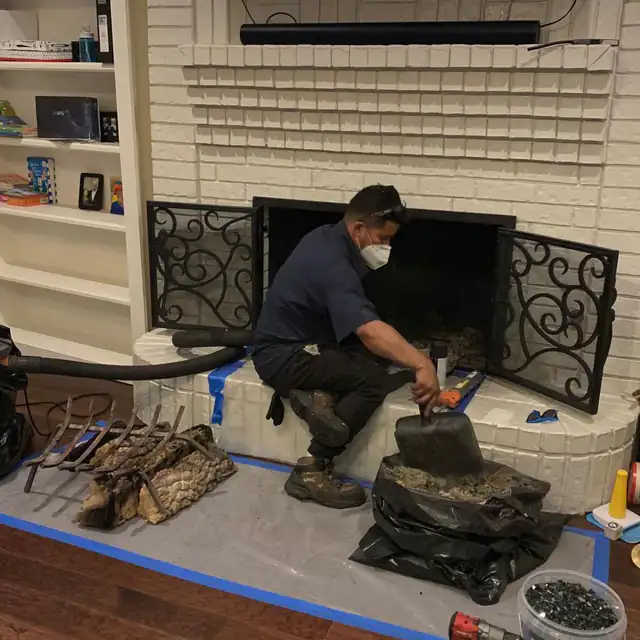
Drop cloths down and a vacuum on the hearth before anything is opened 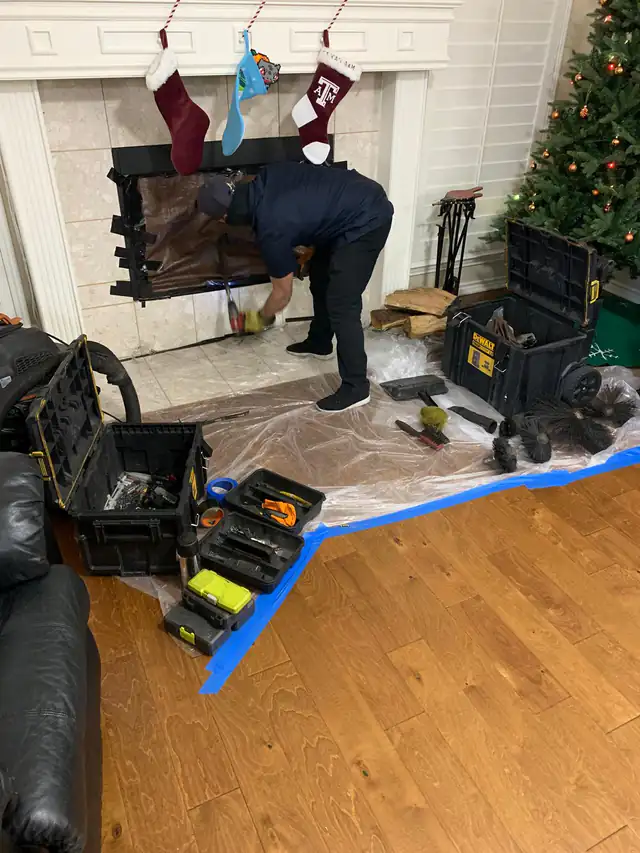
Working at the protected fireplace opening, with brushes and tools on covered floors 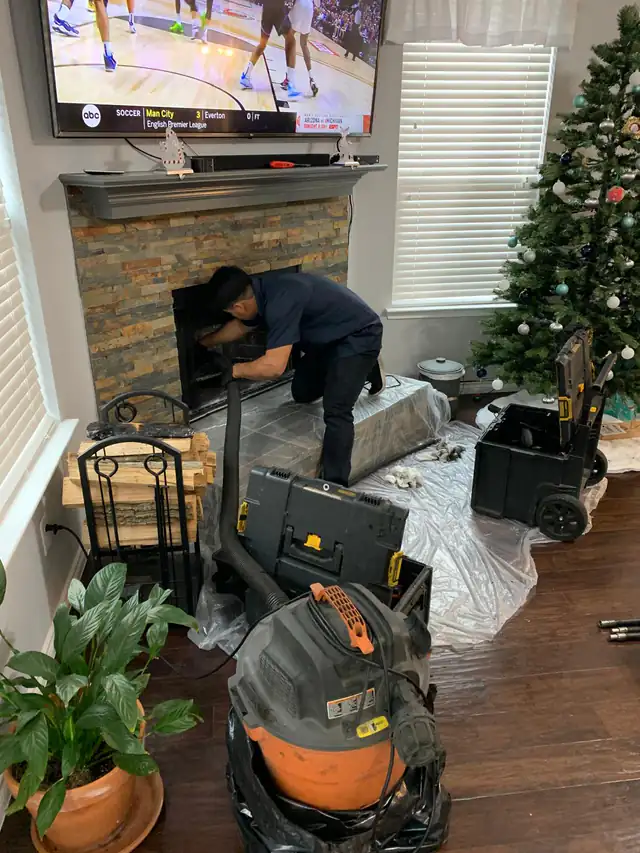
At the stone-front fireplace, with the hearth covered and a vacuum alongside 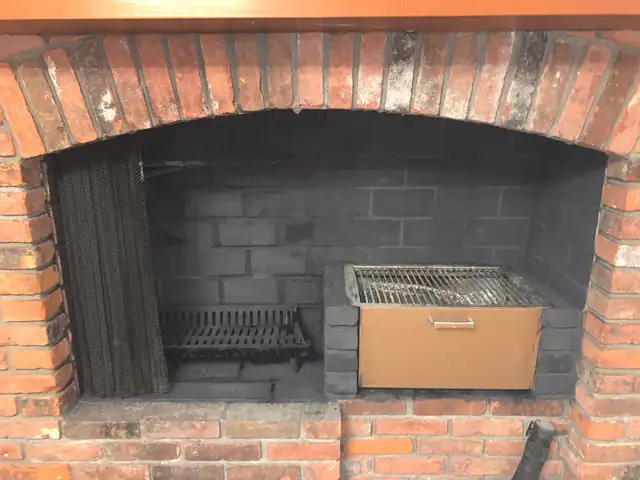
Firebox cleaned back to the brick, damper working 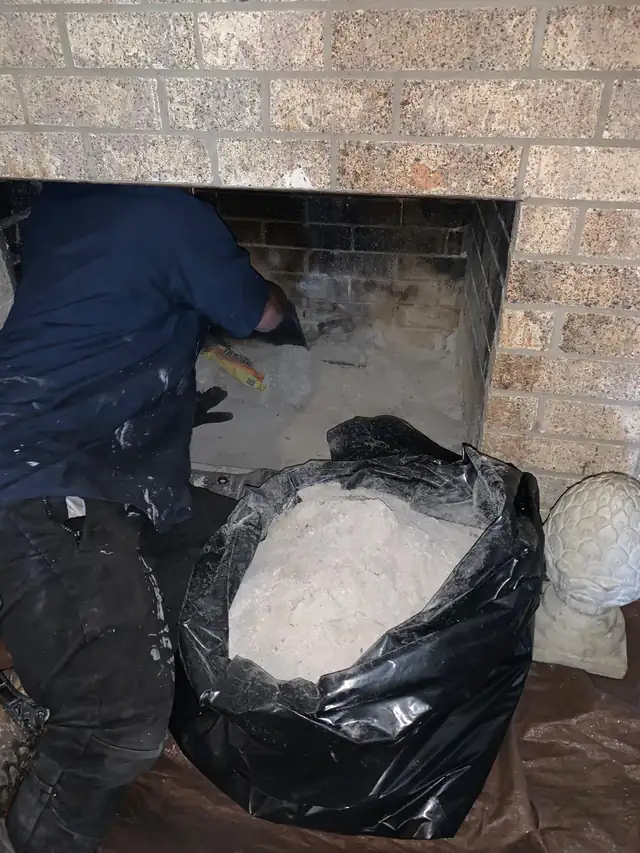
Clearing the firebox down to bare brick, floors covered
Meet the team
The people behind the work
Manny, Zack and Myke — meet the people behind Chimney Expert Solutions.
Our team and story →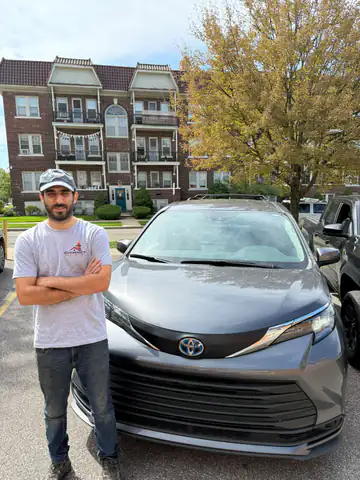
Manny
Owner
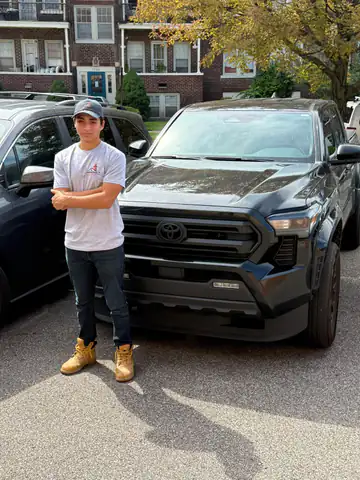
Zack
Manager

Myke
Technician
FAQ
Chimney Sweep in Akron: questions we hear
Two appliances vent into our chimney. Is that allowed?
It can be, but it has conditions: the flue must be sized for the combined input, the connectors have to enter properly and rise toward the chimney, and the appliances need to be compatible. What we usually find in this housing is a second connector added later into a flue sized for one. That causes spillage into the basement rather than draft up the flue, and it is worth checking on any house that was ever a two-family.
What does coal have to do with a chimney that hasn't burned any since 1955?
The sulfates it left in the mortar are still there. They dissolve and recrystallize with every wetting and drying cycle, and each cycle expands the joint a little. That is why the deterioration in these chimneys can look different from ordinary weathering — swollen or crushed joints rather than washed-out ones — and why it kept progressing long after the fuel changed.
Is an unlined brick flue automatically unsafe?
Not automatically — its condition decides that, and some are in better shape than people expect. What is true is that there is nothing between the flue gases and the masonry except the mortar joints, so once those joints open there is a direct path into the structure. A camera scan tells you which situation you are in, and a stainless liner is the usual answer where the joints have gone.
Do you sweep from the roof or from inside the house?
Whichever puts less risk in your house. Roof access, cap design and the pitch and material of the roof all factor in — we will not walk a slate roof that will break underfoot. Both directions clean the same flue; the part that decides whether your living room stays clean is the sealed opening and the vacuum at the firebox, not which end the rods go in.
How long does it take, and do I need to be home?
A single straightforward fireplace flue usually runs a couple of hours including setup, cleanup and the walkthrough. Multiple flues, an insert that has to be pulled, or heavy deposits take longer. Someone should be home to let us in and to hear the findings at the end — that conversation is half the value of the visit.
Free estimate
Chimney Sweep in Akron?
Tell us what you’re seeing and we’ll call or text back to schedule a look — with photos of what we find and an honest read on what’s urgent and what can wait. That evidence-first method is the way we work on every job.
Call and tell us what the chimney's doing — if we're up on a roof, we'll call you back. Other ways to reach us are on the contact page, and Akron is one of the communities we cover across Greater Cleveland.
Call216-647-1882