
Summit County, Ohio
Chimney Repair & Rebuilds in Akron, OH
Masonry repair from spot fixes to full stack rebuilds — spalled brick, failed joints, and chimneys the freeze-thaw cycle has taken apart.
What chimney repair involves in Akron is set by the housing stock here: Company-era and boom-era housing built fast in the rubber years — unlined coal-built flues, mortar carrying a century of sulfate attack with leaning and bowing stacks to show for it, and two-family conversions sharing undersized flues.
Akron's residential neighborhoods were largely built in one extraordinary rush. The rubber industry pulled tens of thousands of workers into the city in the years around the First World War, and the housing went up as fast as it could be framed — Goodyear Heights and Firestone Park laid out by the companies themselves, plus North Hill, Kenmore, Highland Square and the streets between them. It is honest, modest housing built at speed on hilly ground, and its chimneys are exactly what you would expect: functional, unadorned, and built for coal.
Northeast Ohio is close to a worst case for exterior masonry. A Cleveland chimney runs through dozens of freeze-thaw cycles every winter: water finds a hairline crack or an open joint, freezes, expands by about nine percent, and levers the masonry apart a little more each time. Repeat that across eighty winters on the most weather-exposed brickwork the house owns, and you get the local pattern. Brick faces shed, mortar goes soft and sandy, top courses shift, and eventually a stack that was fine at the last home sale needs rebuilding.
What we find on Akron chimneys that leads to chimney repair
Stacks that lean or bow from sulfate expansion
A chimney that has vented coal for decades can have sulfates concentrated in the mortar of the flue-side and the weather-side joints, and as those salts crystallize they take up more room than the mortar had to give. Multiply a fraction of a millimeter by the number of joints in a stack and the top of the chimney moves measurably — usually leaning away from the flue side, sometimes bowing. The tells are a top that is visibly out of plumb, horizontal cracking on one face, and joints that look swollen or crushed rather than washed out. Assessment means a plumb line, a record of the crack pattern and a look at which face is affected, because a leaning stack is a rebuild question rather than a pointing question.
Speed-built housing with unlined heating flues
Houses put up quickly for a booming workforce got sound but economical construction, and flue liners were not a universal expectation in that era. Very large numbers of Akron chimneys were built as bare brick shafts, with the mortar between the courses as the only thing separating combustion gases from the wall cavity. A century of use, sulfate attack and condensation later, those joints are frequently open. It is invisible from the basement and the roof both, and it is the reason a camera scan is the starting point on a house of this vintage rather than an add-on to it.
Matching brick and mortar on older Cleveland houses
On the pre-war housing stock in Cleveland, Lakewood, Cleveland Heights and Shaker Heights, matching is not a cosmetic nicety. A chimney is one of the most visible elements on the front elevation of a Tudor or a foursquare, and a rebuild in the wrong brick blend is something you look at for the next thirty years. Much of the brick used across this housing stock has close modern equivalents, and salvaged brick is available for the rest. Mortar can be tinted and struck to match the original joint color and profile.
The technical half of matching matters more than the visual half. Mortar must always be softer than the brick around it. Pre-war Cleveland brick was fired softer and more porous than modern brick, and it was laid in lime-rich mortar that could move and breathe with it. Point that wall with hard modern Portland-heavy mortar and the joints become stronger than the units. Seasonal movement and trapped moisture then have to escape through the brick instead of the joint, and the brick faces spall off. A great deal of the spalling on inner-ring suburb chimneys was caused by a repointing job that was supposed to help.
What drives the cost of masonry work
- Scope. Repointing, a partial rebuild above the roofline, and a full rebuild are different orders of work, and honest quoting means establishing which one you actually need first.
- Height and access. A chimney on a single-story ranch with a walkable roof, versus a three-story stack on slate that needs staging, is the largest single swing in this trade.
- Roof material. Slate, clay tile and standing-seam metal cannot be walked on, which changes how the work is staged and protected.
- Brick match. Sourcing or salvaging a close match for a visible 1920s chimney takes time that a plain utility stack does not.
- Detailing. Corbelled courses, stone banding, clay pots and decorative caps all have to be rebuilt rather than approximated.
- What is found on the way down. Flue tile condition and hidden deterioration are genuinely not fully knowable until the stack is opened, which is why we photograph as we go and talk before we deviate from the scope.
- Season. Work scheduled into the shoulder of the masonry season sometimes needs protection and heat, which is real cost.
This page covers chimney repair as it plays out in Akron. The full chimney repair & rebuilds page walks the whole job — every stage, what changes the scope, and what we do about each of them. For everything else we handle in this suburb, see chimney services in Akron.
Repair and rebuild work we take on
- Spalled and cracked brick replacement, matched to the existing brick
- Partial rebuilds from the roofline or shoulder up
- Full chimney rebuilds where the stack is beyond saving
- Crown replacement as part of any rebuild — a rebuild under a bad crown is wasted money
- Flue tile replacement while the stack is open, where it is warranted
- Firebox masonry and refractory panel repair
- Written scope with photos before, during and after the work
Our work
Chimney Repair & Rebuilds, photographed on the job
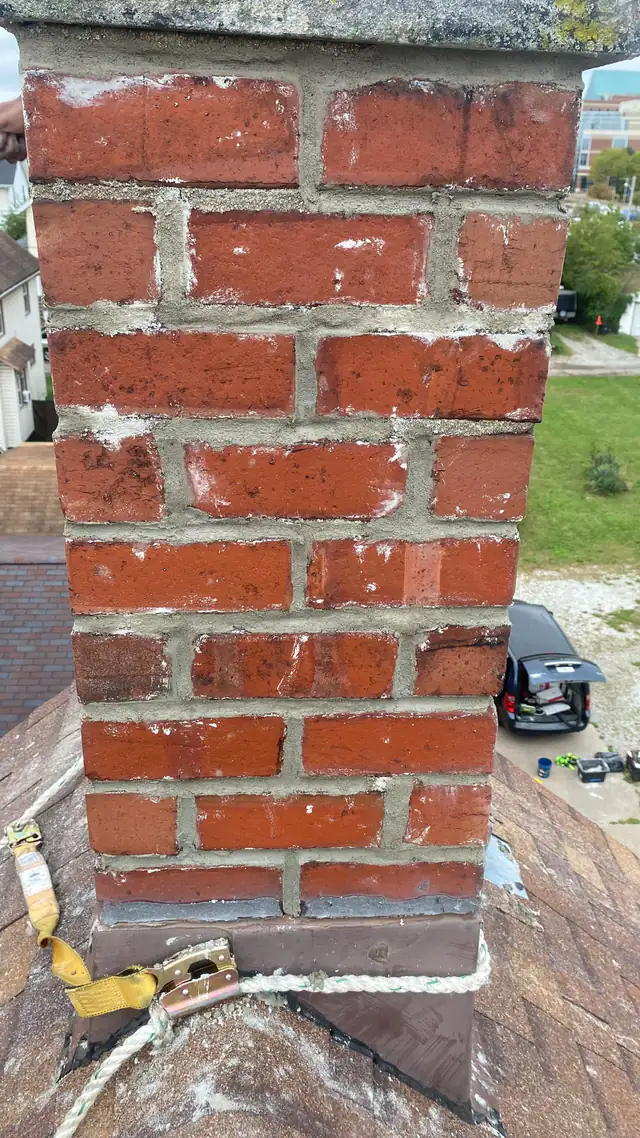
Roped in on a steep roof — repointed, flashing sealed 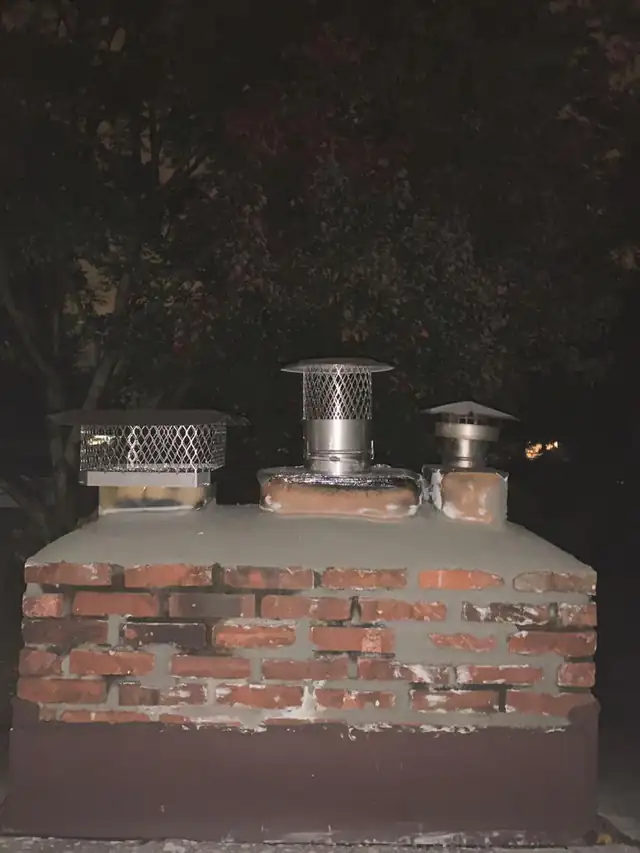
Three flues, three caps, one new crown 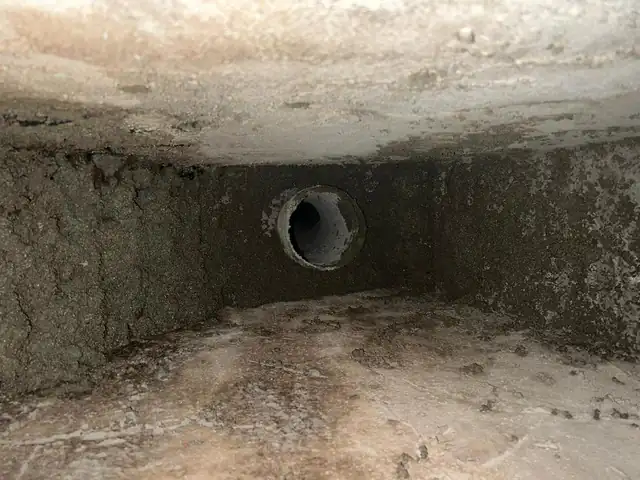
Inside the smoke chamber — the flue opening above the firebox 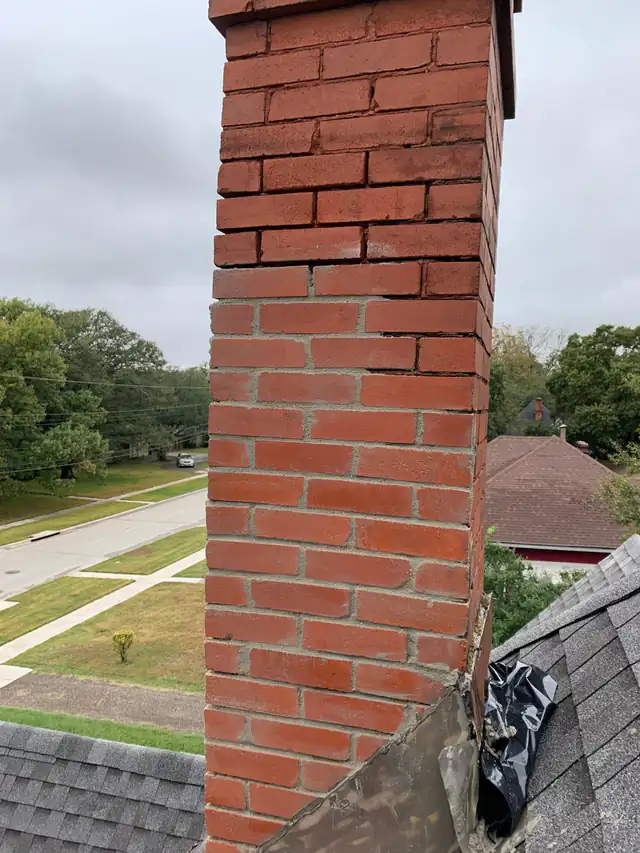
Mid-job — fresh joints below, the old eroded joints still waiting above 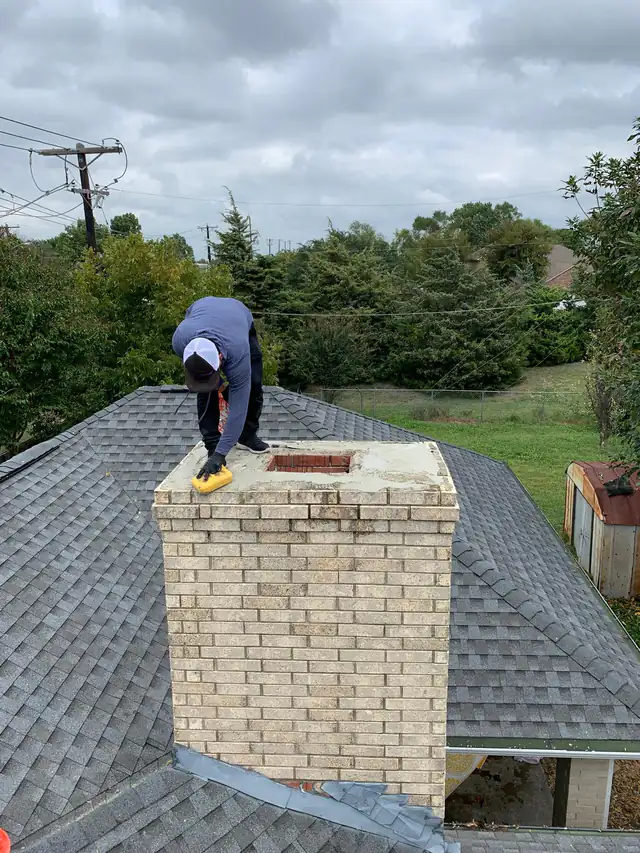
Finishing a fresh crown around the flue 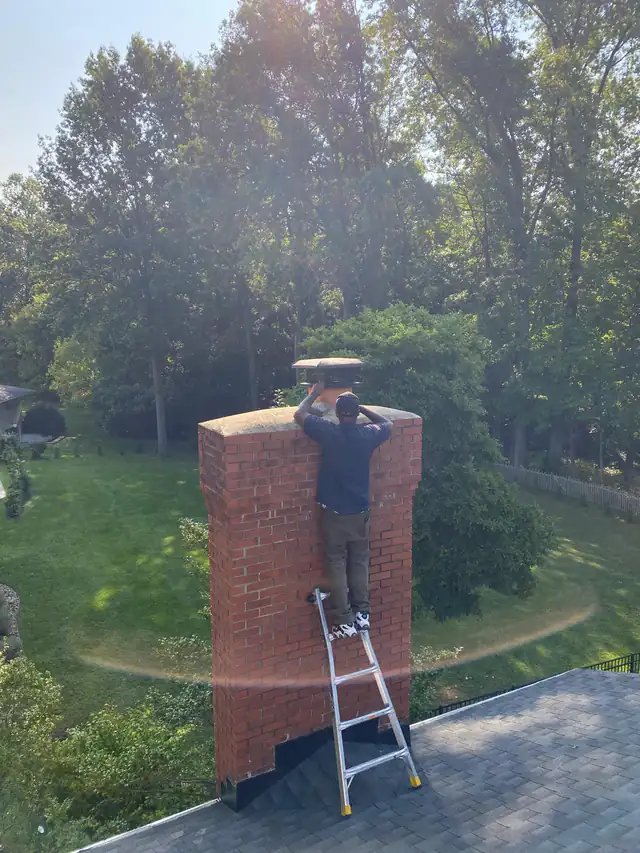
Ladder work on a tall stack — fitting the cap
Meet the team
The people behind the work
Manny, Zack and Myke — meet the people behind Chimney Expert Solutions.
Our team and story →
Manny
Owner
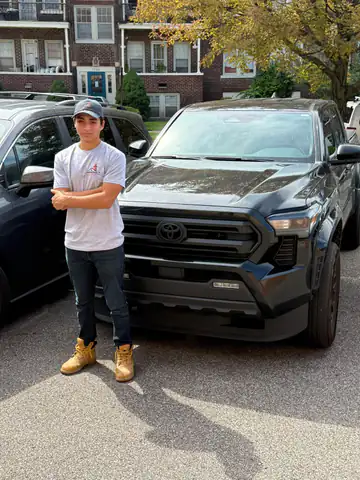
Zack
Manager

Myke
Technician
FAQ
Chimney Repair in Akron: questions we hear
Our chimney is visibly leaning. Is it about to fall?
Usually not imminently, but it does need an assessment rather than a repointing quote. In this housing a lean often comes from sulfate expansion in mortar that spent decades venting coal, which pushes one face of the stack open fractionally at every joint. What we do is take a plumb reading, photograph the crack pattern and establish whether it is stable or progressing, and that determines whether it is a monitored condition or a rebuild.
What does coal have to do with a chimney that hasn't burned any since 1955?
The sulfates it left in the mortar are still there. They dissolve and recrystallize with every wetting and drying cycle, and each cycle expands the joint a little. That is why the deterioration in these chimneys can look different from ordinary weathering — swollen or crushed joints rather than washed-out ones — and why it kept progressing long after the fuel changed.
Is an unlined brick flue automatically unsafe?
Not automatically — its condition decides that, and some are in better shape than people expect. What is true is that there is nothing between the flue gases and the masonry except the mortar joints, so once those joints open there is a direct path into the structure. A camera scan tells you which situation you are in, and a stainless liner is the usual answer where the joints have gone.
Is a chimney rebuild covered by homeowners insurance?
Long-term deterioration from weather is normally treated as maintenance and is not covered, while sudden events like a lightning strike, a storm or a chimney fire often are. That is a conversation with your carrier, not with us, but the photo documentation we produce is exactly the evidence that conversation needs — which is another reason we photograph before, during and after.
Can we still use the fireplace while the chimney is being rebuilt?
No — the flue is open at the top and the stack is partly dismantled. If the chimney also serves a furnace or water heater, that has to be planned around before the work starts, and it is one of the first things we check on a quote visit. Nobody should discover mid-rebuild that the water heater has nowhere to vent.
Free estimate
Chimney Repair in Akron?
Tell us what you’re seeing and we’ll call or text back to schedule a look — with photos of what we find and an honest read on what’s urgent and what can wait. That evidence-first method is the way we work on every job.
Call and tell us what the chimney's doing — if we're up on a roof, we'll call you back. Other ways to reach us are on the contact page, and Akron is one of the communities we cover across Greater Cleveland.
Call216-647-1882