
Cuyahoga County, Ohio
Chimney Leak Repair & Waterproofing in Beachwood, OH
Finding where the water actually gets in — crown, cap, flashing, masonry or condensation — and fixing that, not caulking symptoms.
What chimney leak repair involves in Beachwood is set by the housing stock here: Postwar through modern housing where the chimney is often sound but the system is not — gas log conversions on unswept flues, tight houses with powerful exhaust equipment, and hard-weathered outdoor fireplaces.
Beachwood built out later than the inner-ring suburbs around it, mostly from the 1950s onward, and kept building: ranches and split-levels of the postwar decades near Richmond and Chagrin, then larger colonials, then substantial newer houses. What that produces is a market where the chimney itself is often in decent physical shape and the interesting problems are about how the fireplace is being used and how the house behaves around it.
A leaking chimney is a symptom with at least five different causes, and fixing the wrong one is why so many chimney leaks come back. Water can enter through a cracked crown, a missing or undersized cap, failed flashing where the chimney meets the roof, saturated porous masonry, or condensation forming inside an oversized flue. Each of those has a different repair, and none of them is solved by sealant on whatever surface was easiest to reach. Our leak work starts with diagnosis at roof level and inside the house, so the fix targets the actual entry point.
What we find on Beachwood chimneys that leads to chimney leak repair
Outdoor fireplaces and pool-house chimneys
A lot of Beachwood properties have an outdoor masonry fireplace, a covered-patio hearth or a pool-house stack, and they weather far harder than anything on the house. There is no roof over them, so every face is a weather face; the firebox itself fills with rain and snow; and they were frequently built without a proper crown, a cap, or a drainage detail at the hearth. Freeze-thaw does in ten years to an outdoor stack what it takes forty to do on a sheltered one. They also need sweeping and inspection like any other wood-burning appliance, and they almost never get it.
Gas logs dropped into a wood firebox
A vented gas log set needs the flue open to run, so the damper is normally clamped or blocked so it cannot be closed — and that is correct, not a defect. What goes wrong is everything around it. The flue is usually never swept before the conversion, so old creosote sits there indefinitely. The pilot runs for months, putting a slow trickle of moisture and combustion products into a cold masonry flue that never gets hot enough to dry, which corrodes the damper and eats tile joints. And with the damper permanently open the house loses conditioned air up the chimney every day of the year. A top-sealing damper solves the last part; the flue still wants an annual look.
Lake Erie weather and what it does to the weather face
Wind-driven rain is the local variable that catches people out. Rain falling straight down mostly runs off a vertical brick face. Rain driven at a wall by thirty miles an hour of wind off the lake is pushed into it, and a masonry wall's ability to resist that is a function of its joints. This is why so many chimney leaks in Rocky River, Westlake, Lakewood and the lakefront stretch of Euclid appear only in storms from one particular direction, and why the weather-facing side of a stack is frequently in visibly worse condition than the sheltered side of the same chimney.
The second local factor is duration. Lake-effect conditions keep masonry wet for days rather than hours, so there is far less drying time between wetting events than the same chimney would get in a drier climate. Water that never fully leaves the wall is water available to freeze. That is the whole reason water management on a chimney matters more here than the average national advice suggests.
What water does if the leak is left
The stain on the ceiling is the least of it. Once water has an established route into a chimney, three things happen in parallel. The masonry deteriorates faster, because every wet freeze widens the path the water is already using. The framing around the chimney takes moisture it was never designed to take, and rot in a concealed chase around a chimney is both slow and expensive to find. And inside the flue, water attacks mortar joints between the flue tiles, so a water problem at the top becomes a liner problem in the middle.
There is a fourth, less obvious one: a chimney with water in it smells. The musty odour that shows up in a fireplace in warm weather is damp deposits, and it is a reliable early sign of a water path that has not yet produced a visible stain. Leak repairs sit near the top of the fix-this-season list, not because a small stain is an emergency, but because the path is established and Cleveland winters are very good at widening established paths.
This page covers chimney leak repair as it plays out in Beachwood. The full chimney leak repair & waterproofing page walks the whole job — every stage, what changes the scope, and what we do about each of them. For everything else we handle in this suburb, see chimney services in Beachwood.
How we handle a leaking chimney
- Roof-level diagnosis: crown, cap, flashing, masonry and shoulder — photographed
- Interior check: firebox, smoke chamber and damper for staining, rust and damp
- Flashing repair or a full re-flash where the roofline seal has failed
- Crown repair or full recast with a drip edge and an expansion joint at the flue
- Vapor-permeable masonry repellent on porous brick — never paint or film-forming sealers
- An honest call on whether the 'leak' is actually flue condensation
- The fix in writing, matched to the diagnosed entry point
Our work
Chimney Leak Repair & Waterproofing, photographed on the job
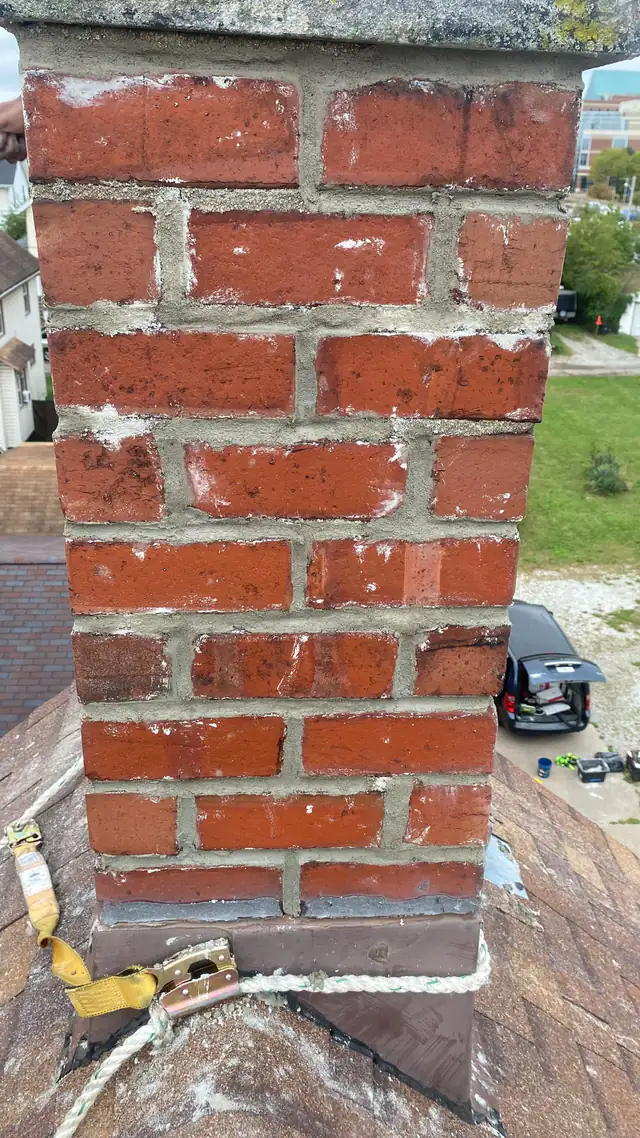
Roped in on a steep roof — repointed, flashing sealed 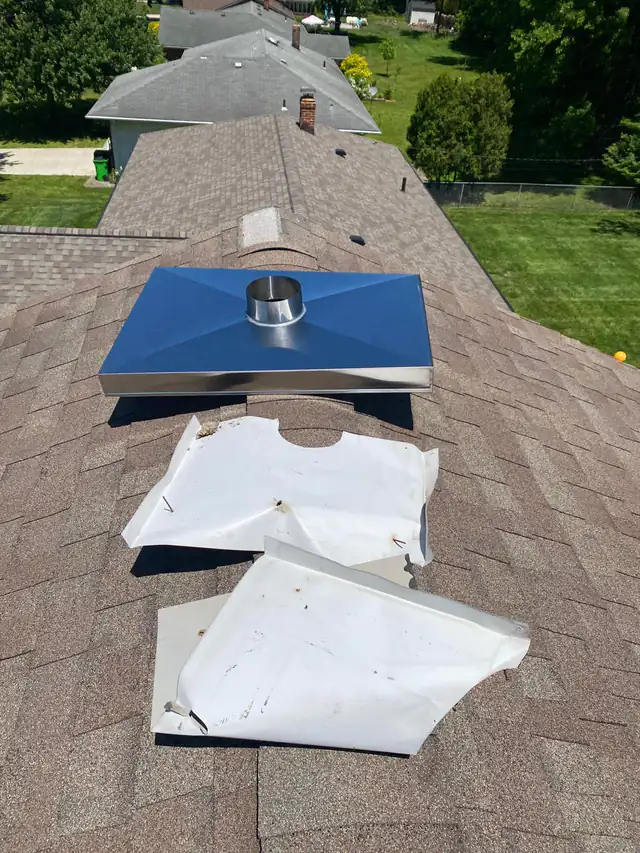
Replacement chase cover beside the removed cover sections on the roof 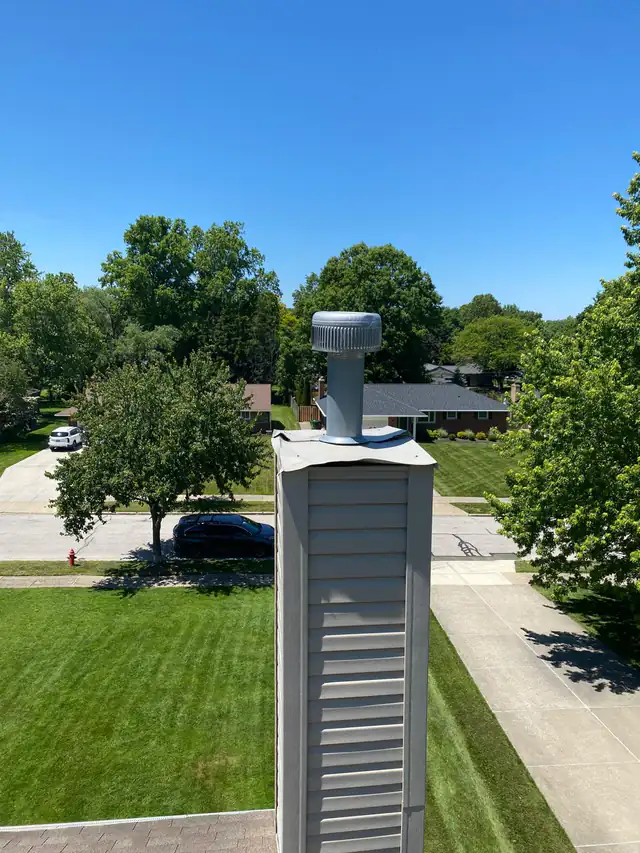
Before — the old chase cover, with bent and raised edges around the vent 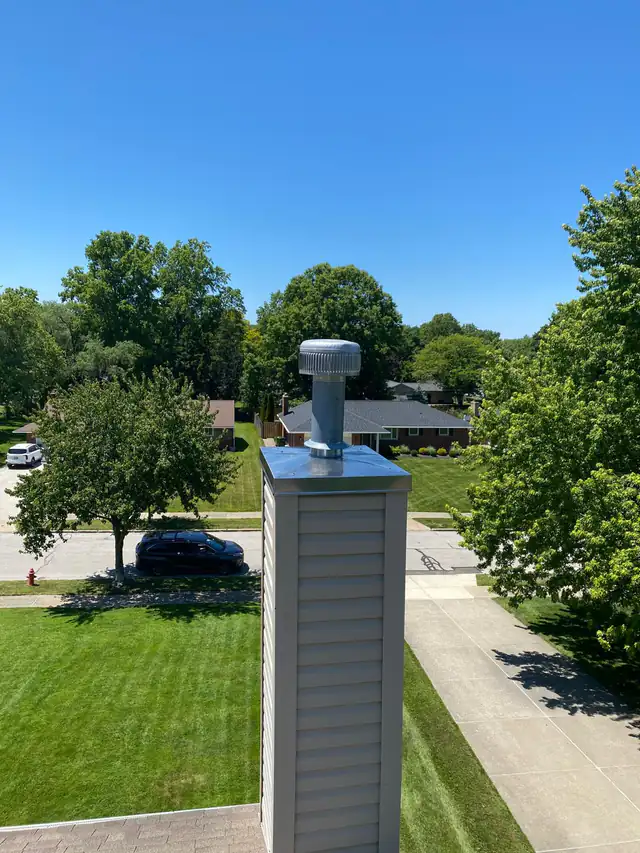
After — replacement chase cover fitted around the vent 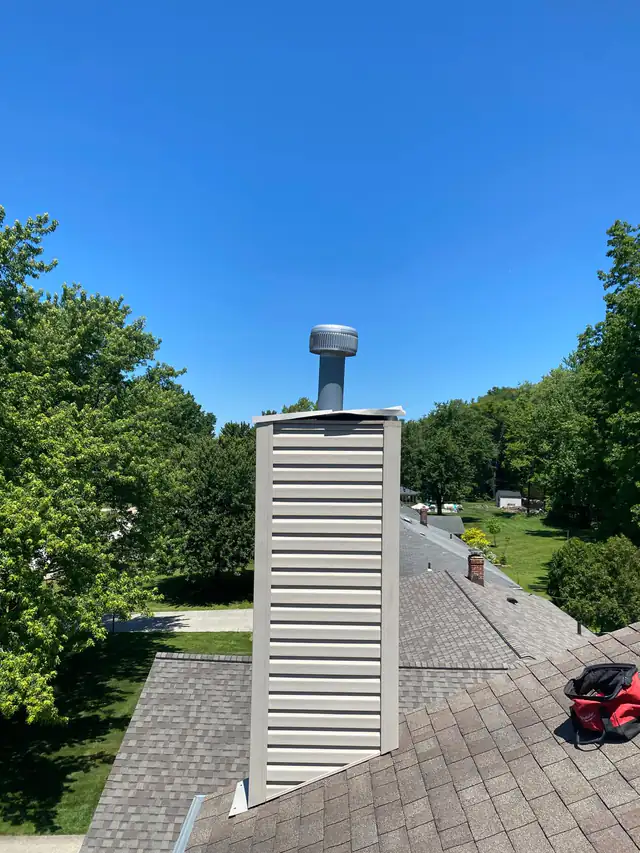
Before — the old cover from the roof side, with a raised edge 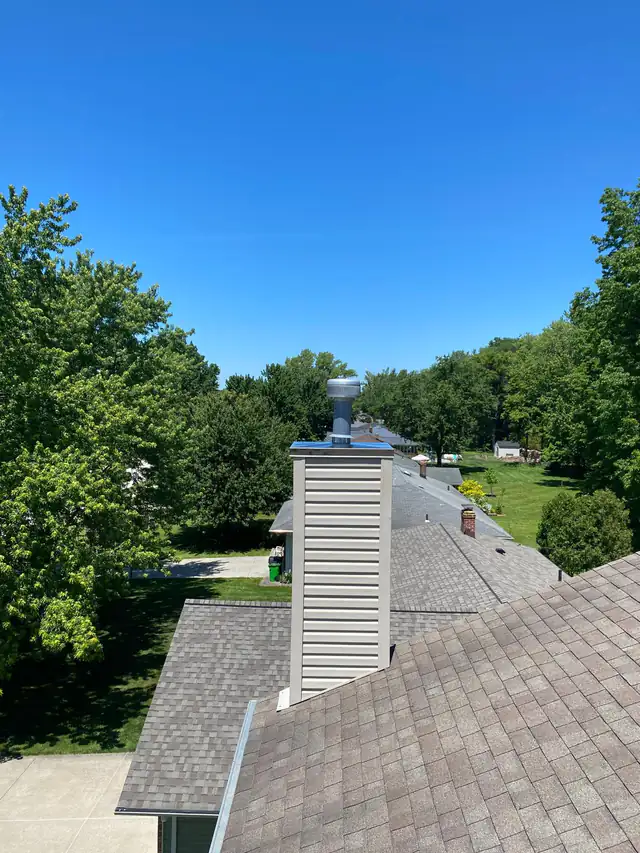
After — the replacement cover and chase, viewed from the roof
Meet the team
The people behind the work
Manny, Zack and Myke — meet the people behind Chimney Expert Solutions.
Our team and story →
Manny
Owner

Zack
Manager

Myke
Technician
FAQ
Chimney Leak Repair in Beachwood: questions we hear
Do you service outdoor fireplaces and fire features?
Yes, and they generally need more attention than the indoor one, not less. An outdoor stack takes weather on every side, holds water in the firebox, and is often built without a crown or cap that sheds properly. Sweeping, a scan of the flue, and getting the water management right at the top are the usual scope.
We converted to gas logs. Does the chimney still need sweeping and inspection?
Yes. If the flue burned wood at any point, that deposit is still up there and gas does not remove it. Beyond that, a vented set runs with the damper held open, so the flue is exposed to weather and animals year-round, and pilot moisture corrodes dampers and tile joints slowly. The NFPA 211 standard's annual inspection recommendation does not carve out gas appliances.
There's a fireplace smell in the room in summer. Is that normal?
It is common and it is fixable. Warm humid air moving down a cool flue picks up odor from old deposits and carries it into the room, and a house under slight negative pressure makes it worse. Cleaning the flue removes most of the source, and a top-sealing damper closes the flue at the top instead of at the throat, which stops the airflow rather than just the draft.
It leaked once and hasn't since. Do I still need it looked at?
Yes, and the intermittency is a clue rather than a reassurance. A leak that only appears under specific conditions usually means a directional entry point, most often driven rain on one face or ice damming at the roofline. The path is still there between events, and it is still admitting the water that does the freeze-thaw damage.
Should the chimney be waterproofed as routine maintenance?
Not as routine, no. A repellent is worth doing on masonry that is genuinely absorbing water and is otherwise sound, and it is pointless or harmful anywhere else. On a chimney with open joints, the joints get pointed first. On a chimney with a cracked crown, the crown is the actual hole. Selling a spray-on treatment to a chimney that needs masonry work is one of the more common bad practices in this trade.
Free estimate
Chimney Leak Repair in Beachwood?
Tell us what you’re seeing and we’ll call or text back to schedule a look — with photos of what we find and an honest read on what’s urgent and what can wait. That evidence-first method is the way we work on every job.
Call and tell us what the chimney's doing — if we're up on a roof, we'll call you back. Other ways to reach us are on the contact page, and Beachwood is one of the communities we cover across Greater Cleveland.
Call216-647-1882