
Cuyahoga County, Ohio
Chimney Sweep & Cleaning in Rocky River, OH
Full mechanical sweep of the flue, smoke chamber and firebox — creosote out, dust contained, and a look at the whole system while we're in it.
What chimney sweep involves in Rocky River is set by the housing stock here: Lake exposure accelerating everything — older masonry taking wind-driven rain on its north and west faces, and newer chase-built fireplaces with rusting galvanized covers.
Rocky River sits between the lake and the river valley, and its housing runs in layers: an older core of 1920s–40s homes along Detroit Road and up toward Lake Road and Beachcliff, then solid postwar neighborhoods, then later contemporary building including condominium development near the river and the lakefront. Chimney work here spans the whole range, from pre-war masonry stacks to factory-built fireplaces in framed chases.
Creosote is what wood smoke leaves behind on the inside of a flue, and it is the fuel in nearly every chimney fire. It leaves the fire as vapor, condenses on any flue wall cool enough to catch it, and hardens over a season into something closer to tar than soot. A real sweep takes the flue back to bare liner with rods and brushes sized to that specific flue, works the smoke chamber and smoke shelf where the deposits sit heaviest, and finishes in the firebox, with the room sealed off and a HEPA vacuum running the whole time.
What we find on Rocky River chimneys that leads to chimney sweep
Chase-built fireplaces with galvanized covers
A lot of the newer housing here has a factory-built fireplace in a wood-framed chase, finished outside in siding or stone veneer and closed at the top with a flat metal chase cover instead of a masonry crown. Galvanized covers rust, pond water rather than shedding it, and then leak straight into the chase framing. The rust streak running down the siding below the chimney top is the giveaway. The durable fix is a custom stainless cover with a cross-break so water runs off.
The leak nobody owns
Roofer says chimney, chimney contractor says roof, and the homeowner pays twice. It happens here more than most places because lake exposure puts real stress on exactly the joint where the two trades meet: the step flashing and counterflashing at the roofline. We diagnose the whole intersection together — flashing, counterflashing, crown, cap and masonry — and give one answer with photographs behind it, including when the honest answer is that the roof is the problem.
What makes a chimney build creosote faster
If you have been told you need sweeping more often than a neighbour with the same house, one of these is usually why. Fixing the cause is cheaper than sweeping around it.
- Wet wood. Freshly cut wood is roughly half water by weight; seasoned firewood should be near 20%. Wood that has not been split, stacked and covered for a year spends the first part of every fire boiling water instead of making heat, and cool smoke deposits fast.
- Smoldering fires. Damping a stove or insert right down overnight is the classic creosote factory — long, cool, oxygen-starved burns put the maximum amount of unburned gas up a cold flue.
- An oversized flue. Common in Cleveland after a wood fireplace is converted to gas, or a big open firebox is replaced with a small insert. Exhaust slows, cools, and condenses on the way out.
- An exterior chimney. A stack running up the outside of the house never holds heat the way an interior one does. On a January night in a lake-effect wind, that flue is a condenser.
- A short or poorly terminated chimney. Draft comes from height and temperature difference. A stack that barely clears the roofline never develops much of either.
- Soft woods and construction scrap. Pine and spruce leave more resin; painted, glued or treated wood leaves deposits you do not want in a flue at all.
What drives the cost of a sweep
Sweeping is one of the more predictable jobs in the trade, and we would rather explain the variables than have you compare two numbers that were never quoting the same work.
- Number of flues. Older Cleveland and Heights homes routinely have two or three in one stack, and each is a separate job.
- Access. A walkable asphalt roof on a ranch is one thing. A steep slate roof on a three-story Tudor, where walking the slate would break it, means roof ladders and staging.
- Appliance type. An insert or stove with no direct liner connection usually has to be pulled out, swept, and re-seated with fresh gasket, which is real extra labor.
- Deposit stage. Stage one and two are inside the standard visit. Stage three glaze is rotary work, sometimes with a chemical pre-treatment and a return trip, and we will not quote it sight unseen.
- Condition. A flue with cracked or loose tiles cannot take aggressive brushing. Sometimes the right sequence is inspect first, stabilise, then clean.
- How long it has been. Ten years of accumulation is not ten times the work of one, but it is not the same visit either.
This page covers chimney sweep as it plays out in Rocky River. The full chimney sweep & cleaning page walks the whole job — every stage, what changes the scope, and what we do about each of them. For everything else we handle in this suburb, see chimney services in Rocky River.
What a sweep with us includes
- Drop cloths, sealed fireplace opening and HEPA dust control before a brush touches the flue
- Mechanical sweep of the full flue length, with brush size and shape matched to your liner
- Smoke chamber and smoke shelf hand-cleaned — the corners most sweeps skip
- Firebox and ash dump cleared, damper cleaned and operated through full travel
- A visual once-over of the whole system, with photos of anything that needs attention
- Straight advice at the end: what's urgent, what can wait, what's fine
Our work
Chimney Sweep & Cleaning, photographed on the job
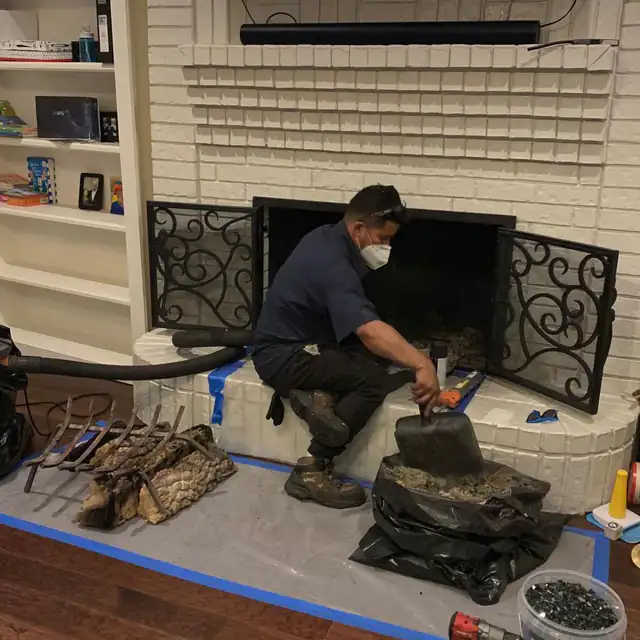
Drop cloths down and a vacuum on the hearth before anything is opened 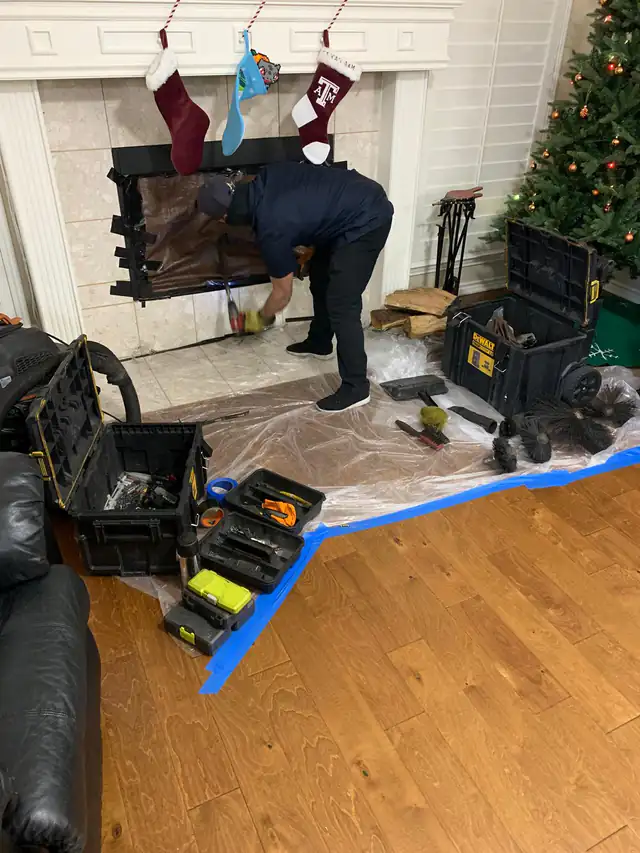
Working at the protected fireplace opening, with brushes and tools on covered floors 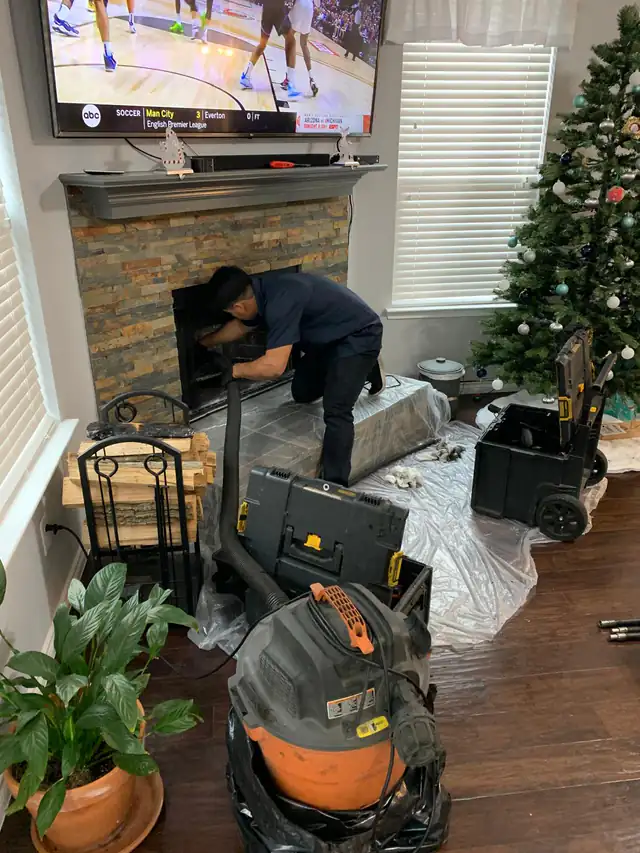
At the stone-front fireplace, with the hearth covered and a vacuum alongside 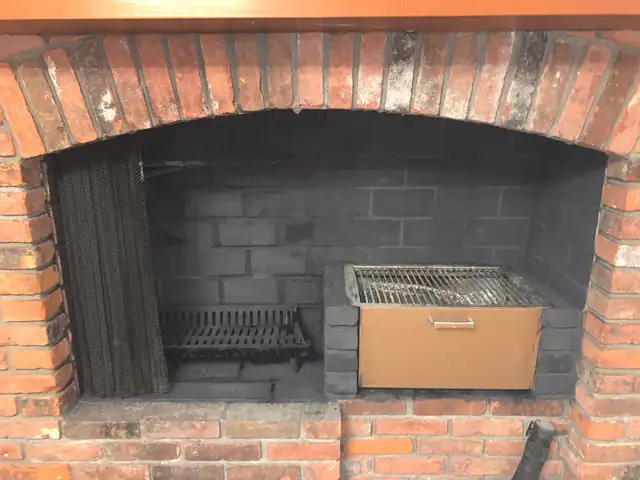
Firebox cleaned back to the brick, damper working 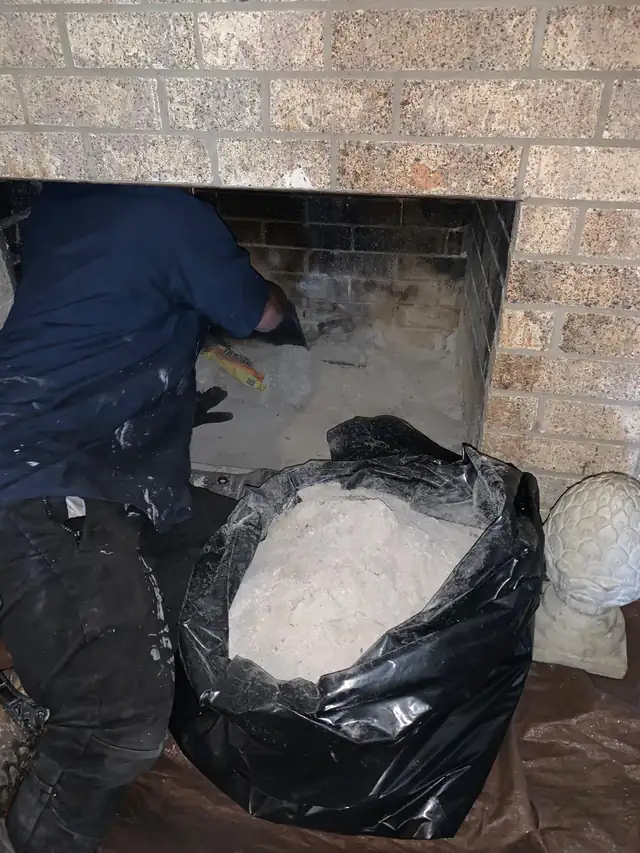
Clearing the firebox down to bare brick, floors covered
Meet the team
The people behind the work
Manny, Zack and Myke — meet the people behind Chimney Expert Solutions.
Our team and story →
Manny
Owner
Zack
Manager
Myke
Technician
FAQ
Chimney Sweep in Rocky River: questions we hear
Our newer home has a metal box on top instead of a brick chimney. Is that yours to service?
Yes. That is a chase cover over a factory-built fireplace, and it is a chimney in every way that matters: the flue still builds creosote and needs sweeping, the cover rusts and pools water, and the refractory panels inside the firebox crack with age. Replacing a failing galvanized cover with stainless is one of the more common jobs on Rocky River's newer streets.
The chimney is on the lake-facing side of the house. Does it need more frequent work?
It usually needs the water-management components watched more closely, yes. The crown, cap, flashing and the pointing on the exposed face are the parts that wear faster. The flue itself does not care which way the house faces. It is a difference in inspection focus rather than an entirely different service.
Should we waterproof the chimney given the exposure?
Only in the right circumstances, and only with the right product. A vapor-permeable siloxane-type repellent on masonry that is sound but genuinely absorbing water is worthwhile here. A film-forming sealer or masonry paint is actively harmful in a freeze-thaw climate because it traps moisture in the wall. And no repellent is a substitute for pointing open joints or recasting a failed crown — those are the actual holes.
What should I do before you arrive?
Do not burn for at least 24 hours, and 48 is better — a warm firebox is a miserable place to work and hot ash and drop cloths do not mix. Clear a path to the fireplace, take fragile things off the mantel, and keep pets in another room. If you have an insert or a stove, tell us the make and model when you book so the right brushes are on the truck.
The fireplace was converted to gas years ago. Does the old creosote still matter?
Yes. Wood-era deposits stay where they are and stay combustible, and a conversion usually leaves the flue badly oversized for the new appliance — so it runs cold and condenses moisture onto exactly those deposits. Conversions are a good reason for a sweep and a camera look, not a reason to skip one.
Free estimate
Chimney Sweep in Rocky River?
Tell us what you’re seeing and we’ll call or text back to schedule a look — with photos of what we find and an honest read on what’s urgent and what can wait. That evidence-first method is the way we work on every job.
Call and tell us what the chimney's doing — if we're up on a roof, we'll call you back. Other ways to reach us are on the contact page, and Rocky River is one of the communities we cover across Greater Cleveland.
Call216-647-1882