
Portage County, Ohio
Chimney Sweep & Cleaning in Kent, OH
Full mechanical sweep of the flue, smoke chamber and firebox — creosote out, dust contained, and a look at the whole system while we're in it.
What chimney sweep involves in Kent is set by the housing stock here: A downtown and campus ring of older houses long since divided into units — decommissioned flues sealed at the bottom and open at the top, appliances added across decades, and shared flues serving separate households.
Kent is a river town with a nineteenth-century downtown and a university in the middle of it, and that combination has shaped its housing more than any building era has. A very large share of the older homes in the streets around campus and downtown are no longer single-family houses. They were divided into units — two, three, five, sometimes more — over the second half of the twentieth century, and most of them are still divided today.
Creosote is what wood smoke leaves behind on the inside of a flue, and it is the fuel in nearly every chimney fire. It leaves the fire as vapor, condenses on any flue wall cool enough to catch it, and hardens over a season into something closer to tar than soot. A real sweep takes the flue back to bare liner with rods and brushes sized to that specific flue, works the smoke chamber and smoke shelf where the deposits sit heaviest, and finishes in the firebox, with the room sealed off and a HEPA vacuum running the whole time.
What we find on Kent chimneys that leads to chimney sweep
Flues sealed at the bottom and open at the top
A decommissioned fireplace in a divided house is usually blocked at the firebox and left entirely alone above. That combination is worse than either extreme. Rain and snow enter at an uncapped top and cannot evaporate out at the bottom, so the interior of the flue stays wet through the winter and freezes repeatedly. Tile joints and brick take the damage from the inside where nobody will see it for twenty years. Doing it properly is not complicated — cap the top, keep the crown sound, and leave a controlled path for the flue to breathe — and it costs a fraction of the masonry it saves.
Nobody quite owns the chimney
In an owner-occupied house the chimney belongs to the person who lives under it. In a rental, the tenant sees the fireplace, the owner sees an invoice, the property manager sees a work order, and the thing itself falls between them for years at a time. The practical answer for an owner is documentation: a camera survey of every flue in the building, a written record of what serves what, and copies of the photographs. It settles what has been done, gives the next contractor a starting point, and answers the question a tenant or a buyer eventually asks.
Shared flues in a house with separate households
Where a divided house has appliances from more than one unit venting into a common flue, a fault in one unit becomes everybody's problem. A blocked or spilling appliance downstairs can put combustion products into a flue that another unit's appliance also connects to, and there is no reason the person affected would know where it originated. That is the specific argument for carbon monoxide alarms on every level of a divided building and near every sleeping area, regardless of what the appliances are — and for the flues and connectors being surveyed as a system rather than unit by unit.
The Northeast Ohio timing problem
Every chimney company in Greater Cleveland gets the same phone calls in the same two weeks of October, and nothing about that is good for homeowners. Booking a sweep between late spring and early fall gets you a real appointment slot instead of a queue position.
The bigger reason to go early is what happens if the sweep finds masonry work. Mortar needs sustained temperatures above roughly 40°F to cure properly, so the masonry season here runs about April through November. A failed crown discovered in late September may not get properly rebuilt until spring. Found in June, it is a scheduled repair rather than a winter of water going into the stack.
What creosote is, and why it changes the job
Wood does not burn completely. Volatile gases leave the fire unburned, travel up the flue as vapor, and condense wherever the flue wall drops below roughly 250°F. Every fire adds a layer. What that layer becomes depends on how the chimney runs: a hot, well-drafted flue burning dry wood makes very little, and a cool flue full of smoldering smoke makes a lot of the worst kind.
The stage of the deposit decides the tools, the time, and sometimes whether the flue can be cleaned at all. This is why an honest sweep looks before quoting anything beyond the standard visit.
Stage one: soot and fine flake
Dry, dusty, sometimes velvety. It brushes off the liner easily and vacuums up without a fight. A fireplace burning properly seasoned hardwood in a warm flue mostly produces this, and an annual sweep keeps it at this stage indefinitely.
Stage two: hard flake and crust
Shiny black flakes that snap rather than crumble, often thick enough to feel ridged against a brush. This is the most common thing we find on Cleveland fireplaces that have gone two or three seasons. It comes off with a proper mechanical sweep, but a nylon brush pushed quickly through the flue will not do it.
Stage three: glaze
A hard, tarry coating fused to the liner, sometimes running in drips. It will not brush off. Removing it takes rotary chain or whip heads run at the right speed, sometimes preceded by a chemical modifier to dry it out, and occasionally more than one visit. Glaze is also the single most dangerous deposit, because it holds an enormous amount of fuel in a thin layer. If a flue is glazed badly enough and the tile underneath is already compromised, the honest answer is not more brushing — it is a camera inspection and a conversation about relining.
This page covers chimney sweep as it plays out in Kent. The full chimney sweep & cleaning page walks the whole job — every stage, what changes the scope, and what we do about each of them. For everything else we handle in this suburb, see chimney services in Kent.
What a sweep with us includes
- Drop cloths, sealed fireplace opening and HEPA dust control before a brush touches the flue
- Mechanical sweep of the full flue length, with brush size and shape matched to your liner
- Smoke chamber and smoke shelf hand-cleaned — the corners most sweeps skip
- Firebox and ash dump cleared, damper cleaned and operated through full travel
- A visual once-over of the whole system, with photos of anything that needs attention
- Straight advice at the end: what's urgent, what can wait, what's fine
Our work
Chimney Sweep & Cleaning, photographed on the job
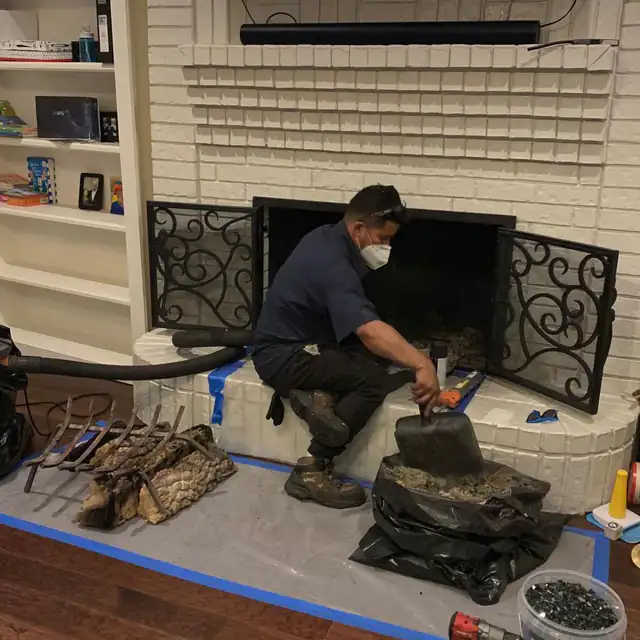
Drop cloths down and a vacuum on the hearth before anything is opened 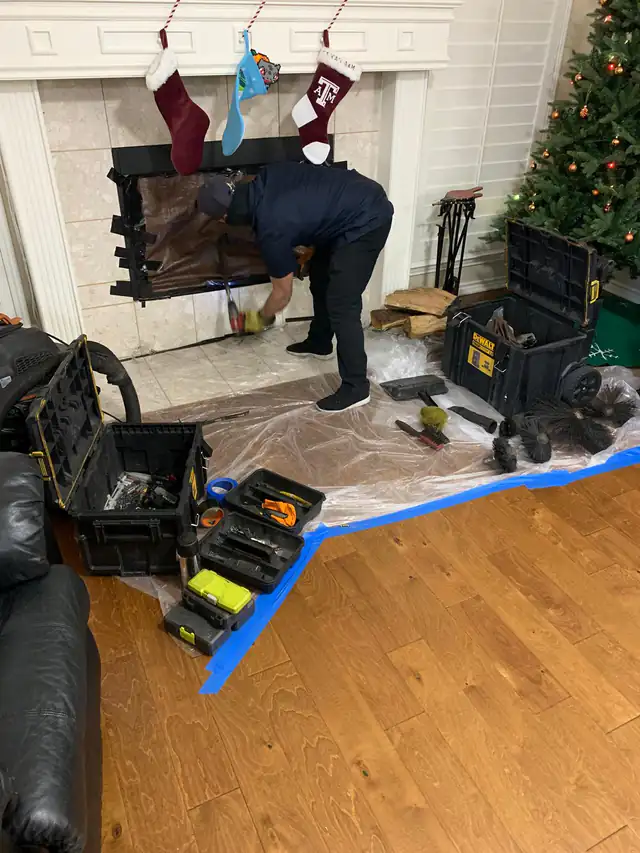
Working at the protected fireplace opening, with brushes and tools on covered floors 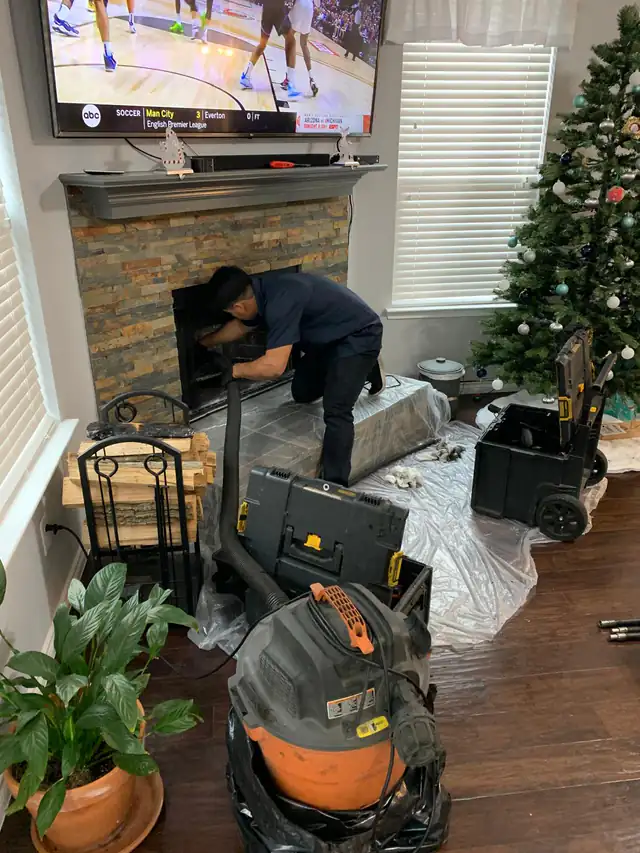
At the stone-front fireplace, with the hearth covered and a vacuum alongside 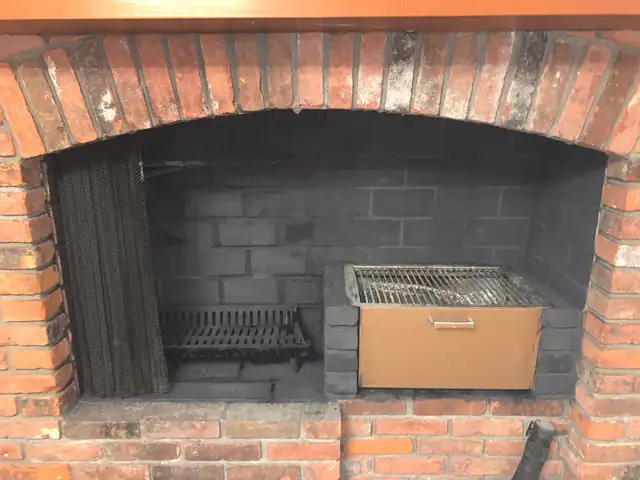
Firebox cleaned back to the brick, damper working 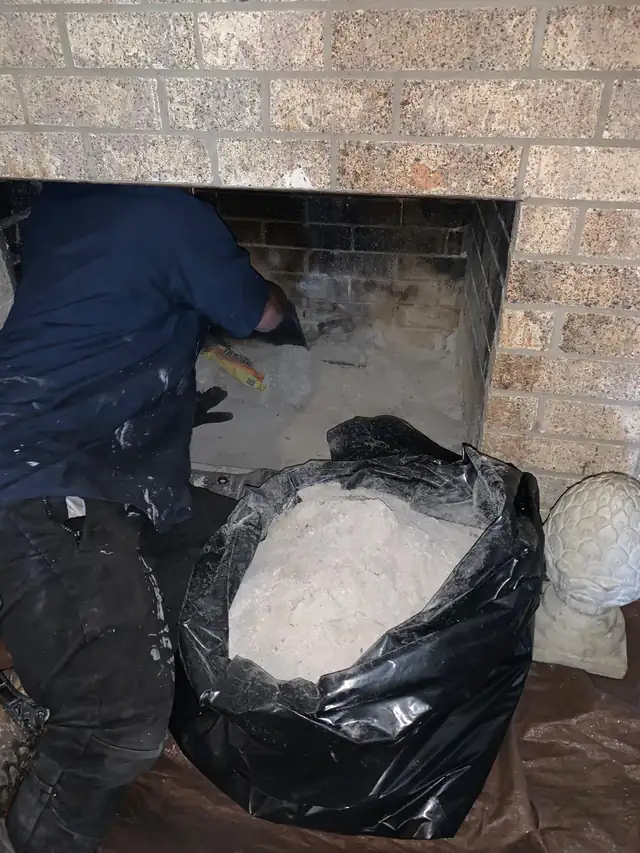
Clearing the firebox down to bare brick, floors covered
Meet the team
The people behind the work
Manny, Zack and Myke — meet the people behind Chimney Expert Solutions.
Our team and story →
Manny
Owner

Zack
Manager

Myke
Technician
FAQ
Chimney Sweep in Kent: questions we hear
The fireplace in our unit is boarded up. Is that safe?
It depends on what was done above it. Sealing the bottom while the top stays open is common and it quietly ruins the flue, because water goes in and cannot get out. It is also worth confirming nothing else vents into that flue. Both questions are answered from the roof and with a camera rather than from inside the room.
Can a long-closed fireplace be brought back into use?
Sometimes, and a scan decides it. What we are looking for is how much damage the years of sealed-bottom, open-top exposure did to the flue, whether anything else was connected to it in the meantime, and what condition the firebox and damper are in. On a rental there is also a conversation to have about whether an open fireplace is something you want tenants using at all.
Why does a shared flue matter for carbon monoxide?
Because a problem in one unit's appliance can reach another unit's air. If two apartments' appliances connect to the same flue and one spills, the products do not stay politely in the apartment they came from. That is the case for alarms on every level and near every sleeping area in a divided building, and for looking at the venting as one system rather than one apartment at a time.
Do those creosote-sweeping logs work?
Partly, and not as a replacement. Creosote-modifying products can dry out and loosen stage-three glaze, which genuinely makes a subsequent sweep more effective. What they cannot do is remove anything. The deposit still has to be brushed loose and carried out of the flue by someone with rods and a vacuum.
The fireplace was converted to gas years ago. Does the old creosote still matter?
Yes. Wood-era deposits stay where they are and stay combustible, and a conversion usually leaves the flue badly oversized for the new appliance — so it runs cold and condenses moisture onto exactly those deposits. Conversions are a good reason for a sweep and a camera look, not a reason to skip one.
Free estimate
Chimney Sweep in Kent?
Tell us what you’re seeing and we’ll call or text back to schedule a look — with photos of what we find and an honest read on what’s urgent and what can wait. That evidence-first method is the way we work on every job.
Call and tell us what the chimney's doing — if we're up on a roof, we'll call you back. Other ways to reach us are on the contact page, and Kent is one of the communities we cover across Greater Cleveland.
Call216-647-1882