
Portage County, Ohio
Chimney Leak Repair & Waterproofing in Kent, OH
Finding where the water actually gets in — crown, cap, flashing, masonry or condensation — and fixing that, not caulking symptoms.
What chimney leak repair involves in Kent is set by the housing stock here: A downtown and campus ring of older houses long since divided into units — decommissioned flues sealed at the bottom and open at the top, appliances added across decades, and shared flues serving separate households.
Kent is a river town with a nineteenth-century downtown and a university in the middle of it, and that combination has shaped its housing more than any building era has. A very large share of the older homes in the streets around campus and downtown are no longer single-family houses. They were divided into units — two, three, five, sometimes more — over the second half of the twentieth century, and most of them are still divided today.
A leaking chimney is a symptom with at least five different causes, and fixing the wrong one is why so many chimney leaks come back. Water can enter through a cracked crown, a missing or undersized cap, failed flashing where the chimney meets the roof, saturated porous masonry, or condensation forming inside an oversized flue. Each of those has a different repair, and none of them is solved by sealant on whatever surface was easiest to reach. Our leak work starts with diagnosis at roof level and inside the house, so the fix targets the actual entry point.
What we find on Kent chimneys that leads to chimney leak repair
Flues sealed at the bottom and open at the top
A decommissioned fireplace in a divided house is usually blocked at the firebox and left entirely alone above. That combination is worse than either extreme. Rain and snow enter at an uncapped top and cannot evaporate out at the bottom, so the interior of the flue stays wet through the winter and freezes repeatedly. Tile joints and brick take the damage from the inside where nobody will see it for twenty years. Doing it properly is not complicated — cap the top, keep the crown sound, and leave a controlled path for the flue to breathe — and it costs a fraction of the masonry it saves.
What water does if the leak is left
The stain on the ceiling is the least of it. Once water has an established route into a chimney, three things happen in parallel. The masonry deteriorates faster, because every wet freeze widens the path the water is already using. The framing around the chimney takes moisture it was never designed to take, and rot in a concealed chase around a chimney is both slow and expensive to find. And inside the flue, water attacks mortar joints between the flue tiles, so a water problem at the top becomes a liner problem in the middle.
There is a fourth, less obvious one: a chimney with water in it smells. The musty odour that shows up in a fireplace in warm weather is damp deposits, and it is a reliable early sign of a water path that has not yet produced a visible stain. Leak repairs sit near the top of the fix-this-season list, not because a small stain is an emergency, but because the path is established and Cleveland winters are very good at widening established paths.
The fixes, matched to the cause
- Cracked but structurally sound crown: a flexible elastomeric crown coating bridges the crazing and seals it for years.
- Failed or never-adequate crown: a full recast in reinforced concrete, with a drip edge overhanging the brick and an expansion joint around the flue tile so thermal movement does not crack it again.
- No cap or a failed cap: a stainless cap sized and anchored to the flue, with screen. This one repair often ends the leak entirely.
- Failed flashing: proper step flashing and counterflashing reset into a cut reglet in the mortar joint, not sealant over the old work. Where the roof is at the end of its life, this gets coordinated with the roofing rather than done twice.
- Open joints and spalled brick on the weather face: repointing and unit replacement, because a repellent over open joints is a waste of a product.
- Genuinely porous but sound masonry: a vapor-permeable siloxane-type water repellent that sheds driven rain while letting the wall dry outward.
- Condensation in an oversized flue: correctly sized liner, which is a relining job rather than a waterproofing one.
- A wide chimney with no cricket on the up-slope side: a cricket, the small saddle roof that diverts water and snow around the stack instead of letting it pool against it.
This page covers chimney leak repair as it plays out in Kent. The full chimney leak repair & waterproofing page walks the whole job — every stage, what changes the scope, and what we do about each of them. For everything else we handle in this suburb, see chimney services in Kent.
How we handle a leaking chimney
- Roof-level diagnosis: crown, cap, flashing, masonry and shoulder — photographed
- Interior check: firebox, smoke chamber and damper for staining, rust and damp
- Flashing repair or a full re-flash where the roofline seal has failed
- Crown repair or full recast with a drip edge and an expansion joint at the flue
- Vapor-permeable masonry repellent on porous brick — never paint or film-forming sealers
- An honest call on whether the 'leak' is actually flue condensation
- The fix in writing, matched to the diagnosed entry point
Our work
Chimney Leak Repair & Waterproofing, photographed on the job
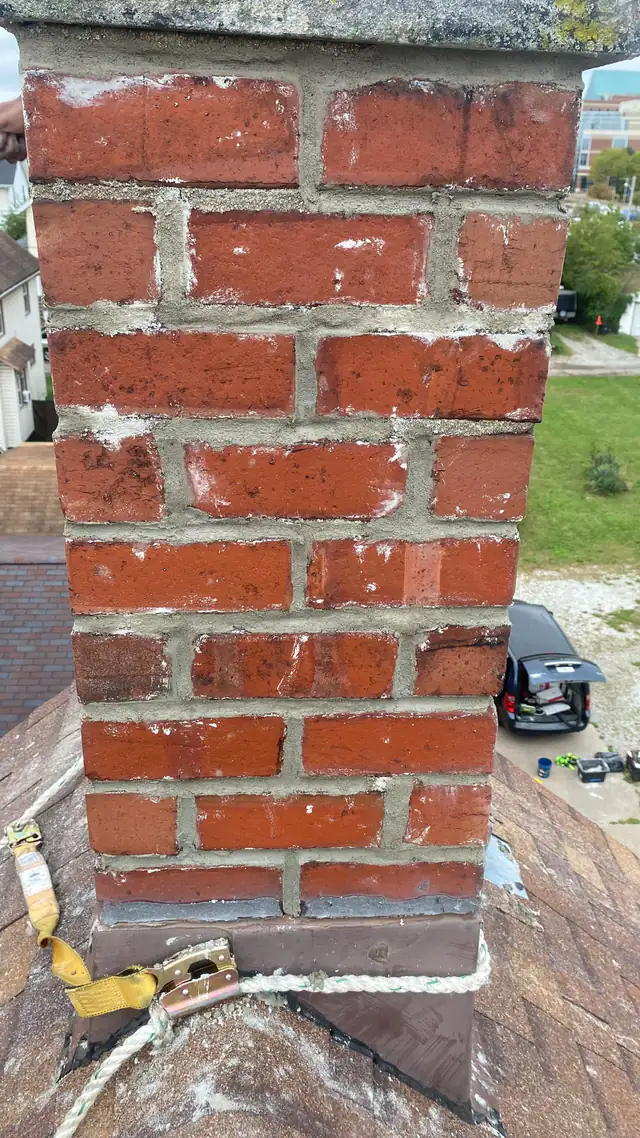
Roped in on a steep roof — repointed, flashing sealed 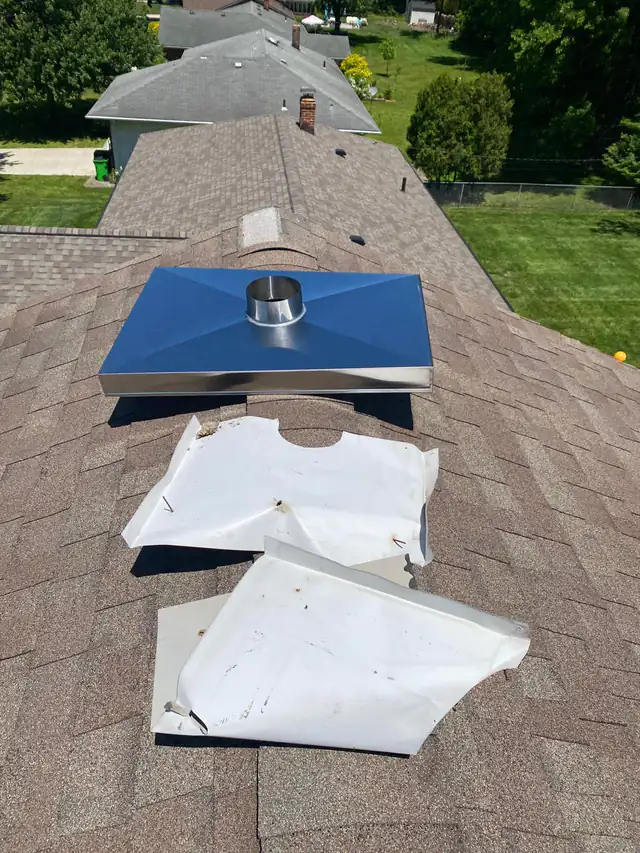
Replacement chase cover beside the removed cover sections on the roof 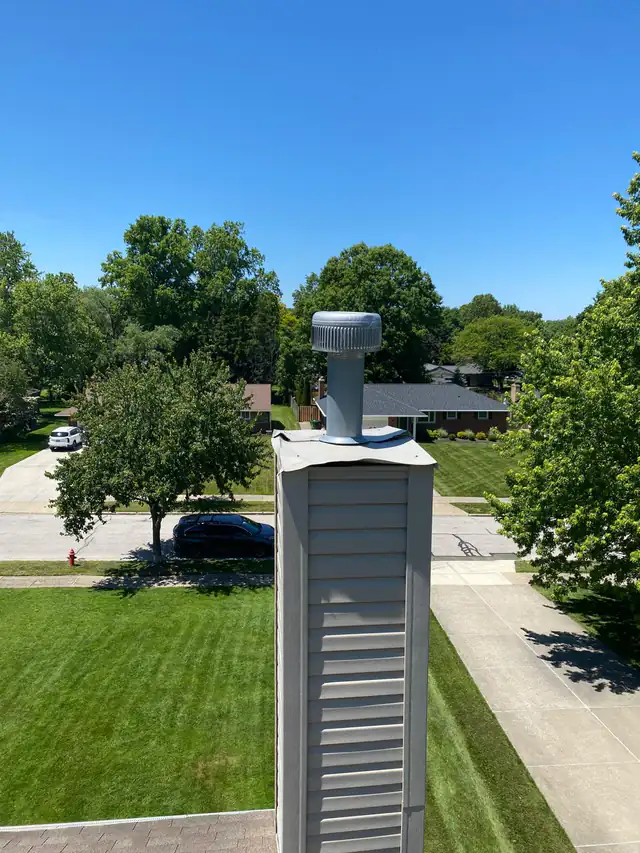
Before — the old chase cover, with bent and raised edges around the vent 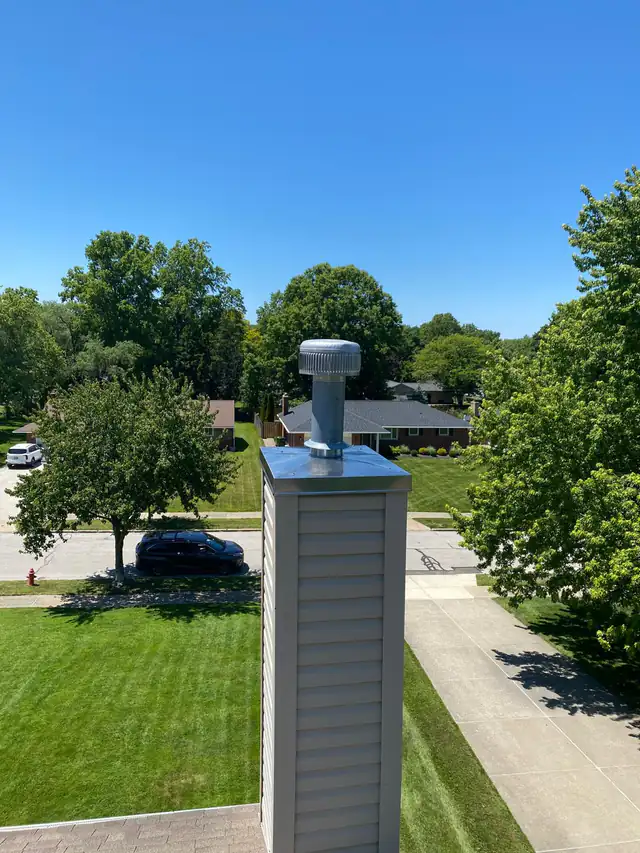
After — replacement chase cover fitted around the vent 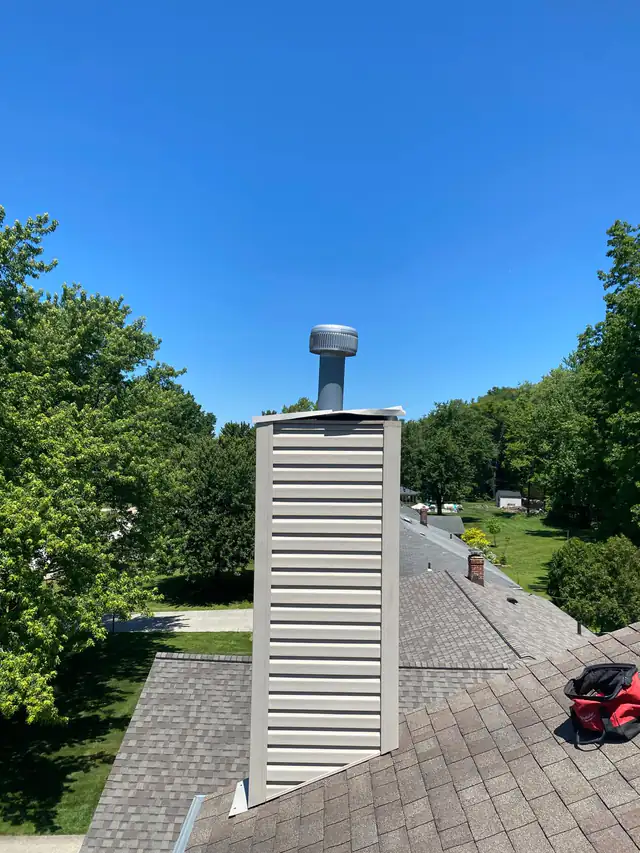
Before — the old cover from the roof side, with a raised edge 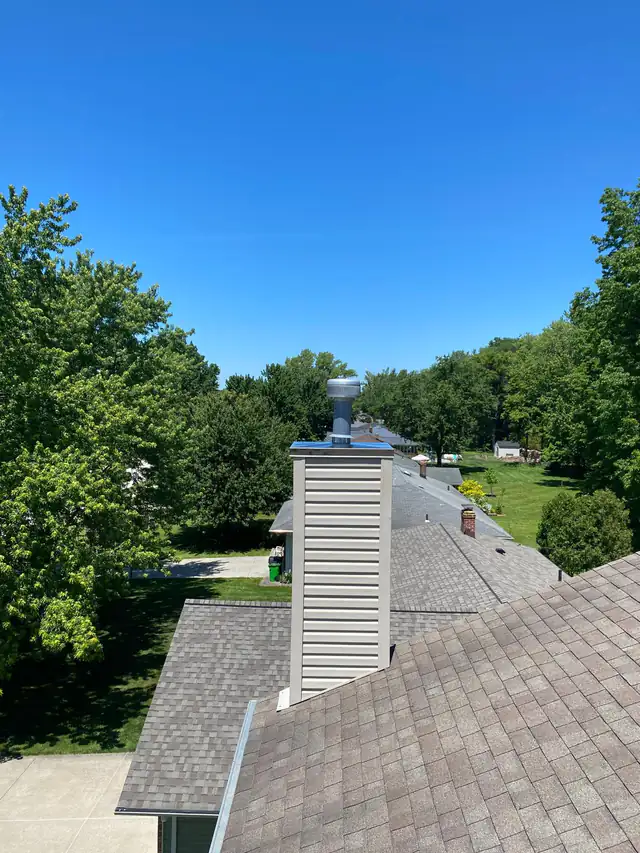
After — the replacement cover and chase, viewed from the roof
Meet the team
The people behind the work
Manny, Zack and Myke — meet the people behind Chimney Expert Solutions.
Our team and story →
Manny
Owner

Zack
Manager

Myke
Technician
FAQ
Chimney Leak Repair in Kent: questions we hear
We own a rental here. What should we actually have done?
A survey of every flue in the building with a camera, a written record of which appliance connects to which flue, and photographs you keep. That gives you a baseline, tells you whether any decommissioned flue is quietly taking on water, and answers the question that comes up when a tenant reports a smell or a buyer's inspector asks. It is a single visit and it does not need repeating annually unless something changes.
The fireplace in our unit is boarded up. Is that safe?
It depends on what was done above it. Sealing the bottom while the top stays open is common and it quietly ruins the flue, because water goes in and cannot get out. It is also worth confirming nothing else vents into that flue. Both questions are answered from the roof and with a camera rather than from inside the room.
Can a long-closed fireplace be brought back into use?
Sometimes, and a scan decides it. What we are looking for is how much damage the years of sealed-bottom, open-top exposure did to the flue, whether anything else was connected to it in the meantime, and what condition the firebox and damper are in. On a rental there is also a conversation to have about whether an open fireplace is something you want tenants using at all.
Can you fix a chimney leak in winter?
Some of it. Caps, some flashing work and temporary measures can be done in cold weather. Anything involving mortar or a concrete crown recast needs sustained temperatures above roughly 40°F to cure, so a winter diagnosis often means a temporary fix now and the permanent one in spring. We will tell you which category yours is in rather than laying masonry that will not set.
Should the chimney be waterproofed as routine maintenance?
Not as routine, no. A repellent is worth doing on masonry that is genuinely absorbing water and is otherwise sound, and it is pointless or harmful anywhere else. On a chimney with open joints, the joints get pointed first. On a chimney with a cracked crown, the crown is the actual hole. Selling a spray-on treatment to a chimney that needs masonry work is one of the more common bad practices in this trade.
Free estimate
Chimney Leak Repair in Kent?
Tell us what you’re seeing and we’ll call or text back to schedule a look — with photos of what we find and an honest read on what’s urgent and what can wait. That evidence-first method is the way we work on every job.
Call and tell us what the chimney's doing — if we're up on a roof, we'll call you back. Other ways to reach us are on the contact page, and Kent is one of the communities we cover across Greater Cleveland.
Call216-647-1882