
Summit County, Ohio
Chimney Inspection in Cuyahoga Falls, OH
Camera inspection of the full flue, plus the firebox, damper, crown, cap and flashing — documented in photos, explained in plain language.
What chimney inspection involves in Cuyahoga Falls is set by the housing stock here: Older river-valley neighborhoods and postwar streets under a heavy mature canopy — blocked cap screens, permanently shaded masonry that never dries, tree-access animal entry, and draft affected by what is growing overhead.
Cuyahoga Falls follows the river gorge north of Akron, and the thing you notice about it from a roof is how much of the city is under trees. The older neighborhoods off Front Street and Portage Trail, the streets running down toward the gorge, and most of the postwar housing east and north of them all sit beneath a mature canopy that has had seventy or a hundred years to grow up over the rooflines.
You cannot see the part of the chimney that matters most. From the ground a stack can look perfectly sound while the flue tiles inside are cracked, shifted, or missing their mortar joints entirely. A compromised flue is exactly how heat and combustion gases reach the wood framing that surrounds every masonry chimney, and there is no version of that story with a good ending. An inspection puts a camera up the full length of the flue and eyes on every accessible part of the system, and gives you the photographs rather than just a verdict.
What we find on Cuyahoga Falls chimneys that leads to chimney inspection
Debris in the cap, and a stack that never dries
A chimney under a canopy collects everything the trees shed — seeds, samaras, needles, twigs, leaf litter — and it collects it in the spark screen of the cap, where it packs down into a mat. A blocked screen restricts the flue, which shows up as poor draft or smoke in the room, and on a heating flue a restriction is a carbon monoxide question rather than a comfort one. The same shade means the masonry stays wet after every rain. Masonry that does not dry between wettings freezes wetter, spalls faster, and grows the green and black film you can see from the yard. Neither is expensive to deal with; both are invisible from the ground.
Animals, and the ones you are not allowed to remove
Raccoons treat an uncapped chimney as a hollow tree and squirrels and starlings do much the same, and an accessible roof under branches is how they get there. There is one case that catches people out. Chimney swifts are a migratory bird protected under federal law, and an active nest with eggs or young cannot legally be removed — the honest answer, when we find one, is that the flue is out of service until the birds fledge, usually a matter of weeks, and then it gets cleaned and capped so it does not happen again. We would rather tell you that than quietly do something we should not.
Branches over the chimney top
Limbs hanging above or immediately beside a flue termination are worth dealing with for two separate reasons. The obvious one is embers: a wood fire sends sparks up the flue, a screened cap catches most of them, and dry foliage directly overhead is the one place you do not want the rest to land. The less obvious one is draft. A chimney needs clear air above it to work, and a dense canopy can create the same kind of turbulence and downward pressure a taller building would. If your fireplace draws noticeably better in winter than it does in early autumn, the leaves are a reasonable suspect.
After a chimney fire, a storm, or years of disuse
A chimney fire does not have to be dramatic to do damage. Many are brief and quiet enough that nobody in the house realizes what happened, and the harm is done to the flue tiles by thermal shock: a rapid temperature spike cracks them, and the crack does not close when it cools. That is why the standard calls for a Level 2 after an operating malfunction rather than leaving it to how bad it looked.
Storms are the other trigger. A lightning strike on a chimney can crack masonry from the inside out, and high wind can shift a top course or tear flashing loose without leaving anything visible from the yard. And a fireplace that has sat unused since the last owner is genuinely unknown territory, and the common findings are a nest, a damper rusted shut, a flue abandoned mid-conversion, or a liner that stops partway up. None of that is visible from the hearth.
The three inspection levels, in plain English
NFPA 211 defines three levels, and the vocabulary matters because it is the difference between a flashlight through the damper and a real answer. Most of what a Cleveland homeowner needs is a Level 2.
Level 1
A visual check of readily accessible parts, appropriate when nothing about the system has changed and it is under continued service. It confirms the chimney is structurally sound, the appliance connection is correct, and the flue is clear of obstruction. It does not tell you the condition of the flue's interior surfaces.
Level 2
Everything in Level 1 plus a camera scan of the flue's full interior and access to accessible portions of the attic, crawl space and basement where the chimney passes through. The standard calls for Level 2 when a property is sold or transferred, when the appliance or the fuel changes, when a liner is added or altered, and after an operating malfunction or an external event that may have caused damage. This is what we quote by default, because it is the only level that answers the question people are actually asking.
Level 3
Adds removal of building or chimney components to reach a concealed area, and it is uncommon. A Level 3 happens when a Level 2 found something serious and the extent of it cannot be established any other way. Nobody should be quoting you a Level 3 up front.
This page covers chimney inspection as it plays out in Cuyahoga Falls. The full chimney inspection page walks the whole job — every stage, what changes the scope, and what we do about each of them. For everything else we handle in this suburb, see chimney services in Cuyahoga Falls.
What an inspection covers
- Camera scan of the full flue interior — every tile joint, documented
- Firebox, damper, smoke chamber and appliance connection condition
- Crown, cap, and the top courses of masonry photographed from the roof
- Flashing and the roofline intersection — the most common leak path
- Exterior masonry: spalling brick, open mortar joints, efflorescence
- A photo report with findings ranked: urgent, plan-for, fine
Meet the team
The people behind the work
Manny, Zack and Myke — meet the people behind Chimney Expert Solutions.
Our team and story →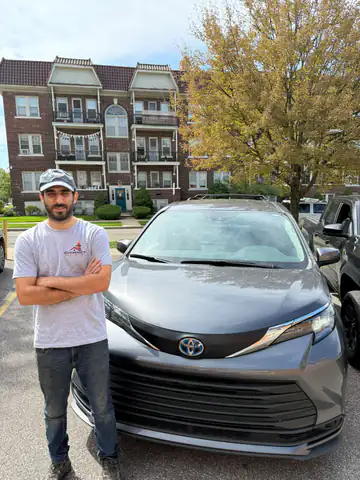
Manny
Owner
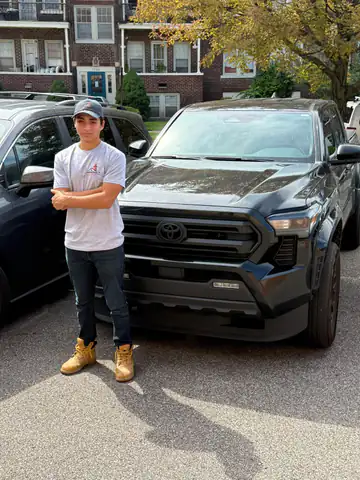
Zack
Manager

Myke
Technician
FAQ
Chimney Inspection in Cuyahoga Falls: questions we hear
We hear scratching in the chimney. What happens next?
First we identify what it is, because that determines what can be done. Raccoons, squirrels and starlings can be dealt with and the flue cleaned and capped. Chimney swifts are federally protected migratory birds, and an active nest has to be left alone until the young fledge — after which the flue gets cleaned and a proper cap goes on so it does not recur. We will tell you which you have before quoting anything.
Do we really need a cap with a screen if we are surrounded by trees?
Especially if you are. The screen is what keeps embers in and animals and debris out, and under a canopy it is doing all three jobs constantly. What it does need is a look each year, because the same screen that catches seeds and leaf litter will pack solid over a season and restrict the flue. A cap is not a fit-and-forget component in this neighborhood.
Should we cut back the branches over the chimney?
Where it is practical, yes. Foliage directly above a flue is the worst place for a spark to land, and a dense canopy over the top can disturb the airflow the chimney needs to draw. A fireplace that works noticeably better once the leaves are down is telling you something. That said, tree work is not what we do — we will point out what is affecting the chimney and leave the arborist decision to you.
Can you inspect a chimney that hasn't been swept?
We can look at the masonry, the crown, the cap and the flashing, but a camera cannot see a flue wall through a layer of creosote. If the flue is loaded, the scan is not telling you anything about tile condition. That is why sweep-plus-inspection is the normal booking — the sweep is what makes the inspection able to answer the question.
How long does an inspection take?
A single flue with reasonable roof access is usually under two hours including the walkthrough. Multiple flues, difficult roofs, or an appliance that has to be disconnected extend it. The camera footage takes as long as it takes; rushing that part is how findings get missed.
Free estimate
Chimney Inspection in Cuyahoga Falls?
Tell us what you’re seeing and we’ll call or text back to schedule a look — with photos of what we find and an honest read on what’s urgent and what can wait. That evidence-first method is the way we work on every job.
Call and tell us what the chimney's doing — if we're up on a roof, we'll call you back. Other ways to reach us are on the contact page, and Cuyahoga Falls is one of the communities we cover across Greater Cleveland.
Call216-647-1882