
Cuyahoga County, Ohio
Chimney Leak Repair & Waterproofing in University Heights, OH
Finding where the water actually gets in — crown, cap, flashing, masonry or condensation — and fixing that, not caulking symptoms.
What chimney leak repair involves in University Heights is set by the housing stock here: Tightly packed brick and frame colonials from a compressed build window around 1930 — matching builder details that are reaching the end of their service life on the same schedule, and a long history of surface patching.
University Heights is small, dense and unusually uniform. Most of it was platted and built in a compressed window either side of 1930, filled in after the war, and laid out on narrow lots along Silsby, Miramar, Warrensville Center and the streets running off Cedar and Fairmount, with John Carroll University in the middle of it. The houses are mostly two-story brick and frame colonials of a very consistent size and plan.
A leaking chimney is a symptom with at least five different causes, and fixing the wrong one is why so many chimney leaks come back. Water can enter through a cracked crown, a missing or undersized cap, failed flashing where the chimney meets the roof, saturated porous masonry, or condensation forming inside an oversized flue. Each of those has a different repair, and none of them is solved by sealant on whatever surface was easiest to reach. Our leak work starts with diagnosis at roof level and inside the house, so the fix targets the actual entry point.
What we find on University Heights chimneys that leads to chimney leak repair
Overlay crowns troweled on top of the old one
The most common bad repair we find in this city is a bag of ready-mix troweled over a cracked crown and feathered out to the brick edges. It looks solved for about two seasons. An overlay has nothing to bond into except a surface that is already failing, it has no overhang past the brick and no expansion gap around the flue tile, and it is usually thicker at the middle than the edges so it cracks along the same lines the original did. Water then gets under it and stays there, which is worse than the crack it covered. A crown that lasts gets the old one removed, is cast with a drip edge past the brick, and is isolated from the flue tile with a flexible joint.
One builder, one detail, one failure down the whole street
The chimneys on a University Heights street were built to the same drawing by the same crews in the same season, which means their corbelled tops, crown thicknesses and flue sizes match. Nine decades later they are failing in step. If your neighbor's stack is shedding brick at the top three courses, yours is very likely two or three winters behind it rather than immune. That is genuinely useful — it makes the inspection predictive instead of purely reactive — but it also means a repair here should address the detail that failed, not just the bricks that fell.
Why sealing the whole chimney is usually a mistake
The instinct when a masonry chimney leaks is to coat it, and the products that come to hand at a hardware store are mostly film-forming: acrylic sealers, masonry paint, silicone. In a freeze-thaw climate these do real damage. Brick and mortar have to be able to release moisture outward. A film-forming coating stops that while doing nothing about the water arriving from the crown or the flashing, so the moisture that gets in stays in — and every freeze then works on masonry that cannot dry. Painted and sealed chimneys spall spectacularly, and the damage shows up across the whole face rather than at one entry point.
Where a repellent is genuinely appropriate, the product class matters: silane and siloxane repellents penetrate and repel liquid water while remaining vapor permeable, so the wall still breathes. And it is applied after the joints are sound, never as a substitute for pointing them. A repellent is a raincoat, not a roof, and it will never fix a crown or a piece of flashing.
What drives the cost of leak work
- The diagnosis versus the repair. Finding the entry point is a defined piece of work; the fix depends entirely on what the finding is, which is why an honest quote for 'a chimney leak' cannot be given over the phone.
- Which component failed. A cap is a small job. A full crown recast is a bigger one. A complete re-flash with the roofing coordinated is bigger again.
- Roof access, pitch and material, as with all chimney work.
- Whether more than one entry point is active — which is common, because the conditions that kill a crown also kill flashing of the same age.
- How much interior damage there is. We do the chimney; drywall, plaster and framing repair inside is separate work and we will say so plainly rather than quietly including it.
- Whether the masonry needs pointing before any repellent is worth applying.
This page covers chimney leak repair as it plays out in University Heights. The full chimney leak repair & waterproofing page walks the whole job — every stage, what changes the scope, and what we do about each of them. For everything else we handle in this suburb, see chimney services in University Heights.
How we handle a leaking chimney
- Roof-level diagnosis: crown, cap, flashing, masonry and shoulder — photographed
- Interior check: firebox, smoke chamber and damper for staining, rust and damp
- Flashing repair or a full re-flash where the roofline seal has failed
- Crown repair or full recast with a drip edge and an expansion joint at the flue
- Vapor-permeable masonry repellent on porous brick — never paint or film-forming sealers
- An honest call on whether the 'leak' is actually flue condensation
- The fix in writing, matched to the diagnosed entry point
Our work
Chimney Leak Repair & Waterproofing, photographed on the job
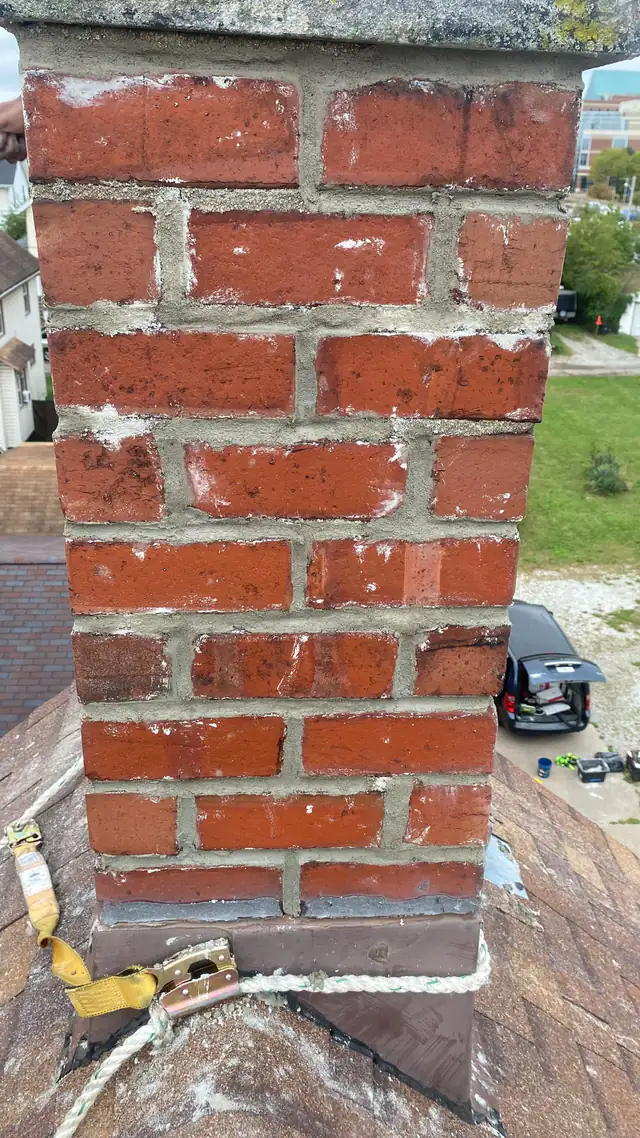
Roped in on a steep roof — repointed, flashing sealed 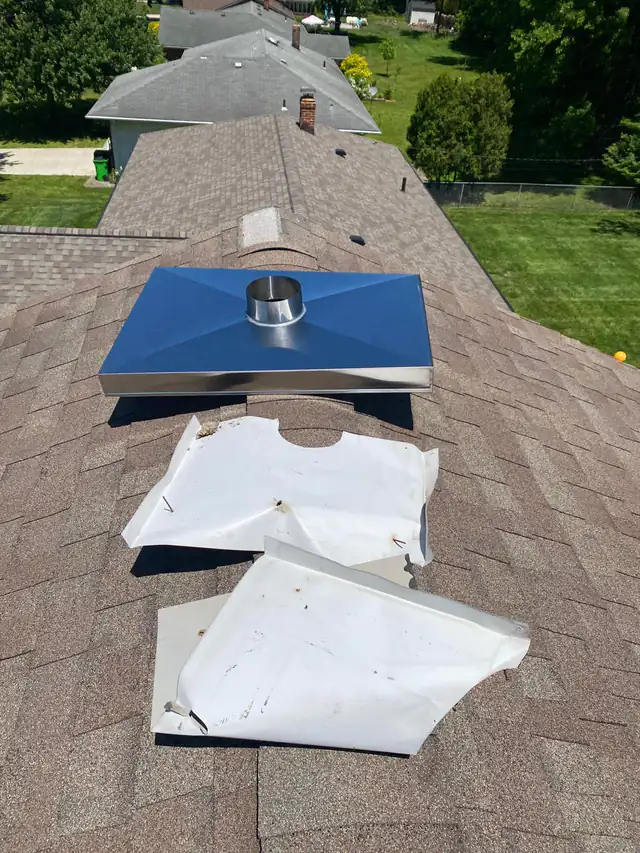
Replacement chase cover beside the removed cover sections on the roof 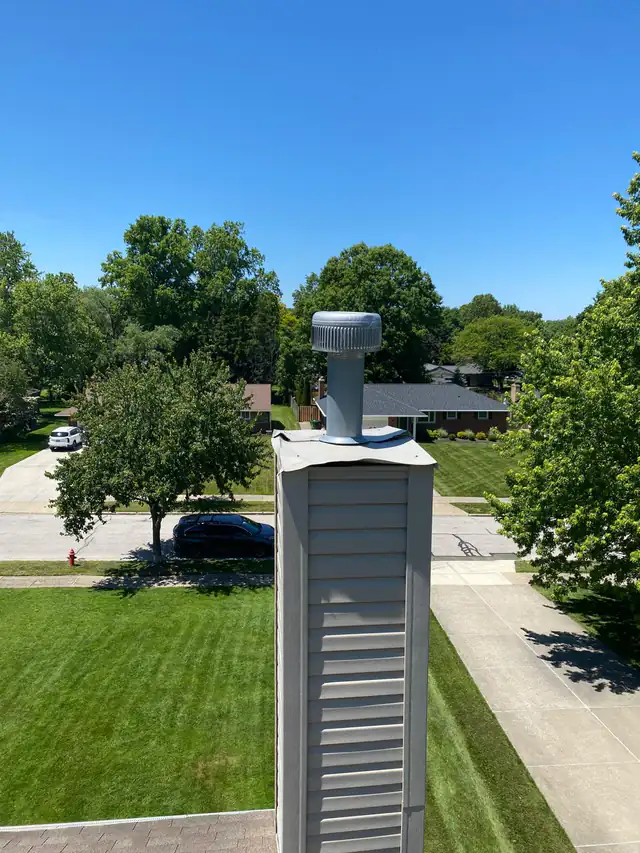
Before — the old chase cover, with bent and raised edges around the vent 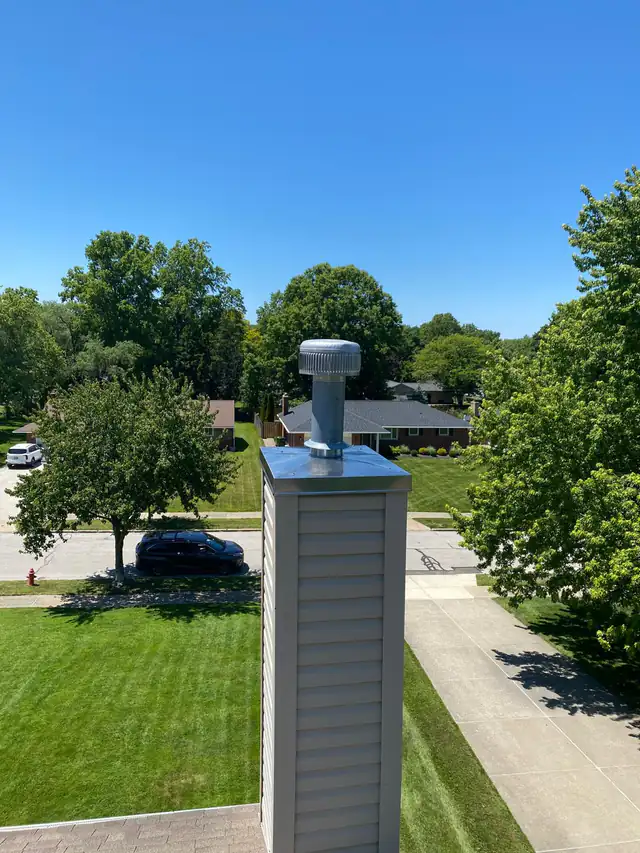
After — replacement chase cover fitted around the vent 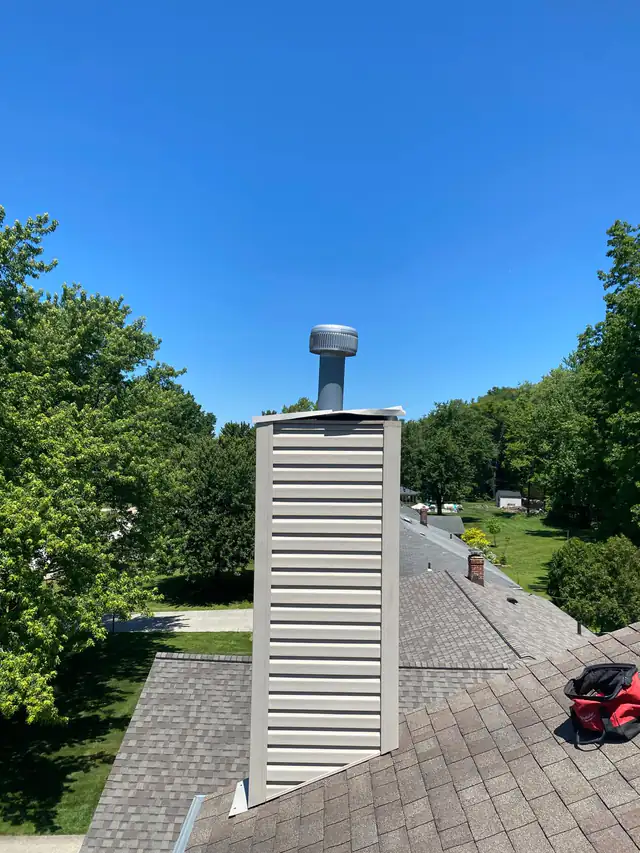
Before — the old cover from the roof side, with a raised edge 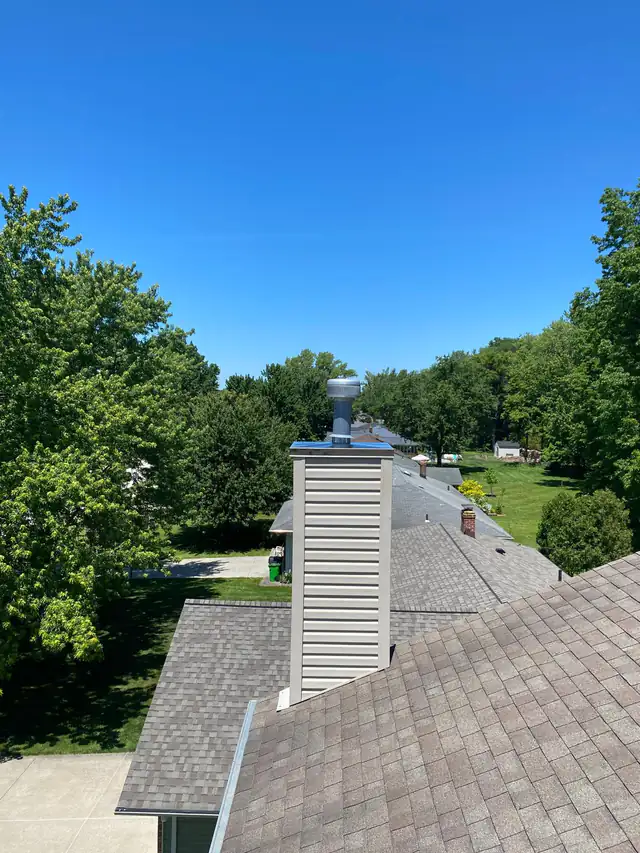
After — the replacement cover and chase, viewed from the roof
Meet the team
The people behind the work
Manny, Zack and Myke — meet the people behind Chimney Expert Solutions.
Our team and story →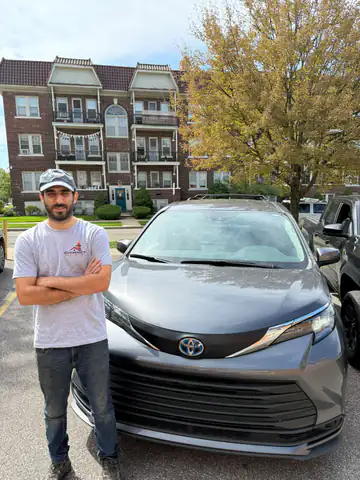
Manny
Owner
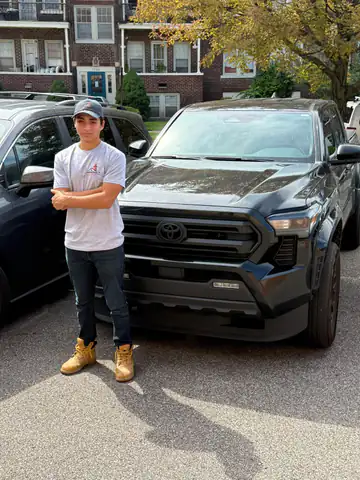
Zack
Manager
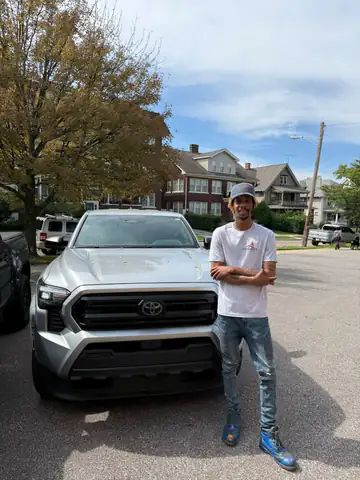
Myke
Technician
FAQ
Chimney Leak Repair in University Heights: questions we hear
Our crown was resurfaced a few years ago and it's cracked again. Why?
Because a resurface is not a crown. Mortar or ready-mix spread over an existing cracked crown has nothing sound to bond into, no overhang to throw water clear of the brick, and no gap around the flue tile to absorb movement, so it re-cracks along the original fault and then holds water against the masonry. A cast crown that is removed and replaced properly is more work up front and it stops the cycle.
Three houses on our street have had chimney work this year. Is that a coincidence?
Almost certainly not. These blocks were built by the same builders in the same seasons to the same details, so the chimneys have a shared birthday and a shared design life. When one original crown or corbel detail lets go, its neighbors are usually within a few winters of the same thing. It is worth an inspection while yours is still a repair rather than a rebuild.
Can we put gas logs in our original fireplace?
Often yes, but the set has to be sized to the firebox rather than chosen from a picture, the flue has to be scanned first, and the damper arrangement matters. An oversized set in a small 1930 firebox concentrates heat on masonry that was never built for it, and vented logs need the flue open to work safely. We would want to see the firebox and the flue before recommending anything.
My roofer says it's the chimney and the chimney guy says it's the roof. Who's right?
That standoff almost always means flashing, the one joint where the two trades meet and neither owns it. We diagnose the whole intersection together — flashing, counterflashing, crown, cap and masonry — and give you one answer with photographs behind it. If the finding genuinely is the roof, we will tell you that too.
Can you fix a chimney leak in winter?
Some of it. Caps, some flashing work and temporary measures can be done in cold weather. Anything involving mortar or a concrete crown recast needs sustained temperatures above roughly 40°F to cure, so a winter diagnosis often means a temporary fix now and the permanent one in spring. We will tell you which category yours is in rather than laying masonry that will not set.
Free estimate
Chimney Leak Repair in University Heights?
Tell us what you’re seeing and we’ll call or text back to schedule a look — with photos of what we find and an honest read on what’s urgent and what can wait. That evidence-first method is the way we work on every job.
Call and tell us what the chimney's doing — if we're up on a roof, we'll call you back. Other ways to reach us are on the contact page, and University Heights is one of the communities we cover across Greater Cleveland.
Call216-647-1882