
Cuyahoga County, Ohio
Chimney Repair & Rebuilds in Beachwood, OH
Masonry repair from spot fixes to full stack rebuilds — spalled brick, failed joints, and chimneys the freeze-thaw cycle has taken apart.
What chimney repair involves in Beachwood is set by the housing stock here: Postwar through modern housing where the chimney is often sound but the system is not — gas log conversions on unswept flues, tight houses with powerful exhaust equipment, and hard-weathered outdoor fireplaces.
Beachwood built out later than the inner-ring suburbs around it, mostly from the 1950s onward, and kept building: ranches and split-levels of the postwar decades near Richmond and Chagrin, then larger colonials, then substantial newer houses. What that produces is a market where the chimney itself is often in decent physical shape and the interesting problems are about how the fireplace is being used and how the house behaves around it.
Northeast Ohio is close to a worst case for exterior masonry. A Cleveland chimney runs through dozens of freeze-thaw cycles every winter: water finds a hairline crack or an open joint, freezes, expands by about nine percent, and levers the masonry apart a little more each time. Repeat that across eighty winters on the most weather-exposed brickwork the house owns, and you get the local pattern. Brick faces shed, mortar goes soft and sandy, top courses shift, and eventually a stack that was fine at the last home sale needs rebuilding.
What we find on Beachwood chimneys that leads to chimney repair
Outdoor fireplaces and pool-house chimneys
A lot of Beachwood properties have an outdoor masonry fireplace, a covered-patio hearth or a pool-house stack, and they weather far harder than anything on the house. There is no roof over them, so every face is a weather face; the firebox itself fills with rain and snow; and they were frequently built without a proper crown, a cap, or a drainage detail at the hearth. Freeze-thaw does in ten years to an outdoor stack what it takes forty to do on a sheltered one. They also need sweeping and inspection like any other wood-burning appliance, and they almost never get it.
Gas logs dropped into a wood firebox
A vented gas log set needs the flue open to run, so the damper is normally clamped or blocked so it cannot be closed — and that is correct, not a defect. What goes wrong is everything around it. The flue is usually never swept before the conversion, so old creosote sits there indefinitely. The pilot runs for months, putting a slow trickle of moisture and combustion products into a cold masonry flue that never gets hot enough to dry, which corrodes the damper and eats tile joints. And with the damper permanently open the house loses conditioned air up the chimney every day of the year. A top-sealing damper solves the last part; the flue still wants an annual look.
The house pulling harder than the chimney can push
A chimney vents on a very small pressure difference. A 1,200 CFM kitchen hood in a tight house can easily overcome it, and when it does, air comes down the fireplace flue instead of up it — bringing smoke, odor, or the exhaust from a gas appliance with it. The symptoms are distinctive: the fireplace smokes only when the range hood is on, or only with the dryer running, or only when the upstairs bath fans are going. It is not a chimney defect and no amount of masonry work fixes it. The answer is a makeup-air path, and diagnosing it starts with turning appliances on one at a time and watching what the flue does.
What happens if the masonry is left
The failure curve is not linear. A chimney with a few open joints deteriorates slowly, because the water is only reaching a small volume of masonry. Once the joints are open across a face, water enters the middle of the wall, and the number of surfaces available to freeze multiplies. That is when a stack goes from needing repointing to needing rebuilding in a handful of seasons.
There are three costs to waiting and only one of them is the masonry. The second is water inside the house: a chimney taking on water at the top delivers it to the ceiling, the framing and the drywall around the chase, and rot in the framing next to a chimney is both expensive and hard to see. The third is safety. Loose brickwork forty feet up over a driveway or a walkway is a different category of problem from a maintenance item, and a stack that has started to lean should not be left through a winter of ice loading.
Repair, partial rebuild, or full rebuild
Depth of damage decides it, and there is a defensible line between the three that we will show you on your own chimney before quoting anything.
Repair and repointing hold well when the brick units themselves are sound and the failure is in the joints, with a limited number of spalled bricks to swap out. This is the cheapest outcome and the right one more often than a homeowner braced for bad news expects.
A partial rebuild — taking the stack down to sound masonry, usually at the roofline or the shoulder, and rebuilding from there — is the correct call when the damage is concentrated above the roof, which is the norm here. The masonry inside the heated envelope of the house is usually in far better shape, because it never sees the freeze-thaw exposure. Rebuilding only what has failed is not a compromise, it is the accurate scope.
A full rebuild from the foundation or the firebox up is for stacks that have deteriorated below the roofline, that have structural cracking through the body, or where the flue itself has to be reconstructed. It is a substantial job and we do not recommend it lightly. What we also will not do is repoint a chimney into another two winters when the evidence says it needs rebuilding, because that is the same money spent twice.
This page covers chimney repair as it plays out in Beachwood. The full chimney repair & rebuilds page walks the whole job — every stage, what changes the scope, and what we do about each of them. For everything else we handle in this suburb, see chimney services in Beachwood.
Repair and rebuild work we take on
- Spalled and cracked brick replacement, matched to the existing brick
- Partial rebuilds from the roofline or shoulder up
- Full chimney rebuilds where the stack is beyond saving
- Crown replacement as part of any rebuild — a rebuild under a bad crown is wasted money
- Flue tile replacement while the stack is open, where it is warranted
- Firebox masonry and refractory panel repair
- Written scope with photos before, during and after the work
Our work
Chimney Repair & Rebuilds, photographed on the job
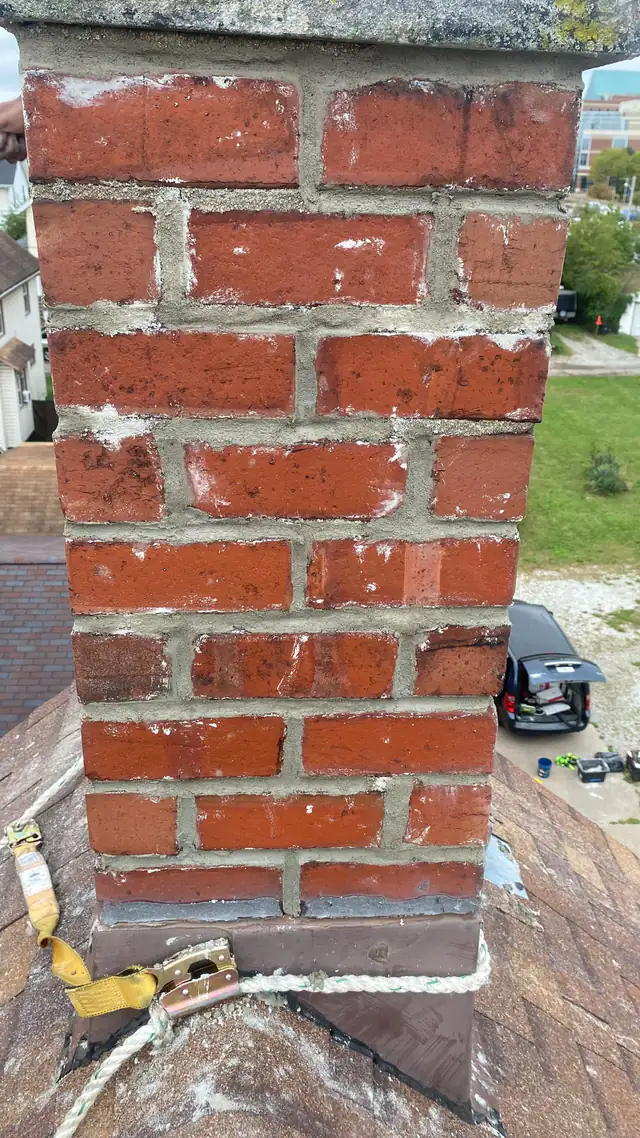
Roped in on a steep roof — repointed, flashing sealed 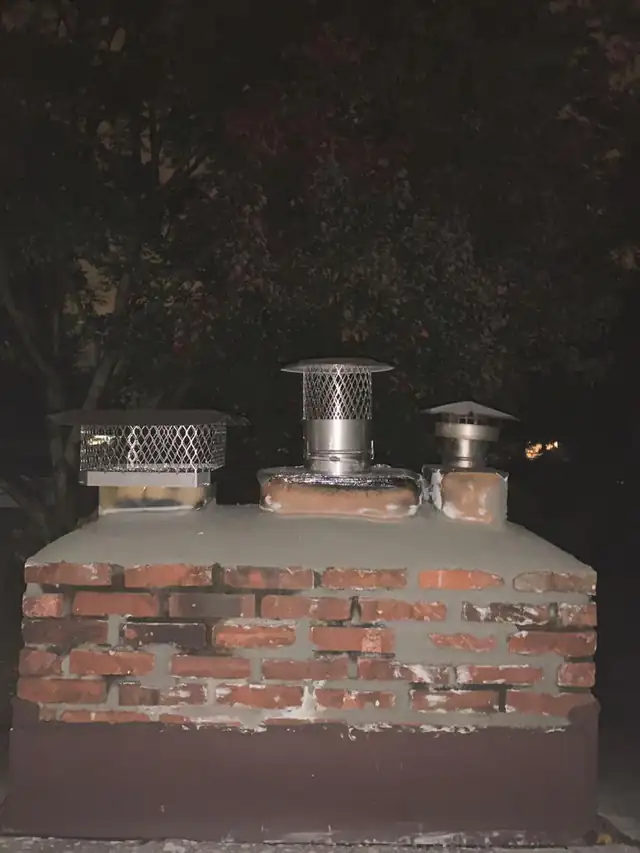
Three flues, three caps, one new crown 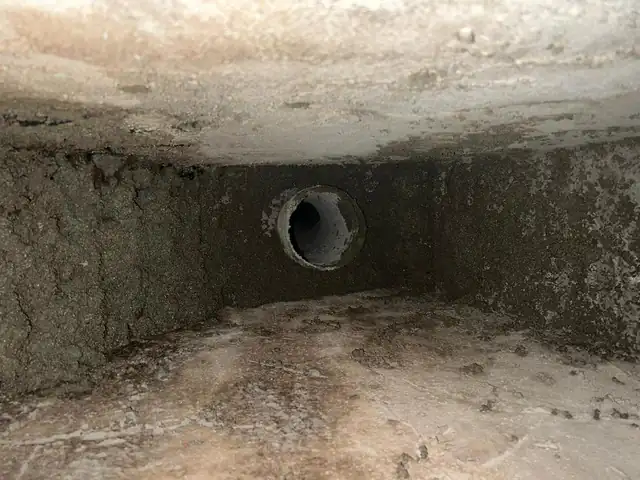
Inside the smoke chamber — the flue opening above the firebox 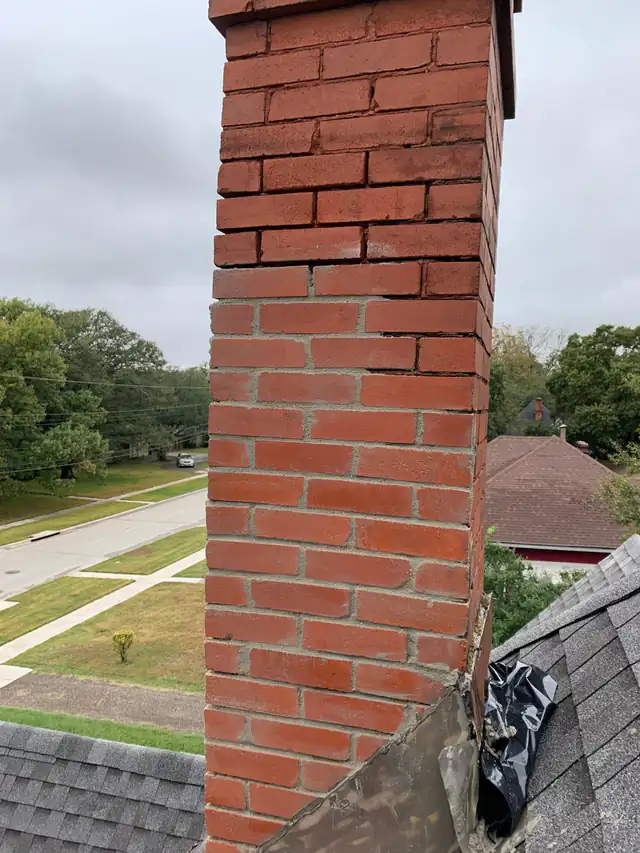
Mid-job — fresh joints below, the old eroded joints still waiting above 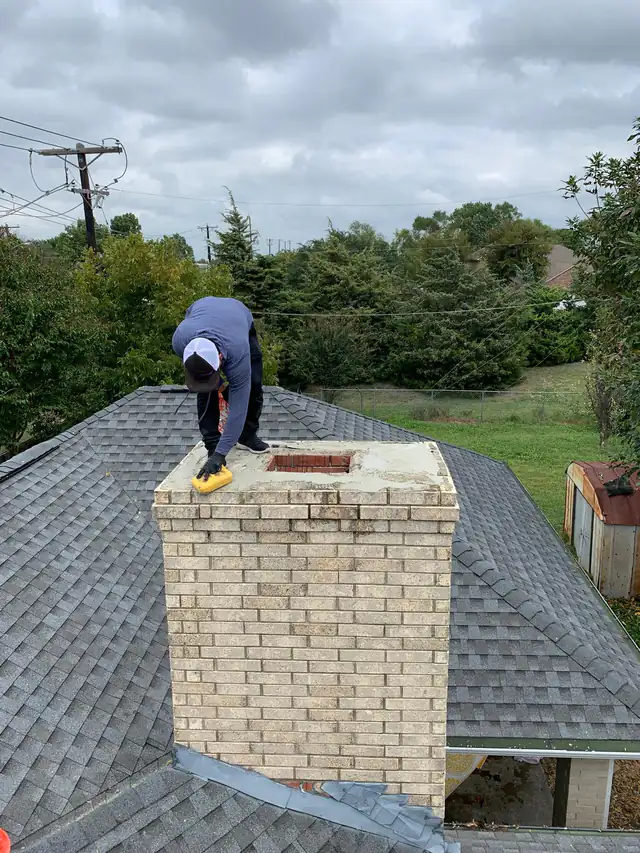
Finishing a fresh crown around the flue 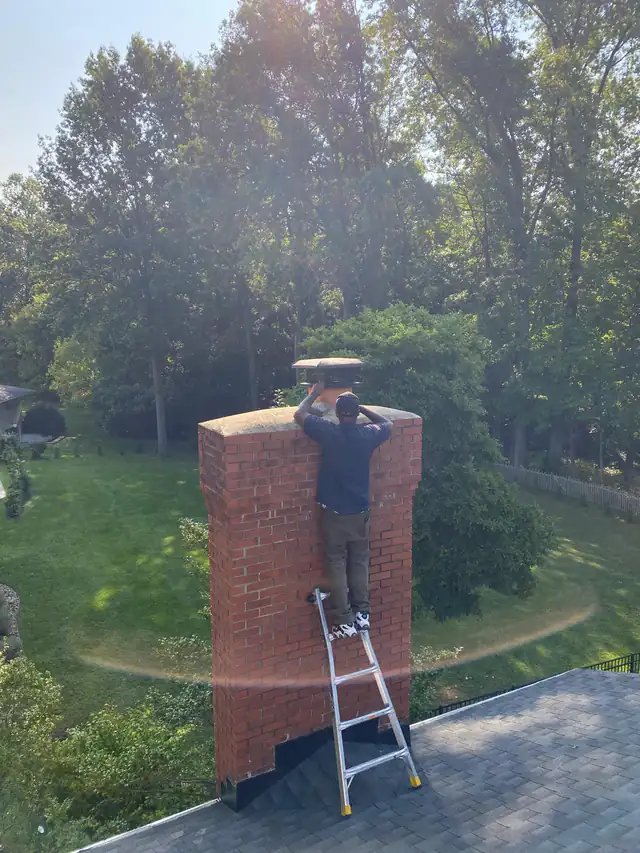
Ladder work on a tall stack — fitting the cap
Meet the team
The people behind the work
Manny, Zack and Myke — meet the people behind Chimney Expert Solutions.
Our team and story →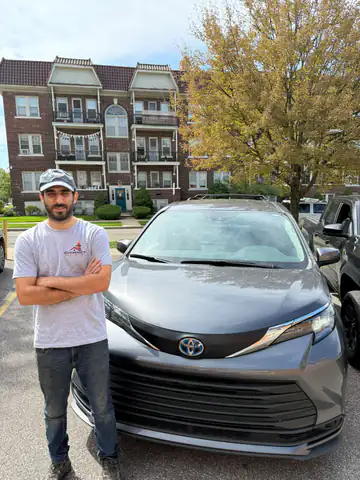
Manny
Owner
Zack
Manager
Myke
Technician
FAQ
Chimney Repair in Beachwood: questions we hear
Do you service outdoor fireplaces and fire features?
Yes, and they generally need more attention than the indoor one, not less. An outdoor stack takes weather on every side, holds water in the firebox, and is often built without a crown or cap that sheds properly. Sweeping, a scan of the flue, and getting the water management right at the top are the usual scope.
We converted to gas logs. Does the chimney still need sweeping and inspection?
Yes. If the flue burned wood at any point, that deposit is still up there and gas does not remove it. Beyond that, a vented set runs with the damper held open, so the flue is exposed to weather and animals year-round, and pilot moisture corrodes dampers and tile joints slowly. The NFPA 211 standard's annual inspection recommendation does not carve out gas appliances.
Our fireplace only smokes when the kitchen hood is running. What's wrong with the chimney?
Probably nothing. That symptom is a pressure problem, not a masonry one — a powerful hood in a tight house can pull more air out than the house can replace, and the easiest opening for replacement air is your chimney. Confirming it is simple: light the fire, let it establish, then switch the hood on and watch. If it reverses, the fix is a makeup-air path rather than anything on the roof.
Can we still use the fireplace while the chimney is being rebuilt?
No — the flue is open at the top and the stack is partly dismantled. If the chimney also serves a furnace or water heater, that has to be planned around before the work starts, and it is one of the first things we check on a quote visit. Nobody should discover mid-rebuild that the water heater has nowhere to vent.
Can a leaning chimney be straightened instead of rebuilt?
Generally not. A lean means the joints have failed and the courses have moved, and there is no way to push masonry back into plane and have it stay. What can be done is establishing where sound masonry begins and rebuilding from there, which on most leaning stacks is at or just below the roofline.
Free estimate
Chimney Repair in Beachwood?
Tell us what you’re seeing and we’ll call or text back to schedule a look — with photos of what we find and an honest read on what’s urgent and what can wait. That evidence-first method is the way we work on every job.
Call and tell us what the chimney's doing — if we're up on a roof, we'll call you back. Other ways to reach us are on the contact page, and Beachwood is one of the communities we cover across Greater Cleveland.
Call216-647-1882