
Cuyahoga County, Ohio
Chimney Repair & Rebuilds in South Euclid, OH
Masonry repair from spot fixes to full stack rebuilds — spalled brick, failed joints, and chimneys the freeze-thaw cycle has taken apart.
What chimney repair involves in South Euclid is set by the housing stock here: 1920s bungalows and colonials near Cedar Center alongside late-40s and 50s Capes and ranches toward Green Road — two building recipes, two failure profiles, often on the same block.
South Euclid was built in two clearly separated pushes, and that is the single most useful thing to know about its chimneys. The streets near Cedar Center and the Cleveland Heights line went up in the 1920s boom: brick and stucco bungalows, side-gable colonials, tile-roofed cottages. Then the war stopped everything, and the land north and east toward Green Road and Bexley Park filled in through the late 1940s and 1950s with Cape Cods and ranches built to a completely different recipe.
Northeast Ohio is close to a worst case for exterior masonry. A Cleveland chimney runs through dozens of freeze-thaw cycles every winter: water finds a hairline crack or an open joint, freezes, expands by about nine percent, and levers the masonry apart a little more each time. Repeat that across eighty winters on the most weather-exposed brickwork the house owns, and you get the local pattern. Brick faces shed, mortar goes soft and sandy, top courses shift, and eventually a stack that was fine at the last home sale needs rebuilding.
What we find on South Euclid chimneys that leads to chimney repair
Two eras on one street, two completely different stacks
A 1920s South Euclid chimney is tall, usually interior, built with soft brick in lime-rich mortar, and its problems are flue-side: unlined or early tile, joints washed out, heat damage from a century of use. A 1950s chimney on the same street is short, exterior or half-exterior, harder brick, and its problems are water-side: a thin flush crown, a weathered face, and a flue that is now the wrong size for what vents into it. Assuming one when you have the other is how people buy a repair that does not address the actual defect.
What the clean-out door at the base is telling you
Most South Euclid stacks have a small iron door at the bottom, usually in the basement, and most owners have never opened it. It is the most informative thirty seconds of an inspection. Sand and grit mean mortar joints are eroding somewhere above. Orange or buff shards mean flue tile is breaking up and falling. Standing water or a white salt bloom on the surrounding brick means the crown or cap is letting rain into the stack. Nothing at all is a good sign. We open it, photograph it, and show you what came out.
Insulation packed against the stack in the knee-wall attic
The bungalows and Capes here have low, awkward attics with knee walls, and almost all of them have been re-insulated at some point. Blown-in cellulose and batt insulation routinely end up shoved hard against the masonry where the chimney passes through, and on the factory-built and metal-flue systems the same thing happens around the pipe. Masonry and listed metal chimneys are both designed with a required air gap and a firestop at the floor or ceiling penetration, and stuffing that gap closed removes the design. It is one of the more common things we photograph in an attic here, and it is cheap to correct once someone has actually looked.
What drives the cost of masonry work
- Scope. Repointing, a partial rebuild above the roofline, and a full rebuild are different orders of work, and honest quoting means establishing which one you actually need first.
- Height and access. A chimney on a single-story ranch with a walkable roof, versus a three-story stack on slate that needs staging, is the largest single swing in this trade.
- Roof material. Slate, clay tile and standing-seam metal cannot be walked on, which changes how the work is staged and protected.
- Brick match. Sourcing or salvaging a close match for a visible 1920s chimney takes time that a plain utility stack does not.
- Detailing. Corbelled courses, stone banding, clay pots and decorative caps all have to be rebuilt rather than approximated.
- What is found on the way down. Flue tile condition and hidden deterioration are genuinely not fully knowable until the stack is opened, which is why we photograph as we go and talk before we deviate from the scope.
- Season. Work scheduled into the shoulder of the masonry season sometimes needs protection and heat, which is real cost.
How freeze-thaw takes a chimney apart
Brick and mortar are porous. They take on water in a rain and give it back in dry weather, and in a normal climate that is fine. The problem is what happens when the water is still in there and the temperature crosses freezing. Ice occupies more space than the water it came from, so every wet freeze pushes outward from inside the pore structure. One cycle does nothing measurable. A few thousand cycles reduce the face of a brick to something that flakes off in sheets.
Greater Cleveland is unusually good at generating those cycles. Lake-effect weather keeps masonry wet for long stretches, and our winters swing across the freeze line repeatedly rather than settling below it. That combination — wet masonry and frequent crossings — is worse for brick than a colder, drier winter would be.
The chimney gets the worst of it for structural reasons. It is exposed on all four sides instead of one, it has no roof over it except its own crown, it sits at the highest and windiest point of the house, and it is the one masonry element that also has hot gas running through the middle of it. Chimneys fail first, and they fail from the top down.
This page covers chimney repair as it plays out in South Euclid. The full chimney repair & rebuilds page walks the whole job — every stage, what changes the scope, and what we do about each of them. For everything else we handle in this suburb, see chimney services in South Euclid.
Repair and rebuild work we take on
- Spalled and cracked brick replacement, matched to the existing brick
- Partial rebuilds from the roofline or shoulder up
- Full chimney rebuilds where the stack is beyond saving
- Crown replacement as part of any rebuild — a rebuild under a bad crown is wasted money
- Flue tile replacement while the stack is open, where it is warranted
- Firebox masonry and refractory panel repair
- Written scope with photos before, during and after the work
Our work
Chimney Repair & Rebuilds, photographed on the job
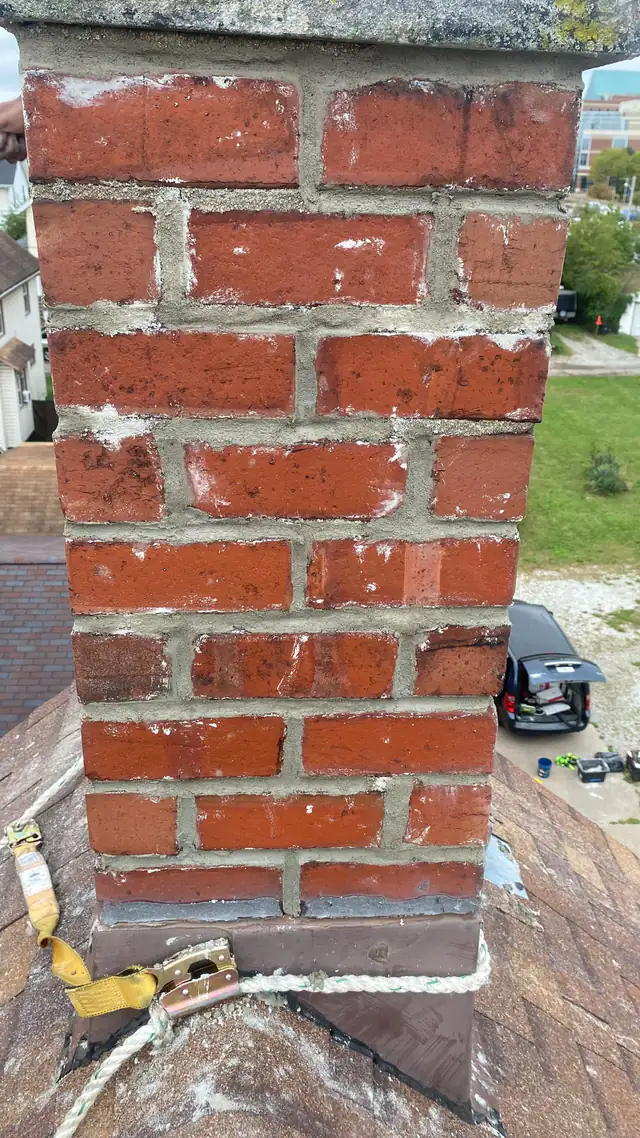
Roped in on a steep roof — repointed, flashing sealed 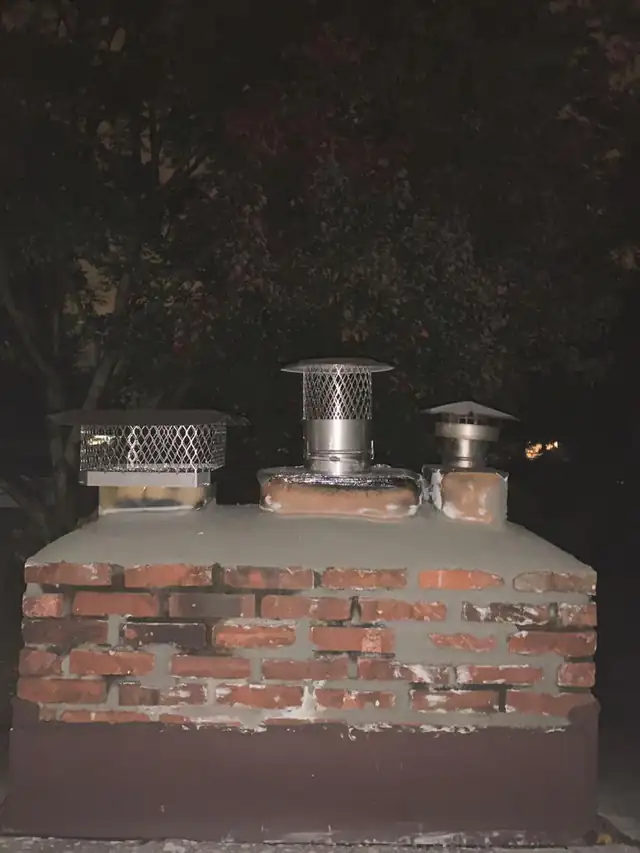
Three flues, three caps, one new crown 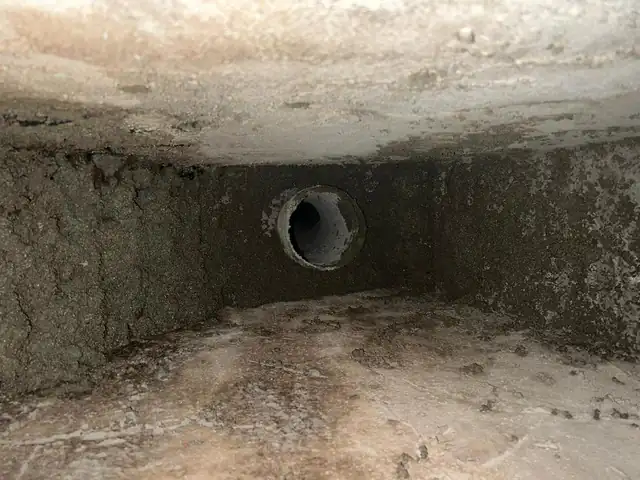
Inside the smoke chamber — the flue opening above the firebox 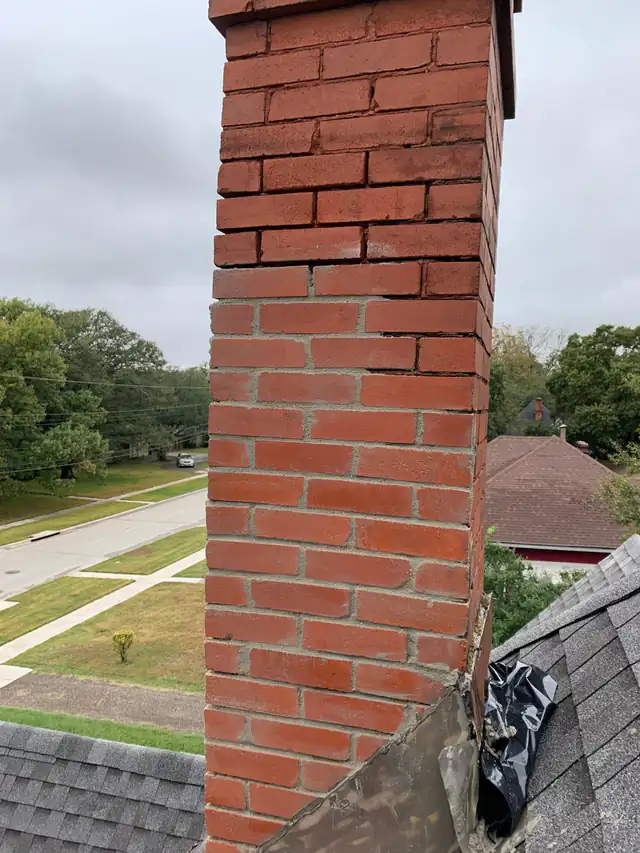
Mid-job — fresh joints below, the old eroded joints still waiting above 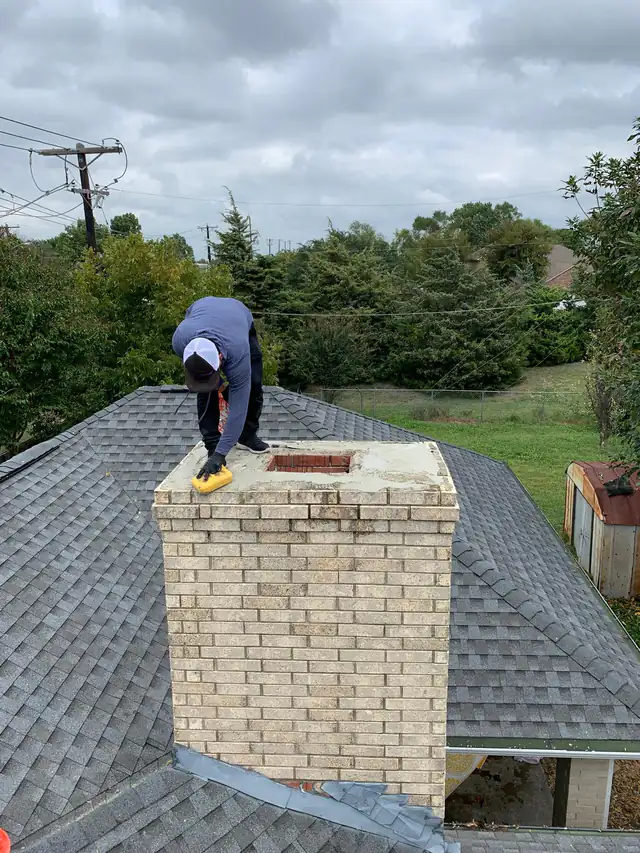
Finishing a fresh crown around the flue 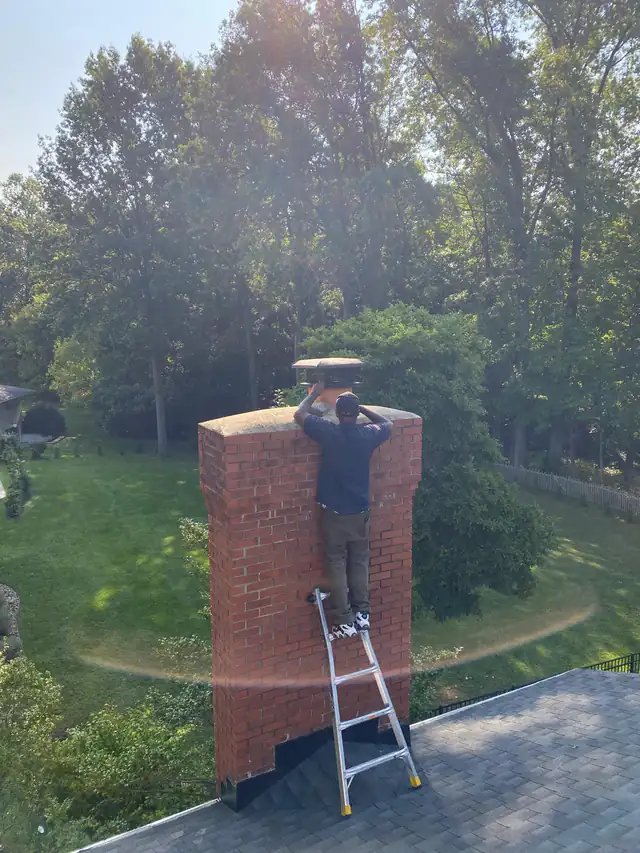
Ladder work on a tall stack — fitting the cap
Meet the team
The people behind the work
Manny, Zack and Myke — meet the people behind Chimney Expert Solutions.
Our team and story →
Manny
Owner
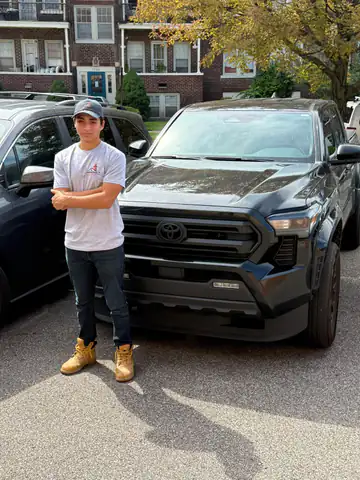
Zack
Manager

Myke
Technician
FAQ
Chimney Repair in South Euclid: questions we hear
Our neighbor was told they needed a full rebuild. Should we assume the same?
No, and on these streets that is a specifically bad assumption. Houses four doors apart here can be twenty-five years apart in construction, with different brick, different mortar and different flues. Even two identical houses weather differently depending on which way the stack faces and whether a tree has been shading it for forty years. Yours gets its own scan and its own photographs.
How do I know which era my chimney is from?
The roofline usually tells you before we get inside. A tall stack rising out of the middle of a steep roof is almost always the older build; a short stack near a gable end on a shallower roof is postwar. Inside, the pre-war fireboxes are narrower and deeper with a hand-laid look to the firebrick. If it is genuinely ambiguous, the flue tile itself dates it — the sizes and joint styles changed.
Is insulation touching the chimney really a problem?
It removes a clearance the chimney was built to have. Masonry chimneys are detailed with an air gap at floor and ceiling penetrations, and listed metal chimneys have a manufacturer-specified clearance that is part of what the system was tested to. Packing that gap with insulation or debris defeats it. Pulling it back and installing a proper firestop is a small job, and the attic is worth a look on any house that has been re-insulated.
Is a chimney rebuild covered by homeowners insurance?
Long-term deterioration from weather is normally treated as maintenance and is not covered, while sudden events like a lightning strike, a storm or a chimney fire often are. That is a conversation with your carrier, not with us, but the photo documentation we produce is exactly the evidence that conversation needs — which is another reason we photograph before, during and after.
How long does a chimney rebuild take?
A partial rebuild above the roofline on a straightforward stack is usually a small number of working days, weather permitting. A full rebuild, a difficult roof, or a chimney with detailing to reproduce takes longer. The unpredictable variable is weather rather than labor: mortar work stops for rain and for cold, and we would rather lose a day than lay masonry that will not cure.
Free estimate
Chimney Repair in South Euclid?
Tell us what you’re seeing and we’ll call or text back to schedule a look — with photos of what we find and an honest read on what’s urgent and what can wait. That evidence-first method is the way we work on every job.
Call and tell us what the chimney's doing — if we're up on a roof, we'll call you back. Other ways to reach us are on the contact page, and South Euclid is one of the communities we cover across Greater Cleveland.
Call216-647-1882