
Cuyahoga County, Ohio
Chimney Repair & Rebuilds in Strongsville, OH
Masonry repair from spot fixes to full stack rebuilds — spalled brick, failed joints, and chimneys the freeze-thaw cycle has taken apart.
What chimney repair involves in Strongsville is set by the housing stock here: 70s–90s colonials and later builds — thin original crowns reaching the end of their service life, stiff original dampers, exterior stacks that run cold, and a generation of fireplaces overdue a first camera inspection.
Strongsville grew fastest between the 1970s and the 1990s, spreading out from the old town center along Pearl Road and Route 82 into large-lot subdivisions. Its chimneys reflect those decades precisely: full-height masonry fireplace chimneys on the colonials of the era, factory-built systems in the later builds, and everything now thirty to fifty years old — which is exactly the age where original components start failing on schedule rather than at random.
Northeast Ohio is close to a worst case for exterior masonry. A Cleveland chimney runs through dozens of freeze-thaw cycles every winter: water finds a hairline crack or an open joint, freezes, expands by about nine percent, and levers the masonry apart a little more each time. Repeat that across eighty winters on the most weather-exposed brickwork the house owns, and you get the local pattern. Brick faces shed, mortar goes soft and sandy, top courses shift, and eventually a stack that was fine at the last home sale needs rebuilding.
What we find on Strongsville chimneys that leads to chimney repair
Thin 1970s crowns failing on schedule
Crowns from this building era were frequently poured thin, flush with the brick, and bonded rigidly to the flue tile. All three are problems. Thin cracks, flush means water runs down the brick face instead of dripping clear, and a rigid bond to the tile guarantees a crack where the two move at different rates. Thirty to fifty years is about the service life of that assembly, which is why a whole generation of Strongsville crowns is reaching the end at once.
Exterior chimneys that run cold
The era's colonials typically put the chimney on an outside gable wall rather than through the middle of the house, which looks right and performs worse. A stack running up the outside never holds heat, so the flue is cold at startup and stays cooler through the burn. Cold flue walls are where creosote condenses, and a cold column of air is what makes a fireplace push smoke into the room for the first ten minutes. Priming the flue before lighting solves most of the smoking; the faster creosote build is a maintenance-frequency question worth knowing about.
What a rebuild actually involves
Protecting the house first
Roof protection under the work area, the flue capped or sealed so debris does not fall down into the firebox and through the house, and a plan for getting brick and rubble down that does not involve the roof surface. On a slate or tile roof this part is most of the planning.
Down to sound masonry
The stack comes down course by course to a level where the brick and joints are genuinely sound, not to a level that was decided from the ground. Existing brick is salvaged where it is worth salvaging, and the flue tiles get evaluated as they are exposed — a rebuild is the one moment when replacing damaged tile is straightforward, and skipping that step because it was not in the original quote is a mistake you live with.
Rebuilding
New masonry laid with mortar matched to the original in strength and appearance, joints tooled to the same profile, and any original detailing reproduced. Flue tiles set with proper joints. Where the design calls for it, corbelling and decorative courses get rebuilt rather than simplified away.
The parts that make it last
A rebuild finishes with a proper cast crown with a drip edge and an expansion joint at the flue, a stainless cap on every flue, and flashing sorted at the roofline. A rebuild under a bad crown or with old failed flashing is money spent on a chimney that will start deteriorating again immediately. We treat those three as part of the scope, not as upsells at the end.
The masonry season in Northeast Ohio
Mortar cures through a chemical reaction that needs sustained temperatures above roughly 40°F. Below that it does not simply cure slowly; it can be damaged permanently, and freshly laid mortar that freezes before it has set never reaches the strength it was supposed to. That gives Greater Cleveland a working masonry season of roughly April through November, with the ends of it dependent on the actual weather rather than the calendar.
The practical consequence is a scheduling one. If your chimney needs structural work, the queue and the season run out at the same time in the fall. A chimney assessed in spring gets fixed that year. The same chimney assessed in late October frequently waits until spring, taking one more winter of freeze-thaw with an open path for water.
This page covers chimney repair as it plays out in Strongsville. The full chimney repair & rebuilds page walks the whole job — every stage, what changes the scope, and what we do about each of them. For everything else we handle in this suburb, see chimney services in Strongsville.
Repair and rebuild work we take on
- Spalled and cracked brick replacement, matched to the existing brick
- Partial rebuilds from the roofline or shoulder up
- Full chimney rebuilds where the stack is beyond saving
- Crown replacement as part of any rebuild — a rebuild under a bad crown is wasted money
- Flue tile replacement while the stack is open, where it is warranted
- Firebox masonry and refractory panel repair
- Written scope with photos before, during and after the work
Our work
Chimney Repair & Rebuilds, photographed on the job
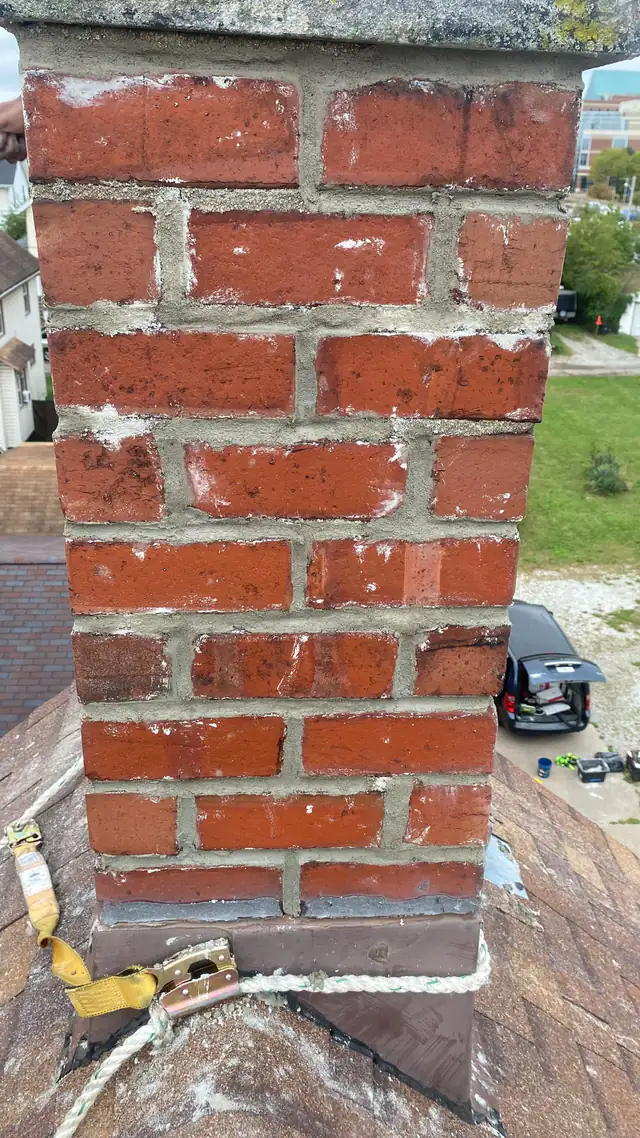
Roped in on a steep roof — repointed, flashing sealed 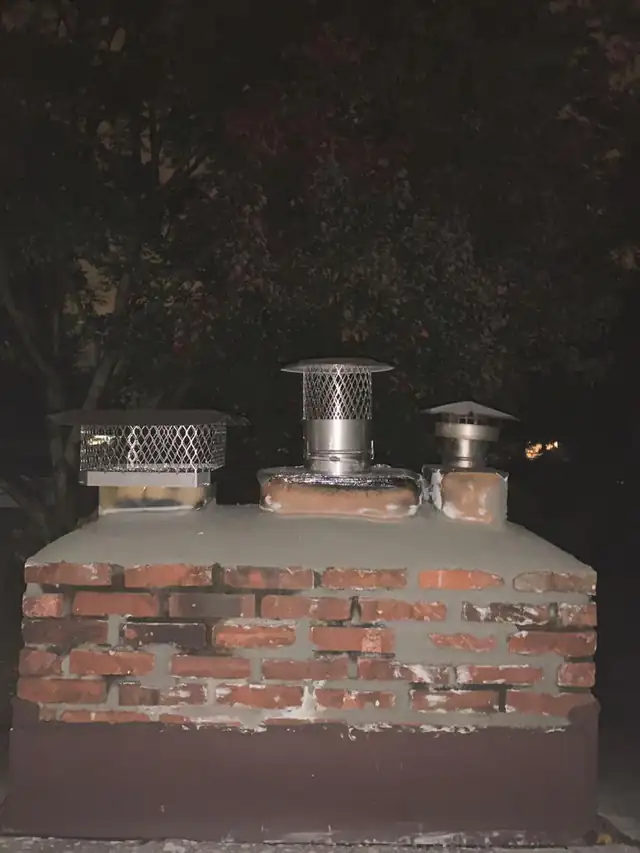
Three flues, three caps, one new crown 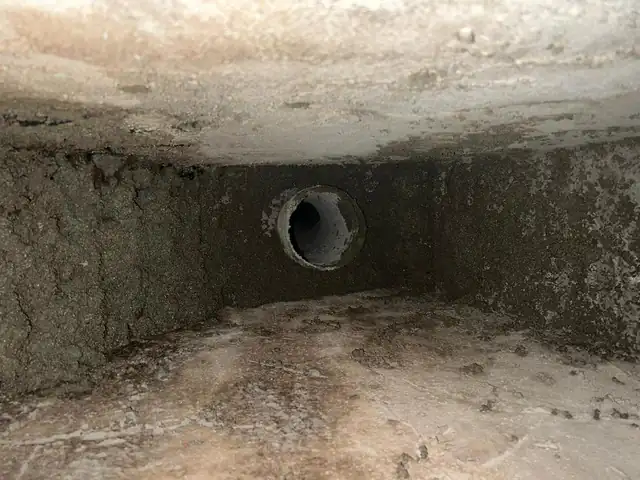
Inside the smoke chamber — the flue opening above the firebox 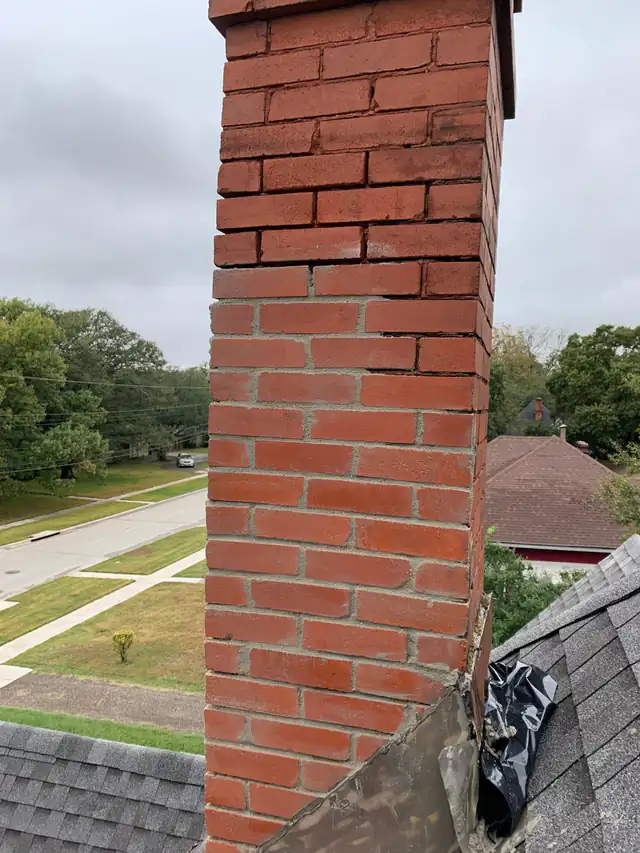
Mid-job — fresh joints below, the old eroded joints still waiting above 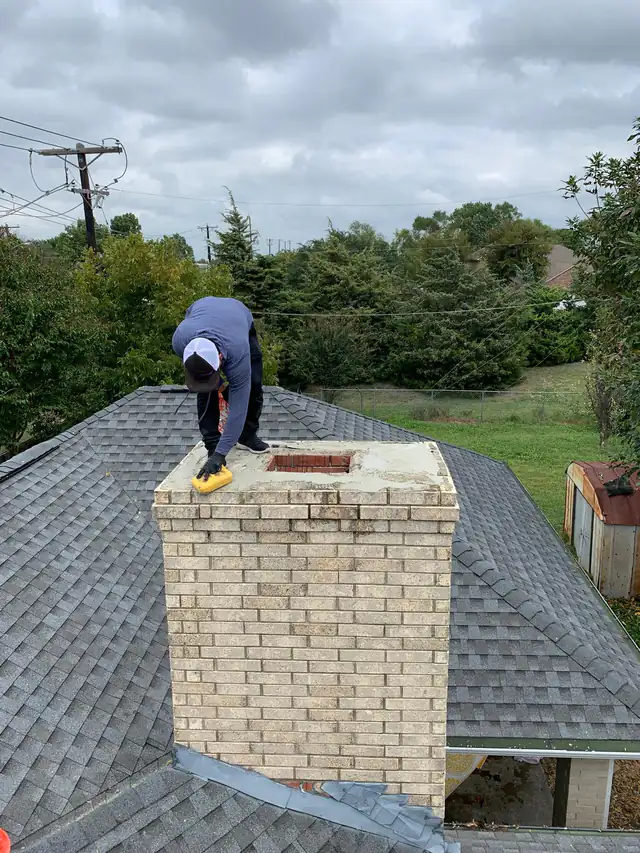
Finishing a fresh crown around the flue 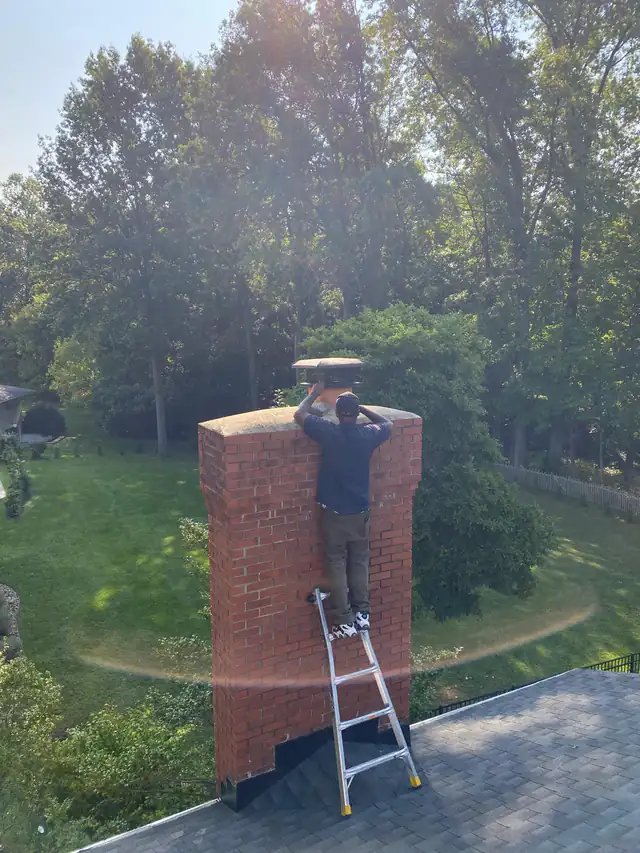
Ladder work on a tall stack — fitting the cap
Meet the team
The people behind the work
Manny, Zack and Myke — meet the people behind Chimney Expert Solutions.
Our team and story →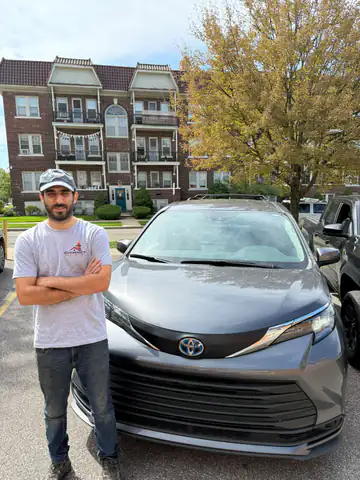
Manny
Owner
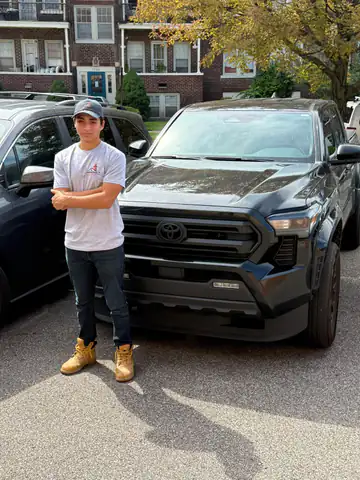
Zack
Manager
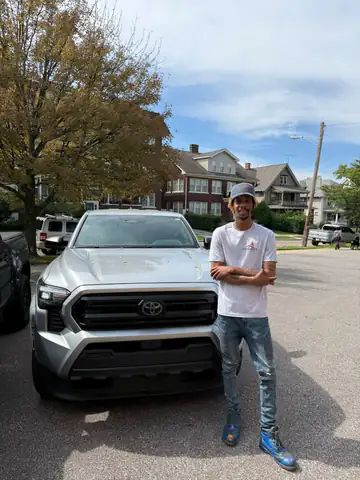
Myke
Technician
FAQ
Chimney Repair in Strongsville: questions we hear
Do you work on the newer builds as well as the older colonials?
Both. The later Strongsville subdivisions have a lot of factory-built fireplaces in framed chases, which need model-specific parts, a chase cover rather than a masonry crown, and a poly brush rather than a wire one. Tell us which you have when you book, or send a photo of the firebox, and the right equipment comes on the truck.
Does chimney repair need a permit in Cuyahoga County?
It depends on the municipality and on the scope — like-for-like repair is generally treated differently from structural rebuilding, and the inner-ring suburbs vary quite a bit in how they handle exterior work. We raise it during the quote for anything structural, and the requirements are worth confirming with your city's building department, because they do change.
Can a leaning chimney be straightened instead of rebuilt?
Generally not. A lean means the joints have failed and the courses have moved, and there is no way to push masonry back into plane and have it stay. What can be done is establishing where sound masonry begins and rebuilding from there, which on most leaning stacks is at or just below the roofline.
Free estimate
Chimney Repair in Strongsville?
Tell us what you’re seeing and we’ll call or text back to schedule a look — with photos of what we find and an honest read on what’s urgent and what can wait. That evidence-first method is the way we work on every job.
Call and tell us what the chimney's doing — if we're up on a roof, we'll call you back. Other ways to reach us are on the contact page, and Strongsville is one of the communities we cover across Greater Cleveland.
Call216-647-1882